Monday, January 14, 2008

"Vice's" Vicar?

While appointments of new heads for the English-speaking world's two most prominent sees edge their way toward B16's desk, an assignment closer to home currently stands at the top of the pontiff's personnel pecking order.

And, per usual, the "Vice-Pope" is reported to be all over it.

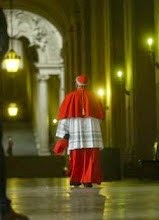
A well-placed leak slipped into the Italian press over the weekend relayed that the Secretary of State Cardinal Tarcisio Bertone has "invented" the appointment of Cardinal Agostino Vallini (right), the current "chief justice" of the church, to succeed Cardinal Camillo Ruini as papal vicar for Rome, the de facto shepherd of the Pope's diocese.

In a selection stakes dominated by such Italian church A-listers as Cardinal Angelo Scola of Venice and the Urb's high-flying auxiliary Bishop Rino Fisichella, the rollout of the near-invisible Vallini, 67, prefect of the Apostolic Signatura -- the church's top tribunal -- would seem somewhat unusual on its face. Then again, as Il Riformista's Paolo Rodari wrote on Saturday, replacing the all-prominent Ruini -- arguably the most influential Italian churchman of the last generation -- with a much quieter choice would fit "perfectly" into the Cardinal-Secretary's master plan to "direct," from the church's side, "the conduct of relations with the political world": exactly the role which, by force of personality, Ruini has held unchallenged since taking over as Rome's vicar in 1990. The cardinal turns 77 next month.

In airing the backstory, Rodari notes that "things could change" before an appointment is formally announced. That's always the case with Vatican moves, of course, but given the players and their history, it's especially true on this one.

Not long after Bertone's arrival on the scene in late 2006, Benedict's Vicar and "Vice" (both shown above in a 2007 meeting with Italian President Giorgio Napolitano and Premier Romano Prodi) memorably clashed over the future arrangement of the Italian hierarchy's top tier.

Seeking to deconstruct Ruini's media and policy empire -- which he had built up through his twin posts as vicar for Rome and president of the Italian episcopal conference, the CEI -- Bertone pushed for the appointment of a low-ranking archbishop hidden away in Southern Italy to the latter office. (Given the Pope's role as primate of Italy, the head of its episcopal conference is chosen by papal appointment.)

Protesting his confrere's aim to "publicly disown" his presidency and "decapitate" the CEI, a stunned Ruini persuaded Benedict to halt the plan. In the end, the appointment went to Bertone's successor in Genoa, Angelo Bagnasco, who was deemed an acceptable balance of Ruini's drive for a prominent successor with Bertone's priority for a nominee stationed far from the TV studios and political salons of Rome. Bagnasco became a cardinal at the November consistory.

According to Rodari, the "exclusion" of Fisichella and the CEI secretary Bishop Giuseppe Betori -- a Ruini disciple -- from the shortlist leaves a terna composed of three cardinals: Vallini, Scola and Angelo Comastri, the archpriest of St Peter's and papal vicar for Vatican City.

A former seminary rector, auxiliary bishop and vicar-general of Naples, Vallini was born on the outskirts of Rome. The publicity-shy prelate returned to his native province in 1999 as bishop of Albano, the largest of the city's suburban dioceses, and was named to head the Signatura in 2004. Benedict made him a cardinal at his first consistory in 2006. Of the 120 cardinal-electors who would select a new bishop of Rome in a hypothetical conclave, Vallini is the group's closest thing to a native of the Pope's diocese.

Discussions on the appointment are so far advanced that, according to the leftist daily, the Signatura's top post is already foreseen passing to the tribunal's current #2, Bishop Velasio DePaolis, a 72 year-old Scalabrinian.

Benedict received Ruini, Vallini and DePaolis in private audiences on Friday.

PHOTO 2: AFP/Getty


-30-

Saturday, April 26, 2008

Musical Chairs

Thursday night, the music-loving Pope attended a concert in the Vatican's Paul VI Hall held to mark his 81st birthday and third anniversary of election.

Hosted by the Italian President Giorgio Napolitano with a program including works of Brahms and Beethoven, B16 was joined by his brother, Msgr Georg Ratzinger, who flew into Rome on Benedict's return from the States.

In keeping with his brother's usual post-travel practice, the Papstbruder -- a former director of the Regensburg cathedral choir -- was to join the pontiff during his recharge at Castel Gandolfo, the papal retreat outside Rome. However, the Castel jaunt had to be scrapped due to the funeral of Cardinal Alfonso Lopez Trujillo, the church's "family czar," who died on Saturday; the Pope presided at Lopez Trujillo's burial liturgy in St Peter's on Wednesday, which was celebrated by the Cardinal-Dean Angelo Sodano.

The death of the Colombian cardinal -- one of the Vatican's lead commanders in the culture wars -- opens just another crucial spot in the Curial ranks, several of which are in for another wave of reshuffling in the short-term future. Of these, though, the vacancy at the Pontifical Council for the Family (the first time a dicastery head has died in office since the saintly Vietnamese Cardinal Francois Xavier Nguyen Van Thuan passed in 2002) is of special note as Lopez Trujillo had been the Holy See's lone prominent voice from a key section of the Catholic world: Spanish-speaking Latin America.

Two other curial chiefs -- the Brazilian prefect of Clergy Cardinal Claudio Hummes and the president of the Council for Health Care Workers Cardinal Javier Lozano Barragan -- might likewise hail from south of the border, but neither could command the visibility that naturally fell to the Roman official whose purview included leading the charge against abortion and gay marriage.

Already, so it's said, the region is being looked to for Lopez Trujillo's successor... and not just because the next World Meeting of Families is scheduled for early next year in Mexico City, quite possibly with Benedict in attendance.

* * *

Beyond the Family, the retirement age of 75 has the Pope in need of new lead-hands at the church's central offices for Worship, Causes of Saints, Justice and Peace and Migrants and Itinerants. (To date, Benedict has named new heads for four of the curia's nine congregations, and five of its eleven pontifical councils.)

Already well-floated in the Italian press, the most current scenario for the top opening has the Vatican liturgy chief Cardinal Francis Arinze being succeeded by the former Cardinal Ratzinger's deputy at the Congregation for the Doctrine of the Faith, Archbishop Angelo Amato. Arinze marked his 75th in November.

A Salesian confrere of his predecessor in the CDF post (the "Vice-Pope" Cardinal Tarcisio Bertone) and ghost-author of its controversial 2000 decree Dominus Iesus, prior tippings had Amato in line for the Congregations for Catholic Education or Causes of Saints (particularly the latter after an Easter Sunday lead article in L'Osservatore Romano on the witness of the martyrs). The Pope's high regard for his former deputy is no secret, and a prefect's job (with its ex officio red hat) has been seen as long in the planning for him. What's more, the foreseen move would defuse one of the more tense tandems in the Curia's top ranks; longstanding reports have indicated a level of friction between Amato and his current boss, Cardinal William Levada, with some even musing that the former "Holy Office" is effectively governed by a triumvirate that's seen the California cardinal outnumbered by the two Salesians.

To succeed Amato, the current buzz points to Bishop Rino Fisichella, the Rome auxiliary dubbed the "chaplain to Parliament." Long a fixture of the Urb's media and policy circles, Fisichella and Levada have long enjoyed good ties. Another key post in play is that of the Vicariate of Rome -- the day-to-day operator of the Pope's diocese -- and the long-expected move of Cardinal Agostino Vallini, currently the church's "chief justice" as prefect of the Supreme Tribunal of the Apostolic Signatura, is still perceived as a go. In succession to the all-powerful Cardinal Camillo Ruini (arguably Italy's most influential political player of recent decades) Vallini's selling-point for the post is said to be his reluctance for a high public profile, a trait which would strengthen the hand of Bertone, who's made little secret of his intent to be the church's lead in relations between the Vatican and the Italian state.

Adding to the drama, reports just prior to the Pope's arrival in Washington noted that the controversial #2 at Divine Worship, Sri Lankan Archbishop Malcolm Ranjith, had been overheard voicing a desire to skip town. A former Vatican diplomat exiled from the Curia once before, Ranjith, 60, was restored to Rome by B16 shortly after his election and has long been thought the prefect-in-waiting of the dicastery that oversees the Latin church's liturgical rites.

Sharing the Pope's affinity for what's now called the "extraordinary rite" -- the pre-Conciliar Missal of Bl John XXIII -- Ranjith made waves in the aftermath of Summorum Pontificum by chastising the disobedience of bishops over the decree permitting wider celebration of the Tridentine Mass, stoking even further resistance when he advocated a reconsideration of the reception of communion in the hand. (A posture recently banned in Peru's capital by Cardinal Juan Luis Cipriani of Lima.)

It's been noted that Sri Lanka's largest local church -- the 700,000-member archdiocese of Colombo -- is in need of a new head; Archbishop Oswald Gomis reached the retirement age in December. Ranjith was an auxiliary of the capital see from 1991 to 1995.

So that's the snapshot... for all the rest, stay tuned.

PHOTOS: AFP/Getty(1); Reuters(2)


-30-

Thursday, June 12, 2008

The Red Roster, '08 Edition

After the longest "honeymoon" in recent memory, last November's intake of new cardinals finally got their dicastery assignments from Pope Benedict this morning.

As the entire college of cardinals is charged aiding the pontiff in overseeing the global church, each member of the papal "senate" is, regardless of home-base, traditionally given a slate of Curial memberships to bring their respective strengths and expertise to the service of the Holy See's universal mission, both within and outside the church's walls.

Among other highlights of the list:
  • Not a single soul was added to the Congregation for the Doctrine of the Faith. Don't ask why.
  • Cardinal Angelo Bagnasco of Genoa -- the president of the Italian bishops' conference -- emerged as the slate's closest thing to a "big winner," picking up memberships on three influential congregations: Oriental Churches, Divine Worship and the Discipline of the Sacraments, and the all-powerful Congregation for Bishops, to which B16 also named Cardinals Andre Vingt-Trois of Paris, Vatican City's governor Giovanni Lajolo and the Laity Czar Cardinal Stanislaw Rylko.
  • Already mentioned as a potential successor to Cardinal Agostino Vallini after the expected transfer of the church's "chief justice" later this month to the vicariate of Rome, Cardinal Lluis Martinez Sistach of Barcelona was named to sit alongside Vallini as a member of the church's highest tribunal, the Apostolic Signatura. (A noted canonist, Martinez was named to the other legal dicastery -- the Pontifical Council for Legislative Texts -- last month, along with US Archbishops John Myers of Newark and Raymond Burke of St Louis.) The Barcelona cardinal, 70, was also named to the Pontifical Councils for the Laity and the Family, heading to the latter with Vingt-Trois.
  • Celebrated for his excellent relations with Ulster's Protestant community, the primate of All Ireland Cardinal Sean Brady of Armagh nabbed a slot on the Pontifical Council for Promoting Christian Unity, while the church's highly-regarded leader in Muslim-dominant Senegal, Cardinal Theodore Adrien Sarr of Dakar, was left off the list for the Pontifical Council for Interreligious Dialogue, being named instead to the Congregation for the Evangelization of Peoples, the office overseeing the church's mission efforts.
  • With the positio recently completed and amid swirling rumors that the beatification of Pope John Paul II could come as early as next spring, two of the late Great's inner sanctum were given seats on the body tasked with green-lighting the Polish Pope's movement toward sainthood, the Congregation for the Causes of Saints. Alongside Rylko -- Cardinal Karol Wojtyla's backup secretary during the two conclaves of 1978 -- Saints sees the arrival of Cardinal Angelo Comastri, the archpriest of St Peter's who, so it's said, John Paul's Polish circle would've favored as his successor... had he been a member of the college at the time of his death. A staunch advocate of the JP cause who recently floated the possibility of moving his remains from the subterranean grottoes to the Vatican basilica's main floor, Comastri was the lone red-hat to join Cardinal Stanislaw Dziwisz of Krakow -- Wojtyla's secretary of four decades -- for the tomb-side vigil to mark this year's anniversary of the pontiff's 2005 death. "People are convinced that John Paul II is already a saint and that therefore he can intercede for them to God," Comastri said in a late 2005 interview with the Italian bishops' daily paper, Avvenire.
  • At its essence, liturgy's all about communication, so it's appropriate that Philadelphia's own Cardinal John Foley -- long the Vatican's "great communicator" and now grand master of the Equestrian Order of the Holy Sepulchre of Jerusalem -- was named to Divine Worship. A missionary in his own right given his life's work of improving the church's accessibility and openness to the press, the Columbia J grad was likewise named to the Propaganda Fide.
  • And, lastly, the church in Texas' longstanding advocacy in defense of immigrants got an even firmer stamp of papal approval with the appointment of Cardinal Daniel DiNardo of Galveston-Houston to the Pontifical Council for Migrants and Itinerants. Having reportedly hoped for a light Roman docket given the time he's already spending away from home, the South's first red-hat got his wish -- he was the class' only member given a single assignment, and the only one of the new intake named to Migrants. Three other Stateside prelates (namely, Cardinals Adam Maida of Detroit, Theodore McCarrick of Washington and Bishop Nicholas DiMarzio of Brooklyn) might already sit on the council, but the combination of the Houstonian's location at ground zero of the national debate over immigration reform and a seat on the Vatican body that handles the church's response to the movement of peoples could just mean that Benedict's tapped his designated hitter on the issue for the American audience.
And lastly, a related stat that's been floating around of late... possibly not without reason.

Under usual circumstances, the US appointment docket will likely see a bit of movement between the days following this weekend's USCCB meeting in Orlando and mid-July's effective suspension of Vatican business for the summer. (For the record, as of this writing, eight American dioceses stand vacant, with another ten whose ordinaries are serving past the retirement age of 75 and holding on for successors.)

But more than these, the potential of another milestone of note looms across the water.

Since 1984, when then-Msgr Foley was named an archbishop and president of the Pontifical Council for Social Communications, at least two US prelates have concurrently led dicasteries of the Roman Curia. The figure first hit a peak of four in 1996, when the then archbishop of Denver, James Francis Stafford, was named president of the Pontifical Council for the Laity (the others: Cardinals William Baum at the Penitentiary, Edmund Szoka at the Holy See's "budget office," and Foley), and again following then-Archbishop William Levada's appointment to the CDF in 2005 until Szoka's retirement a year later.

In the two years since, adding in Foley's 2007 appointment to the Holy Sepulchre post, the figure's been cut in half. And now, with Stafford's 76th birthday approaching late next month, the prospect of a lone Stateside dicastery-head for the first time in a quarter-century has become a topic of interest in some rather keen chattering circles... which can't help but muse that some reinforcement's in the offing.

As always, stay tuned.

PHOTO: Reuters


-30-

Friday, June 27, 2008

The "Chief Justice": A St Louis Cardinal

So... the foreseen "other shoe" has dropped.

This morning, Pope Benedict named Archbishop Raymond Burke of St Louis as prefect of the Apostolic Signatura -- in effect, the church's "chief justice" as head of its top court. The Wisconsin-born prelate, who turns 60 on Monday, succeeds Cardinal Agostino Vallini, whose long-expected appointment as papal vicar for Rome was also announced in today's moves.

The first non-European named to head the historic tribunal, which dates from the 15th century, the archbishop's appointment to the prestigious post -- which, in keeping with tradition, will see Burke receive the cardinal's red hat at the next consistory -- is recognition of the top-shelf canonist's legal chops, but also serves to reflect the dominance of Signatura's docket by cases from the English-speaking world. On the more practical side, the return to the Vatican's top tribunal of the first US cleric to hold a senior post within its ranks -- the second consecutive instance of an archbishop of the onetime "Rome of the West" being called out of town to a cardinalatial post -- removes the American bishop most affiliated with the so-called "Communion Wars" from the domestic fray in advance of another presidential election season.

Born in Wisconsin's rural diocese of LaCrosse, Burke was ordained a priest by Pope Paul VI on 29 June 1975 -- one of 359 clerics ordained together in commemoration of the Holy Year. Distinguished from early on by his canonical aecumen, after serving at home and studies in Washington and Rome, the onetime Basselin scholar -- whose legal studies specialized in ecclesiastical jurisprudence -- was called to the Curia as defender of the bond at the Signatura in 1989. Five years later, at 46, he was named bishop of his native diocese, where he served until his appointment to St Louis in late 2003.

As a diocesan bishop, Burke's record has mixed solid conservative credentials and significant success in recruiting seminarians with a penchant for stoking controversies that've made ripple effects far beyond the boundaries of his charge.

In early 2004, the newly-arrived archbishop -- who had exhorted pro-choice politicians to refrain from receiving Communion in LaCrosse -- rocked the Stateside church by replying that he would "give a blessing" to the then-Democratic nominee, Massachusetts Sen. John Kerry, opening the door to a national firefight that polarized church circles and continues into the present. In April 2006, after Missouri voters narrowly defeated a constitutional amendment forbidding the use of state funds to support embryonic stem-cell research -- a result which, he said, "shows how deeply the culture of death is rooted in our society" -- Burke resigned the chairmanship of the city's Catholic children's hospital in protest over the booking of the singer Sheryl Crow for its major annual fundraiser, citing Crow's public stances in support of abortion and ESCR.

Beyond these, the dominant showdown looming over Burke's St Louis tenure has been the archdiocese's collision with the independent board of St Stanislaus Kostka parish, as the church sought to regularize the Polish parish's status and end its long-standing arrangement of lay governance. In 2005, the archbishop invoked the canons to announce the board's automatic excommunication (and that of the priest it hired) on grounds of schism; after the parish -- which continues to function independently -- appealed to Rome, last month the Congregation for the Doctrine of the Faith upheld the decision. Along the way, Burke revoked the local faculties of Dominican Fr Thomas Doyle after the cleric -- a prominent, longtime advocate for survivors of clergy sex abuse -- provided canonical counsel to the board.

In recent months, a separate flare-up over the attempt of two local women to be ordained to the priesthood was joined with equal force. After claiming orders, Burke summoned the women to defend themselves before him; when they didn't, they were excommunicated. And just yesterday, a Sister of Charity found to have encouraged and participated in the rites was declared guilty of three canonical crimes, placed under interdict and forbidden from exercising "any mission" in the archdiocese.

While the canonical reasoning behind his decisions has been roundly affirmed as unassailable, most observers concluded that the new prefect's reputation as a "lightning rod" steered the US bishops to choose Auxiliary Bishop Thomas Paprocki of Chicago over the St Louis prelate for the chairmanship of the bench's Committee on Canonical Affairs and Church Governance at last November's plenary in Baltimore. Also a respected canonist, the junior prelate bested Burke with 138 votes to the archbishop's 95. Given today's news, however, it could be said that, where it counted, Burke still won out.

Speculation tipping the archbishop's Romecoming began in earnest early last month after Burke -- already one of the Signatura's 18 prelate-judges -- was named to two influential Roman dicasteries: the Congregation for the Clergy and the Pontifical Council for the Interpretation of Legislative Texts. An international leader in the church of the restoration of the 1962 Missal and the growing vocation to lifelong consecrated virginity lived in the world, late July will see the completion of the LaCrosse project he championed during his tenure as its bishop: the Romanesque Shrine of Our Lady of Guadalupe, its cost believed to hover in the $30 million range.

In accord with the norms of canon law, the 560,000-member St Louis see fell vacant with the publication of this morning's appointment; until his departure for Rome in August, the prefect-designate will serve as archdiocesan administrator. Then, the archdiocesan consultors will be charged with the choice of another administrator from within pending the appointment of the Gateway City's ninth archbishop.

A press conference has been called for 11am local time.

-30-

Sunday, September 07, 2008

Deja Vu, Vatican Style

As soon as tomorrow, the Pope is expected to name the longtime #2 of the Italian church -- the CEI secretary-general Bishop Giuseppe Betori -- to one of the Bel Paese's plum posts as archbishop of Florence.

First reported yesterday by Il Giornale's Andrea Tornielli, the foreseen promotion for Betori, 61 (shown above with B16 at a 2007 concert), entered the buzzmill hours after the June transfer of Cardinal Ennio Antonelli from the 800,000-member Florentine church to the Vatican as president of the Pontifical Council for the Family. The formal announcement has reportedly been timed to coincide not just with tomorrow's feast of the Birth of Mary, but the 712th anniversary of the cornerstone-laying of Florence's famous Duomo of S. Maria del Fiore.

As the Tuscan see's tradition of cardinal-holders stretches back to the early 16th century -- i.e. the Medicis -- Betori's safely assured of a red hat at the next consistory. It's not the first time the presumptive appointee finds himself following in Antonelli's footsteps, either; the newly-named Family Czar likewise preceded Betori as the Italian hierarchy's second-in-command.

Best-known as the faithful deputy to Cardinal Camillo Ruini over the final years of the latter's run as Italy's most-powerful churchman, Betori's star began rising in earnest after his oversight of Rome's World Youth Day in 2000; he was elevated to the episcopacy and named the CEI's day-to-day chief but seven months after the festival's climactic closing liturgy on Tor Vergata drew upwards of 2 million. As secretary-general, he's had the task of overseeing the nuts and bolts of the shop built by Ruini's amassed clout -- a purview that's ranged from managing church-state relations and the conference's influential daily Avvenire to defending the use of modern art in the Italian Lectionary and arguing against preventative war.

Yet despite the post's premium on (mostly) keeping behind-the-scenes, Betori's flair for the spectacular didn't go completely unbrandished. When the Italian bishops mounted a firm protest last year to the civil partnership legislation proposed by the government of then-Premier Romano Prodi, the CEI organized a mass protest in Rome against the plan, known as the "DICO." The result: after the "Family Day" rally attracted a crowd estimated in excess of a million, the DICO was stalled, and Prodi's center-left coalition was swept out of office last March.

Given the widely-reported intent of the Secretary of State Cardinal Tarcisio Bertone to play the lead role in the church's dealings with the Italian government, Ruini's empire was gradually split up after he passed the retirement age of 75; then-Archbishop Angelo Bagnasco of Genoa was named to the conference's top post in early 2007, and -- with the "Vice-Pope" reported to have "excluded" Betori from consideration -- Cardinal Agostino Vallini was named papal vicar for Rome in late June after months of leaks leaving little doubt that the pastoral, low-profile canonist was Bertone's choice.

According to Tornielli, Betori's successor at the CEI will be chosen at the next meeting of the body's secretariat later this month. The tradition of the Italian conference has invariably seen the post held by a bishop.

PHOTO: AFP/Getty


-30-

Thursday, May 08, 2008

Around the Beat

A couple quick notes from these pages' core competence...
  • Having just seen the Patriarch of the West (OK, the title's currently in abeyance, but still...), a spiritual father of the East is about to roll onto these shores. Next week, the Maronite Patriarch Cardinal Nasrallah Pierre Sfeir begins a weeklong Stateside swing in New York, with subsequent stops in Philadelphia, Houston, and Washington; along the way, the 88 year-old head of the 9 million-member global fold will meet with both UN Secretary-General Ban Ki-moon and (for the second time) President Bush. Among other highlights, Sfeir -- officially "the 76th patriarch of Antioch and and the Whole Levant" -- will celebrate a Pontifical Maronite Liturgy in the River City's Latin-rite Cathedral-Basilica and receive an honorary doctorate from Villanova University, join a roundtable discussion on the Maronite church in Houston, meet with youth and young adults of the church and offer the Eucharist for the communities in each of the cities on his schedule. The US trip is but one part of the patriarch's monthlong foreign tour, which began earlier this week at Qatar's first church before taking him to South Africa. After the States, Sfeir touches down in Spain, where he'll meet with King Juan Carlos on the way back to his base in Beirut. Home to 3 million Maronite Catholics, the US has two eparchies for the community: the longstanding outpost of St Maron in Brooklyn, founded in 1966 and, since 2000, a western hub based in Los Angeles. Between the two, American Maronites can count close to 70 parishes and missions, two monasteries, two convents, a seminary in the capital, and the National Shrine of Our Lady of Lebanon, located in North Jackson, Ohio. A key intermediary and force for reconciliation amid the recent gridlock in Lebanon that's still failed to produce a successor to President Emile Lahoud, the former head of state called Sfeir "the patriarch of all Lebanon, not only of the Maronites," comparing the patriarch's role to that of the president as a figure of national unity.
  • Speaking of father-figures, the de facto patriarch of American Catholicism's conservative wing has gotten an even fuller plate, courtesy of B16. Already a member of the Apostolic Signatura -- the church's top court where, as a priest, he became the first US native to serve in one of its top posts -- Archbishop Raymond Burke of St Louis was named on Tuesday to the Pontifical Council for the Interpretation of Legislative Texts and, even more significantly, the Congregation for the Clergy. With the Signatura's top post seemingly about to open given the long-rumored appointment of its prefect, Cardinal Agostino Vallini, as the Pope's Vicar for Rome, some have been led to wonder whether yet another shoe is still to drop.... Regardless, as of this writing, the celebrated canonist best-known for his brushes with controversy has more Curial appointments to his name than last November's class of new cardinals, who are still basking in the longest "honeymoon" (i.e. red hat minus Roman responsibilities) in memory. While Tuesday's nods saw the shepherd of the onetime "Rome of the West" joined at Legislative Texts by Archbishop John Myers of Newark -- whose sci-fi homage Space Vulture hit the shelves in recent weeks -- it'd take a good bit of effort for either to equal the most intense Curial commitment shown by a resident US prelate: namely, Burke's predecessor in St Louis, now Philadelphia's Cardinal Justin Rigali. Named to the all-powerful Congregation for Bishops -- where he previously served as its second-in-command -- last fall, Pharaoh's made an assiduous homecoming to the table of the Vatican's "workhorse" dicastery... literally -- while prior American cardinal-archbishops assigned to Bishops would normally phone in their terna votes, Rigali's religiously been on-site for the congregation's fortnightly meetings, the latest of which took place earlier today. In other things Burke, the archbishop recently zapped the local faculties of Fr Tom Doyle, the longtime advocate for abuse survivors, after Doyle acted as canonical counsel for two members of the (schismatic + excommunicated) board of renegade St Stanislaus parish.
  • Keeping with the theme of crowded calendars, just on this side of the Pond, the traveling circuit is about to experience the kind of overload it hasn't seen in years: five ordinations, two installations... and a Ted with a Golden Jubilee. In other words, just in time for summer, party time is back, and in a big way. Starting in earnest on 19 May in Shreveport for the ordination and installation of Bishop-elect Mike Duca, the wave then moves to San Fran for auxiliary-elect Bill Justice's ordination on the 28th, Des Moines for Bishop Richard Pates' installation on the 29th, Bishop-elect Jim Conley's big day the next day in Denver, new auxiliary Oscar Cantu's 2 June rites in San Antonio, Little Rock's welcome for Bishop-elect Tony Taylor three days later, and finally (at least, for now) to Mobile, where Archbishop-elect Thomas Rodi will be installed on the 6th. In the midst of it all, arguably the marquee event will come in the capital on Visitation Night, as an international phalanx of well-wishers descends to honor DC's Cardinal Theodore McCarrick on the 50th anniversary of his priestly ordination. To mark the milestone, Uncle Ted -- who's stepped up his international humanitarian work since "retiring" two years ago this week -- will celebrate a public Mass in the Basilica of the National Shrine of the Immaculate Conception, followed by an open reception. Looking forward, with at least a couple more appointments visible in the distance before the wheels wind down for Roman Summer, the chaos shows little sign of easing up; of course, the celebrations head across the Pond at June's end for the "end of school" that'll see at least three newly-named American archbishops -- Rodi, Baltimore's Edwin O'Brien and the Twin Cities' John Nienstedt -- receive the chief symbol of their office, the pallium. With a late entry or two likely in tow from these shores, the traditional 29 June conferral of the lambswool band on the new metropolitans appointed within the last year will be prefaced by B16's opening of the worldwide Pauline Year the evening before in the Basilica of St Paul's Outside the Walls. Yet while it's celebratory all around from late month on, the current reunion cycle starts on a low note on Monday as Bishop Donald Montrose of Stockton is laid to rest. Head of the NorCal church from 1986 until his retirement in 1999, the native Angeleno died early yesterday -- the 59th anniversary of his priestly ordination -- aged 84.
...and for all the rest, as always, stay tuned.

-30-

Sunday, November 15, 2015

"Life Is Bigger Than Explanations" – To Rome's Lutherans, Pope Talks Conscience on Communion

Before anything else, greetings from Baltimore and the eve of this 97th November Plenary of the Stateside bishops, the public sessions beginning just after 10am Eastern Monday due to early regional meetings.

Even if the halls here are already full of conversation, yet again this Sunday's sudden top-line comes from Rome, where the Pope visited the city's Evangelical Lutheran church for an ecumenical dialogue. (Indeed, with an eye to the coming 500th anniversary of the German Reformation in 2017, today's event follows quickly on the heels of Declaration on the Way, a major joint statement from the USCCB and Evangelical Lutheran Church of America rolled out earlier this month as a roadmap for the path forward.)

Among the handful chosen to take part in today's Q&A, Francis heard from a member of the mostly German-Swiss congregation who, speaking of her marriage to a Catholic, addressed "the hurt we've felt together due to [their] difference of faith" and asked about their ability "to finally participate together in Communion."

In an answer that's almost certain to resonate broadly across the ecumenical scene (and elsewhere, quite possibly show his hand on his intended course following last month's Synod on the Family), the pontiff – clearly wrestling with the plea – pointedly appealed less to the standard prohibition of the Eucharist for Protestant communities than to the woman's discernment in conscience.

As if to reinforce the point, in a move clearly decided in advance, Francis publicly presented the pastor with a chalice which appeared identical to the ones the Pope gave the archbishops of Washington, New York and Philadelphia during his late September US trip.

On another context front, meanwhile, having employed Q&A as a favorite format with no shortage of groups over time, Papa Bergoglio is customarily appraised of the questions to be put to him in advance – and given the situation here, it'd be practically impossible to believe that Francis didn't anticipate the topic coming up.

All that said, as Cardinal Walter Kasper looked on between the current Ecumenism Czar Cardinal Kurt Koch and the Papal Vicar for Rome, Cardinal Agostino Vallini, below is the fullvideo of the exchange on intercommunion, and an English translation of the Pope's reply, which the congregation greeted with warm smiles and an ovation:


The question on sharing the Lord’s Supper isn’t easy for me to respond to, above all in front of a theologian like Cardinal Kasper – I’m scared!

I think of how the Lord told us when he gave us this mandatum to “do this in memory of me,” and when we share the Lord’s Supper, we recall and we imitate the same as the Lord. And there will be the Lord’s Supper in the final banquet in the new Jerusalem – it’ll be there! But that will be the last one… in the meantime, I ask myself and don’t know how to respond – what you’re asking me, I ask myself the question. To share the Lord’s banquet: is it the goal of the path or is it the viaticum [etym. “to accompany you on the journey”] for walking together? I leave that question to the theologians and those who understand.

It’s true that in a certain sense, to share means that there aren’t differences between us, that we have the same doctrine – underscoring that word, a difficult word to understand. But I ask myself: but don’t we have the same Baptism? If we have the same Baptism, shouldn’t we be walking together? And you’re a witness of a likewise profound journey, a journey of marriage: itself a journey of family and human love and of a shared faith, no? We have the same Baptism.

When you feel yourself a sinner – and I’m much more of a sinner – when your husband feels he’s sinned, you go forward to the Lord and ask forgiveness; your husband does the same and also goes to the priest and asks absolution, [thus] I’m healed and kept alive in my Baptism. When you pray together, that Baptism grows, becomes stronger. When you teach your kids who is Jesus? Why did Jesus come? What did Jesus do for us?, you’re doing the same thing, whether in the Lutheran language or the Catholic one, but it’s the same.

The question [Pope draws question mark with his finger].... The supper? There are questions that only if one is sincere with oneself and the little theological light one has, must be responded to on one’s own. See for yourself. This is my body. This is my blood. Do it in remembrance of me – this is a viaticum that helps us to journey on.

I had a great friendship with an Anglican bishop, 48 years old, married with two children, and he had this concern: a Catholic wife, Catholic children, and he a bishop. He accompanied his wife and children to Mass on Sundays and then went to worship with his community. It was a step of participating in the Lord’s Supper. Then he passed on, the Lord called him, a just man.

I can only respond to your question with a question: what can I do with my husband that the Lord’s Supper might accompany me on my path? It’s a problem that each must answer [for themselves], but a pastor-friend once told me that “We believe that the Lord is present there, he is present” – you believe that the Lord is present. And what's the difference? There are explanations, interpretations, but life is bigger than explanations and interpretations. Always refer back to your baptism – one faith, one baptism, one Lord: this Paul tells us; and then consequences come later.


I would never dare to give permission to do this, because it’s not my own competence. One baptism, one Lord, one faith. Talk to the Lord and then go forward. [Pauses] And I wouldn't dare – I don’t dare say anything more.
SVILUPPO: In a Sunday afternoon email to its collaborators obtained by Whispers, the US-based Evangelical Lutheran Church of America announced that – at a Chicago meeting of its governing council today – the group "voted unanimously, and with warm enthusiasm, to accept the Statement of [32] Agreements" in its joint Declaration on the Way with the nation's Catholic bishops, and that "receiving the agreements recognizes that there are no longer church-dividing issues with respect to these Statements."

-30-

Saturday, April 30, 2011

"He Believed, He Loved" -- On Beatification Eve, Recalling "Our Beloved Pontiff, our Prophet of Hope"

Before a sea of pilgrims estimated in excess of 100,000, here below is an English translation of the talk given by the papal vicar for Rome, Cardinal Agostino Vallini, at tonight's Vigil at Circus Maximus for tomorrow's beatification of Pope John Paul II.

* * *
Dear brothers and sisters!

Divine Providence gives us this evening the joy of a great experience of grace and light. With this Marian prayer vigil we hope to prepare ourselves for tomorrow’s celebration, the solemn beatification of the Venerable Servant of God John Paul II. Even though it has been six years since the death of the great Pope—Bishop of Rome and Pastor of the universal Church for 27 years—his memory is particularly vibrant. We feel veneration, affection, admiration, and deep gratitude for the beloved pontiff.

We, above all, remember his witness of faith: a convinced and strong faith, free from fear or compromises, true until his last breath, forged by trails, fatigue, and illness, whose beneficent influence has spread throughout the Church, indeed, throughout the world. His witness, through his apostolic travels, inspired millions of men and women of all races and cultures.

He lived for God. He offered himself entirely to God to serve the Church as a sacrificial offering. He would often repeat this prayer: "Jesus, Pontiff, who handed himself to God as offering and victim, have mercy on us". His great desire was to become more and more one with Christ the Priest through the Eucharistic sacrifice from which he drew strength and courage for his tireless apostolic action. Christ was the beginning, the center, and the apex of each of his days. Christ was the sense and the purpose of his actions. From Christ he drew energy and fullness of humanity. This explains the need and the desire he had for prayer: Each of his days was dedicated to long hours of prayer and his work was penetrated and infused by prayer.

In this faith, which he lived in his most inner being, we can understand the mystery of the suffering that marked him from when he was young and which purified him like gold that is tested by fire (1Pt 1:7). We were all amazed by the docility of spirit with which he faced the pilgrimage of his disease, even to the point of agony and death.

He was witness to the tragic age of big ideologies, totalitarian regimes, and from their passing John Paul II embraced the harsh suffering, marked by tension and contradictions, of the transition of the modern age toward a new phase of history, showing constant concern that the human person be its protagonist. He was a staunch and credible defender of the human person to the nations and the international institutions, which respected him and have paid him homage, recognizing him as a messenger of justice and peace.

With his gaze fixed on Christ, the Redeemer of humanity, he believed in humanity and showed his openness, trust, and closeness. He loved the human person, pushing us to develop in ourselves the potential of faith to live as free persons, cooperating in the realization of a more just and caring humanity, as workers for peace and builders of hope. Convinced that only the spiritual experience can satisfy humanity he said: the fate of every person and of all peoples is tied to Christ, the only liberator and Savior.

In his first encyclical he wrote: "Man cannot live without love. … His life [remains] senseless, if love is not revealed to him … Christ the Redeemer "fully reveals man to himself" (RH, 10). He began his pontificate with these vibrant words: "Don’t be afraid! Open, open wide the doors to Christ! … Christ knows what is in the human person. Only he knows!". These words bear witness that he believed that God’s love is inseparable from the love for humans and their salvation.

In his extraordinary energy of love for humanity he loved, with a kind and tender love, all those "wounded by life", as he called the poor, the sick, the nameless, and those excluded a priori—but he had a particular love for the youth. His calls for the World Youth Days had the purpose of making youth into the protagonists of their own future, becoming builders of history. The youth, he said, are the wealth of the Church and of society. He invited them to prepare for the big choices to be made, to look ahead with confidence, trusting in their own abilities and following Christ and the Gospel.

Dear brothers and sisters, we all know John Paul II’s singular devotion to the Madonna. The motto on the coat of arms of his pontificate, Totus tuus, summarizes well his life, which was oriented toward Christ by means of Mary: ad Iesum per Mariam. As the disciple John, the "beloved disciple", under the Cross at the Redeemer’s death, took Mary into his home (Jn 19:26–27), John Paul II wanted to always keep Mary mystically close to himself, making her part of his life and his ministry, feeling embraced and loved by her.

The remembrance of our beloved pontiff, prophet of hope, should not mean a return to the past for us, but let us make the most of his human and spiritual heritage; let it be an impetus to look forward. May the words that he wrote in his apostolic letter Novo millennio ineunte from the great Jubilee Year of 2000 resound in our hearts: "Let us go forward in hope! A new millennium is opening before the Church like a vast ocean upon which we shall venture, relying on the help of Christ. The Son of God … is at work even today: we need discerning eyes to see this and, above all, a generous heart to become the instruments of his work."

The Virgin Mary, Mother of the Church, so dear to Pope John Paul II, whom we now call upon in the praying of the Rosary, help us, in every circumstance, to be witnesses of Christ and proclaimers of God’s love in the world. Amen.

-30-

Friday, February 18, 2011

Countdown to B-Day

In preparation for Rome's biggest event since the 2005 funeral of Pope John Paul II, this morning the Holy See revealed its gameplan for the late pontiff's beatification on May 1st.

With crowds of 2 to 3 million expected to flood the city -- and the handful of hotel rooms remaining for the days said to have been running at some €700 ($950) a night -- the Vatican first made an unusual caution against "unauthorized offers" by travel agencies which have promised tickets to the beatification events. Released in six languages, a communique from the prefecture of the Papal Household -- the Curial organ that arranges audiences and handles ticketing for Vatican events -- underscored that "For the Beatification Mass... as made clear from the outset, no tickets are required" (emphasis original).

After the chaos that took place during last November's consistory -- when several prime sections had more ticket-holders than could be seated in them, and hundreds of pilgrims (if not more) ended up shut out of St Peter's Basilica -- maybe the lack of passes this time isn't the worst thing.

Beyond the crowd-control plans for the Mass, today's rollout included the announcement of several pieces of the days-long celebration itself. First among them is an evening vigil on 30 April -- the "liturgical anniversary" of John Paul's death -- to be held at 8pm at the Circus Maximus. The papal vicar for Rome, Cardinal Agostino Vallini, will preside, with Pope Benedict joining the gathering by video-link.

On Beatification Day itself, the remains of the new Blessed will be placed before the basilica's High Altar "for the veneration of the faithful," beginning shortly after the midmorning Mass and continuing until everyone who wants to pass by has had the chance to do so. The "exposition" on the basilica's main floor indicates that John Paul's body will be borne outside and present on the Sagrato -- the steps of St Peter's -- during the day's climactic liturgy itself.

The following morning at 10.30, a Mass of Thanksgiving will take place in the Square, to be celebrated by the Cardinal-Secretary of State Tarcisio Bertone. Only after the second Mass will John Paul's remains be "privately" reinterred in the basilica's chapel of St Sebastian, on the main floor, between Michelangelo's Pietá and the chapel of the Blessed Sacrament.

* * *
Likewise this morning, the plans were unveiled for the Vatican presentation of the second volume of B16's Jesus of Nazareth, which will publish on March 10th.

In just the latest sign of the author's regard for Rome's ranking Canadian, the press conference to release the second part of the Pope's chronicle of the historical Jesus will be led by the prefect of the Congregation for Bishops, Cardinal Marc Ouellet, barely six months after the Quebecois arrived to take up the all-powerful post.

-30-

Wednesday, May 10, 2006

The VWS Forecast

OK, for those who think that the church is a gerontocracy, earlier today the Italian "grandi elettori" (comprised of Parliament and regional representatives) elected 80 year-old Giorgio Napolitano as the new president of the Republic, succeeding the retiring (and wildly popular) octogenarian, Carlo Azeglio Ciampi.

Napolitano (shown at left), a former Communist who served as interior minister in the last Romano Prodi government in the mid-90s, will be sworn in on Monday.

Turning to more pertinent matters, however, last week the Vatican Weather Service called a (Curial) Tsunami Watch slated to last until Benedict XVI leaves for Poland on the 25th of the month. (It might be elevated to Warning status in the interim....) These reports have gained further credence on a headline in today's edition of Il Messaggero: "Cardinal Sepe will be named archbishop of Naples."

Returning to speculation which had run rampant for months, the newspaper reported that the Naples appointment will be arriving "shortly." The current archbishop, Cardinal Michele Giordano -- who turned 75 last fall -- is said to have made it known that his successor "will [already] be a cardinal." While the brief also offers the name of the recently-elevated Cardinal Agostino Vallini, head of the Apostolic Signatura (the church's highest court) and a former auxiliary of the archdiocese, it's believed that Sepe is the safer bet, having concluded his quinquennium as prefect of the Congregation for the Evangelization of Peoples.

Il Messaggero goes on to say that, "as the year of study the Pope gave himself has passed," other chairs at the Curial table look to be changing quickly. Cardinal Angelo Sodano's succession as Secretary of State is said to be between two current cardinals: the San Damaso veteran Giovanni Battista Re, prefect of the Congregation for Bishops, and Ratzinger's Salesian confidant Tarcisio Bertone, the archbishop of Genoa. To succeed the American Edmund Szoka as head of the Governatorato, the Vatican's civil government, the paper tips Archbishop Giovanni Lajolo, the current Secretary for Relations with States, i.e. the Pope's foreign minister. A previous round of buzz had Sepe going to the Gov.

In the United States, last-minute preparations are being completed for Bishop Richard Lennon's installation in Cleveland on Monday afternoon. And, despite being a month off his 75th birthday, word is that the Holy See will soon announce Bishop Joseph Imesch's successor in Joliet. No ordination will be necessary for the designee.


PHOTO:
AP/Pier Paolo Cito (Does he ever sleep?)


-30-

Friday, March 24, 2006

THE CONSISTORY: I Titoli

The abbracci among cardinals new and old continue....

The one great mystery leading into today was the titles, or titular churches, to which each new cardinal would be assigned. The cardinals are, of course, the historical successors to the clergy of Rome, and this link is most emphasized by the entrustment to each of a particular parish church in the city, which they serve as a sort of honorary protector (and a financial one in many real ways).

Obviously, some jockeying goes into this, as getting a nice titular is a mark of pride. And it's not a foreign concept for the Romans engage in contortions to be given a church which belonged to a mentor or friend.... You get the idea.

The cardinals-designate usually find out what they're getting the night before, so they can arrange the possession-taking Mass (another rite rich in tradition) as quickly as possible.

Anyways, here's the list of titles assigned today straight from the Press Office.

1. Card. WILLIAM JOSEPH LEVADA, Diaconia di Santa Maria in Dominica

2. Card. FRANC RODÉ, C.M., Diaconia di San Francesco Saverio alla Garbatella

3. Card. AGOSTINO VALLINI, Diaconia di San Pier Damiani ai Monti di San Paolo

4. Card. JORGE LIBERATO UROSA SAVINO, Titolo di Santa Maria ai Monti

5. Card. GAUDENCIO B. ROSALES, Titolo del Santissimo Nome di Maria a Via Latina

6. Card. JEAN-PIERRE RICARD, Titolo di Sant’Agostino

7. Card. ANTONIO CAÑIZARES LLOVERA, Titolo di San Pancrazio

8. Card. NICHOLAS CHEONG JINSUK, Titolo di Santa Maria Immacolata di Lourdes a Boccea

9. Card. SEAN PATRICK O’MALLEY, O.F.M. Cap., Titolo di Santa Maria della Vittoria

10. Card. STANISŁAW DZIWISZ, Titolo di Santa Maria del Popolo

11. Card. CARLO CAFFARRA, Titolo di San Giovanni Battista dei Fiorentini

12. Card. JOSEPH ZEN ZE-KIUN, S.D.B., Titolo di Santa Maria Madre del Redentore a Tor Bella Monaca

13. Card. ANDREA CORDERO LANZA DI MONTEZEMOLO, Diaconia di Santa Maria in Portico

14. Card. PETER POREKU DERY, Diaconia di Sant’Elena fuori Porta Prenestina

15. Card. ALBERT VANHOYE, S.I., Diaconia di Santa Maria della Mercede e Sant’Adriano a Villa Albani

B16 had a very sweet moment with the wheelchair-bound Cardinal Dery, by the way, when the Ghanaian was brought forward to receive his red hat....


PHOTO:
Reuters/Chris Helgren


-30-

Wednesday, February 22, 2006

THE CONSISTORY: The List

Seconds ago, in the setting of the General Audience on this feast of the chair of Peter, Benedict XVI announced that he would hold his first Consistory to create new cardinals on Friday, 24 March. The announcement was met with applause. The Pope called it opportune" to make the announcement on the Feast of Cathedra Petri, "becacuse the cardinals have the charge of sustaining and helping the successor of Peter," and their unique service of the whole church alongside the Pope.

The pontiff announced that he will hold to the fixed limit of 120 cardinals under the age of 80, and therefore able to elect a Pope. That figure was set by Paul VI in 1975, and ignored by John Paul II toward the end of the latter's pontificate.

In order of their placement on the biglietto, the cardinals-designate are:
  • Archbishop William Levada, Archbishop-emeritus of San Francisco, Prefect of the Congregation for the Doctrine of the Faith
  • Archbishop Franc Rode, C.M., Archbishop-emeritus of Ljubljana, Prefect of the Congregation for Institutes of Consecrated Life and Societies of Apostolic Life
  • Archbishop Agostino Vallini, Bishop-emeritus of Albano, Prefect of the Supreme Tribunal of the Apostolic Signatura
  • Archbishop Jorge Liberato Urosa Savino of Caracas
  • Archbishop Gaudencio Rosales of Manila
  • Archbishop Jean-Pierre Ricard of Bordeaux
  • Archbishop Antonio Canizares Llovera of Toledo
  • Archbishop Nicholas Cheong Jin-Suk of Seoul
  • Archbishop Sean O'Malley, O.F.M. Cap. of Boston
  • Archbishop Stanislaw Dziwisz of Krakow
  • Archbishop Carlo Caffara of Bologna
  • Bishop Joseph Zen Ze-kiun, S.D.B of Hong Kong
The Pope announced his intent to elevate three additional clerics who are above voting age to the College of Cardinals, in recognition of their service to the life of the church
  • Archbishop Andrea Cordero Lanza de Montezemolo, Archpriest of St. Paul's Outside the Walls
  • Archbishop-emeritus Peter Proeku Dery of Tamale, Ghana
  • Father Albert Vanhoye, S.J., former secretary of the Pontifical Biblical Commission
And now, if you'll excuse me, it's time to open the champagne. In a month's time, I'm going back to Disney World.

-30-

Monday, February 06, 2006

25 March: The Bandwagon Grows....

The other night, I advised everyone to put as much stock in Saturday's ADNKronos report as you would in James Frey's next book.

Well, the rumours that a consistory for the creation of new cardinals will be held on the Solemnity of the Annunciation got a firm boost this morning from Andrea Tornielli in Il Giornale.

Translation:
"Ratzinger plans new cardinals, curial changes for his Church"

The first consistory for the creation of new cardinals in the pontificate of Benedict XVI could be called before the end of this month and celebrated next 25 March. If the leaks which come from the Oltretevere [a nickname for the Vatican] Palaces are confirmed, it means that Papa Ratzinger has decided to appoint the new cardinals before the changes in the top ranks of the Roman Curia, expected between April and June. Many observers await what has been defined since last fall as the tsunami of curial appointments. In reality, Benedict XVI has within recent weeks stabilised things to leave them as they've been for a year, giving way to a reshuffle which would involve the heads of the Secretariat of State and the various dicasteries of the Holy See led by prelates who have already exceeded the canonical [retirement] age of 75. As in Munich, where he arrived as archbishop in 1977, and then in the Vatican, Ratzinger has always waited one year before moving anyone.
Tornielli goes on to state that it seems the Pope will respect the limit -- set by Paul VI, discarded by John Paul II -- of a maximum of 120 cardinal-electors. He reports that the Pope was asked by one of his collaborators within days of his election when a consistory will be held, and Benedict is said to have replied, in a reference to the current college: "Stay calm, there are already many of them."

And now, the (speculated) nominees....

First of all, and for the first time, Boston's Sean O'Malley has popped up as a likely cardinal-designate in Tornielli's soundings.

Beyond O'Malley, the usual curial suspects -- Comastri, Vallini, Levada, Rode', Rylko and Cordes -- are all named. (By virtue of his seniority in the curial pecking order, Levada would be listed first on a biglietto, the "ticket" which lists the new cardinals, and would render the traditional omaggio to the Pope in the name of the consistory class.)

From the archdioceses of the world, there's Carlo Caffara of Bologna, Andre Vingt-Trois of Paris, Jean-Pierre Ricard of Bordeaux, Stanislaw Dziwisz, O'Malley and (grazie Dio), the archbishop of Dublin, Diarmuid Martin -- whose elevation would put the red hat firmly in the hands of the capital of the Irish Republic as opposed to the historical honoree of Armagh, the primatial see of All Ireland.

The travel agents are getting pumped. Stay tuned.

-30-

Friday, February 03, 2006

From the Apartment

In yesterday's Il Foglio, an unsigned piece points to further changes in the papal apartment.

At the New Year, Angelo Gugel, valet to the Popes since time immemorial, retired. He was replaced by "the young" Paolo Gabriele, the father of three young children.

The author couldn't help noting, however, that Gugel's three daughters are in the employ of the Holy See in various capacities -- "Rafaella at the IOR [the Vatican Bank], Carla at the administrative office of the Propaganda Fide, Flaviana at the Central Statistics Office [the good people who compile the Annuario]."

If you find that shocking, then the Italian way must be news to you.

For some reason, Ingrid Stampa also takes a hit. Gabriele's appointment is said to "complete the team of the papal apartment comprised of the personal secretary Georg Ganswein, the second secretary Mieczyslaw ("Mietek") Mokrzycki [a John Paul holdover], the four consecrated laywomen Carmela, Loredana, Emanuela and Cristina [who are members of the Memores Domini, the lay branch of Communione e Liberazione]. Also part of the papal entourage is Birgit Wansing, of the Institute of Schoenstatt, but not the former governess of the apartment of Cardinal Ratzinger, Ingrid Stampa."

As sources of mine have dealt with Ingrid on things household in recent weeks, I have a hard time believing this report to be the case. But it's there, so take it for what it's worth.

The prospective consistory is also mentioned, with Archbishops Levada, Franc Rode [prefect of Religious], Agostino Vallini [prefect of the Apostolic Signatura] and Angelo Comastri [coadjutor archpriest of St. Peter's], said to be in "pole position." Also named are the heads of four traditionally cardinalatial sees: Carlo Caffara of Bologna, Antonio Canizares of Toledo, Jean-Pierre Ricard of Bordeaux and Andre Vingt-Trois of Paris. Also said to be in line, for obvious reasons, are the two Cracovian Stanislaws: Rylko (president of Laity) and Dziwisz, and the German Paul-Josef Cordes, the ghostwriter of the second part of Deus caritas est and president of the Cor Unum.

Lastly, the piece mentions that the memory of our 2005 International Churchman of the Year, Don Luigi Giussani, Founder of Communione e Liberazione, is being remembered yet again this week for another one of the communities he founded, the Sisters of Charity of the Assumption. The superior-general of the order recalled Don Gius' "forty years of incredible humble and grateful friendship."

Par for the CL course. Gotta love 'em.

-30-

Monday, June 09, 2008

On Communication

Late last month, B16 received representatives of of Catholic university communication faculties who had gathered in Rome for a seminar organized by the Pontifical Council for Social Communications.

Suffice it to say, for anyone involved or interested in media work, the remarks (fulltext) are worth a good read.

Snip:
The diverse forms of communication - dialogue, prayer, teaching, witness, proclamation - and their different instruments - the press, electronics, the visual arts, music, voice, gestural art and contact - are all manifestations of the fundamental nature of the human person. It is communication that reveals the person, that creates authentic and community relationships, and which permits human beings to mature in knowledge, wisdom and love. However, communication is not the simple product of a pure and fortuitous chance or of our human capacity. In the light of the biblical message, it reflects, rather, our participation in the creative, communicative and unifying Trinitarian Love which is the Father, the Son and the Holy Spirit. God has created us to be united to him and he has given us the gift and the duty of communication, because he wants us to obtain this union, not alone, but through our knowledge, our love and our service to him and to our brothers and sisters in a communicative and loving relationship.

It is self-evident that at the heart of any serious reflection on the nature and purpose of human communications there must be an engagement with questions of truth. A communicator can attempt to inform, to educate, to entertain, to convince, to comfort; but the final worth of any communication lies in its truthfulness. In one of the earliest reflections on the nature of communication, Plato highlighted the dangers of any type of communication that seeks to promote the aims and purposes of the communicator or those by whom he or she is employed without consideration for the truth of what is communicated. No less worth recalling is Cato the Elder's sober definition of the orator; vir bonus dicendi peritus -- a good or honest man skilled in communicating. The art of communication is by its nature linked to an ethical value, to the virtues that are the foundation of morality. In the light of that definition, I encourage you, as educators, to nourish and reward that passion for truth and goodness that is always strong in the young. Help them give themselves fully to the search for truth. Teach them as well, however, that their passion for truth, which can be well served by a certain methodological skepticism, particularly in matters affecting the public interest, must not be distorted to become a relativistic cynicism in which all claims to truth and beauty are routinely rejected or ignored.

I encourage you to give more attention to academic programmes in the area of the means of social communication, in particular to the ethical dimensions of communication between people, in a period in which the phenomenon of communication is occupying an ever greater place in all social contexts. It is important that this formation is never considered as a simple technical exercise, or a mere wish to give information. Primarily it should be more like an invitation to promote the truth in information and to help our contemporaries reflect on events in order to be educators of humankind today and to build a better world. It is likewise necessary to promote justice and solidarity, and to respect in whatever circumstance the value and dignity of every person, who also has a right not to be wounded in what concerns his private life.

It would be a tragedy for the future of humanity if the new instruments of communication, which permit the sharing of knowledge and information in a more rapid and effective manner, were not made accessible to those who are already economically and socially marginalized, or if it would contribute only to increasing the gap that separates those people from the new network that is developing at the service of human socialization, of information and of understanding. On the other hand, it would be equally grave if the tendency toward globalization in the world of communications were to weaken or eliminate the traditional customs and the local cultures, particularly those which are able to strengthen family and social values: love, solidarity, and respect for life.
* * *

Earlier tonight, the Pope traveled to his cathedral -- Rome's Basilica of St John Lateran -- to open the annual convocation for the Rome diocese, this year dedicated to the theme of "Educating in Hope by Prayer, Action and Suffering."

Slated to run through Thursday, the gathering of the Eternal City's clergy and layfolk is expected to be the swan song of Cardinal Camillo Ruini, the longtime papal vicar for the Urb charged with running the pontiff's diocese. Arguably among Italy's most influential public figures in recent decades, the 78 year-old cardinal's retirement is expected shortly after he marks his 25th anniversary as a bishop at month's end; as noted for months, the cardinal's successor is widely expected to be Cardinal Agostino Vallini, currently the church's "chief justice" as prefect of the Vatican's highest court, the Apostolic Signatura.

Combined with the new vacancy in Florence as a result of Cardinal Ennio Antonelli's Saturday appointment as president of the Pontifical Council for the Family, the twin openings give Benedict XVI -- closely advised as always by his Secretary of State -- his biggest opportunity yet to reshape the Italian church's top rank in his own image.

Already, the Florentine tipping has largely turned toward the #2 of the nation's episcopal conference, 61 year-old Bishop Giuseppe Betori, the organizer of both the CEI's "Family Day" protest against civil partnership legislation last year and Rome's World Youth Day in 2000.

PHOTO: AP/Plinio Lepri


-30-