Monday, October 13, 2008

Barack's Bishop

With 22 days 'til Election Day, it has been hard to miss that no shortage of Stateside prelates have sought to tackle the question of Faithful Citizenship... even as the ongoing Synod's net effect is that a critical chunk of the American church's top brass -- namely, its president and vice-president, the archbishop of the nation's capital and one of the two cardinals based west of the Mississippi -- finds itself in Rome in the run-up to the vote, where they'll remain for another two weeks.

In their absence, however, more than ever before, ecclesiastical authority on these shores -- granted, by no means a majority of the 300-strong conference, but still a bloc unprecedented in size and force -- has drawn a line in the sand on church teaching and the faithful's responsibility at the ballot box. Its impact -- both on the election itself and the life of the church -- remains to be seen, but the new reality forged in these days has already served to create powerful, lasting impressions far beyond the church's walls that promise to be sliced and diced long after the last vote is counted and the 44th president sworn in.

Yet for all that, as its American contingent keeps mum on matters here at home, one of the Scripture Summit's Pope-appointed members -- Archbishop John Onaiyekan of Abuja, a Word-scholar by trade and former president of the Nigerian bench -- bucked his confreres' carefully-broached approach to the campaigns, telling the National Catholic Reporter that he'd "obviously" back the Democratic nominee:

Known as a strong advocate for social justice, Onaiyekan said Obama’s pro-choice record wouldn’t stop him from voting for the Democrat.

“The fact that you oppose abortion doesn’t necessarily mean that you are pro-life,” Onaiyekan said in an interview with NCR. “You can be anti-abortion and still be killing people by the millions through war, through poverty, and so on.”

A past president of the African bishops’ conference, Onaiyekan is widely seen as a spokesperson for Catholicism in Africa. During the synod, he was tapped to deliver a continental report on behalf of the African bishops.

Onaiyekan said the election of an African-American president would have positive repercussions for America’s image in the developing world.

“It would mean that for the first time, we would begin to think that the Americans are really serious in the things they say, about freedom, equality, and all that,” he said. “For a long time, we’ve been feeling that you don’t really mean it, that they’re just words.”

Onaiyekan said he’s aware that many American Catholics have reservations about Obama because of his stand on abortion, but he looks at it differently.

“Of course I believe that abortion is wrong, that it’s killing innocent life,” he said. “I also believe, however, that those who are against abortion should be consistent.

“If my choice is between a person who makes room for abortion, but who is really pro-life in terms of justice in the world, peace in the world, I will prefer him to somebody who doesn’t support abortion but who is driving millions of people in the world to death,” Onaiyekan said.

“It’s a whole package, and you never get a politician who will please you in everything,” he said. “You always have to pick and choose.”

-30-

Wednesday, October 24, 2012

Bright Lights, Big Consistory

To provide an added flavor of the two marquee members of the incoming class of the College of Cardinals, here, a June talk on clergy sex-abuse in the church given at the International Eucharistic Congress in Dublin by Cardinal-designate Luis Antonio Tagle of Manila:


(Fulltext.)

And from a USCCB-organized conference on international religious freedom held just last month in Washington, a briefing on the situation in Nigeria from Cardinal-designate John Onaiyekan of Abuja (who appears at the 4:30 mark):


(Fulltext.)

The first head of an African diocese given the red hat since the consistory of 2010, since his appointment to the new Nigerian capital in 1994, the 68 year-old prelate – long a high-profile figure on the Roman scene – has presided over a growth that's seen the Abuja church go from some 30,000 members at the time of his arrival to over 550,000 today.


Notably as well, the first red hat for Abuja – a city only made an archdiocese on Onaiyekan's appointment, and established as a diocese just five years before that – marks a shift in the hierarchy of Africa's largest country, whose prior cardinalatial seat had been at the former capital, Lagos, which remains its largest city. 

With the nod, come next month's consistory Nigeria will likewise have two resident cardinals for the first time in its history – after a tenure spanning a remarkable five decades, Cardinal Anthony Olunbumi Okogie (elevated by John Paul II in 2003) retired from the Lagos seat this past summer; at age 76, however, the nation's senior red-hat retains a vote in a conclave for another four years. 
In his intervention at the ongoing Synod for the New Evangelization, amid years of sectarian violence between his homeland's predominantly-Muslim north and Christian south (an outbreak which has included several bombings of churches, even within recent weeks), Onaiyekan took to the floor "to stress" that "despite the impression often given by the world media... Christians in Nigeria do not see themselves as being under any massive persecution by Muslims."


Citing Nostra Aetate – the Vatican II decree on relations with other religions – the now cardinal-designate said that "the differences between Islam and Christianity are not negligible. But there are also broad areas of common grounds [sic]. 

"The new evangelization," Onaiyekan told the Synod, "will entail working together for the promotion of commonly shared values, in a world that is very much in need of such values."

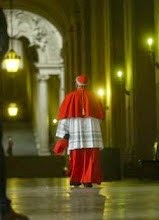
On a side-note, while Nigeria already has two papal electors as of today, the country's best-known ecclesiastical export – global Catholicism's now-retired top liturgist, Cardinal Francis Arinze (right, in a classic shot) – has spent the last quarter-century in the Roman Curia. 

A convert who was long viewed as Africa's top papabile during the twilight years of the reign of John Paul II, Arinze's 80th birthday next week opens one of the two voting seats whose occupants will "age out" over the next month, their places quickly to be filled by members of the college's new intake. 

The other seat undergoing rapid turnover is that of the retired Vatican Peace Czar Cardinal Renato Martino, who marks his 80th on the day before the November 24th consistory.

All that said, for a consistory whose sole Curial designate is American, perhaps it's even more intriguing to consider the one name that's especially – perhaps even historically – conspicuous by its absence: the prefect of the Congregation for the Doctrine of the Faith, Archbishop Gerhard Ludwig Müller, who by long-standing Vatican tradition would've been expected to hold the biglietto's top slot.

-30-

B16's October Surprise – Pope Calls Shock Consistory for 24 November

In an announcement that seems to have taken everyone by surprise, this morning the Pope called Red Dawn, announcing the elevation of six new cardinals at a consistory scheduled for 24 November, the vigil of the feast of Christ the King.

In order of their announcement, the cardinals-designate are:
  • Archbishop James Harvey, 63, the Milwaukee-born prefect of the Papal Household (who, Benedict said today, he will soon name as archpriest of the Basilica of St Paul's Outside the Walls);
  • Patriarch Bechara Boutros al-Rai, 72, the Lebanon-based head of the worldwide, 5 million-member Maronite church;
  • Major Archbishop Basilios Cleemis, 53, head of India's Syro-Malankara church – the first hierarch from the 600,000-member community to receive the red hat (and, by two years, set to become the youngest cardinal);
  • Archbishop John Onaiyekan of Abuja (Nigeria), 68
  • Archbishop Ruben Salazar Gomez of Bogotá, 70
  • Archbishop Luis Antonio Tagle of Manila, 55; head of Asia's largest diocese
The new intake – the second one of this year following the creation of 22 in February – will be Benedict XVI's fifth turn at topping up the College which will elect his successor. 

Following the gathering, the number of cardinal-electors will be restored to its statutory maximum of 120 red-hats under age 80, a figure from which the pontiff "derogated" earlier this year to add five additional members. During his pontificate, John Paul II had ballooned the Electoral College to a size as high as 135 voters.

While two of the voting seats to be filled only come open within the next month, at least an additional 11 electoral spots will be freed up in 2013 as their current holders "age out" of Conclave privileges. Given the relative flood of vacancies, a consistory – normally foreseen weeks, if not months, in advance – had previously been expected for sometime in the first part of next year.
Notably, the "mini-consistory" is the smallest to be called since Paul VI's final intake of four cardinals in June 1977, at which Papa Montini elevated the freshly-ordained 50 year-old archbishop of Munich and Freising, Joseph Ratzinger (above). 

That gathering was known as the "Benelli consistory" for its linchpin figure – the longtime Curial titan Giovanni Benelli, who had been dispatched to Florence earlier that month amid heavy speculation that the move reflected his status as Paul's preferred successor. 

In other words, the small intake was seen as a frail pontiff's taking care of his "unfinished business." Whether that's the case again, of course, time will tell, but the sudden move is bound to fan concerns over the 85 year-old Pope's health. 

Either way, the snap announcement does assuage two significant critiques of Benedict's recent elevation classes: first, an "excessive" distribution of seats to Italians – none of whom made today's cut – at the expense of diocesan bishops from Asia, Latin America and Africa. 

Given the group's size, meanwhile, it seems fairly certain that the organizational chaos which has seen seen several thousand ticket-holders – including relatives of the new cardinals – kept out of St Peter's Basilica at the last several consistories due to repeated overallotments of seating won't be an issue again this time.

In a break from usual practice, all of the diocesan cardinals-designate but one (Salazar) are in Rome for the Synod of Bishops for the New Evangelization, and so are unable to mark today's announcement with their communities at home. Reflecting the degree to which the move was unforeseen, statements on the elevations have yet to emerge from the dioceses of the far-flung designates.

The Synod closes on Sunday with a papal Mass inside St Peter's.

SVILUPPO: Additional notes/background.... and for the latest, continuing updates on the Front Page.
-30-

Saturday, November 24, 2012

"Receive the Red Biretta...."

For anybody just waking up, here's full video of the centerpiece moment at this morning's "rites of creation" – the Pope's conferral of the red hat and ring on new Cardinals James Harvey (archpriest of St Paul's Outside the Walls), Bechara al-Raï (Maronite patriarch of Antioch), Baselios Cleemis Thottunkal (major-archbishop of Trivandrum of the Syro-Malankars), John Onaiyekan (archbishop of Abuja), Ruben Salazar Gomez (archbishop of Bogotá) and Luis Antonio Tagle (archbishop of Manila):


VIDEO: The Holy See

-30-

Saturday, September 06, 2008

Filling Out the Aula

In another sign of the Vatican's gradual return to life from its August hiatus, this morning saw the release of Pope's slate of delegates, experts and observers for next month's Synod of Bishops on the Word. The appointees join those prelates already elected by their respective episcopal conferences, and the heads of the Roman dicasteries who enjoy ex officio seats for the global gatherings.

While the top story from the release is that a record six of the 41 experts at the 5-26 October meet-up are women -- among them Missionary Servant of the Blessed Trinity Sr Sara Butler, a professor of dogmatic theology at Dunwoodie and member of the Holy See's International Theological Commission -- some other notable names dot the list. From the top, among them are the lone biblical scholar among the cardinal-electors, Ghana's Peter Appiah Turkson, Cardinals George Pell of Sydney, Joachim Meisner of Cologne, the Honduran Oscar Rodriguez Maradiaga SDB and Stanislaw Dziwisz of Krakow, along with Archbishops John Onaiyekan of Abuja, a Scripturalist and president of the Nigerian bishops, and the Brazilian Raymundo Assis of Aparecida, the president of the Latin American mega-conference CELAM.

(Closer to home, back in February it was announced that the Stateside bench had filled its allotted four seats with its president and veep, Cardinal Francis George of Chicago and Bishop Gerald Kicanas of Tucson, along with Cardinal Daniel DiNardo of Galveston-Houston and Archbishop Donald Wuerl of Washington.)

Alongside all this, two other items of note stick out: first, a decade after the Stateside crowd and the Romans engaged in a trans-Pond skirmish after Archbishop-emeritus John Quinn of San Francisco was rejected as an elected US delegate to the 1997 Synod for America due to his retired status, B16 shown progressively fewer qualms over naming superannuated prelates to his synods. For the last gathering in 2005 (dedicated to the Eucharist), the pontiff tapped the former prefect of the Congregation for Divine Worship Cardinal Jorge Medina Estevez as one of his slate, and this time around the line-up features no fewer than three red-clad retirees: the dean of the "papal senate" (and former Secretary of State) Angelo Sodano, the archpriest of St Paul's Andrea Cordero Lanza de Montezemolo, and the Belgian Jesuit Albert Vanhoye, the famed scholar of the Letter to the Hebrews (and longtime Ratzinger collaborator) who was given the red hat at this pontificate's first consistory in 2006.

Second, next month's meeting will find the lay-dominated "new movements" especially well-represented. Among others called to the Aula today were the Neocatechumenal Way co-founder Kiko Arguello, Sant'Egidio's Andrea Riccardi, Peru's Luis Figari of the Sodalitium Vitae, Brazil's Lauro Filho of the Shalom community, and Maria Voce, the recently-elected successor of Chiara Lubich as head of the global Focolare movement. For all that, though -- and the many religious superiors-general present on the slate -- Benedict sent another little gift the way of his favorite movement.

While the lower appointments were made by the Synod Secretariat and approved by the Apartment, those whom the Pope himself named as Synod Fathers (full members) were cardinals or senior bishops... with two significant exceptions. Unsurprisingly, the first is the "Black Pope" Adolfo Nicolás, the recently-elected Jesuit Father-General, but yet again, the other is Fr Julian Carrón -- the head of Comunione e Liberazione, the "school of community" which, by Joseph Ratzinger's own admission, "changed [his] life." The successor to the movement's founder Msgr Luigi Giussani -- whose funeral was preached by then-Cardinal Ratzinger just six weeks before his ascent to Peter's chair -- Carrón was also an appointed member of the 2005 synod. (That the conspirary theorists not be disappointed, though, the prelate-head of Opus Dei, Bishop Javier Echeverria, likewise made the top-level cut.)

In tandem with today's list, expected to drop in the coming weeks are another set of high-level curial changes... which, given early reports, could just be the most high-octane yet.

For more on that and everything else, stay tuned.

PHOTO: Max Rossi/Reuters


-30-

Monday, March 16, 2009

"The Announcement of Peace"

Before anything else, a little mood music to get us all into the spirit of the days....


On this eve of B16's departure for Africa, the Pope's message at yesterday's Angelus departed from its usual matter of the daily readings and focused instead on the visit at hand.

Via Zenit, here it is in full translation:
Dear Brothers and Sisters!

I will be making my first apostolic visit to Africa from Tuesday, March 17, to Monday, March 23. I will travel to Cameroon and to its capital, Yaoundé, to deliver the “instrumentum laboris” for the Second Special Assembly for Africa of the Synod of Bishops, which will take place in October here in the Vatican. From there I will travel to Luanda, the capital of Angola, a country that, after a long civil war, has found peace again and is now called to rebuild itself in justice.

With this visit I intend to embrace the whole African continent: its thousands of differences and profound religious soul; its ancient cultures and its toilsome road to development and reconciliation; its grave problems, its painful wounds and its enormous possibilities and hopes. I intend to confirm the African Catholics in faith, to encourage the Christians in their ecumenical commitment, and bring to all the announcement of peace that the Lord has entrusted to his Church.

As I prepare myself for this missionary journey, in my soul resounds the words of the Apostle Paul that the liturgy proposes for our meditation on this third Sunday of Lent: “We proclaim Christ crucified,” the Apostle writes to the Christians of Corinth, “a scandal to the Jews and foolishness to the pagans; but for those who are called, whether Jews or Greeks, Christ the power of God and the wisdom of God” (1 Corinthians 1:23-24).

Yes, dear brothers and sisters! I depart for African with the awareness of having nothing else to propose and give to those whom I will meet if not Christ and the Good News of his cross, mystery of supreme love, of divine love that defeats all human resistance and in the end makes forgiveness and love of enemies possible. This is the grace of the Gospel that is capable of transforming the world; this is the grace that can renew Africa, because it generates an irresistible power of peace and of deep and radical reconciliation. The Church does not pursue economic, social and political objectives; the Church proclaims Christ, certain that the Gospel can touch the hearts of all and transform them, renewing persons and society from within.

On March 19, during the pastoral visit to Africa, we will celebrate the Solemnity of St. Joseph, patron of the universal Church, and my personal patron. St. Joseph, warned in a dream by an angel, had to flee with Mary to Egypt, in Africa, to take the newly born Jesus to a safe place, far from King Herod who wanted to kill him. The Scriptures were thus fulfilled: Jesus followed in the footsteps of the patriarchs of old and, like the people of Israel, reentered the Promised Land after having been in exile in Egypt. To the heavenly intercession of this great saint I entrust this upcoming pilgrimage and the peoples of all of Africa, with the challenges that face them and the hopes that animate them. I think especially of the victims of hunger, disease, injustices, of the fratricidal conflicts and of every form of violence that, unfortunately, continues to strike adults and children, without sparing missionaries, priests, religious, and volunteers. Brothers and sisters, accompany me on this trip with your prayers, invoking Mary, Mother and Queen of Africa.
And for a richer picture of what's doing on the ground (well, among other things), the bishops of Nigeria -- the continent's largest country and home to a booming Catholic community whose "generous growth" won high praise from the Pope on its ad limina visit to Rome last month -- concluded a post-meeting plenary over the weekend, releasing a closing statement on "The Word of God and the Building of the Nigerian Nation," snipped below:


With all the added exposure this visit will bring for Africa's ecclesiastical A-list, one particular figure to keep an eye out for over the week is Archbishop John Onaiyekan of Abuja -- one of the continent's best-regarded, most media savvy movers on the church scene.

The former chair of the Nigerian bench and head of the 400,000-member church in the country's new capital, the Scripture scholar made waves during last October's Synod on the Word by endorsing the Democratic candidate... for the American Presidency.

PHOTOS: AP


-30-

Sunday, June 03, 2007

Bishops to G8: "The World Can't Wait"

In advance of the annual G8 Summit -- coming later this week in Germany -- an international group of senior prelates recently advanced a set of proposals they'd like to see the world's richest nations tackle.

Led by three cardinals -- Rodriguez of Honduras, Murphy-O'Connor of Westminster and the now-famous Keith O'Brien -- the group's statement issued a firm call for more intense development, accountability and anti-poverty efforts, noting in the process that "poverty goes hand in hand with bad governance. And bad governance goes hand in hand with corruption."
There are many issues of relevance to development that we could raise – the role of remittances as source of development finance, foreign direct investment, intellectual property and the lack of progress on trade resulting from entrenched interests in the United States and the European Union – but we focus here on a narrow range of issues in which, given the necessary political will, the G8 can make a real difference.

We witness children dying as a result of malnutrition and lack of basic healthcare. We witness families torn apart because mothers and fathers, unable to provide for their children at home, have become illegal and undocumented migrants in a desperate quest for a basic income. We witness small scale farmers and fisherfolk who stand by helpless as they see their land eroded, their forests cut down and their fishing grounds emptied of fish by industrial fleets. We witness growing slum areas in mega-cities breeding desperation, violence and unrest. We witness whole communities being displaced for the sake of economic gain.

On the other hand, in other regions we see record rates of economic growth and multinational corporations which operate beyond control of national legislation and which themselves have become major power brokers in the global community. We see wealth and material fortune at the same time as abject poverty. While the number of millionaires and billionaires is growing fast in some parts of the world, the numbers of the extreme poor remain stubbornly high. We must also mention the vast gulf between military expenditure which reached $824 billion in 2006 compared with global aid of $75 billion.

As Christian leaders we believe that “God intended the earth with everything contained in it for the use of all human beings and peoples. Thus, under the leadership of justice and in the company of charity, created goods should be in abundance for all in like manner.” (Vat II, [Gaudium et Spes] 69).

This leads us to question the prevalent model of economic growth which operates without reference to the common good and the well-being of the human beings it is intended to serve. If growth is not guided by deliberate policy choices based on clear ethical values, we will face an increasingly polarised world in which humanity is divided into “winners” and “losers”. Our perspective leads us to call for a model of economic growth and of globalisation that incorporates the value of solidarity based on mutual respect and mutual support.
The statement continues the Vatican-led push by church brass on questions of the environment and climate change -- which, it says, "has made us all too aware of the fragile limits of our environment and of the threat to development and to human life itself posed by uncontrolled, business-as-usual economic growth."

The bishops quoted Pope John Paul II, who in his 2003 World Day of Peace (1 January) message said that "If at all times commitments ought to be kept, promises made to the poor should be considered particularly binding. Especially frustrating for them is any breach of faith regarding promises which they see as vital to their well-being. In this respect, the failure to keep commitments in the sphere of aid to developing nations is a serious moral question and further highlights the injustice of the imbalances existing in the world. The suffering caused by poverty is compounded by the loss of trust. The end result is hopelessness. The existence of trust in international relations is a social capital of fundamental value."

Saying that "both as citizens and as Christian leaders we are aware of the share of responsibility that properly belongs to us," the impromptu group -- comprising bishops from developed and developing nations -- recommended several measures to the leaders of the eight wealthiest countries. Among these were a stepped up implementation of pledged contributions for global development efforts; a "fundamenthttp://www.blogger.com/img/gl.link.gifal reform" of international lending bodies, and a closer G8 eye on the accountability new regimes in the developing world have toward their citizens in terms of political freedoms and the people's role in government.

Alongside the three cardinals, other signatories of the group's statement included Archbishops John Onaiyekan of the Nigerian capital Abuja, Vincent Concessao of Delhi, the German Werner Thissen of Hamburg, and the heads of major Catholic humanitarian and relief organizations. Representing the US was Bishop Frank Dewane of Venice, a former undersecretary of the Pontifical Council for Justice and Peace.

SVILUPPO: In what's been called an unprecedented move, another letter has been sent to the G8 leaders by the presidents of the episcopal conferences of the industrialized nations.

...well, seven of the eight -- conspicuous by his absence from what could be called the "C8" is Archbishop Angelo Comastri, the newly-appointed head of the Italian conference, the CEI.

-30-