Tuesday, August 15, 2006

De Propaganda

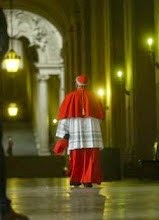
The new "Red Pope," Cardinal Ivan Dias, arrived in Rome at the end of July to take up his duties as prefect of the Congregation for the Evangelization of Peoples.

While purging the dicastery's payroll of his predecessor's loved ones (and their loved ones... and their loved ones...) is the task which awaits him, the 70 year-old prelate -- a former papal diplomat -- leaves behind a vacancy in Bombay. If the trend of this pontificate keeps up, Dias'll have a bit of a say in the choice of the next head of the 500,000-strong flock, India's largest and historically home to the country's red hat.

Shortly after his 2001 elevation to the College of Cardinals, Dias received two auxiliaries -- Agnelo Rufino Gracias and Percival Joseph Fernandez -- both of whom are spoken of as potential nominees.

However, this time it seems that the road to Bombay runs through Agra... and not because of the Taj Mahal.

Agra is currently home to Dias' first Bombay auxiliary, 61 year-old Archbishop Oswald Gracias, who was made a bishop quickly on the heels of the cardinal's 1996 appointment there. Gracias is known in Rome for his work on the Vox Clara Commission for English liturgical translations, which he serves as its Second Vice-Chairman.

Given the recent victory lap of the first piece of the project -- a feat thought impossible not all that long ago -- don't be surprised if some notable appointments down the pike happen to bear those magic Latin words on their resumes... and not just in India.

It's still early, of course, but the stars -- and the karma -- seem aligned.


PHOTO:
Panorama


-30-

Saturday, May 20, 2006

The Tsunami, Wave One

Some weeks ago, you all were advised to expect the first major throes of Benedict XVI's curial reshuffle before the Pope's departure for Poland on the 25th.

Well, right on time and just as predicted for about a year, this morning the Holy See announced that Cardinal Crescenzio Sepe, heretofore prefect of the Congregation for the Evangelization of Peoples, has been appointed archbishop of Naples in succession to the retiring Cardinal Michele Giordano.

To succeed Sepe, the long-standing buzz was also confirmed: the new Red Pope is Cardinal Ivan Dias, the veteran of Vatican diplomacy who has served as archbishop of Bombay since 1996. Dias, shown at left, turned 70 last month. He was elevated to the College at the mega-consistory of 2001.

While secretaries of congregations have often been sent from Rome to archdioceses of their own in the recent past, today's move is the first time in memory that a cardinal-prefect has been exiled from the Curia.

In tandem with Sri Lankan Archbishop Malcolm Ranjith, secretary for the Congregation of Divine Worship, the selection of Dias to head the Propaganda Fide is the second of Benedict XVI's three major dicasterial appointees to date to have been called from the Indian subcontinent.

And next up is.....


PHOTO:
AP/Aijaz Rahi


-30-

Saturday, June 20, 2009

Out of Africa... of Sorts

And the successor to Pius Ncube is... an Indian missionary.

To follow the controversial native Zimbabwean who became a leading critic of the country's President Robert Mugabe, this morning the Pope named Fr Alex Thomas Kaliyanil, the local superior of the Divine Word Fathers, as archbishop of Bulawayo.

The politically sensitive appointment has been pending since September 2007, when Ncube's resignation was accepted after the 62 year-old prelate was accused of adultery in what, at the time, the archbishop maintained was a "well-orchestrated plan" by Mugabe and his allies to discredit Ncube for his globally-noticed protests of the country's authoritarian rule.

Several months later, the prelate admitted to the affair in a documentary interview.

Despite his background, the archbishop-elect, 49, doesn't come as a stranger to the Bulawayo church. Ordained in India in 1988 and sent to Zimbabwe the year after, since 2005 Kaliyanil has served as the diocesan comptroller, or treasurer. Despite his knowledge of the 140,000-member local church, however, today's appointee wasn't among the list of names floated there in recent weeks.

The move coincides with the feast-day of the archdiocesan patroness, the Immaculate Heart of Mary.

While Ncube's political outspokenness made his fall especially prominent, clerical celibacy in the breach recently cost another senior African prelate his job: last month the Pope accepted the resignation of 54 year-old Archbishop Paulin Pomodimo of Bangui, the capital of the Central African Republic, amid reports that a Vatican investigation of the archdiocese found that several of its priests had children and set up their illicit families in "official homes."

As the clergy protested, some citing racism as an ulterior motive, a letter from Rome's lead official on the missions, Indian Cardinal Ivan Dias, was leaked to the local press.

"[M]any bad things have been done to the body of Christ through poor and scandalous comportments," Dias wrote in his assessment.

"It is pointless to deny what every body knows. There is no need judging the motives and circumstances of the evil that has been committed. Members of the national clergy, diocesans and religious, you are, in one way or the other, accomplice of the current situation, but each of you shall assume his own culpability proportionally to his own responsibility."

Likewise this morning, B16 chose from within his old office in quickly naming Archbishop-elect Gus Di Noia's successor as the #3 official at the Congregation for the Doctrine of the Faith.

A priest of Milan, Msgr Damiano Marzotto Caotorta has served as one of the Holy Office's desk chiefs since 2003. The new undersecretary, 65, began his work at the CDF in 1982, shortly after the arrival of Cardinal Joseph Ratzinger as the dicastery's prefect.

After grumbling among the Curial old-guard, the move restores an Italian to one of the CDF's three lead slots. Before the Bronx-born Dominican's Tuesday appointment as secretary for the Congregation for Divine Worship and the Discipline of the Sacraments, the Sant'Uffizio trifecta was comprised of two Americans and a Spaniard.

-30-

Monday, May 05, 2008

Peter and Augustine

For the second time in the last 18 months -- and only the sixth time since 1960 -- the Pope received the archbishop of Canterbury earlier today as Rowan Williams had a 20-minute sit-down with B16:
[The duo] discussed Christian-Muslim relations, inter-faith dialogue and the Pope's impression of his visit to the United States last month.

He described the visit, the second official meeting between the Pope and the spiritual leader of the world's 77 million Anglicans, as "warm and friendly".

In March Cardinal Jean-Louis Tauran, the Vatican's top man for relations with Islam, criticized Williams as mistaken and "naive" for suggesting that it was unavoidable that some aspects of Sharia, Islamic law, would be adopted in Britain.

Williams's remarks, in a speech in February, sparked a storm in Britain and beyond and became part of a broader debate on how to integrate Britain's 1.8 million Muslims....

Relations between the Catholic and Anglican Churches have been strained over the past decade over the issue of women priests and homosexual bishops in the Anglican Church, which both leaders have acknowledged as obstacles to unity.
Unlike the present tandem's first Vatican summit on Thanksgiving Day 2006, today's visit took on a much quieter tone. No statement has yet been issued by the Holy See, and Pope and Primate didn't join in formal, public prayer this time.

Within his own communion, Williams faces the specter of this July's Lambeth Conference -- the decennial meeting of global Anglicanism's bishops -- which is expected to see fierce disputes over the blessing of same-sex couples and the consecration of Gene Robinson, the openly gay bishop of New Hampshire, who has gone uninvited to the conference in the archbishop's hope of tamping down on the tensions.

In an interview with Vatican Radio broadcast earlier today, the primate said he hoped to update Benedict on the Lambeth plans, and "touch base with him about China." On Wednesday, Williams will preside at a service installing the new head of Rome's Anglican Centre, Dr David Richardson, whose role includes standing as the church of England's formal representative to the Holy See.

Richardson's installation will be held in the Basilica of S. Maria Sopra Minerva, the Roman church entrusted to the Catholic primate of England and Wales, the archbishop of Westminster Cardinal Cormac Murphy-O'Connor.

SVILUPPO: In a sign of the Vatican's support for Williams amid the "battle for Anglican unity," a key Roman hand will be appearing at Lambeth:
As the Archbishop of Canterbury arrived in Rome yesterday for a private meeting with the Pope, it was announced that Cardinal Ivan Dias, the Indian prefect of the Congregation for the Evangelisation of Peoples, would be among the speakers at this summer's event, which brings Anglican bishops together in London once every 10 years....

Cardinal Walter Kasper, head of the pontifical Council for Promoting Christian Unity, may also attend the Lambeth event....

Rev Keith Pecklers, a professor of liturgy at the Gregorian University in Rome, who has worked with the Anglican Centre in Rome on relations between the two churches, said: "Cardinal Kasper might be expected to attend, given his role, but Cardinal Dias's presence is proof that the Vatican wants to be supportive of Williams.

"The message is 'We're in this together and we are ecumenical partners, even if there are issues on which we disagree quite clearly,' " he added.

The meeting follows criticism by Vatican officials of Williams for suggesting that some aspects of sharia law in Britain were unavoidable.

But despite his conservative views on women priests and homosexuality, Pope Benedict appears determined to bolster Williams's leadership in the name of Anglican unity.
PHOTO: Reuters

-30-

Tuesday, December 12, 2006

The "Colossal" Installation

Anticipation builds in Mumbai for Thursday's homecoming of Osy Gracias, a native son and the new archbishop:
The Papal Nuncio, Vatican ambassador to India, Archbishop Pedro Lopez Quintana with Cardinal Simon Pimenta, Emeritus Archbishop of Bombay will conduct the induction ceremony in presence of over 30 archbishops and bishops from all over India and priests and religious men and women of the archdiocese of Bombay.

"It will be a grand liturgical ceremony with best of arrangements. We want to give him a very warm welcome," said Father Anthony Charangat, spokesperson, Archdiocese of Bombay. "Archbishop Gracias succeeds the high profile popular Cardinal Dias, thus holds a very important position. He will work towards building bridges of peace in the Christian community and bring about religious harmony and reconciliation between various faiths", added Charangat.

The largest archdiocese in India was vacant since May 20, 2006 when Cardinal Ivan Dias took charge as prefect of the Vatican's Congregation for the Evangelisation of Peoples in the Vatican City.

"We are thrilled to get back our own bishop now elevated as archbishop and we will extend full co-operation in discharging his responsibilities towards the community and the nation at large," said Dolphy D'souza, President of the Bombay Catholic Sabha and Vice President of All Indian Catholic Union.

Born in 1944 in Mahim, Mumbai, Archbishop Gracias was ordained priest in 1970. In January 1997 he was appointed Auxiliary Bishop of Bombay. Three years later he became Archbishop of Agra.
-30-

Saturday, February 05, 2011

Perseverance and Communion: Ordaining a Hong Kong Bishop, the Pope Speaks to China

For just the third time in his nearly six-year pontificate, this morning saw B16 preside at an episcopal ordination in St Peter's as the Pope gave the high-hat to five recent appointees to senior posts in the Roman Curia.

Of the high-ranking group, however, one figure was arguably the linchpin of the pontiff's decision to reserve the rite to himself: the newly-named #2 of the Congregation for the Evangelization of Peoples, now Archbishop Savio Hon Tai-Fai SDB, a native of Hong Kong -- and, more to the point, the first-ever Chinese tapped to serve in a top Vatican post.

Called to Rome in December amid escalating Sino-Vatican tensions centering on the church's prerogatives in the People's Republic, the 60 year-old Salesian theologian was a visiting professor at mainland seminaries and gave conferences to priests there over the last two decades, alongside his chief assignment at Hong Kong's formation house. In his new post, Hon (below) becomes second-in-command of the church's vast mission efforts worldwide as deputy to the "Red Pope" -- the Indian chief of the historic Propaganda Fide, Cardinal Ivan Dias.

Keeping the custom of his prior ordinations of bishops in 2006 and 2009, the Pope's homily today was a catechesis on the episcopal office. At this morning's Mass, however, the text's subtleties were conspicuously evocative of the situation of the Chinese church in its calls to perseverance and communion as the "pillars" of the prelates' new ministry and, by extension, "the life of the church."

For the record, the latter "pillar" was referenced nearly 70 times in Benedict's 2007 Letter to Chinese Catholics.

Here, via AsiaNews, a snip of today's reflection:
[The new bishops'] mission is to "cast the net of the Gospel in the rough seas of this time to obtain the adhesion of people to Christ" because "it may seem that large parts of the modern world, of the men of today, are turning away from God and consider faith a thing of the past – and yet there is still a yearning for justice, love, peace, to be finally established and poverty and suffering overcome, that people find joy. All this yearning is present in today's world, a yearning for all that is great, for all that is good. It is nostalgia for the Redeemer, God himself, even where he is denied. "

It is a 'great task', which in practical terms requires the four elements that have already been the theme for the Week of Prayer for Christian Unity, the memory of how the early Christians "devoted themselves to the apostles' teaching, fellowship, breaking of bread and prayer"(Acts 2:42). They are "the fundamental elements of Christian communion in the Church of Jesus Christ," Benedict XVI traced his homily from the phrase "and they devoted themselves” ["they persevered"]. “Devotion, diligence, belongs to the essence of being a Christian and is fundamental to the pastors task as workers in the Lord's harvest. The Pastor should not be like chaff driven by the wind, a servant of the spirit of the time. Being intrepid, having the courage to oppose the trends of the time, is essential to the task of the pastor. He must not be chaff, but - according to the image of the first Psalm - he must be like a tree that has deep roots, upon which it is solid and well grounded. This has nothing to do with rigidity or inflexibility. Only where there is stability is there also growth. Cardinal Newman, whose path was marked by three conversions, says that living means transforming oneself. But his three conversions and the transformations that took place in them are, however, one consistent journey: the journey of obedience to the truth, to God, the true journey of continuity which in this way brings about progress".

"Perseverance to the teaching of the Apostles", then, means to remember that "faith has a concrete content. Spirituality is not a vague, indefinable feeling for transcendence. God has acted and He truly spoke. He has really done something and he actually said something. Certainly, faith is, at first, trusting in God, a living relationship with God But the God in whom we place our trust has a face and gave us His word. We can count on the stability of His word. "

The second “pillar of the life of the Church” is communion. "Communion with the Father and with his Son, Jesus Christ (cf. 1 Jn 1:1-4). God made himself visible and tangible for us and so has created a real communion with himself. We enter into communion through this belief and live together with those whom have been touched by Him. With them and through, we to in a certain way, see and touch the God who became close for us. Thus the horizontal and vertical are here inextricably intertwined with each other. By being in communion with the Apostles, by standing with them in faith, we ourselves are in contact with the living God. Dear friends, the purpose of the ministry of Bishops is that this chain of communion is not interrupted. This is the essence of apostolic succession: to preserve communion with those who have met the Lord in a visible and tangible way, and so keep Heaven open, God's presence among us. Only through communion with the Successors of the Apostles are we also in contact with the incarnate God. But the reverse is also true: only through communion with God, only through communion with Jesus Christ this chain of witnesses, stays together. One is never a Bishops on his won, says Vatican II, but always only in the College of Bishops. Therefore he cannot lock himself up in the time of his generation. The intertwining of all generations, the living Church of every age belongs to collegiality. You dear Brothers - he continued, turning to the soon to be ordained – have the mission of preserving this Catholic communion. You know that the Lord has appointed St. Peter and his successors to be the centre of that community, the guarantors of being in the totality of apostolic communion and His faith. Offer your help so the joy of the great unity of the Church, the communion of all the places and times, so the community of faith that embraces the heavens and the earth remains alive".

Third "fundamental element of the Church's" is the breaking of bread. "The Holy Eucharist is the centre of the Church must be the centre of our being Christians and our priestly life." "Breaking bread - along with what is also expressed in sharing, transmitting our love with others. The social dimension, sharing is not a moral appendix which is added an to the Eucharist, rather it is part of it. This is clear from his verse in Acts which follows the one quoted above: "... All the believers had everything in common," says Luke (2:44). We must be careful that faith is always expressed in love and justice of one towards another and that our social practice is inspired by faith, that faith is lived in love."
Hon will return to Hong Kong later this month for local celebrations of his ordination.

Notably present for today's rites was the recently-named head of the church there, Bishop John Tong Hon, who also attended his first Vox Clara meeting earlier this week as one of several new members of the blue-ribbon committee on English liturgical translations.

PHOTOS: Getty

-30-

Tuesday, January 11, 2011

The Pope's Hon Solo: Amid Beijing Bishops Flap, B16 Plans "Propaganda" Move

Against the backdrop of heightened tensions with the Chinese authorities over the church's prerogatives on the Mainland, late last month saw an especially pointed Vatican response as the Pope named a Hong Kong-born priest as second-in-command of the Roman office overseeing the Catholic world's vast mission territories, making him the highest-ranking Chinese ever tapped to enter the church's own Forbidden City.

Just on its own, the unique mix of historic and geopolitical threads is enough to make the rise of Archbishop-elect Savio Hon Tai-Fai a significant news-moment. The 60 year-old theologian's profession in the Salesians of Don Bosco -- the community of Benedict's powerful "Vice-Pope" Cardinal Tarcisio Bertone... and, not coincidentally, no shortage of this pontificate's other top appointees -- adds more still to the nod's prominence, as does the longstanding custom that most of Hon's predecessors as #2 at what's now known (at least, officially) as the Congregation for the Evangelization of Peoples have gone on to become cardinals.

Now, however, word's emerged that the unprecedented move will be capped with an even higher-octane dose of the "papal treatment" -- one that, given the roots of the Sino-Vatican clash (read: the ordination of bishops without papal mandate), is conspicuously rich in irony.

In only the third such rite he's led over nearly six years as Pope, UCANews reports that Benedict himself will ordain the new secretary of the Propaganda Fide to the episcopacy on 5 February, the third day of the Chinese New Year:
Archbishop-elect Hon said recently that he has felt “pressure every day” since the announcement.

“I’m reluctant to leave my hometown and take the Vatican post, but I will devote every effort to follow God’s will,” he said.

He said he would pray for “humility to put down oneself, wisdom to discern God’s will, patience to respect the others’ pace, joy to share with others, strength to complete his duty, charity to treat the others well and perseverance to seek the Church’s greatest interests.”

He admitted that his teacher and confrere Cardinal Joseph Zen Ze-kiun’s deep insight and sense of justice had inspired him.

“We should respect the underground Catholics who have been loyal to their faith and understand the value of their existence,” he said.

“It is too hasty and one-sided to ask them to join the ‘open’ Church because of problem in priestly formation and other difficulties that they encounter.”

On guarding Church principles such as bishop ordination without papal approval, “I am a hardliner,” he said.

After his ordination, Archbishop-elect Hon will return to Hong Kong for celebrations on Feb. 19 and 20. “I hope to share the joy also with the mainland Catholics,” he noted.

The archbishop-elect was invited to teach at mainland seminaries and give spiritual guidance to students occasionally from early 1990s to 2003. In recent years, he occasionally gave lectures for mainland priests.
Alongside the new deputy to the reigning "Red Pope," the Propaganda prefect Indian Cardinal Ivan Dias, the Pope will ordain two freshly-named Apostolic Nuncios without portfolio assigned to the direct service of the Secretariat of State, and the new archbishop-secretaries of the Congregations for the Clergy and the Causes of Saints, both of whom previously served in their respective dicastery's third-ranking posts.

Counting the three new secretaries, the Pope has named the seconds-in-command of seven of the nine Congregations -- the foremost Curial offices, which hold executive authority over the church's internal life -- within the last 18 months. Since his 2005 election, B16 has named eight of the dicasteries' nine prefects; the lone remnant of John Paul II's senior Curia is the Catholic Education chief, Cardinal Zenon Grocholewski, who's held the post overseeing the church's network of universities and seminaries since 1999.

While the Polish Pope made an annual practice of ordaining newly-named Nuncios and senior officials as bishops on the feast of the Epiphany over his 27-year reign, Benedict's appointees to the church's central government are customarily invested by Bertone at several points through the year.

To date, the pontiff has served as principal consecrator at ordinations in 2007 and 2009. Each likewise saw the elevation of several new prelates, but like Hon this time around, featured one key figure whose presence among the group moved Benedict to reserve the rites to himself.

PHOTO: Reuters


-30-

Friday, November 28, 2008

"This is Not Mumbai"

As hostages were freed, assailants were killed, and the death toll in the India attacks rose above 200 -- including the 29 year-old rabbi and his wife who ran the city's Jewish center, among five hostages there -- the city's archbishop Cardinal Oswald Gracias issued a message condemning the three days of violence and praying for the city:
Our words cannot express our shock at this incident; I am deeply saddened by this attack on our city and on our beloved nation as a whole.

The Church in India condemns this attack in the strongest possible terms. Innocent and unconnected people have been killed. Very brave police officers have been killed. Mumbai in the target of different terrorist groups. The Church offers our deepest sympathy to the families of those who lost their dear ones, and the Church in Mumbai places all our medical services to those who have been injured.

We must fight together as a nation and as a united people to combat the terrorists. We must never give up hope because ultimately hope will prevail. It is Christian to always hope. Good will triumph, evil will be overcome, this is our Hope.

Regrettably, senseless violence goes on and there may be reprisals, we – all of us -- must consider creating a feeling of intolerance against divisive forces, against elements that sow seeds of mistrust and suspicion in the minds of our people. We must create a climate where every citizen is alert and such incidents can immediately be reported to the intelligence agencies and enable the government and our security agencies to take steps earlier. The important thing today is to be together.

Mumbai is our city, where mutual tolerance and understandings between cultures and religions has prevailed despite of the attempts to rip apart our city, now we will continue to build bridges of understanding between peoples, cultures and religions. We must overcome evil with good and seek peace.

This terror attack was not an act of the people who love our country, this is not India, and this is not Mumbai. Mumbai is a very tolerant and brave city. India is a great country and very tolerant. These are all misguided people who are brain washed who probably think what they are doing is right and that every thing is ok. It’s terrible what they have done. They’re harming innocent people and disturbing the peace.”

”This tragedy snuffed out the lives of many foreign national and this is a matter of immense shame. India is known for her hospitality, we ask for forgiveness for this aberration done in our city…….but please- do not write Mumbai off, India is a great county, Mumbai is a great city, you are also welcome here.

The people who carried out these deadly attacks, are misguided people, who have been deluded and brainwashed into the ideologies and propaganda of the cause, but this is madness, they bring death, fear , panic and disrupt the harmony and lives of the city and county……darkness of chaos.

But we do not despair, we do give up Hope that Goodness will prevail that God will lead us from darkness of chaos to Light Peace and Harmony.

God Bless our city Mumbai!

God Bless India!
A native of the Mumbai church -- whose 500,000 members form India's largest Latin-rite community -- Gracias was named to its top spot in 2006 on the transfer of his predecessor and patron, the diplomat Ivan Dias, to Rome as prefect of the Congregation for the Evangelization of Peoples, the global church's top post overseeing the missions.

Named a cardinal at last year's consistory, Gracias is the fourth archbishop of Mumbai so elevated since Valerian Gracias -- the first native son ever to hold the post -- received the red hat in 1953. In some form or another, the city's history as a local church dates back to the 16th century.

PHOTO: Reuters


-30-

Wednesday, March 21, 2007

Benedictine Rule: You Pick Your Successor

On the morning George Niederauer was appointed archbishop of San Francisco, a call from the mound reminded -- as if anyone needed reminding -- that the new pontificate was a whole different ballgame.

"Someone's crying 'round here," the caller said.

Why? Nothing personal, it's just that the die had been cast -- in a break from the practice of the prior regime, departing prelates would get the successors of their choosing.

As you can see, some over there aren't terribly enthused about this development. But fifteen months on, what's clear is that the top of the scorecard now reads three for three.

First, there was Levada's successful push for Niederauer, his classmate and friend of five decades. Then, leaving Mumbai for the Congregation for the Evangelization of Peoples, Cardinal Ivan Dias set the wheels in gear for his former auxiliary Oswald Gracias to head India's largest local church in his stead. And this morning, Cardinal Claudio Hummes OFM exhibited his clout as Pope Benedict named Bishop Odilio Pedro Scherer (pictured), the Clero head's auxiliary in São Paulo, as its new archbishop. The appointment comes in advance of the pontiff's wheels-down in Brazil's largest diocese in early May to open the mega-plenary of the Latin American episcopal conference, the CELAM, at the national sanctuary of Aparecida.

As head of the largest local church in the country that's home to the world's largest Catholic population, the archbishop of São Paulo invariably moves to the front of the line for a cardinal's red hat.

Ordained a bishop in 2001, the 58 year-old archbishop-elect is wrapping a four-year term as general secretary of the Brazilian episcopal conference. In December, Benedict XVI named him to the top leadership of the CELAM plenary. From 1994 until 2001, Scherer served as an official of the Congregation for Bishops, working in a Roman parish and as a chaplain to Franciscan sisters in his spare time.

A Gregorian alum who earned his licentiate in theology in Rome, his appointment to head the archdiocese of São Paulo and its 5.2 million Catholics returns its top post to a secular cleric, ending almost four decades of Franciscan leadership; before Hummes, Cardinal Paulo Evaristo Arns OFM had helmed it for 28 years. Arns' advocacy for the poor made him a favorite of the Pauline era and a revered figure for the worldwide Catholic left.


PHOTO:
Archdiocese of São Paulo


-30-

Monday, March 17, 2008

A Church for Qatar

Palm Sunday Eve saw the dedication of Qatar's first Christian house of worship of any sort -- a 2,700-seat (expandable to 5,000) parish church for the booming emirate's large expat population, who mostly perform service labor.

Situated on land donated by the emir -- yet without any crosses or campanile marking its exterior -- the church of the Our Lady of the Rosary was inaugurated in a five-hour Mass celebrated by the Vatican's Missions Czar Cardinal Ivan Dias, who served as papal legate.

As the Indian cardinal presented a relic of St Pio of Pietrelcina as a gift to the community, wire reports noted that some among the congregation wept.
The Mass was conducted in English, but prayers were also said in Arabic, Urdu, Hindi, Tagalog, Spanish and French for the many nationalities that would worship in the church.

Dozens of police were deployed around the church, which cost some $20 million, and female officers searched the handbags of women worshippers.

Western embassies, particularly from the United States and Britain, warned nationals living in Qatar to be extra vigilant after an Islamic militants on the Internet made threats linked to the opening of the church.

The US Embassy on Thursday released a warning that the new church might be targeted.

"Extremists may elect to use conventional or non-conventional weapons and target both official and private interests. Examples of such targets include ... the new Christian Church complex in Doha," it said.
Worshippers said they were not concerned by the threats....
Qatar is a close ally of Washington and hosts the command headquarters for US forces in the Middle East.

In the United Arab Emirates, meanwhile, police were seen on Saturday guarding one of the main churches in bustling Dubai and searching worshippers entering the compound. Police closed off access to cars around St. Mary's Church, and signs were put up in the street directing motorists to park their vehicles in other specified places.

A priest who asked not to be identified told AFP there had been no threat against the church and the security deployment was a preventive measure. Policemen said the "precautionary" moves would last until March 25, after Easter....

[T]he papal nuncio in the Gulf, Archbishop Paul-Munjed al-Hashem, said on the sidelines of the Doha Mass that talks had begun with Riyadh to convince it to become the final Gulf Arab state to allow churches.

"Discussions are under way with Saudi Arabia to allow the construction of churches in the kingdom," he said, adding that the country had between 3 and 4 million Christian residents. "We cannot forecast the outcome."
* * *

In other quick news on this Holy Monday:
  • Precisely a month before he's received by President Bush for the first papal visit to the White House since 1979, Pope Benedict made his most emphatic appeal yet for peace in Iraq at the close of yesterday's Palm Sunday Mass in St Peter's Square. After praising the "beautiful witness" of Chaldean Archbishop Paulos Faraj Rahho of Mosul, whose body was discovered Thursday after having been abducted by local militants, the pontiff took up his "loud and anguished" cry, saying "Enough with the massacres, enough with the violence, enough with hatred in Iraq!" Noting Wednesday's fifth anniversary of the first strikes on Baghdad, Benedict called on "the Iraqi people, who for five years have been bearing the consequences of war that has provoked the disintegration of its civil and social life: dear Iraqi people, lift up your heads and be yourselves, in the first place, the rebuilders of your national life!" Five years on -- with cost estimates invariably tipped beyond the $1 trillion mark -- the number of US troops killed in Iraq is approaching 4,000, with the number of civilian deaths placed between 200,000 and 600,000. At a fundraiser for GOP congressional candidates last week in Washington, the president told attendees that while "the fight has been tough" in Iraq, "removing Saddam Hussein was the right decision early in my presidency, it is the right decision now, and it will be the right decision ever."
  • This Wednesday, the longtime Latin patriarch of Jerusalem Archbishop Michel Sabbah will reach his 75th birthday. The first native of the Holy Land to lead its small community of 80,000 Catholics -- which extends into Jordan and Cyprus -- Sabbah, a native of Nazareth, was named patriarch in 1987 and ordained to the episcopacy by John Paul II, who he led around his charge during the late pontiff's 2000 pilgrimage to the cradle of Christianity. Oft-critical of the Israeli government during his tenure, the Palestinian patriarch marked his impending retirement earlier this month with a rather epic pastoral letter expressing both thanksgiving for his ministry and highlighting the universal Christian vocation to become a "living gospel." Once his retirement is accepted by the Holy See, Sabbah will be succeeded by his Jordanian-born coadjutor, the onetime Vatican diplomat Fouad Twal, who B16 tapped as patriarch-in-waiting in 2005.
  • Speaking of the sons of Jerusalem, it's not every day that an independent news outlet -- well, other than this one -- can run a headline about a US-based prelate who's "won hearts all around." Then again, as the subject is Rome's messenger to these shores, no one should be surprised. In his second major interview of the month, papal nuncio to Washington Archbishop Pietro Sambi told Religion News Service that, as his Big Boss prepares for his six-day visit to New York and DC, Papa Ratzi "is not known enough" in the States. "What is known," Sambi said, "is not based on his personality but is based on the position that he had before as prefect of the Congregation for Doctrine of the Faith.... As such, there are people who consider him a man of very solid principles, extremely rigid, inflexible, almost nonhuman." However, the nuncio added his confidence that, once the Pope arrives, "it will be enough to see him and to listen to him to discover a man of great human sensibility." Provided, that is, that the hope and clarity of Benedict's forward-looking words don't get buried under the visual barrage of the papal vestments.
  • And lastly, at a Saturday audience with his chief "Saintmaker" Cardinal Jose Saraiva Martins CMF, the Pope green-lighted the progression of several causes for beatification and canonization, including a declaration of the heroic virtue of Fr Michael McGivney (1852-1890), the founder of the Knights of Columbus. Now entitled to the designation "Venerable," the new stage signifies that the customary investigation into the Connecticut priest's life and writings found them evidencing genuine, exemplary holiness. The next step is locating and investigating reported miracles attributed to McGivney's intercession. While only two of the 19 decrees granted Saturday involved cases of laypeople, the cause of a disabled journalist is rapidly heading toward beatification. The Congregation for the Causes of Saints recently approved a miraculous healing attributed to Ven. Manuel Lozano Garrido (1920-71), a Spanish reporter who spent nearly three decades confined to a wheelchair and the last decade of his life blind.
PHOTO: AFP/Getty(1,2)

-30-

Wednesday, May 07, 2008

"Ut Unum Sint!"

This morning's General Audience saw more than one "Santità" present as the head of the Armenian Apostolic church, Catholicos Karekin II, sat in for Papa Ratzi's Wednesday gathering.

Greeting the "supreme patriarch" of the worldwide fold of 6 million, Benedict XVI noted the nation's history of "severe persecutions"; "Armenia’s many martyrs are a sign of the power of the Holy Spirit working in times of darkness, and a pledge of hope for Christians everywhere," the Pope said. Between 1.5 and 2 million Armenians were killed in the Ottoman-led genocide in the years around World War I.

In his catechesis, the pontiff melded the twin themes of ecumenism and Sunday's celebration of Pentecost, praying that the Holy Spirit might "advance" the Christian family along the path to unity.

In the Easter season, Benedict said, "the Holy Spirit appears as the force for the forgiveness of sins, the renewal of our hearts and our lives; and so he renews the earth and creates unity where there was division.

"On the feast of Pentecost," he added, "the Holy Spirit reveals himself in other signs: the rushing wind, the tongues of fire, and the Apostles speaking in every language. This is a sign that the division of Babel, fruit of the pride that divides man, is superseded in the Spirit who is love and whose gift is unity amid diversity. From the first moment of its existence the church speaks in every language -- thanks to the strength of the Holy Spirit and the tongues of fire -- thus it lives in all cultures, it doesn't destroy their various gifts, their many charisms, but takes them all into a great and new unity of reconciliation: unity and multiformity."

At the end of the audience, Benedict voiced his "cry of pain and help" for the people of Myanmar following Cyclone Nargis, which struck the country last weekend. "I invite everyone to open their hearts with mercy and generosity," the pontiff said, "that there might be relief to the suffering caused by such an immense tragedy."

According to Catholic Relief Services' current estimates, the CAT-3 storm's toll has left at least 20,000 dead, 40,000 missing, 100,000 homeless, with "tens of thousands" of homes destroyed; calling the situation "increasingly horrendous," the charge d'affaires of the US embassy in the capital, Yangon, said earlier today that the actual death toll could be as high as 100,000.

* * *

In other Vatican briefs, while all was gracious at Monday's meeting between B16 and the archbishop of Canterbury Dr Rowan Williams, one leading papal surrogate has called the Anglican Communion to a moment of decision.

In comments to the UK's Catholic Herald, Rome's top ecumenist Cardinal Walter Kasper expressed his hope that this summer's Lambeth Conference would serve as the moment when the fractured global body of 70 million would "clarify its identity."

"Ultimately, it is a question of the identity of the Anglican Church," Kasper told the paper. "Where does it belong?

"Does it belong more to the churches of the first millennium -- Catholic and Orthodox -- or does it belong more to the Protestant churches of the 16th century? At the moment it is somewhere in between, but it must clarify its identity now and that will not be possible without certain difficult decisions."

For its part, the president of the Pontifical Council for Promoting Christian Unity said the Holy See hoped "that certain fundamental questions will be clarified at the [Lambeth] conference so that dialogue will be possible.

"We shall work and pray that it is possible, but I think that it is not sustainable to keep pushing decision-making back because it only extends the crisis."

At Williams' invitation, Kasper will speak at the decennial summit of Anglican bishops. However, in an unusual move intended to underscore its support, the Vatican's top hand in attendance will be the "Red Pope" Cardinal Ivan Dias, the Curia's top official on the missionary world.

And lastly, just two weeks after Italian President Giorgio Napolitano threw the Pope a concert to mark his 81st birthday and third anniversary on Peter's chair, B16 will return to the Paul VI Hall tonight for another, even more politically charged performance as the China Philharmonic plays for the pontiff.

While both Rome and Beijing are seeking to downplay the event's profile -- no diplomatic invitations have been issued -- the evening of Mozart's Requiem and traditional Chinese songs indicates a heightened commitment to what diplomatese calls "reciprocal contacts."

As the orchestra criss-crosses Europe in the run-up to the Summer Olympics in Beijing, conductor Long Yu even went so far as to compare the concert to the early '70s China-US ping-pong matches that paved the way for Richard Nixon's eventual visit.

Long might just be onto something. Statesiders might have a thing for sports... but the Pope's weakness for Mozart is far from a state secret.

Benedict will close the concert with an address.

PHOTO: Reuters


-30-

Thursday, August 24, 2006

The Brothers Ratzi

Great post at Jimmy Akin's place about B16 in a suit. Tip to Akin for the photo, taken from some Trad site, which found it in some magazine... you get the idea.

More than anything, though, the shot underlines the strong bond the Pope enjoys with his one living relative, his older brother Msgr Georg Ratzinger. The two were ordained priests together in 1951, share a deep affinity for music (the Papstbruder served for many years as director of the famed choir of Regensburg Cathedral), and on next month's Bavarian homecoming, little brother Joseph has blocked out a private day with Msgr Georg at the home the former built on a cul-de-sac, which then-Cardinal Ratzinger was anxiously looking forward to retiring to.... For those who've forgotten, everything porcelain and feline decorates the house in the Regensburg suburb of Pentling. (The other Ratzinger sibling, Maria, served as her brother's housekeeper and companion until her death in 1991.)

Msgr Ratzinger -- known to some as "Georg the Elder" to distinguish him from Msgr Georg Ganswein, Benedict XVI's private secretary -- joined the Pope some weeks back for the duration of the summer respite at Castel Gandolfo. Contrary to the practice of the prior pontificate, when "everyone would be clawing to see the Pope" as soon as John Paul II arrived in Albano for the "public" portion of his summer after an excursion in the Alps, Benedict has kept true to his message at this past Sunday's Angelus that even the Pope needs downtime.

Illustrating this, only two senior prelates to date have been received in audience at the papal summer retreat; Cardinal Roger Etchegaray briefed the Pope last week on his visit to Lebanon as the specially-deputed papal legate, and Cardinal Giovanni Battista Re saw Benedict on Monday, ostensibly to restart the bishop-making machine for the fall. Not even the vacationing pontiff's hand-picked "Red Pope," Cardinal Ivan Dias, has been received since his recent arrival in the Eternal City.

The Pope will remain in the Alban Hills until he leaves for Bavaria on 9 September. The morning after Benedict returns from the five-day trip, the Apostolic Palace will quickly return to high gear as he introduces his new Secretary of State.

-30-

Monday, July 10, 2006

From the Secretaries' Desk....

This morning, the Pope named Conventual Franciscan Fr Gianfranco Gardin as Secretary of the Congregation for Religious Life and Societies of Apostolic Life. Archbishop-elect Gardin succeeds Archbishop Piergiorgio Silvano Nesti, a Passionist, whose resignation was accepted for reasons of age.

The new secretary, who will serve alongside Slovenian Cardinal Franc Rode, a Vincentian, was born at Treviso in 1944. He made his final vows as a Conventual in 1965, was ordained a priest in 1970 and taught moral theology for 15 years at his community's seminary in Padua.

From 1980 to 1998, the archbishop-elect edited the magazine he founded, Credere oggi, whose title translates as "Believing Today." He led the Conventuals as their Minister-General from 1995 to 2001, served as president of the Union of Superiors General from 2000 and since last year served as general director of the Conventual journal, St Anthony Messenger.

For those of you keeping score, Archbishop-elect Gardin is the fifth major Curial appointee of the pontificate of Benedict XVI. To date, the pontiff named Cardinal William Levada to take his place at the Congregation for the Doctrine of the Faith, Cardinal Tarcisio Bertone as his Secretary of State (to take effect on 15 September), Archbishop Malcolm Ranjith as Secretary of the Congregation for Divine Worship and the Discipline of the Sacraments and Cardinal Ivan Dias of Bombay as the incoming Prefect of the Congregation for the Evangelization of Peoples.

Archbishop Michael Miller, the Secretary of the Congregation for Catholic Education, marked his 60th birthday yesterday. E buon compleanno a lui.

But could Miller wind up wearing "red Maple Leaves"? That's what a friend tells me, seemingly implying a move for the Ottawa-born archbishop to Toronto, where Cardinal Aloysius Ambrozic reached the retirement age in January, 2005.

The hitch? Miller's US passport -- he became a naturalized American citizen while serving as president of the University of St Thomas in Houston, in advance of his 2004 appointment to the #2 post at Catholic Ed. Oh, and there's the little matter of the apostolic visitation of Canadian seminaries, which Miller -- renowned for his German diction -- will oversee beginning later this year.

Still, it's interesting spec. Keep an eye.

And lastly, the talk of the weekend in Valencia was on the succession to Joaquin Navarro-Valls as director of the Holy See Press Office. Navarro-Valls implied shortly after Benedict's election that his days in the press post, which he's held for 22 years, were nearing their end at his own wish.

While names of potential portavoci buzzed around since, I always told friends to not be surprised if -- in fact, to expect that -- the post would go, in a first, to a laywoman.

Well, it seems we might just have our winner....

She's well-connected. Even better-travelled. She's already served as a Vatican correspondent. She speaks five languages. Her fidelity to the church and longstanding personal loyalty to Ratzinger is beyond doubt. And, not to be outdone, she would return the Sala Stampa to Italian hands.

If it came to pass, however, it wouldn't be her name written all over the appointment, but that another, that of her "Apostle":

Gloria.... G-L-O-R-I-A.... Gloria.

And, it would be quite the event. Stay tuned.

-30-

Friday, June 16, 2006

A Notable Caller...

You'd think the Pope would like a serene Friday.... However, in this morning's list of audiences, the Vatican announced that Benedict XVI had received Fr Álvaro Corcuera Martínez del Río in private audience.

Who is Martínez del Río, you may ask? None other that Maciel's successor as Superior General of the Legionaries of Christ.

Hmm, indeed.

Oh, and as Cardinal Sepe is technically gone -- from the Curia, at least -- Archbishop Robert Sarah, secretary of the Propaganda Fide, is handling the dicastery's meetings with the Pope until Cardinal Ivan Dias arrives from Bombay. Sarah was in today, too.

-30-

Saturday, May 13, 2006

Happy (Attempted) Assassination Day

Twenty-five years after activated gunpowder almost cut short a Pope's life in St Peter's Square, how did the Italians mark the anniversary?

You guessed it -- more activated gunpowder.

...and more still. Not to mention balloons in the colors of John Paul II's coat of arms.

Earlier in the day, with the statue of Our Lady of Fatima brought in from the Portugal shrine especially for the event, Cardinal Ivan Dias of Bombay presided at a procession in St Peter's Square. Then, Cardinal Camillo Ruini, the vicar for Rome, celebrated Mass in the Basilica.

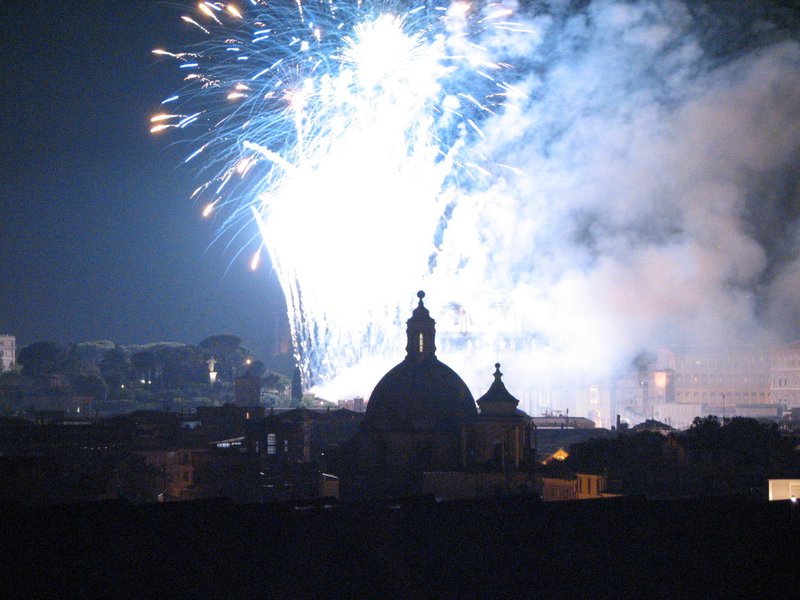
And, of course, the night closed off with the glow of fireworks while, in Scotland, the UK's first statue of the late Pope was unveiled.


PHOTOS 1, 4:
AP/Pier Paolo Cito
PHOTOS 2, 3:
Loggiarazzi

-30-

Friday, September 30, 2005

In the Good Graces


A lovely tableau from the Wednesday Audience -- apologies for the watermark, the photo's from the superlative Catholic Press Photo....

At the Pope's direct left is Cardinal Ivan Dias of Bombay, a veteran diplomat heavily tipped to be the next prefect of the Propaganda Fide (the Congregation for the Evangelization of Peoples). And then Georg -- you know him, he always finds a way to get in the frame. And next to the model secretary is the recently reconfirmed Cardinal-Archbishop of Washington, in Rome with the Board of Trustees of CUA, of which he is the Chancellor.

Viva il Ted.

-30-

Thursday, September 08, 2005

Thursday Bulletin

Well, everything's starting to rock 'n roll again in Rome.... And the Pope's not even back yet in town yet full-time.

Benedict XVI has named the bishop of Tunis, Fouad Twal, 64, as coadjutor to Archbishop Michel Sabbah, the patriarch of Jersualem of the Latins. The intriguing thing about this is that Sabbah is only 72, so this could be considered a subtle nudge....

As opposed to Sabbah, known for often-controversial statements in favor of the Palestinian cause, the new coadjutor is likely to hew a more diplomatic line, precisely because he's a diplomat. Twal -- a Jordanian-born prelate ordained for the Jerusalem patriarchate whose early priesthood included a stint in Ramallah (where the Palestinian Authority is based) -- is a graduate of the Pontifical Ecclesiastical Academy who served in Peru, Germany, Honduras and at the Secretariat of State before being made bishop of Tunis in 1992.

Between this appointment and last week's tip of Archbishop Mounged El-Hachem -- a diocesan bishop in Lebanon who's also a product of State -- as apostolic nuncio in the Arabian Peninsula, we're seeing a unification of the pastoral and diplomatic mission where called for. It's a signal development of the early days of this pontificate.

****************************************

Also in the Bollettino, the Pope has revealed his own long-awaited slate of additional appointees to the Synod for the Eucharist. John Paul revealed a slate of delegates -- both elected from the episcopal conferences and his appointees -- in late March, and this was seen as one of B16's many slight tweakings in advance of the October gathering. It's being said that, with these names, the New Curia is being presented before their appointments. We'll see....

The U.S. already had four delegates: Bishop William Skylstad (USCCB president), Wilton, Rigali and Donald Wuerl. By appointment, that number's now seven: the Pope added Cardinal Szoka (head of the Vatican City Governorato, formerly of Detroit), Salim Bustros, the head of the Melkite eparchy of Newton, Mass., and Stefan Soroka, the archeparch of Philadelphia for the Ukrainians. So three of the seven are from Pennsylvania, including the two archbishops of Catholic Philadelphia....

B16 also added several cardinals to the delegates' list -- 16 to be precise. Among the noteworthy names: Meisner (Cologne), Vinko Puljic of Sarajevo, Ivan Dias of Bombay (a former diplomat rumored to be in line for a Curial job), Errazuriz (former curialist, priest of Schoenstatt, archbishop of Santiago de Chile and president of the CELAM -- the Latin American megaconference), Pell (you know him), Ouellet from Quebec (former Curialist), Medina (retired from Divine Worship), and Tauran (who some are saying still has a shot at being Secretary of State).

Among the bishops, named added to The Big Dance Card include Arthur Roche of Leeds (chairman of the reformed ICEL), the presidents of all the regional episcopal conferences -- notably Amadee Grab, the Swiss Benedictine who presides over the European Bishops Conference and related that he had received permission in March to allow lay catechists to preach homilies under limited circumstances in Switzerland -- Bishop Javier Echevarria of Opus Dei, the "Black Pope" Kolvenbach, and Julian Carron, the new head of Communione e Liberazione.

What a bunch. Should make for an interesting three weeks.

-30-

Monday, May 09, 2011

De Propaganda Filoni: "Chief of Staff" Becomes "Red Pope"

(SVILUPPO: As duly foreseen, everything noted below -- Filoni to Propaganda, and the appointment of his successor as Sostituto -- officially came to pass at Roman Noon Tuesday with the moves' respective announcements in the Bollettino of the Holy See Press Office.)

* * *
After less than four years in the post that's principally responsible for overseeing the machinery of the Roman Curia -- essentially the Vatican's answer to the White House chief of staff -- Archbishop Fernando Filoni's reportedly off to redder pastures.

As early as tomorrow, the 65 year-old Sostituto (Substitute) of the Secretary of State is expected to be named the next prefect of the Congregation for the Evangelization of Peoples -- the venerable Vatican office still widely known by its name of centuries past, De Propaganda Fide (the Propogation of the Faith).

The move buzzed about for weeks, its timing was given earlier today by the most prescient of the Italian vaticanisti, Andrea Tornielli, now of La Stampa.

His ex officio elevation to the college of cardinals essentially a lock at the next consistory, the prefect of the dicastery that oversees the Catholic world's vast reaches of mission territory is traditionally dubbed the "Red Pope" as a reflection of both the power his congregation wields... and, indeed, the blood far too frequently shed by persecuted Christians in the mission lands. Among other instances of the Prop's clout, the office's sizable resources (burnished by income from its long-maintained Roman real-estate holdings) provide a significant amount of funding to the efforts of the developing church, and the congregation's cardinals are responsible for recommending appointees to the episcopacy in mission areas, a task which falls to the Congregation for Bishops only in more established locales.

(While the continental US emerged from over a century of Prop Fide's oversight in 1913, just one of these shores' 197 local churches continues to be supervised by the mission office: Alaska's 410,000 square-mile Fairbanks diocese, whose 20 active priests each have to cover a territory roughly the size of West Virginia... just in case anyone else thought they had it tough.)

Provided the report pans out, the Evangelization post would continue its predominant modern tradition of going to a diplomat -- an especially useful background for the job, given the church-state clashes that often arise in places where Catholics are a pronounced minority. And in this case, moreover, the presumed choice has extensive experience in the mission church... above all, in what's arguably become its most hurting hot-spot.

Prior to his return to the Home Office in 2007, Filoni served as a staffer at the papal nunciatures in Sri Lanka and Iran, but ultimately for six years as apostolic nuncio in Iraq, a tenure which spanned both the US-led invasion and the country's post-Sadaam descent into chaos -- and during which time, so it's said, he was the lone diplomatic mission-chief who declined to leave Baghdad. Given the high profile of Iraq's hemorrhaging Christian community -- some 60 of whom were massacred in its capital's Syriac-Catholic cathedral last October, with most of the rest who haven't fled living in a constant state of fear -- the connection between Filoni's past and future is of no small significance, and in it lies another sign of the Holy See's particularly intense concern for the church there, which has been much in evidence since before the first Gulf War. (Further underscoring the church's challenge in today's volatile Middle East was the weekend's news out of Egypt, where a dozen Coptic Christians were killed after riots that began with the burning of one of their churches by Muslims. According to reports, nearly 200 of the perpetrators have been arrested, and nearly 230 people were injured as a result of the violence.)

At the same time, an ever more pressing area on the Prop's docket is China, as shown by Pope Benedict's late 2010 appointment of the Hong Kong Salesian Savio Hon as the office's new #2, becoming the first ever Chinese named a senior Vatican official. While the freshly-elevated deputy is now understood to be serving as Rome's lead point-man on matters pertaining to Beijing and the Mainland's difficult divide between the state-sanctioned Patriotic Catholic Association and the sizable underground church which has maintained its loyalty to Rome, Filoni likewise happens to bring an unusual amount of his own Chinese exposure, having served the better part of the 1990s as part of the Hong Kong-based "study mission" which, though formally accredited to the nunciature in Manila, served as the Holy See's discreet "bridge" to the Chinese Mainland.

The next Propaganda chief will succeed Cardinal Ivan Dias -- himself a three-decade veteran of the diplomatic corps -- who was transferred to the post from the archbishopric of Bombay in 2006. Having just turned 75 last month, the cardinal's retirement is coming atypically early for a Curial chief due to years of reportedly intensifying diabetes, the impact of which is said to have left him in declining health.

Back at the Big House, though, so the consensus goes, the next Sostituto is likewise tipped to come from another historically fraught (but, of late, notably improving) church-state scenario, with the nuncio to Cuba, 62 year-old Archbishop Giovanni Angelo Becciu (above, con Caridad de Cobre), widely reported as holding the "pole position" to take over the "guts" of the Holy See's day-to-day operations. (On a side-note, given the difficulty the Holy See's had in its communications efforts and getting up to speed with new technologies -- all of which falls within the Sostituto's remit -- if Becciu's presence on Facebook is any indicator, the process should jump-start in short order.)

Six years into his pontificate, B16 has named all but one of the heads of the top ten Vatican offices, the prefect of Catholic Education, Polish Cardinal Zenon Grocholewski, being the lone holdout from the reign of John Paul II.

A month from next week, the pontiff's first major "cabinet" pick following his election -- his own successor at the Congregation for the Doctrine of the Faith, LA-born Cardinal William Levada -- reaches the retirement age.

-30-

Wednesday, October 03, 2007

Back at the Main Office, Catechesis... and Cats

Before a crowd of 20,000 at today's papal audience, B16 offered a notable warning:
Pastors have “the duty to preserve the faith among the people of God” and must remember that those who scandalize even one of those “little ones” who believe in Christ, will be subjected to a “terrible punishment”. This criteria, which “is still true today” is just one of the teachings of St Cyril of Alexandria, V century “father of the Church” who was the focus of Benedict XVI’s catechesis in today’s general audience.

During the audience, Benedict XVI also invited the faithful to learn from the example of St. Francis, whose feast day falls tomorrow, and his “evangelical radicalism”. The pope underlined how by “imitating Christ, he renounced all worldly goods” and thus “showed us that we must be simple, humble and pure, because leaving this world we will be recompensed for our love”.

Over 20 thousand people were in St Peter’s square, on a decidedly spring- like day to listen to the Pope’s latest instalment in what he himself defined as “a journey, retracing the steps of the fathers of the Church”. Today’s catechesis... was dedicated to a saint revered both in the Eastern and Western Churches and proclaimed “Doctor of the Church” by Leo XIII.

Two aspects of the teachings of this Saint who was bishop of Alexandria for over 32 years starting in 412 were highlighted: the unity of Christ, God and man, and the figure of Mary as “Mother of God”. Cyril made a very significant contribution to Christology defending the divinity and humanity of Christ united in the one Lord, Christ and Son. “We will profess one Lord Jesus Christ, not only because we adore both the man and the Logos, but in order not to teach separation, because his being man is not estranged from Logos”, because “beside the Father there are not two Sons”. One Son both before and after incarnation: there was not one Son before and another after....

From the teachings of the bishop of Alexandria, the Pope also highlighted an aspect which he himself has often dwelt upon: “the Christian faith is above an encounter with Christ, a person who gives life new horizons” and who “is with us each day, until the end of all times”: a certainty in which “we must find our life’s path”.
The Pope returned to the Vatican full-time from Castel Gandolfo earlier in the week.

Since departing for vacation in early July, several of the Curia's top deck-chairs have been shuffled, and a long-haul view had yielded a much chewed-over "restoration" of Italian dominance in the ranks... at which CNS' John Thavis takes a closer look:
The pontifical councils that deal with social communications, canon law and cultural issues -- until recently headed by an American, a Spaniard and a Frenchman -- are now in the hands of Italian bishops.

So are the Vatican Library and Secret Archives. The Vatican City governor's office, which had been headed by U.S. Cardinal Edmund C. Szoka, reverted to an Italian for the first time in 26 years.

An Italian Jesuit now directs the Vatican Press Office, taking over from a Spaniard.

A number of important middle-management posts at the Vatican, particularly in diplomatic and financial areas, also have gone to Italians.

Some suspect the Italian resurgence may reflect the influence of Italian Cardinal Tarcisio Bertone, the Vatican's energetic secretary of state, who took office a year ago.

In a recent interview with the Italian Catholic newspaper Avvenire, Cardinal Bertone was asked bluntly: "Is the era of the internationalization of the Roman Curia really over?"

The cardinal responded by pointing out that Italians were still outnumbered by non-Italians as heads of curial offices. He said internationalization was still the way to go, but that geographic identity should never be the determining factor in such appointments.

To illustrate that non-Italians were also being chosen, he cited the recent appointments of a Nigerian protocol chief and a Spanish head of the Vatican's almsgiving office -- not exactly top-level positions.

When the Polish Pope John Paul II was elected in 1978, he was the first non-Italian to sit on the throne of St. Peter in more than 450 years. Many Italians considered this an aberration and fully expected one of their own to succeed him.

When Pope Benedict, a German, was elected instead -- in a conclave that by all accounts did not field a strong Italian candidate -- it ended any lingering illusion that the papacy belonged to Italy....

So far, he has put nine Italians in charge of key Vatican offices, compared to five people from the rest of the world. When one includes the No. 2 and No. 3 positions in curial offices, the appointments total 18 Italians and seven from other countries.

The Italian presence is most visible in the Secretariat of State, where the top seven officials are now Italian, and in two important offices that control the Vatican's budget and investment affairs, where all the top people are Italian.

Yet those numbers do not tell the whole story. Of the Vatican's nine congregations, traditionally the most important of Vatican offices, eight are headed by non-Italians. The lone Italian is Cardinal Giovanni Battista Re, prefect of the Congregation for Bishops.

Early in his pontificate, the pope named U.S. Cardinal William J. Levada as his successor at the Congregation for the Doctrine of the Faith. It's an appointment that never went down well in some Italian quarters, and the Rome rumor mill regularly churns out speculation -- apparently unfounded -- that Cardinal Levada may soon be replaced by an Italian.

The pope has since brought in three other "foreigners": Indian Cardinal Ivan Dias at the evangelization congregation, Brazilian Cardinal Claudio Hummes at the clergy congregation, and Argentine Archbishop Leonardo Sandri at the Eastern churches congregation.

That makes for an unprecedented international mix at the helm of the nine congregations: prelates from nine different countries and five different continents.

In the recent newspaper interview, Cardinal Bertone touched on a related hot topic when he said a reorganization of the Roman Curia was still under study as a hypothesis.

The first few months of Pope Benedict's pontificate brought reports of an imminent reduction of curial offices, tantalizing those who think the Vatican bureaucracy has grown too large and that the German pope would not hesitate to cut it back.

But as a veteran of the Roman Curia, Pope Benedict no doubt remembers that Pope John Paul had a similar plan at the start of his pontificate. When it was finally implemented after 16 years, it turned out to be a minireform instead of a major overhaul and created as many curial agencies as it eliminated.

Pope Paul VI, who also wrestled with the Vatican bureaucratic structure, once remarked that making major changes to the Roman Curia was like trying to "change tires on a moving car -- almost impossible."
In news from the pontifical extracurriculars, this week also sees the release of a children's book chronicling the Pope's life... through the eyes of a cat.

No, as with much of the best stuff on this beat, this ain't a joke.

Entitled Joseph and Chico: A Cat Recounts the Life of Pope Benedict XVI, the 44-page volume -- drawing on the pontiff's famous love of felines -- comes with the very public sanction of the papal apartment; its preface is written by none other than Benedict's private secretary, Msgr Georg Ganswein.
"Dear Children, here you will find a biography that is different to others because it is told by a cat and it is not every day a cat can consider the Holy Father his friend and sit down to write his life story," the Pope's personal secretary, Monsignor Georg Ganswein, says in the foreword....

The illustrated 44-page book is written by Italian author Jeanne Perego and set mostly in Germany in the years before Benedict was elected in April 2005.

Chico is a real cat who belongs to a German couple in the German city of Pentling, where the Pope lived until he moved to Rome in 1981. The couple are caretakers of the house where Ratzinger had hoped to retire had he not been elected Pope.

Chico tells the story of the life of "my best friend" from his birth in Germany in 1927, through his days as a young man, priest, bishop and cardinal. It ends with his election as Pope on April 19, 2005.

It recounts the Nazi era in Germany when the Pope was a teenager, calling the war years "one of the most dramatic and shameful times in the history of man".

"At that time, Joseph was forced to do something which was absolutely against his will: john the army and leave for the war. We cats do not make war," Chico narrates.

Chico recounts how each time then Cardinal Ratzinger returned to Germany for a vacation, the cat would run into his house and sit on his lap as he played the piano.

One Christmas, when the future pope tried to put the cat out of the house "I misbehaved" and scratched him. "He forgave me right away but told me: 'Don't do it again".

In his foreword Ganswein tells the children: "Keep in mind that the cat is writing from his point of view. At the end of the day he is a cat, even if he is a cat who is a friend."
The term hasn't been used here in a good while, but don't anyone ever say that Ratzi isn't Fluffy.

PHOTO 1: AP/Plinio Lepri
PHOTO 2: REUTERS/Edizione Messaggero Padova


-30-