Saturday, October 10, 2009

"Simply Catholic," Cont'd.

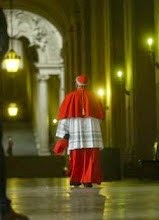
First rolled out in Rome earlier this week, Cardinal Francis George's new release is now getting the hometown treatment -- advance glimpses of the US bishops' chief's The Difference God Makes rolled out in today's editions of the Windy City's Tribune...
[In the book,] George knits together anecdotes, lectures and homilies to provide context for many of the sound bites and quotes that have aired during his more than 11 years as Chicago's archbishop.

In a recent interview, George said he has wanted to write a book about relationships for a while. As the archdiocese's administrator, opportunities to talk about such issues don't come up quite often enough.

"We are defined by our relationships, not by individualism," he said. "Nothing in Catholicism is unrelated. Our local church is part of the universal."

But the local church in Chicago has its own distinct spirit, he added, reflecting on a passage in the book where he recounts a midnight conversation with [his predecessor, Cardinal Joseph] Bernardin in 1994.

After hearing Bernardin explain the difficulties of trying to unify a divided archdiocese, George asked him what was going to happen.

"Well, you know, Francis, Chicago is sometimes ungovernable," Bernardin said with a smile. George still insists Bernardin was cracking a joke. George had no idea he would find out for himself four years later. "That statement comes back to me again and again at odd moments!" he wrote....

The book also lets George offer his vision for spreading the gospel in a modern American context, reflecting on dialogue with Jews and Muslims, the rise of liberal and conservative brands of Catholicism and Catholic liturgy.

George contends that liberal or conservative labels are not effective for evangelization, and faithful from both camps rely too much on the hierarchy to fix the church. Bishops do not speak for themselves or constituents, he said. They speak on behalf of Christ.

"Bishops cannot be co-opted by state authority or political power, nor by pressure groups within the Church, lest the bishops fail in their office," he said.
...and Sun-Times:
While liberal Catholics seem to follow "a mandate to change whatever in the church clashes with modern society" as to abortion, gay marriage and contraception, conservative Catholicism can be so narrowly focused that it risks becoming a sect, George writes in his book....

The shortcomings of liberal and conservative Catholicism -- and the need for a different way to think about the faith -- are among several topics George tackles in the book, his first since becoming archbishop of Chicago in 1997.

With the exception of a few chapters, the book is a collection of essays based on conferences the cardinal has given in recent years.

George, 72, writes that the priest sex-abuse scandal that has rocked the church "is a great tragedy of unbounded proportions and bishops must take responsibility for it; but it is also an occasion to unleash the anti-Catholicism that has never been far beneath the surface of U.S. history."

He also argues that the emphasis on individuality in American culture has led people to put their personal desires and interests above their commitment to God and to each other.

To counter this, people need to realize "the importance of relationships in understanding who we are," he said in an interview with the Sun-Times.

"You're born someone's daughter before you know that. And you're born a creature of God before you know that," George said. "If we had that sense of what would this do to others as we make our individual decisions, which are freely made, I think then we have the vision of the difference God makes."

George compares this idea to ecological consciousness.

"The ecologists are telling us that when a butterfly flutters its wings in Indonesia, we have a snowstorm in Illinois. That's what we're saying here. We're all related, so no matter what any one of us does, it affects everybody else. It's a question of recognizing what the consequences are," he said.
For the record, much of the book's treatment of the church's ideological divide is nothing new; while The Difference returns to its author's famous 1998 statement that "liberal Catholicism is an exhausted project," George's "simply Catholic" antidote was first developed in a 1999 speech he gave to a conference hosted by Commonweal magazine.

-30-

Tuesday, March 17, 2009

Summit of the Chiefs

Earlier this afternoon -- a day after the latter publicly lobbied against the rollback of the Bush administration's last-minute "conscience rights" protections for health-care providers -- President Obama met in the Oval Office with the president of the US Conference of Catholic Bishops, Cardinal Francis George OMI of Chicago.

The White House has issued the following statement:
Today the President met in the Oval Office with His Eminence, Francis Cardinal George, O.M.I., Archbishop of Chicago and President of the US Conference of Catholic Bishops.

The President and Cardinal George discussed a wide range of issues, including important opportunities for the government and the Catholic Church to continue their long-standing partnership to tackle some of the nation’s most pressing challenges. The President thanked Cardinal George for his leadership and for the contributions of the Catholic Church in America and around the world.
And the Mothership has released the following:
Cardinal Francis George, OMI, President of the United States Conference of Catholic Bishops, met at the White House with President Barack Obama during the afternoon of March 17.

The meeting was private. Cardinal George and President Obama discussed the Catholic Church in the United States and its relation to the new Administration. The meeting lasted approximately 30 minutes.

At the conclusion, Cardinal George expressed his gratitude for the meeting and his hopes that it will foster fruitful dialogue for the sake of the common good.
Also today, the President used the traditional St Patrick's Day lunch to announce his nomination of Dan Rooney -- the chairman of the Pittsburgh Steelers, a Catholic and a faithful supporter of church causes -- as his ambassador to Ireland.

Now celebrating the sixth world championship of the team his father founded, Rooney was a staunch Obama advocate during last year's campaign.


-30-

Friday, February 19, 2010

The Chief's Bridge to Brigham

As of this writing, nine months remain in Cardinal Francis George's three-year mandate as president of the US bishops... and so it seems, the Chief's keen to make the most of it.

First, there was the fall release of a well-received book on American culture and Catholic communion... then, November's USCCB assembly saw the Chicago prelate unveil a significant push for ensuring the Catholic identity of institutions which claim ecclesial ties... and now, fresh off clarifying the standing of a leading church lobby for gays and lesbians (a move which garnered a protest last weekend at his cathedral), next week has George making Stateside Catholicism's highest-profile overture yet to the church of Jesus Christ of Latter-day Saints -- better known, of course, as the Mormons:
Cardinal Francis George, archbishop of Chicago and president of the U.S. Conference of Catholic Bishops, will speak Tuesday at Brigham Young University as part of the Provo school's forum series.

George's talk will be titled "Catholics and Latter-day Saints: Partners in the Defense of Religious Freedom," according to an announcement by the Salt Lake City diocese of the Roman Catholic Church.

He will speak at 11:05 a.m. in the Marriott Center. Tickets are not required.
Against the backdrop of a rapidly-expanding Catholic presence on the LDS' home-turf of Utah, relations between Catholics and Mormons -- warm from the start -- have become ever closer over the last decade.

While the venues of cooperation have ranged from humanitarian efforts to the LDS deployment of volunteers and other backup for World Youth Day 2002 in Toronto, the most-prominent front of joint engagement has come on social issues, particularly in efforts to combat same-sex marriage. Only after an appeal from Mormon Country's prior shepherd -- now Archbishop George Niederauer of San Francisco, a close friend of current LDS President Thomas Monson -- did the LDS leadership go all-in with the mobilization of their membership that arguably secured the passage of California's controversial Proposition 8, which restored the one man-one woman definition of civil marriage in 2008, ending the state's two-year sanctioning of gay unions.

Though theological tensions have likewise flared in recent years over the validity of Mormon baptisms and the community's posthumous baptism of deceased pontiffs, for the first time, members of the Quorum of the Twelve -- essentially the LDS equivalent of the College of Cardinals -- were included in an ecumenical prayer with a Pope, joining Benedict XVI for the pan-Christian service during his 2008 visit to New York.

And, lastly, the shot above -- the emblematic depiction of George's role in the American Catholic orbit these days -- comes from an earlier instance of the Chief's Latter-day bridge-building; in June 2007, the cardinal was invited to conduct the Mormon Tabernacle Choir during a Windy City performance.

-30-

Tuesday, April 21, 2015

"This Is The Church" – In Chicago, The Farewell Begins

On a sunny spring afternoon – at least, as springlike as Chicago can get at this point – for the second time in five months, Holy Name Cathedral saw history this Tuesday as the Windy City's first native son-become-Cardinal, likewise the first to leave its archbishop's throne in life, returned to the center of the nation's third-largest diocese for one last moment.

Much like his predecessor in the big seat at State and Superior, Francis George proved himself the dominant force of his generation among the bishops of the United States. And just as today's start of a three-day state farewell saw the local outlets uniquely go live just for the liturgical reception of his body, Thursday's climactic Mass will make for the largest and most significant sendoff an American cardinal has known since the loss of John O'Connor 15 years ago next month. As numbers go, early ballpark figures
 this time around see some nine red-hats concelebrating, and – with no shortage of a grateful bench frantically seeking to rearrange their schedules to be present – a likely turnout of at least 125 of the 300-member USCCB joining in the epic tribute. 

Following the final noontime liturgy, the cortege will take a 21-mile route through the nation's third-largest city, passing the boyhood church where the cardinal was ordained a priest for the OMIs in 1963 before reaching his final resting place in his family's ground-plot at a suburban cemetery alongside his parents and maternal grandmother.

All told, All Saints Cemetery in Des Plaines is a far cry from the grand Hillside mausoleum where most of the post's holders are entombed. In that light, then, it bears recalling how the latter is the place where George finally ensured a proper burial in 2001 for his city's long-forgotten fourth bishop, James Duggan, who was declared "hopelessly insane" and went on to spend 23 years in a sanitarium after leading the Chicago church from 1859-69. (Indeed, knowing his wishes even at that point, it could well be posited that George gave Duggan the niche among the legends that would've been his own.)

In the meantime, this first day of the rites closed with yet another moment of history – the first time an archbishop of Chicago could, and did, eulogize his predecessor, both to encapsulate the past and chart a road ahead.

Accordingly, below is fulltext of Blase Cupich's memorial preach, given in the context of an evening vigil for the priests and seminarians of the 2.3 million-member church (emphases original).

* * *
“Stay with us Lord, for evening draws near.”

These words echo in the Church’s Liturgy of the Hours time and again throughout this Eastertide, as we prepare each day for nightfall. They are the words of the disciples who fled Jerusalem downcast and disappointed; the words of grieving disciples who suffered loss. They are words that remind us that the greatest works of God, the creation, the Cross and the Resurrection, are done in darkness. And they are words for us in this moment of mourning and prayer for our brother, Cardinal Francis George. They are welcomed words, for they force us to focus our attention on what is really taking place, what we are doing and also who we are as a Church and who we are as a presbyterate.

WHAT IS REALLY TAKING PLACE AND WHAT WE ARE DOING

What we claim is taking place and what we pray for is that Christ the Risen Lord, active in our midst, will bring our brother Francis to comprehend with all the holy ones what is the breadth and length and height and depth, and to know the love of Christ that surpasses knowledge, so that he may be filled with all the fullness of God.

We will hear in these days, as we have already, many well-deserved laudatory words about the Cardinal’s life and ministry. His scholarship and razor-sharp incisive mind, his leadership in this country and abroad, his tenacity and courage in the face of great suffering and disability all merit our great admiration and respect.

But, our Catholic tradition hesitates to let the past dominate these days of funeral liturgies. It considers such an approach short-sighted, so unequal to the totally other reality taking place. Our funerals are not celebrations of one’s life, a nostalgic return to past glories. Rather, they focus on the Risen Christ presently active in our midst, whose power at work in us is able to accomplish far more than we ask and far more that we can imagine.

This is what these days are about.

“Stay with us Lord, for evening draws near.”

These words also bring comfort to our grieving hearts, by reminding us that the consolation offered to us in these days is not limited to the warm support and friendship we offer each other, as important and meaningful as that is. But rather, our consolation comes in knowing that we participate and contribute to Christ’s redeeming work which we pray is taking place for the Cardinal. Like Paul, together we kneel before the Father, from whom every family in heaven and on earth is named, that he may grant in accord with the riches of his glory that the one who shepherded this local Church may now be strengthened with power through his Spirit in the inner self, and that Christ may fully dwell in him. That is the consolation we want to offer you, Margaret, and your entire family. We know your loss is great, and there is pain in the deep recesses of your hearts. Be consoled in knowing that, like us, you now are joining in the work of the redeeming Christ. And we offer a special word of consolation to our brother, Fr. Dan Flens. Dan, your steady, devoted and unconditional care for the Cardinal not only in these last days, but throughout the years of service as his secretary, inspires us now to follow your good example by offering our prayerful support for Cardinal George. Repeatedly in his final days, the Cardinal told me and others that you made possible his ministry during his years of service here. Be consoled that now, with you, we continue that support as together we join in Christ’s redeeming work. Be consoled in knowing that like the Lord, we stay with you as evening draws near.

All of this helps us appreciate more deeply who we are as Church and also who we are as a presbyterate in the bond you shared with this good shepherd and which we continue to share with each other in ordained ministry. I want to speak for a moment about each of these aspects and how these days of prayer deepen our understanding of both.

WHO WE ARE AS CHURCH

What we do in these days is at the heart of the Church’s life and mission. It is the kind of Church the Pauline community in Ephesus is challenged to be as we hear in tonight’s epistle. They are invited to be more than just a congregation in Asia Minor, and instead embrace being a world-wide Church, with Christ as the head, a Church that is God’s instrument for making the Divine plan of salvation fulfilled in Christ known throughout the universe. This vision of who we are is far beyond a church that is for its own sake, but is, rather, a Church that is the means for mission in the world.

This is the ancient vision of the Church, this is the vision of the Church which the Second Vatican Council reclaimed and proclaimed anew in Gaudium et Spes, and this is the Church Francis Eugene George generously embraced and committed his life to in loving service.

He told us as much in his selection of his Episcopal motto: To Christ be glory in the Church. These are words from the Letter to the Ephesians, in the passage read tonight, but also the passage which the Fathers of the Second Vatican Council chose to conclude Gaudium et Spes.

Now to Him who is able to accomplish all things in a measure far beyond what we ask or conceive, in keeping with the power that is at work in us—to Him be glory in the Church and in Christ Jesus, down through all the ages of time without end. Amen. (Eph. 3:20-21).

This is the Church the Cardinal wanted us to be, and now it is up to us to carry on and fulfill that vision. It is a Church whose mission is to proclaim “the noble destiny of man and championing the Godlike seed which has been sown in him...Inspired by no earthly ambition, the Church seeks but a solitary goal: to carry forward the work of Christ under the lead of the befriending Spirit. And Christ entered this world to give witness to the truth, to rescue and not to sit in judgment, to serve and not to be served” (GS 3).

This is the ancient vision of the Church, proclaimed by the Council Fathers in Gaudium et Spes, embraced and lived out by the Cardinal and now entrusted to us.

WHO WE ARE AS A PRESBYTERATE

That vision is especially entrusted to us, joined together in a presbyterate. Two symbolic actions, one at the beginning and the other at the end of these days, speak to us about how we support each other in honoring that trust. This afternoon during the Rite of Reception, the vicars, our auxiliary bishops, many of whom were ordained by Cardinal George, placed the pall on his casket, a reminder of the day he was clothed in Christ through baptism. As brother priests we might tend to focus only on strengthening each other in our vocation to the priesthood, so that we can remain faithful in our service to the People of God. But, this ritual action reminds us of the important service we can offer in challenging and encouraging each other to be faithful in our baptismal call for our ministry to the People of God to be fruitful. I often recall the very arresting comment of the late Cardinal Seper as a young bishop at the Second Vatican Council: “Remember,” he urged during the debate on priesthood, “that our ordination does not annihilate our baptism.” We need to offer each other that very foundational support, reminding each other to bring the dignity of our baptism unstained to the day of our rebirth in the resurrection.

A second symbolic action comes at the end of these days. On Thursday, the most recently ordained will carry the Cardinal’s remains from this Cathedral and accompany him to his grave. So, too, we must carry each other, care for each other not as a group closed in on itself for mutual self-preservation, but as a witness to those we serve, so that they do the same for others. It is a call to accompany each other in moments of darkness, loss and death. In this way, we are faithful to the vision of the Church entrusted to us by our ancestors in the faith, by the Council and by the shepherd, Francis, whom we accompany to the Lord in these days. And, with the Year of Mercy before us, what we do together in these days in caring for the dead, anticipates all that the Holy Father urges us to do in taking up with fresh vigor the corporal works of mercy.

Earlier I expressed condolences to Margaret, the family and Fr. Flens. But in this last moment, I want you, my brother priests and our seminarians, to know that I grieve his loss with you. Your experience with him was much deeper and longer than mine, but I can tell you that during the last months of his life and my first months as archbishop, he was unfailingly supportive to me, impressing upon me at this moment how he must have been the same for you over these past 17 years. So together in our grieving, we pray, “Stay with us Lord, for evening draws near.”

These words will keep us focused in these days and in the days ahead on what is really happening, what we are doing, who we are as Church, who we are as a presbyterate. They are words of disciples who seek comfort in a moment of painful loss, not only that they would not be left alone in their grief but in sensing that something greater than they could ever ask for or imagine is happening. They are words that remind us that the greatest works of God, the creation, the Cross and the Resurrection, are done in darkness. They are words we now make our own as we accompany our brother, Cardinal Francis George, O.M.I., and pray:

Stay with him Lord. 

-30-

Friday, February 05, 2010

Chief Clarifies New Ways

It might be late on a Friday afternoon, with snow bearing down on the capital... so it seems, though, the Mothership's still whirring away.

Just before 4pm Eastern, a "clarification" emerged from the USCCB President, Cardinal Francis George of Chicago, on the ecclesial standing of New Ways Ministry, the "gay-positive" outreach for Catholic gays and lesbians whose founders were sanctioned by the Congregation for the Doctrine of the Faith in 1999 and barred from further ministry to the community.

Apparently motivated by New Ways' criticism of "efforts by the church to defend the traditional definition of marriage as between one man and one woman" and the group's call for "Catholics to support electoral initiatives to establish same-sex 'marriage,'" here's George's statement in full:
WASHINGTON—Cardinal Francis George, O.M.I, archbishop of Chicago and president of the United States Conference of Catholic Bishops, issued the following statement on the status of the organization "New Ways Ministry":

New Ways Ministry is an organization based in Mount Rainier, Maryland, that describes itself as "a gay-positive ministry of advocacy and justice for lesbian and gay Catholics and reconciliation within the larger Christian and civil communities." From the time of the organization's founding in 1977, serious questions have been raised about the group’s adherence to Church teaching on homosexuality. In 1984, the archbishop of Washington denied New Ways Ministry any official authorization or approval of its activities. At that time, he forbade the two co-founders of New Ways Ministry, Sr. Jeannine Gramick, SSND, and Fr. Robert Nugent, to continue their activities in the Archdiocese of Washington. In the same year, Sr. Gramick and Fr. Nugent were ordered by their superiors to separate themselves from New Ways Ministry. Although they resigned from leadership posts, they continued their involvement in New Ways Ministry activities until 1999, when the Congregation for the Doctrine of the Faith declared that because of errors and ambiguities in the approach of Sr. Gramick and Fr. Nugent they are permanently prohibited from any pastoral work involving homosexual persons.

In reference to his decision not to grant any approval or authorization to New Ways Ministry in the 1980s, Archbishop James Hickey of Washington cited the organization's lack of adherence to Church teaching on the morality of homosexual acts. This was the central issue in the subsequent investigation and censure of the founders of New Ways Ministry, Sr. Jeannine Gramick and Fr. Robert Nugent. This continues to be the crucial defect in the approach of New Ways Ministry, which has not changed its position after the departure of the cofounders.

New Ways Ministry has recently criticized efforts by the Church to defend the traditional definition of marriage as between one man and one woman and has urged Catholics to support electoral initiatives to establish same-sex "marriage." No one should be misled by the claim that New Ways Ministry provides an authentic interpretation of Catholic teaching and an authentic Catholic pastoral practice. Their claim to be Catholic only confuses the faithful regarding the authentic teaching and ministry of the Church with respect to persons with a homosexual inclination. Accordingly, I wish to make it clear that, like other groups that claim to be Catholic but deny central aspects of Church teaching, New Ways Ministry has no approval or recognition from the Catholic Church and that they cannot speak on behalf of the Catholic faithful in the United States.
SVILUPPO: On further reflection, the above statement is significant on multiple fronts....

Even more than being a noteworthy intervention from the president of the conference (and one who tends to heavily delegate the message-lifting to his committee chairs, at that), the New Ways call-out can be viewed as the first concrete result of George's push -- announced in his Opening Day address to November's USCCB meeting in Baltimore, and previewed several months before -- "to clarify questions of truth or faith and of accountability or community among all those who claim to be part of Catholic communion."

With nine months left in the Chicago prelate's three-year mandate at the conference's helm, smart money says George's task forces "on how [the bishops] might strengthen [their] relationship to Catholic universities, to media claiming the right to be a voice in the Church, and to organizations that direct various works under Catholic auspices" will likely be reaching similar conclusions on other apostolates as the year goes on...

...which leads us, of course, to the million-dollar question: Who's next?

SVILUPPO 2: Having been caught flat-footed by the conference statement, New Ways has issued its response.

-30-

Friday, November 02, 2007

And the Nominees Are...

In ten days' time, the election of a new president and vice-president will be the first order of business for the US Conference of Catholic Bishops at its Fall Plenary in Baltimore. The slate of ten nominees was published earlier in the week.

While the body is widely expected to maintain the longstanding tradition of elevating its current #2, Cardinal Francis George of Chicago, to the presidency, the just-as-customary action will be found in the election of a new vice-president. Since the body's inception in the wake of the Second Vatican Council, no USCCB vice-president who has ever stood for election has failed to win the presidency. George will be the first cardinal elected to the post since 1971.

Once the new president -- who'll take office after the meeting's close -- is chosen, the remaining nine nominees will face off for the deputy's post, with the two top vote-getters ending up in a head-to-head.

In alphabetical order, the presidential nominees are:

Bishop Gregory Aymond of Austin
Archbishop Timothy Dolan of Milwaukee
Cardinal Francis George, OMI, Archbishop of Chicago
Bishop Gerald Kicanas of Tucson
Archbishop Joseph Kurtz of Louisville, Kentucky
Bishop William Lori of Bridgeport
Cardinal Justin Rigali, Archbishop of Philadelphia
Bishop Dennis Schnurr of Duluth
Bishop Donald Trautman of Erie
Bishop Allen Vigneron of Oakland

Through the meeting, the bishops will also elect chairs for their various committees, the number of which has been slimmed down in light of the conference's recent reorganization.

Among the more prominent of the contests:
  • Boston's Cardinal Sean O'Malley OFM Cap. and Bishop George Thomas of Helena will face off for the chair of the newly-consolidated committee for Clergy, Consecrated Life and Vocations;
  • leadership of the bishops' efforts on Laity, Marriage and Youth will fall to either Archbishop Roger Schwietz OMI of Anchorage or Bishop Kevin Vann of Fort Worth;
  • Archbishop Wilton Gregory of Atlanta and Bishop Tod Brown of Orange will vie for the chair of the body's ecumenical and interreligious outreach;
  • and what's become one of the conference's more prominent arms in recent years -- Protection of Children and Young People -- will fall to either Bishops Stephen Blaire of Stockton or Blase Cupich of Rapid City.
(On a related note to the latter, reliable reports say that Blaire -- a former chancellor and vicar-general of his native Los Angeles -- is being eyed as a potential coadjutor to Bishop Robert Brom of San Diego, where the recent bankruptcy and $198 million settlement of abuse cases have made for a very difficult year.)

Conspicuously absent from the presidential mix is Archbishop Donald Wuerl of Washington, who narrowly lost the 2003 VP ballot to George.

Despite returning as a top contender for the #2 post going into this election, the DC prelate declined nomination -- even, it's been said, after the president-in-waiting asked Wuerl to accept.

-30-

Thursday, June 15, 2006

George on Liturgy

In his hometown paper, Cardinal Francis George of Chicago appeared above the fold this morning... not on the usual topic of his above-fold appearances, for once.
Cardinal Francis George of Chicago was the U.S. representative to the International Committee on English in the Liturgy, the panel of bishops from 11 English-speaking countries that prepared the translation.

In addition to concerns about language, George said many bishops have expressed fear over disrupting the mass as leaders work to restore trust damaged by the sexual abuse scandal.

"Liturgy is what the church is all about, so no matter what the question is, liturgy inspires intense debate," George said in an interview.

"Everybody knows that this translation is far more faithful to the Latin," he said. "Whether or not it is a good example of the receiver language, English, is one consideration. Whether or not, no matter how good it is, is this the time to change anything, is another consideration. Those are the two arguments going back and forth as the bishops struggle with whether or not to pass this."
Word on the street is that the two days of lead-up BCL sessions were "awful." As in "not pretty."

Then again, what's new?

-30-

Monday, April 25, 2005

Gli Uomini del Papa: People to Watch in Benedict XVI's Vatican

"La Chiesa e' viva, la Chiesa e' giovane" -- "The Church is alive, the Church is young."

With these words, the oldest Pope in 250 years began his ministry. But who will be the greatest enthusiasts, the most trusted assistants, of that ministry?

Just as John Paul II had Dziwisz, Rylko, Deskur, O'Connor, Krol and Lustiger, every pontificate has them: those handful of backbenchers who, despite having held a job in Rome or elsewhere for years, immediately rise to a higher station when that white smoke goes up. They knew the new Pope before the world came to him, and now he will send them to be his eyes, ears, and sometimes mouth, behind-the-scenes.

In most cases, they might not be moved (at least, not immediately) from the positions they currently hold. But it doesn't matter. Regardless of his day job, each will now be known simply as "L'uomo del Papa" -- "The Pope's Man."

So who are Papa Ratzi's men?

Josef Clemens, 57; Secretary, Pontifical Council for the Laity
Ratzinger's beloved secretary of two decades at CDF -- one of his tasks was picking up dissident theologians at Fiumicino Airport and driving them into the city -- Clemens is the closest thing Benedict XVI has to a son. Within a quick succession in 2003, he was promoted to Undersecretary of the Congregation for Religious, then nine months later elevated to bishop and Secretary of the Pontifical Council for the Laity alongside Wojtyla's student, Stanislaw Rylko. Ordaining Clemens a bishop was Ratzi's happiest day of all his years in Rome; Clemens was spotted escorting Georg Ratzinger, the Pope's brother, to his primo seat at the Installation Mass.

Georg Ganswein, 49, Private Secretary to the Holy Father
The new Stanislaw Dziwisz, Ganswein cuts a striking figure at the Pope's left hand. Clemens' successor as the prefect's gatekeeper at CDF (where he was on the lower rungs before his promotion), Ratzinger had no qualms about Ganswein speaking to the press as his personal spokesman over the past year. Given this Pope's loyalty to his personal secretaries, and his almost immediate move into the Apartment, Ganswein will remain at Benedict's side for at least the near future -- and everything the Pope sees must cross his desk first. Keep an eye on his whereabouts, they will say much.

William Levada, 68, Archbishop of San Francisco
Levada was one of the incoming Prefect's cherished employees at CDF. Upon his return to the States -- he was made an auxiliary bishop of his native LA at 46 -- Ratzinger was ever-loyal, working to move Levada quickly up the ladder; having him promoted to Portland at 50, and then positioning him as the only man who could "clean up" San Francisco after John Quinn. Either San Fran will soon have a cardinal, or Levada will be the American vanguard of Benedict's program in Rome.

Francis George, O.M.I., 68, Cardinal-Archbishop of Chicago
It might've been acceptable before 8 April 1997 -- the day he was named to succeed Cardinal Joseph Bernardin in Chicago, the most unexpected American appointment of John Paul's pontificate -- but if you don't know who Francis George is, you've got some catching up to do. A social anthropologist by trade (he has a Ph.D in it in addition to an S.T.D., teaching for a time at Creighton University in Omaha), George was Ratzinger's biggest American supporter among the cardinal-electors. When approaching the new Pope after his election, George began speaking what he called "a halting German" -- he speaks seven languages. Benedict replied in English that he remembered their conversation about the implementation of permanent norms governing US sex abuse cases, and will work to implement them. Throw in George's Roman experience as vicar general of his order, the Missionary Oblates of Mary Immaculate, and his standing among the American bishops -- he is currently vice-president of the USCCB -- and we might have the new Chief Inquisitor already in our midst. But even if that's not the case, whenever he calls, Benedict will answer and listen.

Tarcisio Bertone, S.D.B., 70, Cardinal-Archbishop of Genoa
Genoa is one of those peculiar Sees -- like Baltimore or Detroit in the States, it's not the largest, but it gets a red hat because of its historical importance. And so Ratzi sent his much-valued Secretary of CDF there as a reward for eight years of devoted service. Bertone reciprocated in kind, doing his former Boss' bidding and condemning The Da Vinci Code on international television. But Bertone also has a soft side -- he was taking photos in the Square before the Conclave with random people, and he does soccer commentary for Italian television. He's still joined at the hip with his Prefect. Keep an eye relating to anything Bertone does in Brazil or Portugal; he speaks flawless Portugese, and he might well be Benedict's liaison to two of global Catholicism's most crucial bastions.

Angelo Amato, S.D.B., 66, Secretary, Congregation for the Doctrine of the Faith
Amato was a simple Consultore to CDF and a professor at the Salesianum when named to succeed Bertone in late 2002. But one thing set him apart in the Prefect's heart: he was the ghost-writer of Dominus Iesus, and the time had come for his reward. The first private audience granted by Benedict was to Amato -- this was on Monday, 25 April -- just as the first excursion the new Pope made from the Vatican walls was to his old office the morning after his election. As with the others, Amato enjoys Ratzinger's complete trust and absolute loyalty. Each of his predecessors under Ratzinger -- Jean Jerome Hamer, Alberto Bovone and Bertone -- received a prominent job and a red hat. Whatever Amato asks of the Pope, he'll get.

And lastly... cats.... Meow.
Joseph Ratzinger, the Holy Father Benedict XVI, loves cats. The story's been told that one morning, on leaving his apartment on Citta Leonina, the street kitties whom the Prefect would routinely talk to and pet waited outside the door and followed him, in a line, to the Holy Office. A Swiss Guard interjected, "Your Eminence! The cats are taking over the Vatican!" Could it be that, maybe, in lieu of the John Pauline kissing of the ground in a new country, he'll presented with a local cat to kiss? Maybe he'll talk to it for five minutes, who knows? It's just fabulous. So be on the lookout for cats slipping through the Portone di Bronzo.


******************

Lastly, I want to thank the good folks at The Revealer, who have given me a privileged pew in St. Blog's Parish. They've called this commentary "pious to biting."

Biting? I'm really aiming for catty.

More soon.....

-30-

Tuesday, January 10, 2006

The Pope's Men: An Encore

You know, of all the posts I've ever written, the one which seems to get called up most frequently through the search engines comes from the day after Benedict XVI's Inaugural Mass, with an early tipping as to the makeup of the new pontificate's inner circle.

Nine months on, as "reserve" has marked itself out as one of the buzzwords of the German Pope's reign, it's clear that Joseph Ratzinger's reticence strengthens the hand of that inner circle in terms of its influence on Benedict's thinking.

I did leave some notables out -- notably Cordes, Schonborn and Scola -- but it also turned out prophetic in other ways.....

So, for everyone's further enlightenment, I'm re-running it. Enjoy.

******************************************

"La Chiesa e' viva, la Chiesa e' giovane" -- "The Church is alive, the Church is young."

With these words, the oldest Pope in 250 years began his ministry. But who will be the greatest enthusiasts, the most trusted assistants, of that ministry?

Just as John Paul II had Dziwisz, Rylko, Deskur, O'Connor, Krol and Lustiger, every pontificate has them: those handful of backbenchers who, despite having held a job in Rome or elsewhere for years, immediately rise to a higher station when that white smoke goes up. They knew the new Pope before the world came to him, and now he will send them to be his eyes, ears, and sometimes mouth, behind-the-scenes.

In most cases, they might not be moved (at least, not immediately) from the positions they currently hold. But it doesn't matter. Regardless of his day job, each will now be known simply as "L'uomo del Papa" -- "The Pope's Man."

So who are Papa Ratzi's men?

Josef Clemens, 57; Secretary, Pontifical Council for the Laity
Ratzinger's beloved secretary of two decades at CDF -- one of his tasks was picking up dissident theologians at Fiumicino Airport and driving them into the city -- Clemens is the closest thing Benedict XVI has to a son. Within a quick succession in 2003, he was promoted to Undersecretary of the Congregation for Religious, then nine months later elevated to bishop and Secretary of the Pontifical Council for the Laity alongside Wojtyla's student, Stanislaw Rylko. Ordaining Clemens a bishop was Ratzi's happiest day of all his years in Rome; Clemens was spotted escorting Georg Ratzinger, the Pope's brother, to his primo seat at the Installation Mass.

Georg Ganswein, 49, Private Secretary to the Holy Father
The new Stanislaw Dziwisz, Ganswein cuts a striking figure at the Pope's left hand. Clemens' successor as the prefect's gatekeeper at CDF (where he was on the lower rungs before his promotion), Ratzinger had no qualms about Ganswein speaking to the press as his personal spokesman over the past year. Given this Pope's loyalty to his personal secretaries, and his almost immediate move into the Apartment, Ganswein will remain at Benedict's side for at least the near future -- and everything the Pope sees must cross his desk first. Keep an eye on his whereabouts, they will say much.

William Levada, 68, Archbishop of San Francisco
Levada was one of the incoming Prefect's cherished employees at CDF. Upon his return to the States -- he was made an auxiliary bishop of his native LA at 46 -- Ratzinger was ever-loyal, working to move Levada quickly up the ladder; having him promoted to Portland at 50, and then positioning him as the only man who could "clean up" San Francisco after John Quinn. Either San Fran will soon have a cardinal, or Levada will be the American vanguard of Benedict's program in Rome.

Francis George, O.M.I., 68, Cardinal-Archbishop of Chicago
It might've been acceptable before 8 April 1997 -- the day he was named to succeed Cardinal Joseph Bernardin in Chicago, the most unexpected American appointment of John Paul's pontificate -- but if you don't know who Francis George is, you've got some catching up to do. A social anthropologist by trade (he has a Ph.D in it in addition to an S.T.D., teaching for a time at Creighton University in Omaha), George was Ratzinger's biggest American supporter among the cardinal-electors. When approaching the new Pope after his election, George began speaking what he called "a halting German" -- he speaks seven languages. Benedict replied in English that he remembered their conversation about the implementation of permanent norms governing US sex abuse cases, and will work to implement them. Throw in George's Roman experience as vicar general of his order, the Missionary Oblates of Mary Immaculate, and his standing among the American bishops -- he is currently vice-president of the USCCB -- and we might have the new Chief Inquisitor already in our midst. But even if that's not the case, whenever he calls, Benedict will answer and listen.

Tarcisio Bertone, S.D.B., 70, Cardinal-Archbishop of Genoa
Genoa is one of those peculiar Sees -- like Baltimore or Detroit in the States, it's not the largest, but it gets a red hat because of its historical importance. And so Ratzi sent his much-valued Secretary of CDF there as a reward for eight years of devoted service. Bertone reciprocated in kind, doing his former Boss' bidding and condemning The Da Vinci Code on international television. But Bertone also has a soft side -- he was taking photos in the Square before the Conclave with random people, and he does soccer commentary for Italian television. He's still joined at the hip with his Prefect. Keep an eye relating to anything Bertone does in Brazil or Portugal; he speaks flawless Portugese, and he might well be Benedict's liaison to two of global Catholicism's most crucial bastions.

Angelo Amato, S.D.B., 66, Secretary, Congregation for the Doctrine of the Faith
Amato was a simple Consultore to CDF and a professor at the Salesianum when named to succeed Bertone in late 2002. But one thing set him apart in the Prefect's heart: he was the ghost-writer of Dominus Iesus, and the time had come for his reward. The first private audience granted by Benedict was to Amato -- this was on Monday, 25 April -- just as the first excursion the new Pope made from the Vatican walls was to his old office the morning after his election. As with the others, Amato enjoys Ratzinger's complete trust and absolute loyalty. Each of his predecessors under Ratzinger -- Jean Jerome Hamer, Alberto Bovone and Bertone -- received a prominent job and a red hat. Whatever Amato asks of the Pope, he'll get.

And lastly... cats.... Meow.
Joseph Ratzinger, the Holy Father Benedict XVI, loves cats. The story's been told that one morning, on leaving his apartment on Citta Leonina, the street kitties whom the Prefect would routinely talk to and pet waited outside the door and followed him, in a line, to the Holy Office. A Swiss Guard interjected, "Your Eminence! The cats are taking over the Vatican!" Could it be that, maybe, in lieu of the John Pauline kissing of the ground in a new country, he'll presented with a local cat to kiss? Maybe he'll talk to it for five minutes, who knows? It's just fabulous. So be on the lookout for cats slipping through the Portone di Bronzo.

-30-

Wednesday, August 16, 2006

Jesuit, Priest, Physician, "Rock Star"

Given an old piece linked here a couple weeks back, you all knew that Dr Myles Sheehan, the head of Cardinal Francis George's medical team, is also Fr Sheehan, SJ.

The Chicago Tribune picks up the story:
Sheehan's dual roles were on display in the last three weeks when his youngest and most prominent patient, Cardinal Francis George, 69, was diagnosed with bladder cancer. At news conferences, Sheehan served as the soothing voice, weaving pathology and prognosis together with doses of heartfelt spirituality.

On Tuesday, Cardinal George was released from the hospital after surgery to remove his bladder, prostate and part of his ureter. Sheehan, who cared for the cardinal during the 19-day hospitalization, said he felt both happiness and relief.

Sheehan even said--jokingly--that the cardinal was so excited to be leaving, he had printed T-shirts that said, "Free Francis!"

"I'm relieved," Sheehan said. "I don't want to set incredible expectations that everything is going to be perfect because again it's a big surgery. But I'm happy. I hope he gets to feel better and to relax.

"He's moving from someone who was told he had a potentially deadly diagnosis to dealing with being a survivor. So, he's in a transitional period like any human being would be. We know that Christ is the one who always accompanies you on these journeys, so I think he's getting to know the Lord in that way."...

There are only 25 Jesuit priests in the nation who are also physicians, Sheehan said. And although both professions require some solemnity, Sheehan possesses an outrageous sense of humor.

Last week, for example, when an impatient George wondered why it was taking so long to recover, Sheehan answered: "It's the devil." The cardinal burst into laughter.

On another occasion, Sheehan said the cardinal asked if all the pain he was feeling was some Jesuit torture that was specially designed for the archbishop of Chicago.

No, Sheehan replied, the doctors use it on everyone.

Yet, when it comes to healing the spiritual leader of the archdiocese's 2.4 million Catholics, Sheehan became reflective and said he struggles with a doctor's anxious desire to cure the cardinal. At the same time, his faith tells him the matter is all in God's hands.

"I don't want to see him sick and suffering, and part of the thing I do with all my patients is that I want to protect them," he said.
Well done, well done.

-30-

Friday, April 17, 2015

The Maestro Departs – Cardinal George Dies at 78

The American hierarchy has lost the figure widely seen as its intellectual giant of the last generation.

Francis Eugene George – the first Chicago native to become the Windy City's cardinal-archbishop, then the first to retire from the post late last year – died shortly before noon local time amid his third bout with bladder cancer. An Oblate of Mary Immaculate with twin doctorates in social psychology and theology whose rise from the academy to his order's Roman leadership then through the Stateside ranks arguably made for the most unlikely path ever to result in a US cardinal, George was 78.

After less than a year as archbishop of Portland, the native son was a surprise choice in April 1997 to succeed the iconic Cardinal Joseph Bernardin at the helm of the nation's third-largest diocese, going on to receive the red hat nine months later. As president of the USCCB from 2007-10 – the first cardinal in three decades to hold the post – George's conciliatory abilities and esteem across the bench's polarized divide were able to forge an almost miraculous consensus that carried the body through a host of turbulent moments, most notably the cataclysmic tension felt by many prelates in the wake of Barack Obama's election to the presidency in 2008.

Afflicted with childhood polio – the pronounced limp from which remained throughout his life – George's 17 years in his hometown chair (his ministry's lone assignment in Chicago) were dogged by no shortage of controversies and challenges. Amid an epic shift of the 2.3 million member fold's demographics to the cusp of a Hispanic majority, the prelate who introduced himself at his installation as "Francis, your neighbor" often found himself at loggerheads with the famously independent presbyterate, all while the national eruption of the clergy sex-abuse scandals saw the vaunted Corporation Sole mired in years of lawsuits and settlements. While George's genius and serenity through years of health scares earned him the hard-won respect of the local crowd, the cardinal's constant emphasis on saying "what I think" as opposed to "how I feel" made for a spirited, usually contentious relationship with much of the press corps.

Yet "in the end," as George himself said at the 2013 funeral of his unlikely friend and opera companion – the celebrated novelist and Sun-Times columnist Fr Andrew Greeley – "everyone was forgiven": as they entered Holy Name on the eve of his successor's installation last November, the most prolonged, raucous ovation wasn't at the sight of the incoming archbishop gliding up the aisle, but that of the first-ever emeritus struggling up a ramp to the sanctuary, guided by his ever-faithful longtime secretary, Fr Dan Flens.

The author of a landmark 2001 pastoral letter on racism – a text which drew viscerally from his experiences in the Jim Crow South – having articulated a dire vision of the church's future in American society in later years while seeking to surmount Stateside Catholicism's damaging ideological turf-war, the cardinal was reportedly hard at work on a final book over recent months and said to be "driven" to complete it in the time left to him.

A favorite of St John Paul II – whose Lenten retreat George preached in 2001 – the cardinal's Roman standing rose even further in the reign of Benedict XVI, a fellow theologian (and German speaker) under whom the Chicagoan became the preeminent US-based voice in the Vatican's mind.

Five months after handing over the reins of the Chicago post in unprecedented fashion to Blase Cupich, the Ninth Archbishop is slated to make a formal announcement of his predecessor's death at 2pm Central in the courtyard of Holy Name. (Video posted.)

While the funeral timetable remains to be determined, the archbishopric of Chicago is unique among the US' major posts in that its occupants are entombed not in a Cathedral crypt, but at a towering mausoleum (below) some 20 miles outside the city at Mt Carmel Cemetery in Hillside, after a lengthy cortege from the Near North Side traditionally brings the nation's third-largest city to a halt.


With George's passing, the number of Stateside electors in a hypothetical Conclave falls to ten. This Sunday, the bloc will again diminish to nine as Philadelphia's Cardinal Justin Rigali marks his 80th birthday, while in the first half of 2016, the respective age-outs of LA's retired Cardinal Roger Mahony and the former CDF chief Cardinal William Levada will make for a combined loss of four American seats in just over a year, leaving a contingent numbering seven.

Given Pope Francis' drastic makeover of the geographic distribution of the 120 electors in the College of Cardinals, it is expected that at least half of the lost voting slots will not be restored to these shores, ending a seven-decade custom of US cardinals comprising roughly ten percent of the papal electorate, a practice whose roots date to the end of World War II and was successively maintained by the grateful European Popes who've followed until now.

SVILUPPO: After two days of lying in-state, the Funeral Mass has been scheduled for Thursday, 23 April, at Noon. Per his wishes – which only emerged on the release of the arrangements – George will not be laid to rest alongside his predecessors, but with his parents in a simple suburban ground-plot.

-30-

Tuesday, March 25, 2014

At the Vatican, It's Obama's Turn... But The Pope's Trip Takes Center Stage

A year into the new Rule of Francis, the Pope has met almost every key Western leader, with one particularly glaring exception.

That'll change first thing Thursday morning, as President Obama returns to the Apostolic Palace for his first meeting with Papa Bergoglio and second overall with a Pope after his July 2009 visit to Benedict XVI.

Given its late afternoon scheduling to accommodate Obama's schedule – and the now-retired Pope's desire to meet with him – that earlier visit upended standard Vatican protocol, which invariably sees heads of state and government received from mid-morning until noon. This time, with Francis enjoying Stateside approval numbers more than double those of the battle-weary, second-term president, Air Force One is touching down in Rome tomorrow night to allow for the morning time-slot.

A keen morning person, Francis prefers to hold the daily rounds of courtesy audiences for high-profile visitors before lunch. Despite the new reality of the Pope residing at the Domus, almost all of his formal meetings are still held in the Papal Apartment atop the Palace, which he continues to employ as his daytime office.

In another change from the last POTUS-Pope summit, the First Lady won't be meeting Francis alongside her husband; together with the couple's two daughters, Michelle Obama is on a visit to China. As the Vatican stop is part of a six-day swing through Europe and Saudi Arabia, the makeup of the delegation accompanying Obama on Thursday remains unclear.

Of course, amid the Democrat's prominent support of legal abortion and the seeping of the wider political polarization into American Catholic life, no modern Commander-in-Chief can visit the Pope without a spate of controversy, or the desire for it from media or lobbying circles. A year since Francis' emergence, however, the Obama White House has come to warmly embrace the new Pope, with the president even taking to pulling quotes from the pontiff on the stump.

At a preliminary briefing for the visit, White House Press Secretary Jay Carney said that Obama "has long looked forward to meeting Pope Francis.

"He has very much admired the leadership he has provided in his first year as Pope, his commitment to address issues like income inequality, and his leadership of the church more broadly," Carney said, adding that the president was especially intent "to hear about the very ambitious agenda that [Francis] has launched in his first year."

Following the president's sit-down with the Pope – likely to comprise around a half-hour one on one, then the usual exchange of gifts and Francis' greetings to the traveling aides – per custom, geopolitical issues will come into further focus as Obama meets with the Vatican Secretary of State, Cardinal Pietro Parolin.

Among the phalanx of secular heavyweights who've been beating a path to his door since his ascent to the papacy, Francis has already met with the leaders of Russia, Germany, France, Spain, the United Nations and European Community, as well as most of the heads of state or government from his native Latin America. Last week, the Argentine President Cristina Fernandez de Kirchner paid her third visit to the country's most celebrated export, which this time included a long lunch for the duo alone. With Kirchner running late due to a leg injury, keeping to his own form, as the Pope waited for the president at the door of the Domus, he walked over alone to start chatting with the press corps on hand. (Above, Francis is shown walking with the granddaughter of the Maltese President, George Abela, who brought his family to his audience on Saturday.)

Next week, another top-flight visit's in store for Francis as Queen Elizabeth II returns to the Vatican to meet with the seventh Pope of her 62-year reign. Given the British monarch's historic role as supreme governor of the Church of England, the encounter brings an added ecumenical dimension, all the more given the queen's intense personal faith and commitment to a prominent place for religion in society.

Set to be accompanied by the Duke of Edinburgh, in a sign of the Pope's esteem, the royals won't be received at the Palace, but for a more personal visit at the Domus. Soon to turn 88 and in the process of handing over an increasing amount of duties to her heirs, the queen's Rome swing will be her first overseas trip in three years.

Back to Obama's stop, meanwhile, as domestic affairs always tend to frame the stage for an American president at the Vatican, this week brings converging storylines featuring a couple key threads on the US' church-state front.

First, underscoring the bishops' prime clash with the administration over recent years, today brings the oral arguments at the Supreme Court in two cases seeking an overturn of the Federal health-care reform's mandate for contraceptive coverage in benefit plans. As opposed to the scores of suits filed by church-related entities nationwide over the Obamacare mandate's exemptions for religious employers, however, the cases at issue today involve the ability of for-profit businesses to opt out from covering contraceptives on religious freedom grounds.

With the church suits encountering a clash of outcomes as they wend their way through lower courts, Supreme Court review for those cases is likely in the next term. As the mandate took force for non-exempt religious institutions last January, several injunctions were issued to Catholic entities, allowing them to not comply without penalty until the cases were settled. Most prominently, the SCOTUS granted a stay for the Little Sisters of the Poor and other church organs enrolled in its Christian Brothers-administered plans.

While the issue of the mandate was raised as a concern of the Holy See during Secretary of State John Kerry's January meeting with Parolin, for his own part, Francis has indicated his preference that matters of domestic issue engagement are optimally addressed by the relevant conference of bishops. That signal began at home – within weeks of his election, the Pope told the Italian bishops that their national body would lead the response to the country's political affairs, ending a longtime tug of war over that role between the Vatican and the CEI, as the conference is known.

And lastly, even if this week has Obama in Rome, in an unusual twist, the center-stage element of the president's visit is the Pope's return of the favor.

As has been understood among church officials on both sides of the Atlantic for several months, what's likely to be Francis' lone US tour – not to mention Jorge Bergoglio's first-ever trip to these shores – is widely expected to take place at the end of September 2015. While the date has been locked in for over a year following B16's June 2012 announcement that Philadelphia would host the Holy See's eighth World Meeting of Families at that time, the change of pontificates has altered the shape and focus of the last commitment Papa Ratzinger wrote into his calendar, and the response to the new Pope has inspired hopes for the most extensive papal journey to the States since John Paul's epic two-week, seven-city swing in 1987. Yet only this week is the requisite protocol machine rolling into motion.

For any PopeTrip to happen, as a head of state, the pontiff must be invited by his civil counterpart in the country in question, as well as the national church via its episcopal conference. Accordingly, Obama will ostensibly follow the precedent set by George W. Bush in inviting Francis for just the second papal state visit to the US. And even before the president touches down, a high-powered delegation of Philadelphia officials led by Archbishop Charles Chaput OFM Cap. alongside Pennsylvania Gov. Tom Corbett and the city's Mayor Michael Nutter are spending this week in Rome to discuss planning for the families' event (below) before a brief private meeting with the Pope prior to tomorrow's general audience.

Beyond the Philadelphia meeting, as both John Paul II and Benedict visited Washington for the diplomatic formalities at the White House on their respective first US trips, the capital would almost certainly be on a September 2015 itinerary in any case. Adding to the papal pile-on, however, is an invite for Francis to address a joint session of Congress – a rare privilege for a foreign leader – extended earlier this month by Speaker John Boehner and Minority Leader Nancy Pelosi, both Catholics. Should he accept, Francis would be the first Bishop of Rome to appear at the Capitol; while John Paul was also given a joint session invite before his first visit, he declined. (Earlier this year, Francis likewise became the first Pope to be asked to address the European Parliament in Brussels; to date, no response has been announced.)

In addition, it is no accident – and, again, fully in keeping with tradition for papal scheduling – that the Vatican slated the Family gathering to coincide with the peak period of the UN General Assembly in New York, an address to which was a core element of John Paul's visits in 1979 and 1995 and Paul VI's historic 13-hour trek to Gotham on St Francis' Day 1965.

As only the Holy See can publicly confirm the Pope's travel – and, in this instance, isn't expected to do so for some time yet – officials have been forced to tiptoe the fine line of anticipating Francis' attendance without conveying it as definite. Speaking of the Families' Meeting at a late-morning Vatican press conference today, the president of the Pontifical Council for the Family, Archbishop Vincenzo Paglia, illustrated the exercise with his statement that even as "the Philadelphia Meeting is looking first of all to gathering the churches of the Americas... there is no doubt that the presence on the Chair of Peter of the first Latin American Pope makes the event even more meaningful."

The longtime chaplain to the Sant'Egidio movement, Paglia playfully ducked a subsequent question seeking a timetable on Francis' confirmation of the visit plans. Out of deference to the local media who've swarmed Rome to cover the trip, today's briefing was a rarity for the Press Office, being conducted almost entirely in English as opposed to Italian.

For purposes of context, it bears noting that senior US prelates first received word of B16's April 2008 visit to New York and Washington all of seven months in advance, and the trip was publicly confirmed two months later. While Benedict delighted the Secret Service-led security team with his preference for smaller venues for the twin public Masses and his understanding of the needed "bubble," planning for Francis – who famously reveled in having his car swarmed in Rio and once mused that "a bishop behind bulletproof glass is crazy" – is bound to make for a rockier negotiation between the Pope's premium on closeness to the crowds and the paranoia of those charged with his protection.

Initially slated to be revealed today, the theme of the 2015 gathering still awaits Francis' signoff. Regardless, next year's Meeting plays squarely into the issue the Pope has designated as his ecclesial centerpiece for the next two years – the role and challenges facing the family in the life of the church.

Amid ongoing skirmishes between senior prelates over possible evolutions of pastoral practice in addressing difficult situations, this October's Extraordinary Synod and an ordinary assembly in October 2015 are intended to discern new ways of proceeding.

Speaking of Francis' road calendar, after months of rumors, only earlier this month did the Vatican confirm a mid-August PopeTrip to South Korea for a pan-Asian youth gathering. Aiming to clear out his long-haul travel before anything else, Papa Bergoglio is likewise expected to visit Africa in either late 2014 or early next year. After July's triumphant homecoming in Rio for the already-planned World Youth Day, the Pope has repeatedly said that his next return to South America won't come until 2016 at the earliest.

-30-

Friday, September 18, 2015

At the Vatican, It's Obama's Turn... But The Pope's Trip Takes Center Stage

25 March 2014 (with follow-up) – A year into the new Rule of Francis, the Pope has met almost every key Western leader, with one particularly glaring exception.

That'll change first thing Thursday morning, as President Obama returns to the Apostolic Palace for his first meeting with Papa Bergoglio and second overall with a Pope after his July 2009 visit to Benedict XVI.

Given its late afternoon scheduling to accommodate Obama's schedule – and the now-retired Pope's desire to meet with him – that earlier visit upended standard Vatican protocol, which invariably sees heads of state and government received from mid-morning until noon. This time, with Francis enjoying Stateside approval numbers more than double those of the battle-weary, second-term president, Air Force One is touching down in Rome tomorrow night to allow for the morning time-slot.

A keen morning person, Francis prefers to hold the daily rounds of courtesy audiences for high-profile visitors before lunch. Despite the new reality of the Pope residing at the Domus, almost all of his formal meetings are still held in the Papal Apartment atop the Palace, which he continues to employ as his daytime office.

In another change from the last POTUS-Pope summit, the First Lady won't be meeting Francis alongside her husband; together with the couple's two daughters, Michelle Obama is on a visit to China. As the Vatican stop is part of a six-day swing through Europe and Saudi Arabia, the makeup of the delegation accompanying Obama on Thursday remains unclear.

Of course, amid the Democrat's prominent support of legal abortion and the seeping of the wider political polarization into American Catholic life, no modern Commander-in-Chief can visit the Pope without a spate of controversy, or the desire for it from media or lobbying circles. A year since Francis' emergence, however, the Obama White House has come to warmly embrace the new Pope, with the president even taking to pulling quotes from the pontiff on the stump.

At a preliminary briefing for the visit, White House Press Secretary Jay Carney said that Obama "has long looked forward to meeting Pope Francis.

"He has very much admired the leadership he has provided in his first year as Pope, his commitment to address issues like income inequality, and his leadership of the church more broadly," Carney said, adding that the president was especially intent "to hear about the very ambitious agenda that [Francis] has launched in his first year."

Following the president's sit-down with the Pope – likely to comprise around a half-hour one on one, then the usual exchange of gifts and Francis' greetings to the traveling aides – per custom, geopolitical issues will come into further focus as Obama meets with the Vatican Secretary of State, Cardinal Pietro Parolin.

Among the phalanx of secular heavyweights who've been beating a path to his door since his ascent to the papacy, Francis has already met with the leaders of Russia, Germany, France, Spain, the United Nations and European Community, as well as most of the heads of state or government from his native Latin America. Last week, the Argentine President Cristina Fernandez de Kirchner paid her third visit to the country's most celebrated export, which this time included a long lunch for the duo alone. With Kirchner running late due to a leg injury, keeping to his own form, as the Pope waited for the president at the door of the Domus, he walked over alone to start chatting with the press corps on hand. (Above, Francis is shown walking with the granddaughter of the Maltese President, George Abela, who brought his family to his audience on Saturday.)

Next week, another top-flight visit's in store for Francis as Queen Elizabeth II returns to the Vatican to meet with the seventh Pope of her 62-year reign. Given the British monarch's historic role as supreme governor of the Church of England, the encounter brings an added ecumenical dimension, all the more given the queen's intense personal faith and commitment to a prominent place for religion in society.

Set to be accompanied by the Duke of Edinburgh, in a sign of the Pope's esteem, the royals won't be received at the Palace, but for a more personal visit at the Domus. Soon to turn 88 and in the process of handing over an increasing amount of duties to her heirs, the queen's Rome swing will be her first overseas trip in three years.

Back to Obama's stop, meanwhile, as domestic affairs always tend to frame the stage for an American president at the Vatican, this week brings converging storylines featuring a couple key threads on the US' church-state front.

First, underscoring the bishops' prime clash with the administration over recent years, today brings the oral arguments at the Supreme Court in two cases seeking an overturn of the Federal health-care reform's mandate for contraceptive coverage in benefit plans. As opposed to the scores of suits filed by church-related entities nationwide over the Obamacare mandate's exemptions for religious employers, however, the cases at issue today involve the ability of for-profit businesses to opt out from covering contraceptives on religious freedom grounds.

With the church suits encountering a clash of outcomes as they wend their way through lower courts, Supreme Court review for those cases is likely in the next term. As the mandate took force for non-exempt religious institutions last January, several injunctions were issued to Catholic entities, allowing them to not comply without penalty until the cases were settled. Most prominently, the SCOTUS granted a stay for the Little Sisters of the Poor and other church organs enrolled in its Christian Brothers-administered plans.

While the issue of the mandate was raised as a concern of the Holy See during Secretary of State John Kerry's January meeting with Parolin, for his own part, Francis has indicated his preference that matters of domestic issue engagement are optimally addressed by the relevant conference of bishops. That signal began at home – within weeks of his election, the Pope told the Italian bishops that their national body would lead the response to the country's political affairs, ending a longtime tug of war over that role between the Vatican and the CEI, as the conference is known.

And lastly, even if this week has Obama in Rome, in an unusual twist, the center-stage element of the president's visit is the Pope's return of the favor.

As has been understood among church officials on both sides of the Atlantic for several months, what's likely to be Francis' lone US tour – not to mention Jorge Bergoglio's first-ever trip to these shores – is widely expected to take place at the end of September 2015. While the date has been locked in for over a year following B16's June 2012 announcement that Philadelphia would host the Holy See's eighth World Meeting of Families at that time, the change of pontificates has altered the shape and focus of the last commitment Papa Ratzinger wrote into his calendar, and the response to the new Pope has inspired hopes for the most extensive papal journey to the States since John Paul's epic two-week, seven-city swing in 1987. Yet only this week is the requisite protocol machine rolling into motion.

For any PopeTrip to happen, as a head of state, the pontiff must be invited by his civil counterpart in the country in question, as well as the national church via its episcopal conference. Accordingly, Obama will ostensibly follow the precedent set by George W. Bush in inviting Francis for just the second papal state visit to the US. And even before the president touches down, a high-powered delegation of Philadelphia officials led by Archbishop Charles Chaput OFM Cap. alongside Pennsylvania Gov. Tom Corbett and the city's Mayor Michael Nutter are spending this week in Rome to discuss planning for the families' event (below) before a brief private meeting with the Pope prior to tomorrow's general audience.

Beyond the Philadelphia meeting, as both John Paul II and Benedict visited Washington for the diplomatic formalities at the White House on their respective first US trips, the capital would almost certainly be on a September 2015 itinerary in any case. Adding to the papal pile-on, however, is an invite for Francis to address a joint session of Congress – a rare privilege for a foreign leader – extended earlier this month by Speaker John Boehner and Minority Leader Nancy Pelosi, both Catholics. Should he accept, Francis would be the first Bishop of Rome to appear at the Capitol; while John Paul was also given a joint session invite before his first visit, he declined. (Earlier this year, Francis likewise became the first Pope to be asked to address the European Parliament in Brussels; to date, no response has been announced.)

In addition, it is no accident – and, again, fully in keeping with tradition for papal scheduling – that the Vatican slated the Family gathering to coincide with the peak period of the UN General Assembly in New York, an address to which was a core element of John Paul's visits in 1979 and 1995 and Paul VI's historic 13-hour trek to Gotham on St Francis' Day 1965.

As only the Holy See can publicly confirm the Pope's travel – and, in this instance, isn't expected to do so for some time yet – officials have been forced to tiptoe the fine line of anticipating Francis' attendance without conveying it as definite. Speaking of the Families' Meeting at a late-morning Vatican press conference today, the president of the Pontifical Council for the Family, Archbishop Vincenzo Paglia, illustrated the exercise with his statement that even as "the Philadelphia Meeting is looking first of all to gathering the churches of the Americas... there is no doubt that the presence on the Chair of Peter of the first Latin American Pope makes the event even more meaningful."

The longtime chaplain to the Sant'Egidio movement, Paglia playfully ducked a subsequent question seeking a timetable on Francis' confirmation of the visit plans. Out of deference to the local media who've swarmed Rome to cover the trip, today's briefing was a rarity for the Press Office, being conducted almost entirely in English as opposed to Italian.

For purposes of context, it bears noting that senior US prelates first received word of B16's April 2008 visit to New York and Washington all of seven months in advance, and the trip was publicly confirmed two months later. While Benedict delighted the Secret Service-led security team with his preference for smaller venues for the twin public Masses and his understanding of the needed "bubble," planning for Francis – who famously reveled in having his car swarmed in Rio and once mused that "a bishop behind bulletproof glass is crazy" – is bound to make for a rockier negotiation between the Pope's premium on closeness to the crowds and the paranoia of those charged with his protection.

Initially slated to be revealed today, the theme of the 2015 gathering still awaits Francis' signoff. Regardless, next year's Meeting plays squarely into the issue the Pope has designated as his ecclesial centerpiece for the next two years – the role and challenges facing the family in the life of the church.

Amid ongoing skirmishes between senior prelates over possible evolutions of pastoral practice in addressing difficult situations, this October's Extraordinary Synod and an ordinary assembly in October 2015 are intended to discern new ways of proceeding.

Speaking of Francis' road calendar, after months of rumors, only earlier this month did the Vatican confirm a mid-August PopeTrip to South Korea for a pan-Asian youth gathering. Aiming to clear out his long-haul travel before anything else, Papa Bergoglio is likewise expected to visit Africa in either late 2014 or early next year. After July's triumphant homecoming in Rio for the already-planned World Youth Day, the Pope has repeatedly said that his next return to South America won't come until 2016 at the earliest.

-30-