Saturday, November 24, 2007

For Eire, Cardinal "Moses"

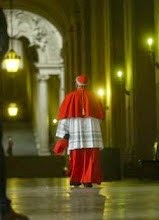
Last night, Cardinal-designate Sean Brady of Armagh attended a reception at Rome's Irish College; he's shown above with his sister, Kitty, a Dublin teacher.

A former rector of the college, the elevation of the low-key Primate of All Ireland -- only the eleventh Irishman to ever receive the red hat -- is being acclaimed at home, both across the North-South divide and by press and prelates alike.

The Irish Independent's John Cooney writes in today's editions that Brady's honor "is Papal recognition of his honesty in cleaning up the clerical child sex abuse scandals, as well as for his stout defence of the Catholic faith in the most difficult period for the Irish Church since the Penal Days."

The primate "is widely seen as representing the pulse of a Catholic revival in Ireland," Cooney noted, "and is also being rewarded for his role in the peace process in the North."

What's more, in an analysis piece yesterday, the paper's chief religion hand asked if, as the "de facto" head of the Irish church, Brady might just the lead the Auld Sod "to the Promised Land":

What Sean Brady has going for him is patent sincerity. What he also has going for him is genuine humility. The Church has its fair share of careerists and it will have impressed Rome that Archbishop Brady is not the type to campaign for a red hat. In addition, he is impeccably orthodox, though not in a rigid way. Much as I loath that overused word 'pastoral', he is a good pastor. There's a wonderful story about how, when he was rector of the Irish College in Rome , he used to regularly help out a homeless Irishman who would call to the college from time to time....

By making him a cardinal, Rome has very much thrust Sean Brady front and centre so far as the Church in Ireland is concerned. When he was 'merely' Archbishop of Armagh he may have felt slightly overshadowed by Dublin and the media would have been more inclined to see the capital city's prelate as the leader of the Church rather than his counterpart in Armagh. This will no longer be the case. Even if he is not the de jure leader of the Church he is the de facto leader.

How will he be expected to lead? For one thing he will be expected to do more teaching than listening. The 'listening Church' metaphor has become completely over-used. Yes, the Church has to listen if it wants to read the signs of the times. But it also has to teach. First and foremost it has to teach. As a retired bishop once remarked, when Christ sent out the disciples he told them to convert all the nations, not listen to them.

Teaching will mean tackling the tough issues and not just the easy ones that will win media applause. The easy ones essentially are anything that will win an approving Irish Times editorial. The hard ones are those likely to earn you a slap on the wrist from that same quarter....

He must also get the Church -- no, make that the churches, plus the Jewish and Muslim communities -- much more involved in the marriage debate. The Government is sleep-walking us into a radical new family policy that puts adult autonomy first and child welfare second by degrading marriage as a social institution even though marriage is the most pro-child of all family forms.

These tasks mean the Church must become more assertive in public debate. Assertive doesn't mean aggressive. Nor does assertive mean trying to impose itself in an undemocratic way upon society. What it simply means is having the same right as any other social actor to influence public opinion. A refusal to allow this is the kind of aggressive secularism spoken of by [Irish Prime Minister] Bertie Ahern.

Doing all of the above successfully is a tall order. But as Cardinal, Sean Brady's responsibility will be to try. He may not quite lead us to the Promised Land. But in his new role he has a chance to lead us to a slightly better one.

In Belfast, the paper of record pitches in a tribute:
[I]t is generally recognised that Dr Brady's elevation is not only a personal affirmation of his work and character, but also an affirmation of the important, and indeed primary, role of Armagh in Irish Catholic Church affairs. This is the city where St Patrick established his first main Church in the fifth century AD, and the relationship between the Catholic and Church of Ireland Primates, and with other Church leaders, is of paramount importance.

It was significant that Dr Brady's appointment was welcomed by the heads of the main Protestant Churches, including the Presbyterian Moderator and the Methodist President. In his 12 years as Catholic Primate, Dr Brady had close working relationships with his Church of Ireland counterpart Archbishop Robin Eames, and latterly with the new Church of Ireland Primate, Dr Alan Harper, whom he met at ecumenical gatherings.

One of Archbishop Brady's priorities has been, and will continue to be, the development of good relations between all the main Churches. Earlier this week Bishop Anthony Farquhar, president of the Irish Bishops' Commission on Ecumenism, pointed out that this has been particularly helpful in furthering this important work.

One result of Archbishop Brady's elevation to the role of Cardinal could be a significant increase in the number of invitations to speak at functions all over Ireland, and further afield. He prepares such addresses very carefully and his work-load may increase accordingly.

This, he admits, will give him even less time to read widely or to enjoy some of his pastimes, such as Gaelic games and reading.

However it is highly unlikely that the new role will change Dr Brady as a person. He is widely-respected as a genuinely humble and spiritual man whose main desire to is spread the values of the Gospel. As he said himself recently: "My motto is 'To know Jesus Christ' and that's what I will be judged on - what did I do to help people to know Jesus Christ. In the end, that's what really matters."
In an interview with Vatican Radio on Consistory Eve, Brady characterized his thoughts on the elevation as a "taking up [of] the cross."

"It's a call to deeper service," he said.

The 68 year-old designate's parents and grandparents would also be on his mind. "I know many of them would be very proud," he said, "and a lot would be very surprised."

The new cardinal has called on a longtime friend and seminary classmate -- now Archbishop Dermot Clifford of Cashel and Emly -- to deliver the homily at Monday's Mass of Thanksgiving at St John Lateran, the Roman basilica where the two were ordained. Three days later, touring Armagh aboard an open-top bus before a climactic liturgy in St Patrick's Cathedral, word says the eighth cardinal-primate will get a "hero's welcome" home.

Brady's titular church will be, relatively speaking, a surprise. For several decades, the tradition had been to give St Patrick's successor the church dedicated to the "apostle of Ireland," located along the banks of the Tiber. However, S. Patrizio is still in the care of his predecessor, 90 year-old Cardinal Cahal Daly.

In a first, Armagh will see two living cardinals, and the Isle three; the other is the archbishop-emeritus of Dublin Cardinal Des Connell, who was elevated in 2001. With the others past 80, however, Brady becomes Ireland's lone papal elector.

PHOTO: Dara Mac Dónaill/Irish Times

-30-

Friday, January 18, 2013

For Patrick's Chair, Pope Picks Martin... No, Not That One

Set to be the native "frontman" for Rome's intended reconstitution of an Irish church plunged into epic straits, at Roman Noon the Pope named Msgr Eamon Martin as coadjutor-archbishop of Armagh, placing the 51 year-old administrator of Derry in line for the chair that, according to legend, was first held by St Patrick around the year 445.

In the post, the archbishop-elect will soon succeed the embattled Cardinal Sean Brady, 73, as head of the 230,000-member diocese in the North and, further beyond, as Primate of All Ireland, the traditional distinction reserved to Armagh given its lineage. 

As a more modern sign of his clout, the Primate – almost invariably the holder of Ireland's seat in the College of Cardinals for the last century and a half – serves ex officio as president of the Isle's joint episcopal conference, whose operations Eamon Martin oversaw as general secretary from 2008 until returning to his home-diocese in 2010 as vicar-general. 

A mathematician and teacher by training said to have a "keen interest" in sacred music, the Primate-in-waiting was elected Derry's administrator on Bishop Seamus Hegarty's early retirement a year later for reasons of health. Equal to Armagh in size, the Derry church remains one of five Irish sees awaiting new bishops; as of today, two of the 26 dioceses stand vacant, with another three bishops serving well past the retirement age of 75. 

After a years-long drought of appointments from Rome, two other dioceses have been filled since late November, and the widespread thought remains that the sprawling structure – which, in reality, oversees fewer Catholics than live in New York City or Los Angeles – is in for a significant consolidation over the coming years, especially as (much like the US) the majorities of several active presbyterates there will enter retirement later this decade as the last large classes ordained in the 1960s and early 1970s "age out" of full ministry.

11am in Ireland, a press conference at this appointment hour was to take place in St Patrick's Cathedral, with Brady and the key force behind the recent moves – the New York-born Nuncio, Archbishop Charlie Brown – on-hand to present the archbishop-elect.


*   *   *
A former rector of Rome's Irish College, the Cavan-born Brady was likewise a simple priest on his 1994 appointment as coadjutor to Cardinal Cahal Daly, whom he succeeded 18 months later. 

Once hailed as "man of patent sincerity" and even a "Moses"-like figure for his work in advancing the Isle's long-fraught peace process, Brady's standing has come under heavy fire and loud calls for his departure amid revelations of his role in the Irish church's long, brutal history of sexual abuse by clergy and religious, and the subsequent neglect of allegations by church officials. 

Most prominently, the sitting primate was bitterly excoriated in the open last year after it emerged that, as a priest-notary in the 1970s, he had sworn teenage victims to secrecy – a standard part of a canonical proceeding – in collecting testimonies of their abuse by Fr  Brendan Smyth, the Norbertine whose staggering trail of assaults would make him the country's most notorious predator priest. 

Smyth was convicted on 20 abuse-related counts before his death in prison in 1997, three years after disclosures that his criminal case was intentionally bungled by civil authorities led to the collapse of an Irish government. 

Brady is believed to have requested a coadjutor in early 2010, following the first round of outcry over his involvement in a case involving the late cleric, who was also found to have abused children in Rhode Island and the Dakotas during a brief period of ministry in the US in the 1960s. Notably, the cardinal's successor already serves on the National Board for Safeguarding Children, established by the Irish bishops in 2006.

Despite a fairly sizable record of media turns – including a history of presenting the "Thought for the Day" on the North's BBC stations – the primate-in-waiting is described as a "shy" or "soft spoken" figure, yet perhaps most pointedly of all, a "protege" of the cardinal's. In his statement on today's announcement, Brady said he received the news with "joy and gratitude," describing the choice of his eventual successor as a "gift."

Brady turns 75 on 16 August 2014. Underscoring the influence of the post his successor will inherit, the cardinal was scheduled to spend this afternoon in Dublin, joined by a delegation of prelates for "wide ranging talks" with the Taoiseach (Prime Minister) Enda Kenny. According to Irish reports, the sit-down would be the duo's first meeting since Kenny's furious attack on the Holy See in the wake of a 2011 state inquiry that detailed a diocese's serial mishandling of abuse allegations, one of several  to have been conducted over the last five years.

Meanwhile, as Ireland enters into a charged debate over amending its constitution to legalize abortion – a debate in which accusations of "misogyny" and "impermissible arrogance," to say nothing of the scandals' fallout – have been lobbed at the church's leadership for its defense of the unborn, today's keenest reaction might just be how to resolve the impending confusion that, at least for a time, will see both the country's most prominent prelates called "Archbishop Martin."

This one, however, is reportedly not another Diarmuid

Then again, who ever could be? Or as the "cabal" would have it, just one of those is more than enough.

SVILUPPO: Released by the Irish bishops, here's a piece of the nominee's statement at the announcement, held on the steps of Armagh cathedral...
We live in a time of great change, challenge and opportunity. It is a time, as the psalms say, to ‘sing a new song to the Lord’. There is need for renewal in the church, so that the message of Christ, in all its richness, is presented in ways which engage a new generation. There is a need for a mature relationship between church and society, in both parts of this island, and people of faith have a vital role to play. It would hugely impoverish our faith if we were expected to ‘leave it at home’ or ‘keep it for Sundays’, excluding it from our conversations and actions in daily life. I believe it would equally impoverish society if the fundamental convictions of faith were unable to be heard in public debate; it would diminish our understanding of the human person and dilute the concept of the common good. In these days of recession and financial crisis, many people are struggling to find work, pay the bills and keep food on the table. And there are other kinds of poverty around us – a poverty of meaning in life, a poverty of purpose, a poverty of hope. Today, more than ever, people of faith are called to present to the world ‘a coherent ethic of life’ – one which knits together a conviction about the sacredness of human life and the dignity of the person, with a commitment to solidarity and the family, to the fair distribution of goods and environmentally sustainable development, to justice and peace. 
As Christians, we are not there to impose, but to invite; we are not there simply to oppose, but to convince others of the truth of Christ’s teaching and to offer them the gift and message of salvation. We say to everyone in our society, as Blessed Pope John Paul II did: ‘Do not be afraid, the Gospel is not against you, but for you’, or as Pope Benedict XVI put it: ‘if we let Christ into our lives, we lose nothing, absolutely nothing of what makes life free, beautiful and great’. 
I look forward to getting to know Archbishop Clarke and the other Christian Church leaders. It is important that we encourage dialogue and seek common cause with all groups and individuals who are working for the common good. The continued threats from those who appear not to want lasting peace, and the tensions on our streets in recent days, remind us how important it is to work more closely together for true and lasting reconciliation. There is still much to be done in healing the wounds caused by division and mistrust. We in the Churches can play out part – inspired by the Word of God which speaks clearly to us about conversion, repentance and forgiveness. 
One of the greatest challenges facing our Church is to acknowledge, live with, and learn from the past, including the terrible trauma caused by abuse. I think today of all those who have been abused by clergy, and the hurt and betrayal they have experienced. As the words on the Healing Stone at the International Eucharistic Congress remind us – they have been left with a lifelong suffering. 
I am saddened that many good Catholics were let down so badly over the issue of abuse and that some have even stopped practising their faith. It saddens me because I love God and I love the Church that I serve. I believe that faith in Jesus Christ brings meaning and purpose to our lives and gives hope and healing to anyone who feels broken or in despair.
While Eamon Martin's own comments spoke of his trepidation at accepting the post, in an even deeper indication of the high-wire that awaits, the editor of the independent Irish Catholic newspaper, Michael Kelly, said in a radio interview this morning that "several people" had declined appointment as the next primate.

PHOTO: David Sleater/The Irish Times

-30-

Monday, December 07, 2009

Return of the Irish

Eleven days after the Murphy Report's release dealt a fresh blow to an Irish church already well-scarred by revelations of abuse and cover-up, it's emerged that the Isle's top two prelates will head to Rome later this week for their second scandal-related sit-down with Pope Benedict in just the last six months.

On Friday, the pontiff has called Cardinal Sean Brady of Armagh and Archbishop Diarmuid Martin of Dublin (respectively, above right and left) -- the president and vice-president of the Irish bishops -- to an unusual roundtable audience that'll likewise include officials of the Curial dicasteries with relevant competence, and the nuncio to Dublin, Archbishop Giuseppe Leanza, whose office was faulted by the state inquiry for its failure to reply to the commission's requests for information (a result the Vatican blamed on the inquiry's failure to go through the proper diplomatic channels).

According to multiple reports, an e.mailed statement from the Holy See's lead spokesman, Jesuit Fr Federico Lombardi, said that Benedict wants "information and an evaluation" on the report's fallout, ostensibly in order to craft a Vatican response. For his part, however, Brady told today's Irish Times that he intended to convey "the anger and dismay among the people" at the report's findings of a decades-long cover-up of abusive clergy carried out by four successive Dublin archbishops and their top staffs.

The cardinal-primate likewise told the paper that the inquiry's correspondence to the Holy See and the Dublin nunciature "should have been acknowledged."

Meanwhile, the Irish press is also reporting that one prelate prominently named in the commission's findings has flown to Rome, where he's expected to turn in his resignation. A Dublin auxiliary from 1981-96, Bishop Donal Murray of Limerick has come under intense pressure to stand down in the report's wake after his prior plan to gauge the opinion of his diocese's consultative bodies was widely panned as an inauthentic vote of confidence.

For his part, Murray said in a homily last weekend that his "inability to get to the full truth was not the result of any lack of effort on my part, but a lack of skill and experience."

"At no time, however, did I receive an allegation of sexual abuse and fail to take it seriously," he added, "at no time did I engage in an attempt to cover up."

Having led the response to the report thus far, Martin returned to the path of penance that follows it in a homily preached yesterday in the capital:
The Church on many occasions in history has betrayed its vocation and failed its people. How does the Church respond? The response will come not just from new structures, which are necessary and that process will go on, but structures must be combined with accountability, as Cardinal Brady said yesterday. The real protagonist of reform and transformation in the Church is the Word of God. It is only when we as individuals and as the Church begin to allow their lives to be taken over by the power of the word and when our lives become not just lip service to the word, but become truly consonant with the word of God, that the saving and transforming power of God’s power will appear in a prophetic way, against all human prevision. But for that to happen, then and today, we have to repent.
The prelate's preach included a particular plea for the young to "not abandon the church."

"Your Church lies in the future," Martin said, "the long future which will be there when my generation will have long since gone.... The Church will not be reformed by abandoning the Church, but by living the word. The Church needs your integrity and honesty and idealism. You have something special to bring so that arrogance of the past can be replaced by a new idealism of the future."

Friday's session will be the second time the Irish top brass has met with the pontiff this year; Brady and Martin went to Rome in early June to brief B16 on the Ryan Report, the May findings of another years-long state inquiry, which concluded that an "endemic" pattern of abuse existed in the residential schools entrusted to Ireland's religious orders.

* * *
After said first meeting with the Pope, Brady told reporters that Benedict had repeated the "four points" on healing abuse in the church first given in his 2006 ad limina address to the Irish bishops -- the first time the reigning pontiff went on-record about the crisis.

Lest anyone missed said text before, here goes (emphases added):
"In the exercise of your pastoral ministry, you have had to respond in recent years to many heart-rending cases of sexual abuse of minors. These are all the more tragic when the abuser is a cleric. The wounds caused by such acts run deep, and it is an urgent task to rebuild confidence and trust where these have been damaged. In your continuing efforts to deal effectively with this problem, it is important to establish [1.] the truth of what happened in the past, [2.] to take whatever steps are necessary to prevent it from occurring again, [3.] to ensure that the principles of justice are fully respected and, above all, [4.] to bring healing to the victims and to all those affected by these egregious crimes. In this way, the Church in Ireland will grow stronger and be ever more capable of giving witness to the redemptive power of the Cross of Christ. I pray that by the grace of the Holy Spirit, this time of purification will enable all God’s people in Ireland to “maintain and perfect in their lives that holiness which they have received from God” (Lumen Gentium, 40)."
Align Left
Before their leaders depart for Rome, the Irish bishops will have their Winter Meeting at Maynooth on Wednesday and Thursday of this week.

-30-

Thursday, April 20, 2006

Irish Gone Wild?

Well, my inbox is telling me that Ireland is all up in a twist over an Easter Mass at which a priest of the (Anglican) church of Ireland "concelebrated" alongside an Augustinian priest.

The liturgy took place in the Republic, in the archdiocese of Armagh (which straddles the north-south border). Suffice it to say, Archbishop Sean Brady -- St Patrick's successor as primate of All Ireland -- isn't pleased. He's opened an investigation.

Oh, and my fearless leader is quoted.

The deep-rootedness of the differences between the Roman Catholic Church and even 'high-church' Anglicanism at the official level were seen in the South not so long ago when Cardinal Desmond Connell berated President Mary McAleese for receiving the Anglican Eucharist.

Significantly, the Church of Ireland Primate, Robin Eames, has come out in support of Sean Brady and, no doubt, will be interviewing the Rev Graham about what he sees as a well-intentioned but misguided initiative.

Signficantly, too, the Drogheda Rising has become a subject of intense interest among English Roman Catholics and Anglicans alike. According to Catherine Pepinster, the editor of the influential Catholic weekly, 'The Tablet', Catholics and Anglicans including church leaders in England regularly attend each others' services.

Catholics, she points out, however, are not supposed to receive Communion at an Anglican service, although liberal Catholics wish that they could as a sign of unity.

And here's something of note which didn't resonate back in January, when the mega-ecumenical conference at Durham was held....
In January at an ecumenical conference in Durham attended by some Irish theologians, the local Anglican bishop, Tom [NT] Wright, presided at a Communion Service in a Catholic chapel.
Wasn't aware that it was a Catholic chapel. Hmm.

Stay tuned -- this story's got Eire downright transfixed. Or befuddled. Take your pick.

-30-

Monday, October 22, 2007

Sean the Baptist?

In conversation with an Irish friend the other night, the archbishop of Armagh and Primate of All Ireland Cardinal-designate Sean Brady was described as kind, warm, and rather nondescript.

A former rector of Rome's Irish College, Brady, 68 -- whose middle name actually is Baptist -- was serving as a parish priest in his native Co. Cavan when he was named as coadjutor to Cardinal Cahal Daly in 1995. Since succeeding to the chair that, according to legend, was first occupied by St Patrick around 445, he's taken an active role in the peace process in the North, and his low-key style was said to have earned the good notice of the Pope, whose inclusion of Brady on the list of his 23 new cardinals provided one of the Red Dawn's major surprises.

The Irish Times' John Waters, however, sees even more in the appointment -- a new message and new hope for Irish Catholicism (one rooted, interestingly enough, in the approach of Benedict XVI).

His noteworthy reflection is reproduced below... and, even for those of us across the Pond or the Irish Sea, is well worth a read.
Hearing only pious clichés

On the announcement that he is to become a cardinal, one of the first things Archbishop Seán Brady said was that there was a necessity to put an end to the idea that Catholicism is "a collection of prohibitions". I had a sense of hearing something new followed by something I had heard many times before, writes John Waters.

"We must be bold in speaking of the joy that comes from following Christ," he elaborated. While correcting any negative views of Catholicism, we must emphasise the "life-giving and life-enhancing message of the Gospel".

How are the latter words likely to have been apprehended by the culture to which they were addressed? For my own part, having taken some recent interest in the subject, I had the faintest glimmer of understanding. What the archbishop said seemed neither as obvious nor ridiculous as, at different stages of my life, it might have.

I felt he had in mind the fact that, once in history, God, in response to human pleading, came to live with His children and that, on a spring morning about 1,975 years ago, an event occurred which made despair impossible other than through ignorance or wilful blindness. I sensed that the archbishop was reminding me that the incarnation, death and resurrection of Christ have ensured that there is no need to be afraid, now or in the future, because, arising from the events of that first Easter, death can have no dominion.

Something like that. But I can't be sure I have it exactly right. And I know that this is only the beginning, that there is much more, radiating outwards from this event, embracing everything.

This, then, was as sensational a statement as might be published on the front page of this newspaper. The trouble is that it didn't read like big news and excited no comment or reaction. This was the fault of neither the archbishop nor the reporter, but arose as a consequence of how our culture comprehends and retains concepts of religiosity and faith.

If we were ever able to hear religious messages for what they are (and I doubt it), that time is long behind us. Now, we hear only a pious regurgitation of what always sounds like cliches. The meaning shorts out on the circuit board of collective understanding, with its crisscrossing wires of prejudice, hostility, assumed knowledge, ideology and rote learning. It's all either too obvious or too ridiculous.

Even with the best will in the world, we tend to miss the point. We think: "Oh, there's that new cardinal saying something we've heard a million times before, something about Jesus being the top brand." The best that can be achieved is individualised communication, which occurs despite the collective culture.

Dr Brady is correct in identifying as a serious problem an impression of Irish Catholicism as predominantly concerned with prohibition. Actually, I would say that this is the chief cause of the cultural sclerosis sketched above. I have suggested before that the Irish Catholic Church needs to decommission for a generation all words with their roots in concepts of morality. It is not, God knows, that Irish society does not need to hear about morality, but that such statements tend to convey an obsession with human sexuality and therefore short-circuit on particular concepts of freedom, ubiquitous nowadays.

At the back of all the prescriptions and proscriptions is, undoubtedly, a profound understanding of human nature, which is, moreover, rooted in sense and reason, but the hypnotic repetition of rules has most certainly given rise to the impression that religion is nothing but a series of thou-shalt-nots.

In truth, morality, the love of truth above everything, is no more about rules than music is about dots and lines, but is within us waiting to be cherished like a tune.

Much has been made recently about the need for the church to make gestures of atonement for the series of abuses that occurred under cover of its moral authority. But these outrages, too, were symptoms of the deeper malaise. It was not merely that the church ceased to be able to persuade people concerning the essential meaning of Christianity, but that many of its own personnel had lost sight of that meaning.

Atonement, therefore, must go much deeper. For what needs to be acknowledged is that, in the way it conducted itself in Irish life, the church has been guilty of mistakes and wrongs extending far beyond the horrors of sex abuse, cover-up or hypocrisy.

It needs to admit that Irish Catholicism fell into a form of idolatry that placed moralism at the centre of its message, making it all but impossible for the Christian story to be understood.

It is not enough for the bishops to resign as a moral police force; they must go back to the beginning, explaining everything in an entirely new language, conscious of the danger that everything may again be misheard and taking whatever steps are necessary to avoid this.

Listen, they must say, not because we are bishops, but because we know things that will blow your mind.
On a rather curious side note of the "six degrees" kind, Waters has a child from an out-of-wedlock relationship with the singer Sinead O'Connor, who infamously ripped up a photo of John Paul II on Saturday Night Live in 1992 as waves of clergy sex abuse revelations in her native country damaged the standing of the vaunted Irish church.

In the years following the rip-up -- which effectively killed her mainstream career in the States -- the controversial chrome-domed artist claimed ordination to the priesthood by way of a schismatic group, at one point vowing to leave the music industry to become a catechist.

That plan having foundered, O'Connor now tours as a reggae performer.

-30-

Wednesday, March 17, 2010

Signed Friday, "Sent Soon": The Ireland Letter

In the works since December -- weeks after the devastating Murphy Report on clergy sex-abuse in Ireland's capital see -- at this morning's General Audience the Pope revealed that his pastoral letter on the Isle's abuse crisis will be signed Friday and "sent soon after"....

Timing the disclosure for today's feast of the national patron, B16 said thus:
Today is the feast of Saint Patrick, and in a special way I greet all the Irish faithful and pilgrims here present. As you know, in recent months the Church in Ireland has been severely shaken as a result of the child abuse crisis. As a sign of my deep concern I have written a Pastoral Letter dealing with this painful situation. I will sign it on the Solemnity of Saint Joseph, the Guardian of the Holy Family and Patron of the Universal Church, and send it soon after. I ask all of you to read it for yourselves, with an open heart and in a spirit of faith. My hope is that it will help in the process of repentance, healing and renewal.
The much-anticipated letter will arrive as the latest Irish crisis -- which arguably jumpstarted the most seismic global wave of abuse revelations yet to rock the church universal -- has reignited over recent days amid the emergence of the involvement of the Isle's highly-regarded primate, Cardinal Sean Brady of Armagh, in a mid-1970s canonical process involving the country's first prominent predator priest, the late Norbertine Brendan Smyth.

Then a part-time priest-secretary to his bishop, Brady aided in collecting testimony from two teenage victims of Smyth's as part of a church investigation that led to the disgraced cleric's removal from ministry. Still, public reaction has dwelt with a new fury on the now-cardinal's failure to alert the authorities, viewing Brady's role -- which included securing confidentiality oaths from the boys -- as partaking in a cover-up.

Amid the fresh outpouring in the media and calls for his resignation, the cardinal (who dropped out of a confirmation yesterday "under pressure") said earlier this week that he would step aside only if asked to do so by Pope Benedict.

In his homily at this morning's St Patrick's Mass in Armagh cathedral (above), the successor to the Irish apostle apologized to "anyone who has been hurt by any failure on my part."

"Looking back," the primate said, "I am ashamed that I have not always upheld the values that I profess and believe in."

Brady went on:
Like St. Patrick, like St. Peter, we as Bishops, successors of the Apostles in the Irish Church today must acknowledge our failings. The integrity of our witness to the Gospel challenges us to own up to and take responsibility for any mismanagement or cover-up of child abuse. For the sake of survivors, for the sake of all the Catholic faithful as well as the religious and priests of this country, we have to stop the drip, drip, drip of revelations of failure.

The Lord is calling us to a new beginning. None of us knows where that new beginning will lead. Does it allow for wounded healers, those who have made mistakes in their past to have a part in shaping the future? This is a time for deep prayer and much reflection. Be certain that I will be reflecting carefully as we enter into Holy Week, Easter and Pentecost. I will use this time to pray, to reflect on the Word of God and to discern the will of the Holy Spirit. I will reflect on what I have heard from those who have been hurt by abuse. I will also talk to people, priests, religious and to those I know and love.

Pray for those who have been hurt. Pray for the Church. Pray for me.
Since November's Murphy Report and its stepped-up Vatican response, significant, unprecedented revelations of abuse and administrative mismanagement have emerged from locales including Germany, Switzerland, Austria, the Netherlands, and in the crisis' latest harrowing turn, the world's largest Catholic country -- Brazil -- where three priests were suspended earlier this week, including an 82 year-old cleric secretly filmed having sex with a 19 year-old man who charged that the cleric had abused him since he was 12.

The suspension was undertaken after the video was aired as part of a nationally-televised report.

PHOTO: St Patrick's Cathedral, Armagh


-30-

Saturday, March 07, 2009

Shake-Up in Cloyne

In an unusual arrangement reflecting the fallout of the Cloyne Report for the scandal-weary Irish church, this morning the Pope appointed an apostolic administrator for the Cork diocese, stripping Bishop John Magee (right) of his powers, but not his office, at the embattled prelate's own request.

Announced by the Irish bishops, Cloyne's metropolitan, Archbishop Dermot Clifford of Cashel and Emly, will step in, enjoying the full powers of the diocesan bishop while Magee, 72 -- the former secretary to three Popes -- will "devote the necessary time and energy to cooperating fully with the government Commission of Inquiry into child protection practices and procedures in the diocese of Cloyne," according to a statement from the diocese, which added that Magee was "grateful" for the Pope's move.

In his own statement, Cloyne's interim overseer pledged "every possible cooperation" with the state inquest, while the isle's primate Cardinal Sean Brady of Armagh said in a terse repsonse that the move was "an indication of the importance which the church gives to safeguarding children and caring for the needs of victims."

Nearly two decades since the first revelations of clergy sex-abuse and chancery cover-up rocked Irish Catholicism, the move comes three months after the church's own review found Cloyne out of compliance with the bishops' protocols, judging that the diocese's handling of cases was "inadequate and, in some respects, dangerous... thereby potentially exposing vulnerable young people to further harm" as a result.

In response, Magee admitted to "errors" in his conduct, but ruled out the option of standing down. The bishop requested the appointment of an apostolic administrator in early February.

Along the way, Magee's future became openly debated in the press, with both Brady and Archbishop Diarmuid Martin of Dublin appearing in turns to push the prelate toward the door. While Brady later expressed his support for the bishop, Martin made headlines and raised eyebrows by publicly embracing a priest who made an "atonement walk" across Ireland calling for Magee's resignation.

In January, the Irish cabinet announced the opening of a state inquiry on Cloyne by the same panel soon to complete its investigation of the history of abuse in the capital church.

At best, however, the appointment of the 69 year-old Communications chair for the Irish bench is a temporary fix. In addition to Cloyne, Clifford remains head of his own diocese, and the bella figura-esque solution is unlikely to satisfy the calls for resignation made by victim advocates, politicians and churchfolk alike.

By law, an apostolic administrator is named for an open-ended interim period, and no indication was given with today's announcement on what form a permanent resolution for the Cloyne church would take. In other words, still standing as the diocesan bishop despite the privation of governance, it remains possible that Magee could be reinstated to the post's full faculties at any time.

The bishop is slated to address the move at a 6pm (1800 UTC) Mass tonight in St Colman's Cathedral.

SVILUPPO: Citing the amount of work the state inquiry will entail, Magee said at tonight's cathedral Mass that not only is he handing over the governance of the diocese, but also his confirmation schedule, the latter task entrusted to his vicars forane.

Bottom line: Magee gets his wish to remain bishop of Cloyne... while dropping off the face of the planet.

From his 6pm statement:
You may be aware that on January 7th last the government decided to ask the Commission of Investigation into the Dublin Archdiocese to carry out an examination of the operation of practices and policies in relation to child protection in this Diocese. At that time I stated I would give every possible cooperation to the Commission in carrying out its task.

This, I came to realise, will entail quite an amount of work for me.... I am conscious of the fact that, as I have to give so much of my time and energy to the task ahead, conducting the normal administration of the Diocese, in all its aspects, would prove to be very difficult. Therefore, as you may have heard from media reports earlier today, on February 4th last I requested the Holy See to appoint an Apostolic Administrator for the Diocese. The Apostolic Nuncio announced today that the Holy Father has acceded to my request and has appointed Archbishop Dermot Clifford as Apostolic Administrator for the Diocese of Cloyne. This means that the governance of the Diocese has now been transferred to Archbishop Clifford and that he has been given all the powers and duties of the Bishop of Cloyne. I retain the title of Bishop of Cloyne and I will dedicate my full time to the matter of the Inquiry. I shall certainly give Archbishop Clifford every support and assistance and shall keep him in my daily Masses and prayers. I ask you to do likewise. I am grateful to the Holy Father for the appointment of Archbishop Dermot Clifford as Apostolic Administrator of Cloyne.

I ask you to join with me as we continue to remember in our prayers any persons who have been so wrongly abused by priests of this Diocese.
PHOTO: IPA

-30-

Saturday, January 03, 2009

Primate to Cloyne: Under the Bus

As the fallout from last month's Cloyne Report set off Yuletide shockwaves in the Irish church, the silence of the Isle's primate, Cardinal Sean Brady of Armagh, was duly noted.

Also chair of the Irish bishops, it's now clear that Brady was simply delaying to keep the season's focus where it belonged.

Having held his tongue over Christmas, the cardinal unleashed himself yesterday, going full-tilt to assure the nation of his bench's commitment to the protection of young people, along the way giving no quarter to his embattled confrere John Magee -- the Cloyne bishop and former private secretary to three Popes whose mishandling of allegations has gravely undermined public confidence in the hierarchy's decade-long efforts to restore trust, leading to wide calls both for his resignation and, in some quarters, the establishment of an outside authority to enforce the church's implementation of its abuse protocols.

While Magee admitted to "errors" and accepted responsibility for the church-chartered inquiry's findings at his Midnight Mass in the Cork diocese, he has made no indication of any intent to stand down.

As word on the street swirls that the message had papal backup, snips from Brady's statement:
The findings of the recent report of the National Board [for Safeguarding Children] into the handling of allegations by the Diocese of Cloyne have brought further anxiety to victims of abuse. For many, these findings have brought into question the efforts of thousands of volunteers and trained personnel who are fully committed to implementing statutory guidelines and agreed Church policies on safeguarding children throughout the Dioceses and parishes of Ireland. I realise the extent to which so many people now feel let down, angry and bewildered by recent events.

The National Board for Safeguarding Children in the Catholic Church in Ireland has demonstrated an ability to investigate rigorously, report courageously and, crucially, to have its recommendations accepted. Everyone is entitled to know that in all Church activities, children will be safe. Everyone is entitled to be reassured that when commitments have been given to implement statutory guidelines and agreed policies for safeguarding children in the Church, these are reliable and trustworthy. The Board is in a unique position to provide such assurance. It must continue its work in cooperation with the statutory authorities and with the full support of everyone in the Catholic Church in Ireland.

I have been in contact with the Chair and CEO of the National Board and I can confirm that the Board will seek a written commitment from every Bishop, every Religious Congregation and Missionary Society to implement all statutory guidelines and the agreed policy of the Bishops’ Conference, the Irish Missionary Union and the Conference of Religious of Ireland. I give my own assurance that I will immediately sign any such commitment on behalf of the Archdiocese of Armagh.

I have also suggested to the Board that it might explore the possibility of conducting a review of current child safeguarding practice in every Diocese across the island in cooperation with the relevant statutory authorities....

It is vitally important that the National Board continue the work for which it was established. In doing so it has my full support. At all times the welfare of children must be the paramount consideration. This is a Gospel value as well as a core principle of safeguarding policy. For all those with responsibility for implementing child safeguarding policies in a given Diocese, Religious Congregation or Missionary Institute, ability to establish trust and to maintain confidence in their personal commitment to this value of putting children first is critical.
On Wednesday, the Irish Cabinet is scheduled to consider a state inquiry into the history of abuse in the Cloyne church, and at month's end, word's already out that the final report of the public audit on the scandal's toll in the nation's largest diocese -- Dublin -- will "contain some shocking revelations that could rock church and state to their very foundations."

-30-

Sunday, November 25, 2007

Brady: Red Hat's For the Bunch

The Ring Mass -- or Day Two of what one denizen dubbed "Guido Marini Presents: Restoration" -- has wrapped, and the Pope is now lunching with all the cardinals present for the weekend.

Recap, etc. to come... but in the meantime, among yesterday's standout remarks were the post-consistory reflections of Cardinal Sean Brady of Armagh.

Before an afternoon reception at the Irish College, the newly-elevated primate of All Ireland spoke to the press in attendance (fulltext; snipped below):
I would like to take the opportunity today to pay tribute to the priests and religious of Ireland, including those who work abroad.

These have been difficult, at times traumatic years for the Church in Ireland. Yet in the midst of some of these challenges, not least the appalling and criminal behaviour of some of their colleagues, the overwhelming majority of priests and religious have continued to serve their people with quiet devotion and outstanding generosity.

Today I believe, is in some way about them. It is about the quiet acts of kindness, the supportive, prayerful presence in times of tragedy and joy, the effort to build community and bring dignity, comfort and hope those in need. These are the things which have been the hallmark of generations of Irish priests and religious at home and across the world. It is a legacy I believe Ireland can be proud of. These are her sons and daughters and their generosity and commitment is celebrated in many parts of the world.

Being created a Cardinal today is about representing the bonds of affection and unity between the Office of Peter and the Irish Church. So I have no hesitation in saying to the priests and religious of Ireland today: “Take heart! Today is recognition of your service, of your efforts and your generosity. Today the Successor of Peter has not so much honoured me as honoured the people of Ireland and in a special way her priests and religious.”

I also ask the people of Ireland to give fresh heart to their priests and religious. The years ahead will bring a new emphasis on the role of the lay faithful. This is welcome. It is also appropriate and necessary. But you only have to visit the parishes, the youth groups, the schools and the community projects around the country to know the special affection and regard so many people have for their faithful, generous and hard working priests and religious. They have a unique and irreplaceable role in our society. I ask people to continue to give them their support, to encourage many young people to follow their example and to pray that Ireland will always recognise in justice and gratitude the valued role of her faithful priests and religious.

Two weeks ago Father Peter McVerry addressed the priests of the diocese of Armagh that I am so privileged to serve. He told us that the passion of God is compassion, especially for the poor and the vulnerable of our world. My hope is that through God’s grace, Ireland will continue to be known as a country which values and defends the irreplaceable role of faith, a faith which is compassionate and has at its heart a concern for the vulnerable and the poor.

My hope is that we will see our tradition as a country of faith as an asset, something which motivates and inspires our compassion for the world. That out of our new diversity and the particular lessons of our history, we will bring to the great issues of our day the insights and values which flow from faith in a God who has created and loves the world. I pray for a deep renewal of that faith. I pray that many Irish people will rediscover the joy which has brought such fulfilment to my own life, the joy of following Jesus Christ.

Respect for our neighbour, defence of the inherent dignity of the human person, generosity in service of others, concern for those most in need, turning the other cheek, going the extra mile, these are the things which have made Ireland the generous and peace-making country that it is. These are the things which flow from faith.

Finally, for my own part, as I thank his Holiness Pope Benedict XVI for the great privilege he has bestowed on me today, and through me on the whole Irish Church, I take to myself this prayer of St. Patrick:
‘But what can I say or what can I promise to my Lord, as I can do nothing that He has not given me? May He search my heart and my deepest feelings…. may God never permit it to happen to me that I should lose His people which He purchased in the utmost parts of the world. I pray to God to give me perseverance and to deign that I be a faithful witness to Him to the end of my life for my God.’
In the run-up to the consistory, Brady gave an extended interview to Vatican Radio, as did the new cardinal whose surname is Pirate... in Gaelic, of course.

PHOTO: AP/Andrew Medichini


-30-

Monday, May 31, 2010

For Ireland, Visitation Day

In a move that could be considered too coincidental to be a coincidence, the Holy See used this feast of the Visitation to roll out the plans for the much-expected Apostolic Visitation of the church in Ireland in the wake of the Isle's latest, most staggering wave of revelations of sex abuse by clergy and cover-up by church officials.

Spurred by last year's releases of the twin government inquiries on the Irish church's response to abuse -- May's Ryan Report on residential schools, and November's Murphy Report on the archdiocese of Dublin -- the visit will begin in the Fall, led by five prelates, all of Irish descent.

The investigation was called by Pope Benedict in his pastoral letter to the Irish church, released in March.

Here, the Vatican release detailing the plans:
PRESS RELEASE OF THE HOLY SEE ON THE APOSTOLIC VISITATION IN IRELAND

Following the Holy Father’s Letter to the Catholics of Ireland, the Apostolic Visitation of certain Irish dioceses, seminaries and religious congregations will begin in autumn of this year.

Through this Visitation, the Holy See intends to offer assistance to the Bishops, clergy, religious and lay faithful as they seek to respond adequately to the situation caused by the tragic cases of abuse perpetrated by priests and religious upon minors. It is also intended to contribute to the desired spiritual and moral renewal that is already being vigorously pursued by the Church in Ireland.

The Apostolic Visitors will set out to explore more deeply questions concerning the handling of cases of abuse and the assistance owed to the victims; they will monitor the effectiveness of and seek possible improvements to the current procedures for preventing abuse, taking as their points of reference the Pontifical Motu Proprio "Sacramentorum Sanctitatis Tutela" and the norms contained in Safeguarding Children: Standards and Guidance Document for the Catholic Church in Ireland, commissioned and produced by the National Board for Safeguarding Children in the Catholic Church.

The Visitation will begin in the four Metropolitan Archdioceses of Ireland (Armagh, Dublin, Cashel and Emly, and Tuam) and will then be extended to some other dioceses.

The Visitors named by the Holy Father for the dioceses are: His Eminence Cardinal Cormac Murphy-O’Connor, Emeritus Archbishop of Westminster, for the Archdiocese of Armagh; His Eminence Cardinal Sean Patrick O’Malley, Archbishop of Boston, for the Archdiocese of Dublin; the Most Reverend Thomas Christopher Collins, Archbishop of Toronto, for the Archdiocese of Cashel and Emly; the Most Reverend Terrence Thomas Prendergast, Archbishop of Ottawa, for the Archdiocese of Tuam.

In its desire to accompany the process of renewal of houses of formation for the future priests of the Church in Ireland, the Congregation for Catholic Education will coordinate the visitation of the Irish seminaries, including the Pontifical Irish College in Rome. While special attention will be given to the matters that occasioned the Apostolic Visitation, in the case of the seminaries it will cover all aspects of priestly formation. The Most Reverend Timothy Dolan, Archbishop of New York, has been named Apostolic Visitor.

For its part, the Congregation for Institutes of Consecrated Life and Societies of Apostolic Life will organize the visitation of religious houses in two phases. Firstly it will conduct an enquiry by means of a questionnaire to be sent to all the Superiors of religious institutes present in Ireland, with a view to providing an accurate picture of the current situation and formulating plans for the observance and improvement of the norms contained in the "guidelines". In the second phase, the Apostolic Visitors will be: the Reverend Joseph Tobin, CSsR and the Reverend Gero McLaughlin SJ for institutes of men; Sister Sharon Holland IHM and Sister Mairin McDonagh RJM for institutes of women. They will carry out a careful study, evaluating the results obtained from the questionnaire and the possible steps to be taken in the future in order to usher in a season of spiritual rebirth for religious life on the Island.

His Holiness invites all the members of the Irish Catholic community to support this fraternal initiative with their prayers. He invokes God’s blessings upon the Visitors, and upon all the Bishops, clergy, religious and lay faithful of Ireland, that the Visitation may be for them an occasion of renewed fervour in the Christian life, and that it may deepen their faith and strengthen their hope in Christ our Saviour.
As preliminary notes go, O'Malley's already up with a statement on his selection for the team; Dolan just returned from a pilgrimage to Ireland's lone seminary -- St Patrick's in Maynooth -- where he delivered a lecture last week on priesthood in a time of scandal; the executive of the Irish bishops has welcomed the Vatican plans; presuming the Visitors' will investigate the "extended" dioceses within the provinces assigned to them, O'Malley and Collins would respectively be charged with looking into two of the hardest-hit suffragan churches -- Ferns and Cloyne... and, lastly, Murphy-O'Connor's appointment to the team represents the second Roman nod to the Westminster prelate since his retirement last year: named to the Congregation for Bishops shortly after Archbishop Vincent Nichols succeeded him in the UK capital, the cardinal's selection as Visitor to the Isle's primatial see -- where Cardinal Sean Brady recently decided to keep on (and seemingly request a coadjutor) after a firestorm over his involvement in a 1975 case -- is of interest given decade-old allegations that Murphy-O'Connor had mishandled at least one case during his tenure as bishop of Arundel and Brighton.

-30-

Sunday, February 14, 2010

For Irish Church, the Moment of Truth

Tomorrow, a historic moment in the Vatican's response to the global clergy sex-abuse scandals arrives as Ireland's 24 diocesan bishops begin an unprecedented two-day summit with Pope Benedict and his senior Curia over the devastating fallout of November's Murphy Report on the history of abuse and its handling in the archdiocese of Dublin.

While the American cardinals were addressed by Pope John Paul II and met with the relevant heads of dicasteries nearly four months after the outbreak of the US' edition of the crisis in 2002, never before has an entire national bench been summoned to Rome on the hot-button issue... and neither has a pontiff himself led the discussions as Benedict XVI will with his Irish visitors.

Beginning at 9.30am Rome time (3.30am ET), tomorrow's first sit-down will stretch into the night, wrapping up at 7pm, minus a three-hour afternoon break. Tuesday's session will again be extensive, but run only through the day's first half.

According to the Irish Times, the Pope is "expected" to be present throughout. Joining him at the talks will be no fewer than seven dicastery chiefs, led by his Secretary of State, the prefects of the Congregations for the Doctrine of the Faith, Bishops, Clergy, Religious and the leading canonist Archbishop Francesco Coccopalmerio, president of the Pontifical Council for the Interpretation of Legislative Texts.

In a briefing this afternoon, the Irish church's lead spokesprelate warned that the sessions would be "a complete flop if seen as a formality or a glossing over of difficult points."

The bishops were being called in "to account directly to the Holy Father," Bishop Joseph Duffy of Clogher told reporters, over "the failure of all of us, including bishops, for not doing what we were expected to do."

After furious reaction and intense coverage on the Isle in the wake of the state inquiry's release, the summit was announced five weeks after B16's first response, when the pontiff's "outrage, betrayal and shame" were communicated after he met with the country's two top prelates, Cardinal Sean Brady of Armagh and Archbishop Diarmuid Martin of Dublin, the latter of whom has won both wide praise and internal scorn for affirming the public outcry since the report's release.

Before the meeting's start, the prelates made their first public appearance earlier today at a memorial Mass for Cardinal Cahal Daly, the retired primate of All Ireland who died on New Years Eve aged 92.

In his homily during the liturgy at Daly's titular church -- St Patrick's on the Tiber's banks -- Bishop Colm O'Reilly of Ardagh and Clonmacnoise noted the context, saying thus: "This year we who live and minister to God’s people in Ireland are especially conscious of the call of the Gospel to repentance, a time for confessing our sinfulness and entrusting ourselves to the mercy of God.

"It is a time for undoing, insofar as this is possible, the damage our sins have done for what is done and what we have failed to do," O'Reilly added. "It is a time for a new beginning a time to begin trusting in the Lord’s power to save."

"We pray that we may search with [Benedict] for ways forward which will be pleasing in the sight of God. We search... aware of our own poverty, our need of God and our inability to do anything that is good without God’s help."

As ever, more as it emerges.

PHOTO: Reuters


-30-

Tuesday, March 30, 2010

US Bench: "We Stand With" B16

Just before 10am Eastern, the following statement emerged from the Executive Committee of the US Conference of Catholic Bishops:
On behalf of the Catholic bishops of the United States, we, the members of the Executive Committee of the United States Conference of Catholic Bishops, write both to express our deep concern for those harmed by the crime and sin of sexual abuse by clergy and to express our profound gratitude for the assistance that Pope Benedict XVI has given us in our efforts to respond to victims, deal with perpetrators and to create safe environments for children. The recent emergence of more reports of sexual abuse by clergy saddens and angers the Church and causes us shame. If there is anywhere that children should be safe, it should be in their homes and in the Church.

We know from our experience how Pope Benedict is deeply concerned for those who have been harmed by sexual abuse and how he has strengthened the Church’s response to victims and supported our efforts to deal with perpetrators. We continue to intensify our efforts to provide safe environments for children in our parishes and schools. Further, we work with others in our communities to address the prevalence of sexual abuse in the larger society.

One of the most touching moments of the Holy Father’s visit to the United States in 2008 was his private conversation with victims/survivors at the Apostolic Nunciature in Washington. Pope Benedict heard firsthand how sexual abuse has devastated lives. The Holy Father spoke with each person and provided every one time to speak freely to him. They shared their painful experiences and he listened, often clasping their hands and responding tenderly and reassuringly.

With the support of both Pope John Paul II and Pope Benedict XVI, we bishops have made a vigorous commitment to do everything in our power to prevent abuse from happening to children. We live out this commitment through the Charter for the Protection of Children and Young People, which calls us to respond with compassion to victims/survivors, to work diligently to screen those working with children and young people in the Church, to provide child abuse awareness and prevention education, to report suspected abuse to civil law enforcement, and to account for our efforts to protect children and youth through an external annual national audit.

As we accompany Christ in His passion and death during this Holy Week, we stand with our Holy Father Pope Benedict XVI in prayer for the victims of sexual abuse, for the entire Church and for the world.

Cardinal Francis George, OMI
Archbishop of Chicago
President

Bishop Gerald Kicanas
Bishop of Tucson
Vice-President

Bishop George Murry, SJ
Bishop of Youngstown
Secretary

Archbishop Joseph Kurtz
Archbishop of Louisville
Treasurer

Bishop Arthur Serratelli
Bishop of Paterson
Elected Member
* * *
Meanwhile, the Stateside church's most-prominent advocate for victim-survivors has said that the calls in some quarters for the pontiff's resignation weren't only "highly unlikely" to be heeded, but just as counterproductive.

In an NPR op-ed today, David Clohessy of the Survivors' Network of those Abused by Priests (SNAP) said that "if the pope were to step down, like Cardinal Bernard Law did in Boston, it would create the illusion of reform while decreasing the chances of real reform" (emphases original).

A papal departure, Clohessy said, "would foster the tempting but naive view that change is happening. It would not address the deeply rooted, unhealthy, systemic dysfunctions that plague any medieval institution that vests virtually all power in a pope who allegedly supervises 5,000 bishops across the planet."

Further underscoring the
challenge for the Holy See and its message operation -- its effectiveness of late a worthy topic for discussion -- a poll commissioned by Ireland's Independent newspaper and reported in its Sunday editions found that 51 percent of Irish surveyed thought the pontiff should leave office, something no Pope has done since the early 15th century.

The same poll found over three-quarters of respondents calling for the resignation of Cardinal Sean Brady of Armagh, who's come under heavy fire on the Isle in recent weeks for aspects of his administrative role in a 1970s canonical process against an accused priest, a controversy then compounded by fresh disclosures that Ireland's primatial see has paid more to the legal team handling its case-load than its total settlements with victim-survivors who've filed suit.

-30-

Wednesday, October 17, 2007

RED DAWN: List Leaking... H-Town Rising... Et al.

In a first for the church in the American South, Archbishop Daniel DiNardo of Galveston-Houston will be a cardinal.

According to a preliminary list circulating around the offices of the Roman Curia in advance of Pope Benedict's formal announcement of a 24 November consistory, others included in the group of Cardinals-designate include Archbishops Sean Brady of Armagh, Jose Lluis Sistach of Barcelona, Andre Vingt-Trois of Paris, and the Baghdad-based Patriarch Emmanuel III Delly of Babylonia of the Chaldeans. Also among those to be elevated is the incoming archbishop of Nairobi John Njue, the head of the Kenyan episcopal conference.

The class will consist of 23 new cardinals -- 18 electors and five over-80 nominees, the latter elevated in particular recognition of their distinguished service.

A widely respected veteran of six years in Rome, where he worked on the staff of the Congregation for Bishops, the Pittsburgh-bred DiNardo is the only resident US prelate cited on the circulating draft.

Texas' cardinal-designate, 58, was named coadjutor-bishop of Sioux City in 1997, becoming diocesan bishop on the retirement of Bishop Lawrence Soens. In 2004, he was transferred to Galveston-Houston, the 1.5 million-member mother diocese of the Lone Star State and the largest local church in the South.

First on the biglietto -- which, per custom, is arranged in order of precedence -- is Archbishop Leonardo Sandri, prefect of the Congregation for the Oriental Churches. Just behind him is the (now Pro-free) Grand Master of the Equestrian Order of the Holy Sepulchre of Jerusalem, Cardinal-designate John Foley.

Formalities to come.

-30-

Monday, February 15, 2010

Rome's Irish Remedy: "The Full Force of Renewal"

At 9am Rome time, the unprecedented two-day Vatican summit on clergy sex-abuse in Ireland opened with prayers and an opening greeting to Pope Benedict from the Isle's primate, Cardinal Sean Brady of Armagh.

From there, each of the country's 24 diocesan bishops in attendance were allotted seven minutes to speak, reportedly with the understanding that the pontiff and his seven top Curial lieutenants could interject with questions or comments for each as they saw fit.

Before being joined by Benedict, however, the day's lone public element -- at least, so far -- was an 8am Mass concelebrated by both sides, led by the Cardinal-Secretary of State Tarcisio Bertone SDB (above, at B16's right).

Held at the Confessio altar before the tomb of St Peter under the main floor of the Vatican Basilica, the key elements of Bertone's homily -- a likely glean of the Holy See's thinking going into the sessions -- were reported by the Irish Times:
In his homily, Cardinal Bertone urged the Irish bishops to consider their trials with joy because, while on the one hand they humiliate, on the other hand they test faith, producing patience and perseverance.

He added that, for the Church, these tests “may come from outside or inside. Both are painful, but those that come from within are naturally hard and humiliating”.

He described the trials facing the Catholic community in Ireland as “a serious test” which “sees some churchmen involved in particularly abhorrent acts”.
He said “this kind of test strips us of any false security and pushes us to entrust ourselves to God alone”.

Because only if we are “true and sincerely humble” can “the grace of God act and we achieve a true rebirth”.

The Cardinal warned against the temptation to discouragement and despair touching the hearts of believers, shaking their faith and threatening their ability to trust God.

For this reason, he concluded, the bishops must accept God's will with a “good and faithful heart in order to receive the full force of renewal”.
Scheduled to close for today at 7pm CET (1pm Eastern) according to the Holy See, no media briefings are slated until after the encounter's close tomorrow afternoon.

PHOTOS:
L'Osservatore Romano

-30-

Friday, December 11, 2009

"Outrage, Betrayal and Shame": B16's Murphy Response

Within the hour, the Holy See released the following statement on this morning's roundtable meeting to discuss the recent Murphy Report on clergy sex-abuse in the archdiocese of Dublin:
Today the Holy Father held a meeting with senior Irish Bishops and high-ranking members of the Roman Curia. He listened to their concerns and discussed with them the traumatic events that were presented in the Irish Commission of Investigation’s Report into the Catholic Archdiocese of Dublin.

After careful study of the Report, the Holy Father was deeply disturbed and distressed by its contents. He wishes once more to express his profound regret at the actions of some members of the clergy who have betrayed their solemn promises to God, as well as the trust placed in them by the victims and their families, and by society at large.

The Holy Father shares the outrage, betrayal and shame felt by so many of the faithful in Ireland, and he is united with them in prayer at this difficult time in the life of the Church.

His Holiness asks Catholics in Ireland and throughout the world to join him in praying for the victims, their families and all those affected by these heinous crimes.

He assures all concerned that the Church will continue to follow this grave matter with the closest attention in order to understand better how these shameful events came to pass and how best to develop effective and secure strategies to prevent any recurrence.

The Holy See takes very seriously the central issues raised by the Report, including questions concerning the governance of local Church leaders with ultimate responsibility for the pastoral care of children.

The Holy Father intends to address a Pastoral Letter to the faithful of Ireland in which he will clearly indicate the initiatives that are to be taken in response to the situation.

Finally, His Holiness encourages all those who have dedicated their lives in generous service to children to persevere in their good works in imitation of Christ the Good Shepherd.
According to the Irish Times, present for the 90-minute session alongside the pontiff, Cardinal Sean Brady of Armagh and Dublin Archbishop Diarmuid Martin (above right and left) were five top Curial cardinals: the Secretary of State Tarcisio Bertone SDB, and the prefects of the Congregations for the Doctrine of the Faith, William Levada, Giovanni Battista Re of Bishops, Claudio Hummes OFM of Clergy, Franc Rodé CM of CICLSAL, the "Congregation for Religious," and the nuncio to Dublin, Archbishop Giuseppe Leanza.

Just prior to the statement's release, word from Ireland likewise came that one of the Isle's many priests in mission work around the globe had been murdered in Kenya during a robbery of his home there.

A native of west Limerick and member of the St Patrick's Missionary Society -- the Kiltegan Fathers -- 68 year-old Fr Jeremiah Roche had been serving in east Africa for over four decades.


PHOTOS:
Reuters

-30-