Friday, October 26, 2007

From West Africa, A Cardinal for Islam

Continuing with our coverage of "Scarlet Fever '07," while the rapid elevation of newly-named Archbishop John Njue of Nairobi took the top line among Africa's new entries among the College of Cardinals, the Pope indeed named two electors -- his first two -- from the continent where global Catholicism's biggest boom is taking place.

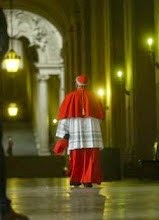
The senior African prelate heading into the papal senate next month is 70 year-old Archbishop Theodore-Adrien Sarr of Dakar in Senegal. Ordained a bishop at 37 and named to the capital see of the West African nation in 2000, the cardinal-designate follows his princely predecessor Hyacinthe Thiandoum, who was given his red hat in 1974 and died three years back.

What marks Sarr out, however, is his status as the top hierarch of a nation whose population is 95 percent Muslim. What's more, relations between Islam and the church in Senegal are reported to be unusually strong, cooperative and reciprocal.

As evidence of this, after his nomination was made public the cardinal-designate noted that his elevation had been sought in prayer... by one of the country's senior imams:
The Senegalese prelate disclosed hours after his nomination that Muslim cleric Habibou Tall had predicted publicly he would be made a cardinal before the end of the year.

"He said he was going to pray for that to happen," Sarr told reporters. "I know he has prayed for that to happen and I thank him for that."...

Christians in Senegal's breezy coastal capital expressed happiness at Sarr's appointment.

"There are countries where Christians are the biggest majority, but a cardinal was not named there, and we in small Senegal with a tiny population of Christians, we got one! We are simply blessed," said Alioune Ndiaye, 35, a brick maker.

Many Muslims expressed satisfaction at the appointment of the respected prelate.

"The new cardinal, Theodore Sarr, will work hard to strengthen the already good relations between Muslim and Christians," said Abdoulaye Diop, 45, a book-keeper of Muslim faith.
Among his post-Consistory curial assignments, expect Sarr to be named to the Pontifical Council for Interreligious Dialogue.

PHOTO: Reuters/Normand Blouni

-30-

Thursday, November 29, 2007

Pope to Muslims: C'mon Down

Last month, a group of 138 Muslim leaders released an open letter to Pope Benedict in response to the pontiff's September 2006 lecture at Regensburg.

Writing that his "is arguably the single most influential voice in continuing to move" Christian-Muslim relations "forward in the direction of mutual understanding," the group said it joined Benedict's "desire for frank and sincere dialogue and recognize[s] its importance in an increasingly interconnected world."

In that light, the writers said their letter was also intended to "point out some errors in the way [Benedict] mentioned Islam as a counterpoint to the proper use of reason, as well as some mistakes in the assertions" advanced by the Pope in the controversial address at the German university.

Presented in London and Washington, the group's letter attracted a significant amount of attention in the global press, as a Vatican response was awaited. The note even came up at last week's pre-consistory meeting of the college of cardinals.

Earlier this week, the newly-elevated Senegalese Cardinal Theodore-Adrien Sarr of Dakar indicated that a "positive" response was at hand. Noted for his own good relations with Muslims -- who comprise 95% of the population at home -- Sarr told Reuters that the church "will not miss this oppportunity."

And this morning, a late announcement from the Holy See revealed the response, signed by the Cardinal-Secretary of State Tarcisio Bertone. The letter was addressed to Prince Ghazi bin Muhammad bin Talal, a Jordanian academic thought to be the leader of the effort.

Fulltext:
From the Vatican, November 19, 2007

Your Royal Highness,

On 13 October 2007 an open letter addressed to His Holiness Pope Benedict XVI and to other Christian leaders was signed by one hundred and thirty-eight Muslim religious leaders, including Your Royal Highness. You, in turn, were kind enough to present it to Bishop Salim Sayegh, Vicar of the Latin Patriarch of Jerusalem in Jordan, with the request that it be forwarded to His Holiness.

The Pope has asked me to convey his gratitude to Your Royal Highness and to all who signed the letter. He also wishes to express his deep appreciation for this gesture, for the positive spirit which inspired the text and for the call for a common commitment to promoting peace in the world.

Without ignoring or downplaying our differences as Christians and Muslims, we can and therefore should look to what unites us, namely, belief in the one God, the provident Creator and universal Judge who at the end of time will deal with each person according to his or her actions. We are all called to commit ourselves totally to him and to obey his sacred will.

Mindful of the content of his Encyclical Letter Deus Caritas Est ("God is Love"), His Holiness was particularly impressed by the attention given in the letter to the twofold commandment to love God and one’s neighbour.

As you may know, at the beginning of his Pontificate, Pope Benedict XVI stated: "I am profoundly convinced that we must not yield to the negative pressures in our midst, but must affirm the values of mutual respect, solidarity and peace. The life of every human being is sacred, both for Christians and for Muslims. There is plenty of scope for us to act together in the service of fundamental moral values" (Address to Representatives of Some Muslim Communities, Cologne, 20 August 2005). Such common ground allows us to base dialogue on effective respect for the dignity of every human person, on objective knowledge of the religion of the other, on the sharing of religious experience and, finally, on common commitment to promoting mutual respect and acceptance among the younger generation. The Pope is confident that, once this is achieved, it will be possible to cooperate in a productive way in the areas of culture and society, and for the promotion of justice and peace in society and throughout the world.

With a view to encouraging your praiseworthy initiative, I am pleased to communicate that His Holiness would be most willing to receive Your Royal Highness and a restricted group of signatories of the open letter, chosen by you. At the same time, a working meeting could be organized between your delegation and the Pontifical Council for Interreligious Dialogue, with the cooperation of some specialized Pontifical Institutes (such as the Pontifical Institute for Arabic and Islamic Studies and the Pontifical Gregorian University). The precise details of these meetings could be decided later, should this proposal prove acceptable to you in principle.

I avail myself of the occasion to renew to Your Royal Highness the assurance of my highest consideration.

Cardinal Tarcisio Bertone
Secretary of State
-30-

Wednesday, October 17, 2007

The list as formally announced... in real-time... filling in names....

Electors:
  • Leonardo Sandri, prefect of the Congregation for the Oriental Churches (Argentina)
  • John Patrick FOLEY, Pro-Grand Master of the Equestrian Order of the Holy Sepulchre of Jerusalem (USA)
  • Giovanni Lajolo, Governor of the Vatican City-State (Italy)
  • Paul-Josef Cordes, president of the Pontifical Council Cor Unum (Germany)
  • Angelo Comastri, archpriest of St Peter's Basilica, Pope's vicar-general of the Vatican-City State (Italy)
  • Stanislaw Rylko, president of the Pontifical Council for the Laity (Poland)
  • Raffaele Farina SDB, archivist of the Holy Roman Church (Italy)
  • Agustin Garcia-Gasco y Vicente, archbishop of Valencia (Spain)
  • Sean Brady, archbishop of Armagh, primate of All Ireland
  • Lluis Martinez Sistach, archbishop of Barcelona (Spain)
  • Andre Vingt-Trois, archbishop of Paris (France)
  • Angelo Bagnasco, archbishop of Genoa (Italy)
  • Theodore-Adrien Sarr, archbishop of Dakar (Senegal)
  • Oswald Gracias, archbishop of Bombay (India)
  • Francisco Lopez Ortega, archbishop of Monterrey (Mexico)
  • Daniel Nicholas DINARDO, archbishop of Galveston-Houston (USA)
  • Odilio Pedro Scherer, archbishop of Sao Paulo (Brazil)
  • John Njue, archbishop of Nairobi (Kenya)
five "honoraries"/over-80s:
  • Emmanuel III Delly, Patriarch of Babylonia of the Chaldeans (Iraq)
  • Giovanni Coppa, archbishop, (retired) apostolic nuncio (Italy)
  • Esteban Karlic, archbishop-emeritus of Parana (Argentina)
  • Fr Urbano Navarrete, SJ, rector-emeritus of the Pontifical Gregorian University
  • Fr Umberto Betti, OFM, rector-emeritus of the Pontifical Lateran University
  • -30-

    Thursday, June 12, 2008

    The Red Roster, '08 Edition

    After the longest "honeymoon" in recent memory, last November's intake of new cardinals finally got their dicastery assignments from Pope Benedict this morning.

    As the entire college of cardinals is charged aiding the pontiff in overseeing the global church, each member of the papal "senate" is, regardless of home-base, traditionally given a slate of Curial memberships to bring their respective strengths and expertise to the service of the Holy See's universal mission, both within and outside the church's walls.

    Among other highlights of the list:
    • Not a single soul was added to the Congregation for the Doctrine of the Faith. Don't ask why.
    • Cardinal Angelo Bagnasco of Genoa -- the president of the Italian bishops' conference -- emerged as the slate's closest thing to a "big winner," picking up memberships on three influential congregations: Oriental Churches, Divine Worship and the Discipline of the Sacraments, and the all-powerful Congregation for Bishops, to which B16 also named Cardinals Andre Vingt-Trois of Paris, Vatican City's governor Giovanni Lajolo and the Laity Czar Cardinal Stanislaw Rylko.
    • Already mentioned as a potential successor to Cardinal Agostino Vallini after the expected transfer of the church's "chief justice" later this month to the vicariate of Rome, Cardinal Lluis Martinez Sistach of Barcelona was named to sit alongside Vallini as a member of the church's highest tribunal, the Apostolic Signatura. (A noted canonist, Martinez was named to the other legal dicastery -- the Pontifical Council for Legislative Texts -- last month, along with US Archbishops John Myers of Newark and Raymond Burke of St Louis.) The Barcelona cardinal, 70, was also named to the Pontifical Councils for the Laity and the Family, heading to the latter with Vingt-Trois.
    • Celebrated for his excellent relations with Ulster's Protestant community, the primate of All Ireland Cardinal Sean Brady of Armagh nabbed a slot on the Pontifical Council for Promoting Christian Unity, while the church's highly-regarded leader in Muslim-dominant Senegal, Cardinal Theodore Adrien Sarr of Dakar, was left off the list for the Pontifical Council for Interreligious Dialogue, being named instead to the Congregation for the Evangelization of Peoples, the office overseeing the church's mission efforts.
    • With the positio recently completed and amid swirling rumors that the beatification of Pope John Paul II could come as early as next spring, two of the late Great's inner sanctum were given seats on the body tasked with green-lighting the Polish Pope's movement toward sainthood, the Congregation for the Causes of Saints. Alongside Rylko -- Cardinal Karol Wojtyla's backup secretary during the two conclaves of 1978 -- Saints sees the arrival of Cardinal Angelo Comastri, the archpriest of St Peter's who, so it's said, John Paul's Polish circle would've favored as his successor... had he been a member of the college at the time of his death. A staunch advocate of the JP cause who recently floated the possibility of moving his remains from the subterranean grottoes to the Vatican basilica's main floor, Comastri was the lone red-hat to join Cardinal Stanislaw Dziwisz of Krakow -- Wojtyla's secretary of four decades -- for the tomb-side vigil to mark this year's anniversary of the pontiff's 2005 death. "People are convinced that John Paul II is already a saint and that therefore he can intercede for them to God," Comastri said in a late 2005 interview with the Italian bishops' daily paper, Avvenire.
    • At its essence, liturgy's all about communication, so it's appropriate that Philadelphia's own Cardinal John Foley -- long the Vatican's "great communicator" and now grand master of the Equestrian Order of the Holy Sepulchre of Jerusalem -- was named to Divine Worship. A missionary in his own right given his life's work of improving the church's accessibility and openness to the press, the Columbia J grad was likewise named to the Propaganda Fide.
    • And, lastly, the church in Texas' longstanding advocacy in defense of immigrants got an even firmer stamp of papal approval with the appointment of Cardinal Daniel DiNardo of Galveston-Houston to the Pontifical Council for Migrants and Itinerants. Having reportedly hoped for a light Roman docket given the time he's already spending away from home, the South's first red-hat got his wish -- he was the class' only member given a single assignment, and the only one of the new intake named to Migrants. Three other Stateside prelates (namely, Cardinals Adam Maida of Detroit, Theodore McCarrick of Washington and Bishop Nicholas DiMarzio of Brooklyn) might already sit on the council, but the combination of the Houstonian's location at ground zero of the national debate over immigration reform and a seat on the Vatican body that handles the church's response to the movement of peoples could just mean that Benedict's tapped his designated hitter on the issue for the American audience.
    And lastly, a related stat that's been floating around of late... possibly not without reason.

    Under usual circumstances, the US appointment docket will likely see a bit of movement between the days following this weekend's USCCB meeting in Orlando and mid-July's effective suspension of Vatican business for the summer. (For the record, as of this writing, eight American dioceses stand vacant, with another ten whose ordinaries are serving past the retirement age of 75 and holding on for successors.)

    But more than these, the potential of another milestone of note looms across the water.

    Since 1984, when then-Msgr Foley was named an archbishop and president of the Pontifical Council for Social Communications, at least two US prelates have concurrently led dicasteries of the Roman Curia. The figure first hit a peak of four in 1996, when the then archbishop of Denver, James Francis Stafford, was named president of the Pontifical Council for the Laity (the others: Cardinals William Baum at the Penitentiary, Edmund Szoka at the Holy See's "budget office," and Foley), and again following then-Archbishop William Levada's appointment to the CDF in 2005 until Szoka's retirement a year later.

    In the two years since, adding in Foley's 2007 appointment to the Holy Sepulchre post, the figure's been cut in half. And now, with Stafford's 76th birthday approaching late next month, the prospect of a lone Stateside dicastery-head for the first time in a quarter-century has become a topic of interest in some rather keen chattering circles... which can't help but muse that some reinforcement's in the offing.

    As always, stay tuned.

    PHOTO: Reuters


    -30-

    Saturday, February 14, 2009

    "Leading By Example"... or "Pope Wants Vibrant Parishes"... or "Pope Calls Bishops to Islam"

    Earlier today -- a month before he departs for his pontificate's first voyage to Africa -- the Pope received the Nigerian bishops as the body wraps its ad limina visit, now held on a septennial basis.

    Praising God and thanking the prelates for the church's "generous growth" of both new Christians and priestly and religious vocations in the continent's most-populous country, B16 offered some pointers for the future, including this notable snip:
    Expansion in the Church calls for special care in diocesan planning and the training of personnel through ongoing activities of formation in order to facilitate the necessary deepening of the faith of your people. From your reports I see that you are well aware of the basic steps involved: teaching the art of prayer, encouraging participation in the liturgy and the sacraments, wise and relevant preaching, catechetical instruction, and spiritual and moral guidance. From this foundation faith flourishes in Christian virtue, and gives rise to vibrant parishes and generous service to the wider community. You yourselves, together with your priests must lead by humility, detachment from worldly ambitions, prayer, obedience to the will of God and transparency in governance. In this way you become a sign of Christ the Good Shepherd.
    Now, it's worth pointing out that the Arabic term for "obedience to the will of God" is, of course, "Islam" -- Nigeria's majority religion, comprising half its 150 million residents, compared to 17 million or so Nigerian Catholics.

    Also this morning, the Nigerian visit provided an apt springboard for the Holy See to announce the top lineup for October's Second Synod devoted especially to Africa, its theme dedicated to "reconciliation, justice and peace" on the continent.

    To lead the three-week gathering as his presidents-delegate, the Pope named Cardinals Francis Arinze, the second Nigerian ever given the red-hat and recently retired Worship Czar, the Senegalese Theodore Adrian Sarr of Dakar and Wilfrid Fox Napier of Durban South Africa's lone member of the college.

    What's more, while the Roman Curia has no African dicastery-head for the first time in over three decades since Arinze's December retirement as prefect of the Congregation for Divine Worship and the Discipline of the Sacraments, the coming Synod's all-important post of Relator-General went to Ghana's lone cardinal, Peter Turkson of Cape Coast.

    Six languages under his belt and elevated to the papal "senate" in 2003, the appointment will showcase Turkson on the church's global stage for the first time. In itself, that bears watching: the lone Scripture scholar among the cardinal-electors, the Ghanaian's already considerable coterie of fans are unstinting in their near-evangelical zeal for the 60 year-old cleric... and, well, quite the high-profile opening to add to their number has come his way.

    In the meantime, however, Benedict departs Rome on 17 March for his pontificate's longest overseas trip yet -- a week in Angola and Cameroon.

    PHOTO: AFP/Getty


    -30-