Friday, May 08, 2009

Burke to ND: "Come Clean"

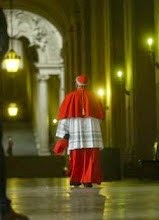
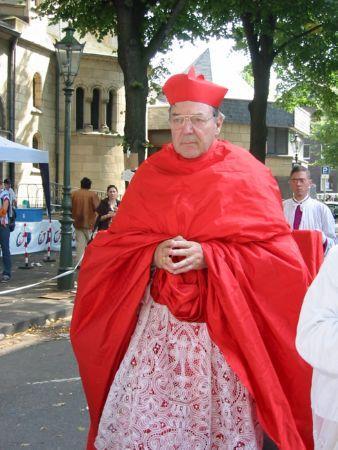
Fulltext to come, but the National Catholic Register's reporting that Archbishop Raymond Burke's performance at this morning's National Catholic Prayer Breakfast in Washington didn't disappoint:
“What should the Church do about Notre Dame?” [Register] asked Archbishop Raymond Burke last night. His answer:

“What it should do is have Notre Dame come clean. Is it Catholic or isn’t it? A Catholic institution, a Catholic university, cannot give honors to someone who is a promoter of things that are opposed to the most fundamental beliefs of Catholics, and so that’s what needs to happen.”

How can the Church do that?

“There’s an apostolic constitution, Ex Corde Ecclesiae, which sets forth the requirements for a university to have the name Catholic. I think that Notre Dame has to either follow those norms or say ‘We’re not a Catholic university anymore.’”...

At the prayer breakfast, Archbishop Burke said:

“In a culture marked by widespread and ingrained confusion about the most fundmental teachings of the moral law, our Catholic schools and universities must be beacons of truth and right conduct. “

He added, “The purposed granting of an honorary degree” by Notre Dame to Barack Obama is “the source of the greatest scandal.”

The archbishop said, “If we as individuals are not willing to accept the burdens” of the Catholic witness to the right to life, “we are not worthy of the name Catholic.”
According to the wires, the church's "chief justice" slammed the Obama administration for "so aggressively advancing an anti-life and anti-family agenda."

The former St Louis archbishop "told Catholics Friday morning that Catholic universities should not honor those who teach and act publicly against the moral law," the AP reported.

Burke likewise deemed the President's selection of Kathleen Sebelius -- a pro-choice Catholic -- as Secretary of Health and Human Services "necessarily the source of the deepest embarrassment to Catholics and a painful reminder of the most serious responsibility of Catholics to uphold the moral law."

Again, fulltext to come.

SVILUPPO: Fulltext of Burke's keynote has been posted.

-30-

Thursday, March 26, 2009

Burkxploitation?

After yesterday's videotape release in Washington featuring Archbishop Raymond Burke quickly made its way 'round the chattering circles before hitting the wires, this morning the prefect of the Apostolic Signatura issued the following statement:
ROME, Italy - In response to the March 25, 2009 press conference of Mr. Randall Terry in Washington, D.C., the Most Reverend Raymond L. Burke, Archbishop Emeritus of Saint Louis and Prefect of the Supreme Tribunal of the Apostolic Signatura, issued the following statement:
“Recently, Mr. Randall Terry and some of his associates visited me in Rome and asked to videotape an interview with me to share with pro-life workers for the purpose of their encouragement. The interview was conducted on March 2, 2009.

“Sadly, Mr. Terry has used the videotape for another purpose which I find most objectionable.

“First, Mr. Terry issued a media advisory which gave the impression that I would be physically present at the press conference during which he played the videotape, when, in fact, I was in Rome.

“Second, I was never informed that the videotape would become part of a press conference.

“Third, I gave the interview as a Bishop from the United States to encourage those engaged in the respect life apostolate, not as the Prefect of the Supreme Tribunal of the Apostolic Signatura.

“Fourth, I was never informed that the videotape would be used as part of a campaign of severe criticism of certain fellow bishops regarding the application of Canon 915 of the Code of Canon Law.

“If I had known what the true purpose of the interview was, I would never have agreed to participate in it.

“I am deeply sorry for the confusion and hurt which the wrong use of the videotape has caused to anyone, particularly, to my brother bishops.”

(Most Rev.) Raymond L. Burke

March 26, 2009
Speaking of Randall Terry's conduct, however, America's Michael Sean Winters attended yesterday morning's rollout of the Burke interview at DC's National Press Club, from which he reported thus:
The interview took place while Terry and others met with Vatican officials urging them to remove Washington D.C. Archbishop Donald Wuerl and Arlington Bishop Paul Loverde for their failure to deny Holy Communion to politicians because of their political stands on abortion laws.

Mr. Terry, who was introduced at the press conference as "a great warrior for life," boasted that the Vatican officials were sympathetic to his pleas. He had a copy of the document that was presented to the officials, including Archbishop Burke, which explicitly calls for the removal of Archbishop Wuerl and Bishop Loverde.... During the press conference, Terry repeatedly called them "treacherous." During the interview, Terry specifically asked Archbishop Burke about "the bishops who stepped up such as in Washington, D.C. Virginia, others…Massachusetts…[and] said that we will serve communion." Burke did not endorse Terry’s call for the bishops’ removal but neither did he say anything in their defense. It was the Vatican equivalent of throwing them under the bus.

In the course of a Q-and-A, Terry also said Boston Cardinal Sean O’Malley had "done a great disservice to the Church" for failing to excommunicate Sen. John Kerry. Terry did not, at first, object to Cardinal Edward Egan inviting candidate Obama to the Al Smith dinner, until it was pointed out to him that Obama did speak at the event. "That was very bad then," Terry concluded.
-30-

Friday, June 27, 2008

The "Chief Justice": A St Louis Cardinal

So... the foreseen "other shoe" has dropped.

This morning, Pope Benedict named Archbishop Raymond Burke of St Louis as prefect of the Apostolic Signatura -- in effect, the church's "chief justice" as head of its top court. The Wisconsin-born prelate, who turns 60 on Monday, succeeds Cardinal Agostino Vallini, whose long-expected appointment as papal vicar for Rome was also announced in today's moves.

The first non-European named to head the historic tribunal, which dates from the 15th century, the archbishop's appointment to the prestigious post -- which, in keeping with tradition, will see Burke receive the cardinal's red hat at the next consistory -- is recognition of the top-shelf canonist's legal chops, but also serves to reflect the dominance of Signatura's docket by cases from the English-speaking world. On the more practical side, the return to the Vatican's top tribunal of the first US cleric to hold a senior post within its ranks -- the second consecutive instance of an archbishop of the onetime "Rome of the West" being called out of town to a cardinalatial post -- removes the American bishop most affiliated with the so-called "Communion Wars" from the domestic fray in advance of another presidential election season.

Born in Wisconsin's rural diocese of LaCrosse, Burke was ordained a priest by Pope Paul VI on 29 June 1975 -- one of 359 clerics ordained together in commemoration of the Holy Year. Distinguished from early on by his canonical aecumen, after serving at home and studies in Washington and Rome, the onetime Basselin scholar -- whose legal studies specialized in ecclesiastical jurisprudence -- was called to the Curia as defender of the bond at the Signatura in 1989. Five years later, at 46, he was named bishop of his native diocese, where he served until his appointment to St Louis in late 2003.

As a diocesan bishop, Burke's record has mixed solid conservative credentials and significant success in recruiting seminarians with a penchant for stoking controversies that've made ripple effects far beyond the boundaries of his charge.

In early 2004, the newly-arrived archbishop -- who had exhorted pro-choice politicians to refrain from receiving Communion in LaCrosse -- rocked the Stateside church by replying that he would "give a blessing" to the then-Democratic nominee, Massachusetts Sen. John Kerry, opening the door to a national firefight that polarized church circles and continues into the present. In April 2006, after Missouri voters narrowly defeated a constitutional amendment forbidding the use of state funds to support embryonic stem-cell research -- a result which, he said, "shows how deeply the culture of death is rooted in our society" -- Burke resigned the chairmanship of the city's Catholic children's hospital in protest over the booking of the singer Sheryl Crow for its major annual fundraiser, citing Crow's public stances in support of abortion and ESCR.

Beyond these, the dominant showdown looming over Burke's St Louis tenure has been the archdiocese's collision with the independent board of St Stanislaus Kostka parish, as the church sought to regularize the Polish parish's status and end its long-standing arrangement of lay governance. In 2005, the archbishop invoked the canons to announce the board's automatic excommunication (and that of the priest it hired) on grounds of schism; after the parish -- which continues to function independently -- appealed to Rome, last month the Congregation for the Doctrine of the Faith upheld the decision. Along the way, Burke revoked the local faculties of Dominican Fr Thomas Doyle after the cleric -- a prominent, longtime advocate for survivors of clergy sex abuse -- provided canonical counsel to the board.

In recent months, a separate flare-up over the attempt of two local women to be ordained to the priesthood was joined with equal force. After claiming orders, Burke summoned the women to defend themselves before him; when they didn't, they were excommunicated. And just yesterday, a Sister of Charity found to have encouraged and participated in the rites was declared guilty of three canonical crimes, placed under interdict and forbidden from exercising "any mission" in the archdiocese.

While the canonical reasoning behind his decisions has been roundly affirmed as unassailable, most observers concluded that the new prefect's reputation as a "lightning rod" steered the US bishops to choose Auxiliary Bishop Thomas Paprocki of Chicago over the St Louis prelate for the chairmanship of the bench's Committee on Canonical Affairs and Church Governance at last November's plenary in Baltimore. Also a respected canonist, the junior prelate bested Burke with 138 votes to the archbishop's 95. Given today's news, however, it could be said that, where it counted, Burke still won out.

Speculation tipping the archbishop's Romecoming began in earnest early last month after Burke -- already one of the Signatura's 18 prelate-judges -- was named to two influential Roman dicasteries: the Congregation for the Clergy and the Pontifical Council for the Interpretation of Legislative Texts. An international leader in the church of the restoration of the 1962 Missal and the growing vocation to lifelong consecrated virginity lived in the world, late July will see the completion of the LaCrosse project he championed during his tenure as its bishop: the Romanesque Shrine of Our Lady of Guadalupe, its cost believed to hover in the $30 million range.

In accord with the norms of canon law, the 560,000-member St Louis see fell vacant with the publication of this morning's appointment; until his departure for Rome in August, the prefect-designate will serve as archdiocesan administrator. Then, the archdiocesan consultors will be charged with the choice of another administrator from within pending the appointment of the Gateway City's ninth archbishop.

A press conference has been called for 11am local time.

-30-

Tuesday, October 14, 2008

The Gateway Movement

Following Friday's first "snapshot" reporting the unexpected emergence of Bishop Salvatore Matano of Burlington at the head of the field to succeed Archbishop Raymond Burke in St Louis, the buzz in the "Rome of the West" kicks up another couple notches with a Pat Rice piece for the local Beacon... that reveals even more:
Matano's name ranks first on a list of three bishops under consideration, four sources outside of St. Louis told us.

The first two major steps in the selection of a replacement for St. Louis Archbishop Raymond Burke have been completed and that Matano is out front. Sources in Italy, Washington and Rhode Island declined to be named since the process is highly secretive. An announcement might come next month, with the new bishop's installation most likely after the first of the year....

Sources who have been predicting Matano since late July say Matano is several lengths ahead as the appointment process enters its home stretch.

The Providence native is known as a good preacher. As a young priest, he was an engaging math teacher in grade school. He also has been an effective teacher of moral theology ad canon law to graduate students at the Dominican Order-sponsored Providence College. Smart and witty are two words that friends are quick to use for him.

"One of my memories is seeing him walk from his St. Augustine parish (in Providence, R.I. ) about three-fourths of a mile to visit parishioners in a hospital," said Patrick Reid, a theology professor at Providence College. "That's him, no need to get the car, make no fuss. He's a humble good priest. I don't think he is particularly ambitious. He liked being a pastor and if he was going to become a bishop, then, it would have to be the Lord's will -- not something he'd seek."

Reid also recalled the "wonderful, terrific" talk that Matano gave at Reid's son's 8th grade parish school graduation. The priest's words had the class and their parents riveted with attention. "He's good with kids," Reid said.

One month before his death, Pope John Paul II assigned Matano to Burlington. The new Vermont bishop took a loan to pay one $11 million civil law suit settlement to a victim of clerical sex abuse. It was one of about 20 cases he had had to deal with. Matano prefers not to settle suits and has been sending cases to trial.

About once a month, Matano celebrates a Sunday 6 p.m. Mass at the Catholic Center at the University of Vermont's Burlington campus. About 60 students crowd the space.

Matano also is a FOB and a FOD -- a friend of Burke and a friend of Milwaukee Archbishop Timothy Dolan, a St. Louis native. As Burke's friend, Matano was the guest preacher at the annual Red Mass for lawyers and judges in October 2005 at the St. Louis Cathedral. Lawyers said he was such a good speaker that several wrote thank-you notes.

Burke and Matano were classmates in Rome at the Jesuit's Gregorian University. Both are canon lawyers.
According to one of Rice's sources, the terna for the highly-anticipated appointment arrived in Rome within the last two weeks.

Repeating an earlier word of caution, it is of prime importance to keep in mind that, given the nature of the process, these are merely "tracking" reports of where things are credibly said to stand at present, and nothing more than that. At least, until the Apartment has spoken; especially in light the current Pope's heightened involvement in his appointments, the usual rule that all presumptions are to be avoided is ever more the case in this pontificate. (As Rice herself notes, the top name on the St Louis shortlist following Archbishop John May's 1992 retirement was that of the then-bishop of Lafayette (LA), Harry Flynn... who the wind in the Vatican eventually swept to another sainted archbishopric.)

That said, on a related note -- and at long last -- the latest word on the ad intrade indicates an audible revving of the gears toward the long-awaited succession in New York.

For everything else, as always, stay tuned. And Go Phils.

-30-

Saturday, November 08, 2014

The Hammer Falls... And Then Some

Foreseen for weeks, it's now come to pass – at Roman Noon this Saturday, the Pope named Cardinal Raymond Burke as patron of the Sovereign Military Order of Malta, removing the Wisconsin-born prelate from his role as the church's "chief justice" as head of the Apostolic Signatura, where he's served since 2008.

Arguably the most polarizing figure on the global Catholic stage due to his outspoken, unstinting conservatism in matters of liturgy and church teaching, the move caps a yearlong dismantling of Burke's clout, which began last December with the 66 year-old's sudden yanking from the membership of the Congregation for Bishops, where he helped facilitate the most controversial US appointments of Benedict XVI's pontificate. While the cardinal rejected the description in one of his many recent interviews, even his champions have termed the former archbishop of St Louis as the leading face of "opposition to the new orthodoxies" in the age of Pope Francis.

In a surprise choice for Burke's replacement at the Signatura, Francis tapped his "foreign minister," the Corsican Archbishop Dominique Mamberti, 62, who's served as Secretary for Relations with States since 2006. Yet with the diplomatic role become ever more crucial given the Argentine Pope's concerted forays into geopolitical affairs, today's most significant move is neither of the above, but the even more astonishing choice of Mamberti's successor at the helm of the Holy See's foreign service: Archbishop Paul Richard Gallagher (right), 60, the Liverpool-born Nuncio to Australia, who becomes the first native English-speaker ever to hold the post.

A three-decade veteran of the diplomatic corps, Gallagher's first assignment at ambassador level was in Burundi as successor to Archbishop Michael Courtney, who was shot and killed in a December 2003 attack reportedly planned by senior officials in the war-torn country.

Since arriving in Canberra in late 2012, Gallagher has proven an immensely popular figure on the Aussie scene, and one whose ecclesiology is said to line up squarely with Francis' emphasis that ecclesiastical desk-holders work to keep their rootedness in pastoral life and ministry.

Set to conduct Wednesday's all-important installation of Anthony Fisher OP as archbishop of Sydney, a planned December celebration for the 100th anniversary of the Vatican's diplomatic presence in Australia will now double as Gallagher's farewell Down Under. For his opening stroke in Rome, meanwhile, the new Secretary for Relations will take the lead alongside Cardinal Pietro Parolin in advising Francis on his next "State of the World" speech – the traditional New Year's greeting to the diplomatic corps, given in early January.

* * *
Returning to Burke, having gone into overdrive during the recent Synod on the Family to protest any prospect of change to the church's existing pastoral practice toward couples in irregular situations – as well as stoutly defending the existing annulment process amid Francis' recent moves to probe its effectiveness – whether intentional or not, the timing of the cardinal's "exile" to the Rome-based Malta post is almost certain to be taken as an added provocation by his allies among the US bishops, as the announcement coincides with the prelates' arrival in Baltimore this weekend for Monday's start of their November plenary.

Then again, following the cardinal's recent comments that the church under Francis "is like a ship without a rudder" and affirming "the risk" of a schism over the Pope's decisions following next year's Ordinary Synod, one senior US prelate termed the steady stream of polemics a form of "public suicide."

In any case, the wheels of the cardinal's transfer from the church's lead tribunal have been in motion for over a year. From the first months after Francis' election, as Burke went unconfirmed by the new Pope at the Signatura, Whispers ops indicated the top canonist as a top choice to become Grand Master of the Equestrian Order of the Holy Sepulchre once Cardinal Edwin O'Brien reached the retirement age of 75 last April.

Much as that match would've killed two birds with one stone as the US boasts the lion's share of the millennium-old order's membership and Burke's well-known homesickness for the States, the prospect would've inevitably been shot down by Francis' domestic brain-trust, for whom even a Rome-based foothold on these shores for Burke was still too close for comfort. In the end, Burke now becomes the first non-European to serve as chief chaplain of the thousand-year-old Order of Malta, which is always headed not by a cleric, but a celibate layman elected in a Conclave who holds the title Sovereign Prince. (The current Prince-Grand Master is Fra Matthew Festing, the second Englishman to occupy the office.)

Having taken the unorthodox step of confirming reports of the Malta move in an on-record interview during the Synod, just last weekend, Burke was the star attraction in St Peter's for one of his favorite causes, as he celebrated Mass in the Extraordinary Form to close an international pilgrimage of devotees of the pre-Conciliar liturgy.

In a pointed message to the gathering, the now Pope-emeritus Benedict expressed his pleasure at the "full peace in the church" which he restored to the Tridentine books with 2007's Summorum Pontificum, adding his praise that the rites were being "celebrated by great cardinals."

With Burke's effective demotion, for the first time in three decades, no US prelate leads an office of the Roman Curia as traditionally understood. As Francis' reform of the governing apparatus is expected to roll out in early 2015, it nonetheless bears reminding that – alongside his seat on the Pope's supreme council of nine cardinal-advisors – Boston's Cardinal Seán O'Malley OFM Cap. now heads up the newly-created Pontifical Commission which reports directly to Francis on the church's response to clergy sex-abuse and the care of survivors.

-30-

Saturday, October 17, 2009

The Judge of Bishops

As the Holy See remains open for business on Saturdays, weekend news is always a possibility on the beat... and true to form, a move announced this morning will likely garner no shortage of reaction in church circles, and from all sides at that.

Earlier today, B16 named the church's "chief justice" Archbishop Raymond Burke to the membership of the Congregation for Bishops, giving the 61 year-old prelate a seat at the dicastery's all-important Thursday Table, whose votes recommend prospective appointees to the Pope.

As a result, Burke's impact on the process and its outcomes could extend for two decades; normally renewed on a five-yearly basis, Curial memberships automatically cease at age 80 both for bishops and the college of cardinals, which the Wisconsin-born prefect of the Apostolic Signatura is likely to join at the next consistory, currently expected to take place sometime in mid-2010.

Best known for his oft-controversial commentary on public life, the naming of the former St Louis archbishop gives the US its fifth seat on the 30-member A-list group, joining Cardinals Bernard Law (archpriest of St Mary Major), William Levada (prefect of CDF), Francis Stafford (retired Major Penitentiary) and Philadelphia's Justin Rigali, a former #2 at Bishops who's become the Stateside hierarchy's standout kingmaker since his appointment to the congregation in September 2007.

While Burke is the youngest US member the congregation's seen since Law's arrival at the peak of his clout in the early 1990s, its most youthful American until today was Levada, 73; Stafford and Law are both 77, and Rigali turns 75 next April. By custom, the heads of both the Signatura and the Apostolic Penitentiary (the top tribunal for matters pertaining to the internal forum) each hold a seat on Bishops.

Though it can only be gauged with time, the emergence of a potential -- and potentially significant -- "Burke effect" on Stateside appointments bears watching.

Since Rigali's return to the table, the congregation's American choices have trended heavily toward pastoral, conciliatory candidates whose ideological leanings have proven tough to read. Along these lines, the recent picks have mostly shown little inclination to enforce Burke's reading of Canon 915, whose preclusion from Communion of anyone "obstinately persevering in manifest grave sin" would, in the prefect's clearly and frequently articulated judgment, see the Eucharist denied to Catholic politicians who defy church teaching on abortion.

While last spring's selection of Archbishop Robert Carlson as Burke's St Louis successor can easily be viewed among said bunch, the new prelate-maker's penchant for unstinting fidelity with a taste for stoking public debate was reflected in at least one recent high-profile pick: Oakland Bishop Salvatore Cordileone, a protege of Burke's who was named to head the northern California diocese in March.

Again, whether the presence of the sanctions' first and most prominent advocate will lead to a shift won't become clear for some time. In the meanwhile, though, it makes a process that's lately become far more complex all the more interesting.

Also named to Bishops this morning was the Vatican's "Worship Czar," the Spanish Cardinal Antonio Cañizares Llovera, whose longstanding ties to Pope Benedict have seen him dubbed the Ratzingerino, or "Little Ratzinger."

Tomorrow morning, Burke will offer a Pontifical High Mass in the Roman rite's "extraordinary form" in St Peter's Basilica. The celebration with the 1962 Missal -- a cherished cause of the archbishop's -- is believed to be the first public use of the pre-Conciliar Mass at the Vatican since the liturgical reform was implemented in 1969.

PHOTO: Institute of Christ the King Sovereign Priest


-30-

Monday, September 29, 2008

Burke: Dems Risk "Death"

He might be re-settling into Roman life as the church's new "chief justice," but the ringleader of 2004's first movement among the US bishops to bar pro-choice public officials from the Eucharist has sent strong words back home with 36 days to go 'til Election '08.

Now prefect of the Apostolic Signatura, Archbishop Raymond Burke's comments ran in Saturday's edition of the Italian bishops' newspaper, Avvenire:
The newspaper asked the archbishop... for his reaction to reports that his Vatican job was designed to get him away from St. Louis.

"I have too much respect for the pope to believe that in order to move someone away from a diocese he would nominate him to a very sensitive dicastery like this one," said the archbishop, whose office is in charge of ensuring that lower church courts correctly administer justice in accordance with canon law.

Archbishop Burke was asked if he knew that the August Democratic National Convention in Denver featured a guest appearance by Sheryl Crow, a musician whose performance at a 2007 benefit for a Catholic children's hospital the archbishop had opposed because of her support for abortion and embryonic stem-cell research.

"That does not surprise me much," the archbishop said. "At this point the Democratic Party risks transforming itself definitely into a 'party of death' because of its choices on bioethical questions as Ramesh Ponnuru wrote in his book, 'The Party of Death: The Democrats, the Media, the Courts and the Disregard for Human Life.'"

Archbishop Burke said the Democratic Party once was "the party that helped our immigrant parents and grandparents better integrate and prosper in American society. But it is not the same anymore."

Pro-life Democrats are "rare, unfortunately," he said.

Archbishop Burke also was asked about being one of a few U.S. bishops to publicly ban Catholic politicians who hold positions contrary to church teaching from receiving Communion.

"Mine was not an isolated position," the archbishop said. "It was shared by Archbishop Charles J. Chaput of Denver, by Bishop Peter J. Jugis of Charlotte (N.C.) and by others."

"But it is true that the bishops' conference has not taken this position, leaving each bishop free to act as he believes best. For my part, I always have maintained that there must be a united position in order to demonstrate the unity of the church in facing this serious question," he said.

"Recently, I have noticed that other bishops are coming to this position," he said, especially after Sen. Joseph Biden of Delaware, the Democratic vice-presidential candidate, and House Speaker Nancy Pelosi, D-Calif., "while presenting themselves as good Catholics, have represented church teaching on abortion in a false and tendentious manner."

Archbishop Burke said he is convinced that a 2004 letter from then-Cardinal Joseph Ratzinger to the U.S. bishops and canon law say "it is not licit to give holy Communion to one who is publicly and obstinately a sinner. And it is logical that one who publicly and obstinately acts in favor of procured abortion enters into this category."
For the record, Burke's not the only curial head talking death lately -- the church's Social Justice Czar did the same earlier today at a Sant'Egidio-sponsored conference in Rome on the universal moratorium of capital punishment:
There goes the president of the Pontifical Council for Justice and Peace, Cardinal Renato Martino, in Rome today, looking to the day in which the death penalty is "definitively eliminated" from the earth.... Cardinal Martino left American Catholics no wiggle room in his description of the death penalty as "contrary to the great Christian values which sustain the universal rights of man".
And finally, having garnered no shortage of reaction and "multiple requests" for clarification following his impromptu post-Meet the Press homily on Catholic politicians, church teaching, abortion and natural law, Bishop Robert Morlino of Madison "set[s] the record straight" in his latest column for the diocesan Herald.

PHOTO: AP/Tom Gannam

-30-

Friday, June 27, 2008

More Burke

Keeping with the day's top story, a video message from Archbishop Raymond Burke has been posted on the St Louis archdiocesan site...

Fulltext:
Today, at noon in Rome (5 a.m. CDT), it was announced that His Holiness, Pope Benedict XVI, has named me prefect of the Supreme Tribunal of the Apostolic Signatura, effective immediately. With the announcement, I ceased to be the Archbishop of St. Louis.

I am deeply humbled by the trust which His Holiness has placed in me, and, in priestly obedience, I have pledged to serve our Holy Father to the best of my abilities. Although you will no longer pray for me as your archbishop, especially during the celebration of the Holy Mass, I ask your prayers for me, that I may faithfully and generously cooperate with God's grace in fulfilling my new responsibilities.

Leaving the service of the Church in the Archdiocese of St. Louis is most sad for me. It has been an honor and gift for me to serve the archdiocese over the past four years and five months. It had been my hope to serve here for a long time, but, as the bishop who called me to priestly ordination often remarked, "Man proposes, but God disposes." I trust that doing what our Holy Father has asked me to do will bring blessings to the Archdiocese of St. Louis and to me. St. Louis is a great archdiocese which will always have a treasured place in my heart.

In a particular way, I am saddened to leave my fellow priests, whom I have so much grown to esteem and love. Often, I have spoken about the remarkable unity and loyalty of our presbyterate. For me, it has been a special grace to work with them in the service of God's flock in the archdiocese. I thank them for the priestly fraternity which they have always shown me, and for the generous obedience with which they have responded to my pastoral care and governance of our beloved archdiocese.

With regard to the governance of the archdiocese, the College of Consultors will meet to elect an archdiocesan administrator who, with the help of the consultors, will govern the archdiocese, until the new archbishop is appointed and installed. Please pray for the College of Consultors and for the archdiocesan administrator whom they will elect.

Again, I ask your prayers. You can count upon my daily prayers for the Archdiocese of St. Louis, always.
...and from on the ground, the first line from The Beacon's Pat Rice:
The Signatura is the court of last resort within the church, its Supreme Court. Its prefect is its administrator and something like a chief justice who has one vote along with the 20 other judges. Appointing an American to that post seems like common sense. Since 2002, many of the cases being appealed are brought by priests from the U.S., Ireland and Australia. They are men whose bishops want to laicize them -- take away their rights of ministry -- because of sexual abuse of minors. An English speaker who has seen how the scandal has ravaged the church and dispirited both the clergy and laity would have an advantage.

The post is an important Vatican desk job, although the leader is not much in the public eye -- barring a rare hullabaloo over a case. Until 2002, this tribunal mostly handled appeals of marriage annulments.

For the first time in the history of the St. Louis archdiocese, its archbishop has been assigned to a job in the Vatican leadership, its curia in Rome, removing him from pastoral work with the laity. Burke was installed as the St. Louis archbishop in January 2004, coming here from his home diocese of Lacrosse, Wisc. There he had studied as a seminarian, been ordained a priest and after more studies to become a canon lawyer in Rome became its bishop. He was named to St. Louis after its former archbishop Justin F. Rigali, now a cardinal, was transferred to Philadelphia.

Burke is warmly regarded by seminarians, by cloistered nuns and some St. Louis priests; he is wildly popular nationally with traditional Catholic grateful that he has promoted the Mass in Latin. However, he has not been popular with some priests and nuns here.

"Oh, my gosh, that is marvelous news," said one parish priest on hearing the news Friday morning. He declined to allow his name to be used. "The priest morale here has been so low."

Though warm and charming one-on-one with the laity and on pilgrimages he led, his official communications and actions with church members has often left them stunned because his efforts to help them understand his actions failed....

Burke has been the most outspoken American bishop on not giving Holy Communion to public figures -- politicians -- who support abortion rights and public financing of embryonic stem cell research. In January 2004, shortly before the Missouri presidential primary, within a week of becoming St. Louis' archbishop, he told this reporter on KMOV-TV that he would refuse Holy Communion to Democratic presidential candidate John Kerry, a Catholic, because Kerry did not uphold the church's position on abortion. Last year, he said the same thing about then-Republican presidential candidate Rudy Giuliani.

"The appointment is going to make every pro-choice Catholic politician very worried,” said the Rev. Thomas Reese, author of “Inside the Vatican” and a Jesuit priest. “After all, he made his name as a canon lawyer denying communion to pro-choice politicians."

Now that Burke has been promoted to Rome, it will make some American bishops “much more sympathetic” to Burke’s efforts, Reese said. "Burke now will become a voice in Rome for cracking down on pro-choice Catholics."

“The appointment shows Pope Benedict has reached deep into the American church to find people to help run the Vatican," Reese said.

Until Pope Benedict XVI names a new archbishop for St. Louis, the archdiocese's college of consultors, a group of about 12 parish priests, likely will elect an administrator. This is what the body did when Archbishop John L. May was ill and after Rigali left St. Louis for Philadelphia. Bishop Robert J. Hermann, a Weingarten, Mo., native and now St. Louis' only auxiliary bishop, or another vicar general, Monsignor Vernon Gardin, will likely be named to the temporary post. No administrator can make permanent assignments during his tenure.

In a rarer move, the Vatican could name an apostolic administrator who would have full powers of an archbishop.

The much revered Hermann would not be considered for the permanent post of archbishop since he turns 74 in August. Bishops must offer the pope their resignations when they reach 75.

As a member of the Congregation for Bishops, Rigali will influence who is the next St. Louis Archbishop. No one would be more popular than native son, Milwaukee Archbishop Timothy Dolan, but Benedict likely has the leadership of larger dioceses planned for him....

[Leading the Signatura] is not a joyful post, but it is in Rome, a place where Burke enjoys living. He speaks excellent Italian and studied to be a canon lawyer there as a young priest. Beginning in 1989, he worked in another of the Vatican's three courts, the Roman Rota. Pope John Paul II named him Defender of the Bond, the lawyer who must defend the validity of the marriage in annulment cases. He left that post only when John Paul named him LaCrosse's bishop in 1994.

The assignment also returns him to a mostly clerical world where he will have scant interaction with lay people except when he says public Masses.
On a note of historic context, Burke becomes the tenth American prelate named to lead a Roman dicastery, and the first called from a Midwestern post since 1958, when an ailing Pope Pius XII named Cardinal Samuel Stritch of Chicago prefect of the Propaganda Fide. The first Stateside cleric chosen to lead a curial office, Stritch died shortly after taking up his duties in the Eternal City. It's also noteworthy that, of the ten, seven were heads of dioceses on these shores at the time of their respective appointments to the church's central government.

While this morning's appointment brings the number of US curial chiefs to three, with 75 year-old Cardinal James Francis Stafford's retirement as head of the Apostolic Penitentiary (i.e. the Vatican's Mercy Czar) likely around the corner, as previously forecast on these pages (...and not without reason), the Holy See has now ensured that the figure wouldn't drop below two, thus maintaining a custom that's been in place for nearly a quarter-century.

SVILUPPO: At this morning's press conference, the appointee let the tears flow (video):
At a news conference packed with supporters at the Cardinal Rigali Center in Shrewsbury, Burke became emotional while talking about what he called "a major change in the life of the archdiocese and of my own life."...

Burke called the news of his departure "bittersweet," and said he would miss his priests and seminarians most of all. "I really love this archdiocese, and it’s sad for me to leave," he said, before pausing, and breaking down. "I will never lose the deep affection I have for the archdiocese of St. Louis."
Contrary to usual practice (which would see Burke serving as administrator until his departure for Rome), indications are that the St Louis archdiocesan consultors will sit sometime this afternoon to elect an administrator to serve for the duration of the sede vacante.

All preliminary signals expect that, if not by year's end, the ninth archbishop of St Louis will be in place by Easter... and already, the field of possibles grows by the second.


-30-

Wednesday, March 25, 2009

Burke v. US

Continuing the push for his preferred interpretation of Canon 915 -- i.e. the legal basis for the denial of the Eucharist to pro-choice politicians -- the church's "chief justice" Archbishop Raymond Burke was featured in a video shown this morning in Washington calling the text "completely clear" and urging its universal enforcement on public officials who support legalized abortion... or, as it was described in the conversation, "killing children."

Given in an interview with the longtime pro-life activist Randall Terry, the comments were advertised as "thunder" before their debut at the National Press Club... and now, the transcript's posted so you can judge for yourself.

Having received Burke's blessings for "what you are doing to advance the cause of life," Terry recorded the interview in early March while on a visit to Rome, during which he met with Vatican officials to call for for the removal of Stateside bishops who don't refuse Communion to public officials whose platforms conflict with church teaching, including the longtime leader of the no-ban school -- Archbishop Donald Wuerl of Washington -- who seemingly had something to say about the criticism in his column for last week's archdiocesan paper, the Catholic Standard.

On his first public journey home since becoming prefect of the Apostolic Signatura last summer, the former archbishop of St Louis will appear in the capital to keynote the annual National Catholic Prayer Breakfast.

The conservative-leaning event will take place on 8 May, three days after the installation of Burke's friend and protege, Bishop Salvatore Cordileone, in Oakland. Supreme Court Associate Justice Antonin Scalia will likewise appear at the morning nosh as a guest speaker.

In other Burke-notes, the Wisconsin-born prelate recently termed the nomination of Kansas Gov. Kathleen Sebelius as secretary of Health and Human Services as "the source of the greatest embarrassment because she has publicly and repeatedly betrayed her Catholic faith."

A pro-choice Catholic, the Democratic gov's confirmation hearing remains unscheduled. Last year, she was publicly called upon to refrain from the Eucharist by her ordinary, Archbishop Joseph Naumann of Kansas City.

-30-

Tuesday, January 22, 2008

Deja Crow

In his latest brush with controversy, Archbishop Raymond Burke of St Louis marked the Roe anniversary by prodding the administration of Jesuit-run St Louis University to "deal with" its head basketball coach after Billikens honcho Rick Majerus self-identified as pro-choice:
Burke said this morning that... Majerus should be disciplined over his public comments supporting abortion rights and stem cell research.

Majerus made his comments at a campaign appearance for Hillary Rodham Clinton on Saturday night during an interview with KMOV (Channel 4).

During an interview with the Post-Dispatch today in Washington, where Burke is attending the March for Life, he said the coach should be disciplined.

"It's not possible to be a Catholic and hold those positions," Burke said. "When you take a position in a Catholic university, you don't have to embrace everything the Catholic church teaches. But you can't make statements which call into question the identity and mission of the Catholic church."

The archbishop declined to offer specifics of what discipline Majerus should face. "I'm confident it (the university) will deal with the question of a public representative making declarations that are inconsistent with the Catholic faith."

Burke declined to say if he thought Majerus should be fired, but added, "You can't have a Catholic university with one of its prominent staff making declarations" that are in conflict with the church.

A spokesman for the university, Jeff Fowler, said Majerus' comments were not related to his role at the university.

"Rick's comments were his own personal view. They were made at an event he did not attend as a university representative," Fowler said. "It was his own personal visit to the rally. The comments were his, he was not speaking for the university in whatever comments he made to Channel 4."

Last year, St. Louis U. celebrated a legal victory that affirmed it is not controlled by the Catholic church or by its Catholic beliefs.

The Missouri Supreme Court agreed with the school in handing down a decision that the city of St. Louis did not violate state and federal constitutions by granting the university $8 million in tax increment financing for its new arena.

Opponents of the $80 million arena sued the school in 2004, halting construction.

The Missouri Constitution prohibits public funding to support any "... college, university, or other institution of learning controlled by any religious creed, church or sectarian denomination whatever."

The debate came down to two words: "control" and "creed." Does the guiding mission of a Catholic university align with the specific system of religious faith espoused by the Catholic church? And if so, does that system of faith control the actions of the university?

In a 6-1 decision, the court said SLU "is not controlled by a religious creed."
With a lifetime record of 423-147 over 25 years of running the bench, Majerus' SLU signing last April wasn't his first with a Jesuit university; his coaching career began at Marquette, where he he first spent 12 years as an assistant before making it to the head slot.

But nothing of this sort ever happened in Milwaukee.

-30-

Friday, January 30, 2009

He's Baaaack...

As prefect of the Apostolic Signatura, Archbishop Raymond Burke is no longer a member of the US Conference of Catholic Bishops.

Always ready with a money quote (or an arsenal), however, that didn't keep the global church's ever-controversial chief justice from offering some impressions on things Stateside in a recent interview:
A document of the US Catholic Bishops is partly to blame for the abandonment of pro-life teachings by voting Catholics and the election of the “most pro-abortion president” in US history, one of the Vatican’s highest officials said....

Burke, the prefect of the Apostolic Signatura, named a document on the election produced by the US Conference of Catholic Bishops that he said “led to confusion” among the faithful and led ultimately to massive support among Catholics for Barack Obama.

The US bishops’ document, “Forming Consciences for Faithful Citizenship,” stated that, under certain circumstances, a Catholic could in good conscience vote for a candidate who supports abortion because of "other grave reasons," as long as they do not intend to support that pro-abortion position.

Archbishop Burke, the former Archbishop of St. Louis Mo. and recently appointed head of the highest ecclesiastical court in the Catholic Church, told LifeSiteNews.com that although “there were a greater number of bishops who spoke up very clearly and firmly ... there was also a number who did not.”

But most damaging, he said, was the document “Faithful Citizenship” that “led to confusion” among the voting Catholic population.

[C]iting an article by a priest and ethics expert of St. Louis archdiocese, Msgr. Kevin McMahon, who analysed how the bishops’ document actually contributed to the election of Obama, [Burke] called its proposal “a kind of false thinking, that says, ‘there’s the evil of taking an innocent and defenceless human life but there are other evils and they’re worthy of equal consideration.’

“But they’re not. The economic situation, or opposition to the war in Iraq, or whatever it may be, those things don’t rise to the same level as something that is always and everywhere evil, namely the killing of innocent and defenceless human life.”

Archbishop Burke also cited the work of the official news service of the US Catholic Bishops’ Conference, that many pro-life observers complained soft-pedalled the newly elected president’s opposition to traditional morality.

“The bishops need to look also at our Catholic News Service, CNS, they need to review their coverage of the whole thing and give some new direction, in my judgement,” he said.
Having said during the presidential campaign that the Democratic party "risks transforming itself definitely into a death," the interview was the prefect's first since his Election Eve counsel that "a good citizen must support and vote for the candidate who most supports the inalienable dignity of innocent and defenseless life, and the integrity of marriage."

PHOTO:
Institute of Christ the King, Sovereign Priest

-30-

Tuesday, May 27, 2008

The New Breed

The press pool might've been kept out of the National Shrine's Crypt Church as B16 addressed the US bishops last month, but it still wasn't hard to hear a good few of the assembled groaning -- at least, on the inside... not to mention afterward -- as the Pope shared his assessment of Stateside Catholicism's ministerial recruitment efforts.

"Let us be quite frank: the ability to cultivate vocations to the priesthood and the religious life is a sure sign of the health of a local church," Papa Ratzi said.

"There is no room for complacency in this regard," he added.

"God continues to call young people; it is up to all of us to encourage a generous and free response to that call. On the other hand, none of us can take this grace for granted."

Thirty years ago, the American dioceses ordained close to 800 new priests a year. These days, the national figure's a shade more than half that.

That doesn't mean, however, that Boomtowns aren't to be found. Memorial Weekend saw a couple dioceses ordain their largest classes in years. For example...

...nine in St Louis (the Gateway City's biggest intake since 1983):
Once or twice a year, each student at Kenrick-Glennon Seminary will drop by Archbishop Raymond Burke's residence in the Central West End at 4:30 p.m. From there, they set off down Lindell Avenue and into Forest Park..

"The walks," as the seminarians call them, are opportunities for young men to have heart-to-hearts with a man who regularly meets with the pope, a heady prospect for a young priest-in-training. The conversations are usually casual, and the seminarians get to see a more personal, human side of Burke — like when he gets a little skittish around off-leash dogs.

Kenrick officials organize the walks using time sheets. When the sheets are posted, there's a rush to sign on.

"It's like when you throw pellets at the Japanese fish at the Botanical Gardens," said seminarian Edward Nemeth, 26. "Guys falling over each other to get their names on the list."...

On Saturday, Nemeth and eight of his colleagues at Kenrick will be ordained as priests in the St. Louis Archdiocese — the largest St. Louis ordination class in 25 years and one of the largest in the U.S. It's also the same number of ordinations in St. Louis as the last three years combined....

The archdiocese officially attributes its recent success with vocations — Latin for vocare, which means, to call — to a higher power. More men are hearing God's call to the priesthood, they say. But God has had a hand from Burke, who decided vocations would be a high priority since he arrived in St. Louis in 2004.

"A bishop's principal responsibility is to provide priests for the people in his pastoral care," Burke said in an interview last week from Rome. "Ordinations have to be absolutely right at the top of my priorities."

During a Vatican meeting just months before his death in 2004, Pope John Paul II told Burke and other Midwest bishops to do more to increase the number of men training for the priesthood.

"No one can deny that the decline in priestly vocations represents a stark challenge for the church in the United States," the pope told the bishops.
...four in Madison:
It was the largest ordination class the [270,000-member] diocese has seen since 2000, when five men were ordained. By 2015, the diocese expects that 28 new priests will be ordained.

It 's a hopeful sign at a time when the Roman Catholic Church nationwide faces a crisis in the shortage of priests, and as the church still struggles to deal with the aftermath of scandals involving the clergy and sexual abuse.

"Many, many dioceses have this uptick " in the number of seminarians, said Msgr. James Bartylla, director of vocation for the Madison diocese, adding that only four years ago the diocese had just six seminarians. "Our situation is not unique. I think things look very promising."...

For the men newly ordained as priests, accepting the call to service is a small but hopeful step in stemming what some see as society-wide resistance to commitment.

"I think people are failing to respond to God 's call for whatever their vocation is: marriage, family, relationships, " Schneider said.

Dulli said he hoped to be "a joyful priest, to give that joy to other people.

"There is so much negativity floating around in people's lives, " he said. "I really hope to see new flourishing of a healthy, Catholic culture where we have a good sense of what it means to be Catholic. We have so much to offer to the world, and I can 't wait to be on the front lines, to be leading people into our future as a church. "
...and another four in Saginaw:
This is the first time since 1982 that at least four priests have been ordained for the Catholic Diocese of Saginaw. Four men were ordained that year by Bishop Kenneth E. Untener, however, those ordinations did not take place on the same day. June 7, 1969 was the last day in which at least four priests were ordained for Saginaw on the same day by Bishop Francis F. Reh at St. Mary Cathedral in Saginaw....

Bishop Carlson also is set to ordain two transitional deacons during a 10 a.m. Mass on Saturday at Assumption of the Blessed Virgin Mary Parish in Midland.
The Saginaw ordinations bring to seven the number of new priests ordained by Bishop Robert Carlson... that is, just within the last year.

For the record, the Michigan diocese counts a Catholic population of somewhere around 140,000.

The litany of vocational wonder-workers is well-known: Carlson's 30-odd candidates (up from two on his 2005 arrival in Saginaw); Bishop Robert Morlino's six-to-30+ over his five years in Madison; Bishop Art Serratelli's nearly forty in Paterson -- a 900% increase during his four years in the North Jersey diocese... etc.

And though it wasn't much of a secret before, it's recently been proven again that the "black rain"-makers bring the magic with 'em.

Word from Louisville says that, come September, Archbishop Joseph Kurtz -- whose "farewell gift" to the 50,000-member Knoxville diocese was East Tennessee's first/largest-ever class of three new priests (alongside 29 new permanent deacons) -- will see Derbyland's number of men in priestly formation zoom from three to double-digits... just one year after taking the reins in Bluegrass Country.

Given that, and the state of things in the River City, a curious song's already been heard emerging from the hometown trenches: "Bishop Kurtz, you'd make a lovely Pharaoh / guys as sharp as he are something rare...."

Sure, the sentiment might be somewhat premature 'round these parts... but so it goes.

SVILUPPO: As an addendum to the above, for the first time in a decade, the nation's largest diocese also has its largest priesthood class -- 12 will be ordained Saturday for the archdiocese of Los Angeles.

PHOTO: Mary C. Weaver/East Tennessee Catholic

-30-

Saturday, July 08, 2006

From the Supreme Tribunal

Now, here's something interesting: this morning, it was announced that Pope Benedict XVI had named Archbishop Raymond Burke of St Louis as a member of the church's highest court.

Burke will join the Supreme Tribunal of the Apostolic Signatura alongside Cardinal Zenon Grocholewski, the prefect of the Congregation for Catholic Education, and Archbishop Lluis Martinez Sistach of Barcelona. (The members of the Signatura serve on it in addition to the primary posts they hold.)

Grocholewski served for 17 years as secretary and then prefect of the Tribunal before being named to head Catholic Ed in 1999, and Burke's a veteran of the place as well. The 58 year-old St Louis prelate was the first American to serve as its Defender of the Bond from 1990-94, when he was named bishop of his home diocese of LaCrosse. His presence was noted in Rome last week for the Peter and Paul celebrations.

From the US, Cardinal Edward Egan of New York and Bishop Thomas Doran of Rockford -- both former uditori of the Roman Rota -- also serve on the Signatura, which hears appeals of cases on a highly selective basis. Its American docket has received much more attention in recent years given high-profile appeals of parish closings and, especially since 2002, an uptick in recourses from priests who have been administratively removed on allegations of sex-abuse. At least one recourse case alleging a US bishop's violations of due process against an accused priest is pending before the Signatura for its review.

Beyond being an accolade for his legal aecumen, Burke's appointment to the high court could be seen as a vindication for the canonical strategy he employed in the case of St Louis' St Stanislaus parish. In December, following the refusal of the parish's board of directors to acknowledge the archbishop's right of governance over the Polish ethnic parish, Burke excommunicated the five members of the board, as well as the priest the laypeople had hired to serve the parish.

-30-

Sunday, June 07, 2009

Comings and... Comings

This week's big event on the church circuit begins Tuesday night in the "Rome of the West" as, his white GMC Yukon (and three Labs) in tow, Archbishop-elect Robert Carlson arrives in St Louis.

Best known as the US bench's rainmaker-in-chief when it comes to priestly vocations, the Gateway City's Post-Dispatch has turned the spotlight in earnest onto Archbishop Raymond Burke's successor, turning in both a Q&A...
Q. Do you believe Catholic politicians who support abortion rights, and who persist in doing so even after consultation with their bishop, should be denied the Eucharist if they approach to receive it?

A. If I were to enter into dialogue with somebody, and after they reflect on the discussion and that person persisted, it could come to that point. Again, (former St. Louis) Archbishop (Raymond) Burke, who is on the Supreme Apostolic Signatura (the Vatican's highest court), has combined in an interesting way (the church laws that govern the issue), and I think he does it correctly.

And he's not just speaking anymore as the archbishop of St. Louis, he is the prefect of the Signatura. It appears that's the direction the church consensus is moving towards. ... Could we get into that situation? Yes. But at least in my own time in St. Louis, I'd like to have a crack at the dialogue first.

Q. In the 1990s, you were diagnosed with bladder cancer. Did that time in your life change you?

A. Yeah, I'm a different person. Once you almost die, you try to live life the best you can. Not because you're afraid of death, but because you got a second chance. ... People ask, "Are you nervous going to St. Louis?" No — St. Louis is what St. Louis is, and hopefully I can bring some gifts there, and I can share something. And no matter whether I get nervous or not, I still can only bring myself.

Some people will like me, some people won't like me. I'll hopefully accomplish some things and hopefully do some good. Some people in the church will think I'm conservative and some will think I'm doing just the right thing. I try to be open to the various sides, that's why I try to read a wide variety of articles and magazines, so I can get a sense of what's going on. You make decisions, hopefully they're the right decisions, but sometimes you have to back up. You have to listen first.

I've gotten some letters already from St. Louis saying, "You really need to do this" or "You really need to do that," and I have to say, "I really can't do anything until I get there, but I look forward to meeting you so you can explain this to me."

That's what cancer did.

Q. You have a reputation as a sports lover.

A. I'm a lousy golfer, even though I have a reputation of being good. I sunk a 30-foot putt last year and got a trophy, so that helps my reputation. Was a hockey chaplain once, but I skate like a 747 taxiing. The Irish would say about my sports ability — when they gave out the ability, I was hiding behind the door. But I am competitive.

Q. Are you a big reader?

A. I read a lot. I like novels — just about any kind. I read a lot about animals, because I love animals. I watch Animal Planet. I love dogs, I've had them at home since I was 5.

Q. You're also a pheasant hunter.

A. What I like best about it, isn't so much shooting the pheasant, but the camaraderie of being out in the field with 10 other guys — just walking along and joking and kidding and teasing. Watching the dog work is beautiful.
...and a wider look.

Of course, Carlson's successor in Saginaw was named with rapid speed -- an auxiliary of Philadelphia before his late May appointment, Bishop Joseph Cistone will be installed in Mid-Michigan on July 28th.

* * *
Meanwhile, last week's lone move -- the transfer of St Louis native George Lucas to Omaha -- gets the Sunday treatment in the Nebraska mecca's World-Herald:
Lucas attracted some national attention with a pastoral letter on reconciliation that he published in February 2008.

It addressed the pain and alienation among Catholics in several groups. Victims of clergy sex abuse. People who lost trust in church leaders because of the scandal. Women who feel the church doesn't value their gifts because they can't be priests. Gays and lesbians. People who were divorced and remarried outside the church. Women who have had abortions and feel excluded from church life.

In the letter, Lucas apologized for clergy sex abuse and other misconduct by priests. A sex abuse scandal involving his predecessor, Bishop Daniel Ryan, was brewing when Lucas became bishop of Springfield in 1999.

Lucas hired a former federal prosecutor to lead an inquiry into allegations of priest misconduct after a 2004 incident. Two young men beat a former chancellor of the archdiocese, the Rev. Eugene Costa, after he allegedly solicited them for sex in a park.

Lucas wrote that he had met with a number of persons who had been abused as children. He said their stories broke his heart.

He recognized, he wrote, that "trust has been damaged within the Church and in society by the accusations that those who abused their responsibility were shielded from accountability by Church authorities." Lucas enumerated steps he was taking to make himself accountable and "face and correct any abuse of responsibility."

The letter made no apologies in the letter for church positions on abortion, homosexual sex, women's ordination and other issues. But he told people affected by those positions that they are welcome and valued in the church.

Two priests familiar with Lucas said he has a reputation as someone who stands clearly for church teachings, but in pastoral and teaching modes, and not a confrontational way.

"No one who's a traditionalist should worry, but no one who has experienced the faith differently should think they're going to have someone with anything other than a kind ear," said the Rev. Peter Harman, pastor of the Cathedral of the Immaculate Conception in Springfield.

"He (Lucas) teaches the truth of the faith faithfully, but he's not in any way going to put the hammer down. He's not going to teach in a way that's going to exclude any particular group."

The Rev. Richard Peddicord, president of Aquinas Institute of Theology in St. Louis, has known Lucas since the bishop's years (1995-99) as rector of Kenrick-Glennon Seminary in St. Louis. Lucas was born, raised, educated and ordained in St. Louis.

"He's faithful to the church through and through," said Peddicord, a Dominican priest who teaches theology. "He's someone who brings people together. That's a quality of him as a person, and that's a quality of him as a bishop."
-30-

Tuesday, July 15, 2008

"...And They Called it Camelot"

With an encore of Cardinal Pell in cappa and the USCCB chief Cardinal Francis George of Chicago leading 20 decades of the Rosary, the festivities for neo-Tridentine-inclined WYD pilgrims might be getting underway later today in Sydney, but half a world away -- and fresh off his appointment as the church's "chief justice" -- it didn't take Archbishop Raymond Burke long to return to the mothership of his preferred 1962 Missal community, and with a hero's welcome to boot.

Having ordained two of its members last year in his now-former cathedral in St Louis, the new prefect of the Apostolic Signatura repeated the honors earlier this month for the Institute of Christ the King Sovereign Priest at a Florentine church close by the group's main headquarters at Gricigliano.

Burke decamped for Italy within hours of being named to head the Vatican's top tribunal in late June; aside from the ordinations, the incoming head of the appellate body comprised of 18 cardinals and bishops from around the world met with the Signatura staff, on which he served prior to his 1994 appointment as bishop of his native LaCrosse. Later this month, Burke -- now effectively a cardinal-in-waiting given his new post -- will dedicate one of his cherished projects in the rural Wisconsin diocese: a multi-million dollar Renaissance-inspired shrine dedicated to Our Lady of Guadalupe. The 60 year-old prelate will make his final departure for Rome in late August.

Widely believed to be one of Pope Benedict's top consultors in crafting the canonical aspects of Summorum Pontificum -- the pontiff's 2007 motu proprio granting wider permission for the celebration of the pre-Conciliar missal -- one untouched aspect in the significant buzz over the archbishop's transfer is the significant likelihood that, given his new base at the Vatican, his long ties to the communities attached to the "Old Rite," not to mention (much like the Signatura's docket) the issue's predominant concentration to the English-speaking world, the archbishop could just be named in due course to head the Pontifical Commission Ecclesia Dei in succession to Colombian Cardinal Dario Castrillon Hoyos, who turned 79 in early July.

At the helm of the Vatican dicastery that oversees both the Holy See's care for the Tridentine-friendly faithful in communion with the church and its efforts to reconcile the various schismatic groups which broke away from Rome in the decades following the Second Vatican Council, Castrillon -- the former prefect of the Congregation for the Clergy -- remains immersed in a continuing conversation with the lead breakaway group, the Society of St Pius X, which has expressed its interest in more dialogue with the Vatican whilst turning back a June ultimatum from the Pope intended to regularize its status in an expedited manner. In recent days, however -- possibly portending some movement with the Swiss-based SSPX -- a group of monks with close ties to the society formally petitioned, and received, reconciliation with Rome, and its canonical sanctions were lifted.

And as for Burke's succession in St Louis, there's no shortage of talk going around in church circles... at least for now, however, it's just that -- talk.

PHOTO: Institute of Christ the King


-30-

Thursday, October 09, 2008

Gateway to "Long-Range"

So for the record, not a lick of the posts below are the aforementioned longer-frame stuff... and that's the thing about a 24-hour news-cycle with loads of time-sensitive material: it's hard to get away from. But hopefully what's popped up in the meantime has held its weight.

And to top it off, as Columbus Day -- or, as our Canadian friends (rightfully) call it, Thanksgiving -- is upon us, in the interests of starting the bash off right, a bit of news from the Italo-American beat, albeit with wider ramifications... ergo, especially given the wide interest in this one, ecco:

* * *
Over recent weeks, three independent sources in divergent locales have indicated a surprise front-runner for the vacant archbishopric of St Louis: Bishop Salvatore Matano of Burlington.

A native of Providence ordained to lead Vermont's statewide diocese of 150,000 in 2005, the 62 year-old prelate was a Roman classmate and remains a close friend of the prior head of the 550,000-member Gateway City church, Archbishop Raymond Burke, now the prefect of the Apostolic Signatura, the Holy See's highest court. A product of the North American College and the Gregorian, he was ordained a priest at the Vatican in 1971.

Long a diocesan official and pastor in Rhode Island, Matano served from 2000 until his Burlington appointment as a locale -- a "local collaborator" -- at the apostolic nunciature in Washington, where he won the high regard of his boss, the then-nuncio Archbishop Gabriel Montalvo, who led his aide's ordination in Vermont on the afternoon of Benedict XVI's election.

Described as a "complete workaholic," one observer in Vermont notes that the bishop's had his work cut out for him in the Green Mountain State, including the resolution of several clergy sex-abuse civil suits. The shop's now perceived to be in "good shape," but in a departure from Burke's best-known stance, the "archetypal papal diplomat" said to be loath to confrontation -- but not, so they say, immune to the occasional flash of Italian temper -- reportedly told his priests to not hold their breath on him denying the Eucharist to pro-choice politicians. The chair of the Senate Judiciary Committee, Democratic Sen. Patrick Leahy, is a Vermont Catholic who's represented the state in the upper house since 1975; the last available score from the leading abortion-rights advocacy group NARAL rated Leahy with a 75% pro-choice voting record.

While it's of prime importance to remember that, as always, nothing is assured until the file makes its way through the standard trail of the Congregation for Bishops and the papal apartment, the sudden emergence of the New Englander's name atop a wide swath of the trans-continental buzzmill implies two things: first, that the process leading to a St Louis appointment has been fast-tracked and, second, that in keeping with Benedict's precedent for the three other diocesan bishops he's called to lead Curial dicasteries, Burke will likely have, at the very least, a strong say in the selection of his replacement.

It's likewise worth noting that, along with the first mention of Matano's name, in mid-September one source close to the "chief justice" tipped 52 year-old Auxiliary Bishop Salvatore Cordileone of San Diego -- like Burke, a former Signatura staffer -- as another favored choice.

So, now it gets really interesting. In the meantime, remember the guitar case -- and a ton of thanks to everyone who already has... and, of course, as always, stay tuned.

And Go Phils.

-30-

Tuesday, November 04, 2008

In Gateway City, a Clash on Charities

Termed a "locking of horns," the interim head of the St Louis church is moving to consolidate fund-raising oversight for the 550,000-member archdiocese's Catholic Charities... and the fallout hasn't been pretty.
Bishop Robert Hermann has given the board members an ultimatum: Agree with his plan, or get out.

The archdiocese says that it has talked with Catholic Charities about its "day-to-day operations" and that it wants to better coordinate fundraising with the agency. But, at least one board member claims the dispute is really about the archdiocese trying to seize control of the nonprofit and how it is run.

In a memo to board members dated Oct. 30 and obtained by the Post-Dispatch, Hermann wrote that Catholic Charities "was allowed ... to drift in a direction that began to work contrary to the desires of Archbishop Rigali and Archbishop Burke" and that the relationship between the Archdiocese and Catholic Charities is "at an impasse."

Cardinal Justin Rigali, now archbishop of Philadelphia, preceded Archbishop Raymond Burke as St. Louis' Catholic leader. Hermann has been interim bishop since Burke was named to a Vatican post in June.

Hermann wrote in the memo that he wants to combine the two organizations' development offices because the archdiocese has been "getting complaints of donor fatigue in going to the same people at the same time for donations."

He added that while "I treasure and respect each and every one of you," he understood that they may be "uncomfortable" with his approach. He told them he wanted to know by the end of this week whether they wanted to remain on the board.

"While I prefer that you stay, I would not want you to stay if this were a constant thorn in your side," he wrote.

Former board member James Gunn said talks about combining fundraising operations began soon after Hermann was named acting bishop.

Gunn, a lawyer and partner at Thompson Coburn, said he and board chair Kelly O'Malley, a partner at O'Malley Hansen Communications, were removed for objecting to Hermann's directives. O'Malley did not respond to a request for comment.

Several other board members did not respond to phone calls, or declined to speak on the record, citing an agreement with the archdiocese that they not speak to reporters.

Archdiocesan officials "want to be able to solicit people for their own purposes," Gunn said. "The social ministry of the church is not nearly as important to them as their far-right conservative Catholic agenda."

Catholic Charities President Thomas Mulhearn did not respond to an interview request Monday. Hermann denied an interview request, but released a statement saying that he and Burke had been discussing Catholic Charities' day-to-day operations with Mulhearn over the last year.

"Per those conversations, I continued to move forward to implement the Archbishop's desire that Catholic Charities' fundraising activities and those of the Archdiocese of St. Louis be more closely synchronized," according to the statement. "In an effort to further improve stewardship within the entire Archdiocese, we are attempting to continue to improve coordination of operations."
Its annual budget topping $80 million, the work of the Gateway City church's diaconal arm was recently highlighted in a video-series featuring "90 Second Stories of Hope."

Speaking of the work of charity, next week's November Meeting will feature a cameo appearance from the Vatican's top humanitarian hand: the president of the Pontifical Council Cor Unum Cardinal Paul Josef Cordes.

A close German compatriot of Papa Ratzi's -- and, so it's been said, a ghostwriter of B16's first encyclical -- Cordes touched down yesterday and will hit Denver and New York before arriving in the Premier See to "share experiences in the field of Catholic charity" with the prelates and top brass of the nation's Catholic Charities and Catholic Relief Services.

"From the nation’s very beginnings, the church has been at the forefront of providing for those in need both within and outside the United States," the council said in announcing Cordes' visit.

"Today, there are new challenges and opportunities given the rapidly changing demographic and social fabric. The mission of diakonia remains indispensable both for the poor and the very essence of the Church. Since diakonia is one of the three missions of the church, the ministry of the bishop or local ordinary is primordial: indeed, the ultimate responsibility for charitable action is his."

The 73 year-old cardinal will also receive an honorary doctorate from Seton Hall.

PHOTO: Huy Richard Mach/St Louis Post-Dispatch


-30-