Thursday, June 12, 2008

The Red Roster, '08 Edition

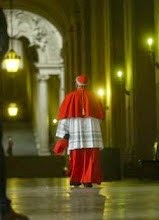
After the longest "honeymoon" in recent memory, last November's intake of new cardinals finally got their dicastery assignments from Pope Benedict this morning.

As the entire college of cardinals is charged aiding the pontiff in overseeing the global church, each member of the papal "senate" is, regardless of home-base, traditionally given a slate of Curial memberships to bring their respective strengths and expertise to the service of the Holy See's universal mission, both within and outside the church's walls.

Among other highlights of the list:
  • Not a single soul was added to the Congregation for the Doctrine of the Faith. Don't ask why.
  • Cardinal Angelo Bagnasco of Genoa -- the president of the Italian bishops' conference -- emerged as the slate's closest thing to a "big winner," picking up memberships on three influential congregations: Oriental Churches, Divine Worship and the Discipline of the Sacraments, and the all-powerful Congregation for Bishops, to which B16 also named Cardinals Andre Vingt-Trois of Paris, Vatican City's governor Giovanni Lajolo and the Laity Czar Cardinal Stanislaw Rylko.
  • Already mentioned as a potential successor to Cardinal Agostino Vallini after the expected transfer of the church's "chief justice" later this month to the vicariate of Rome, Cardinal Lluis Martinez Sistach of Barcelona was named to sit alongside Vallini as a member of the church's highest tribunal, the Apostolic Signatura. (A noted canonist, Martinez was named to the other legal dicastery -- the Pontifical Council for Legislative Texts -- last month, along with US Archbishops John Myers of Newark and Raymond Burke of St Louis.) The Barcelona cardinal, 70, was also named to the Pontifical Councils for the Laity and the Family, heading to the latter with Vingt-Trois.
  • Celebrated for his excellent relations with Ulster's Protestant community, the primate of All Ireland Cardinal Sean Brady of Armagh nabbed a slot on the Pontifical Council for Promoting Christian Unity, while the church's highly-regarded leader in Muslim-dominant Senegal, Cardinal Theodore Adrien Sarr of Dakar, was left off the list for the Pontifical Council for Interreligious Dialogue, being named instead to the Congregation for the Evangelization of Peoples, the office overseeing the church's mission efforts.
  • With the positio recently completed and amid swirling rumors that the beatification of Pope John Paul II could come as early as next spring, two of the late Great's inner sanctum were given seats on the body tasked with green-lighting the Polish Pope's movement toward sainthood, the Congregation for the Causes of Saints. Alongside Rylko -- Cardinal Karol Wojtyla's backup secretary during the two conclaves of 1978 -- Saints sees the arrival of Cardinal Angelo Comastri, the archpriest of St Peter's who, so it's said, John Paul's Polish circle would've favored as his successor... had he been a member of the college at the time of his death. A staunch advocate of the JP cause who recently floated the possibility of moving his remains from the subterranean grottoes to the Vatican basilica's main floor, Comastri was the lone red-hat to join Cardinal Stanislaw Dziwisz of Krakow -- Wojtyla's secretary of four decades -- for the tomb-side vigil to mark this year's anniversary of the pontiff's 2005 death. "People are convinced that John Paul II is already a saint and that therefore he can intercede for them to God," Comastri said in a late 2005 interview with the Italian bishops' daily paper, Avvenire.
  • At its essence, liturgy's all about communication, so it's appropriate that Philadelphia's own Cardinal John Foley -- long the Vatican's "great communicator" and now grand master of the Equestrian Order of the Holy Sepulchre of Jerusalem -- was named to Divine Worship. A missionary in his own right given his life's work of improving the church's accessibility and openness to the press, the Columbia J grad was likewise named to the Propaganda Fide.
  • And, lastly, the church in Texas' longstanding advocacy in defense of immigrants got an even firmer stamp of papal approval with the appointment of Cardinal Daniel DiNardo of Galveston-Houston to the Pontifical Council for Migrants and Itinerants. Having reportedly hoped for a light Roman docket given the time he's already spending away from home, the South's first red-hat got his wish -- he was the class' only member given a single assignment, and the only one of the new intake named to Migrants. Three other Stateside prelates (namely, Cardinals Adam Maida of Detroit, Theodore McCarrick of Washington and Bishop Nicholas DiMarzio of Brooklyn) might already sit on the council, but the combination of the Houstonian's location at ground zero of the national debate over immigration reform and a seat on the Vatican body that handles the church's response to the movement of peoples could just mean that Benedict's tapped his designated hitter on the issue for the American audience.
And lastly, a related stat that's been floating around of late... possibly not without reason.

Under usual circumstances, the US appointment docket will likely see a bit of movement between the days following this weekend's USCCB meeting in Orlando and mid-July's effective suspension of Vatican business for the summer. (For the record, as of this writing, eight American dioceses stand vacant, with another ten whose ordinaries are serving past the retirement age of 75 and holding on for successors.)

But more than these, the potential of another milestone of note looms across the water.

Since 1984, when then-Msgr Foley was named an archbishop and president of the Pontifical Council for Social Communications, at least two US prelates have concurrently led dicasteries of the Roman Curia. The figure first hit a peak of four in 1996, when the then archbishop of Denver, James Francis Stafford, was named president of the Pontifical Council for the Laity (the others: Cardinals William Baum at the Penitentiary, Edmund Szoka at the Holy See's "budget office," and Foley), and again following then-Archbishop William Levada's appointment to the CDF in 2005 until Szoka's retirement a year later.

In the two years since, adding in Foley's 2007 appointment to the Holy Sepulchre post, the figure's been cut in half. And now, with Stafford's 76th birthday approaching late next month, the prospect of a lone Stateside dicastery-head for the first time in a quarter-century has become a topic of interest in some rather keen chattering circles... which can't help but muse that some reinforcement's in the offing.

As always, stay tuned.

PHOTO: Reuters


-30-

Sunday, November 07, 2010

"Temple of God and the Christian Community"

(POST TIME: 10.50am) Minutes after this morning's Opening Mass ended, B16's spokesman said that leading the consecration of Barcelona's iconic Temple of Sagrada Familia -- by miles, the most memorable, exquisite Papal Mass of this pontificate... and at least good chunk of the last one, too -- made for "one of the most joyful moments" in the life of the beauty-loving Pope.

Fullvid to come... in the meantime, here's The Entrance -- complete with the kind of applause that drives Benedict's "reform of the reform" liturgy team into fits.


Meanwhile, in a rush house translation, snips from the bull elevating Antoni Gaudí's masterwork to the rank of a minor basilica....

Temple of God and the Christian community: thus can one contemplate the temple built in Barcelona to honor the Holy Family of Jesus, Mary and Joseph, the family from whose bosom our Lord consecrated domestic life with ineffable virtues, and by means of them, wanted to give us, that we might imitate them, the greatest examples of mercy, goodness, humility, modesty, patience and the bonds that come from love, that our own families might stand on the foundation of his grace and his peace.
For this, even from its first moment, (this temple) was raised up as as a sign of the perfect relationship of the art of the present with the faith and the liturgy, and also as a genuine image of the Holy Church itself, which is present and is a pilgrim in this world. This temple, through its beauty and its distinguished splendor, is able, truly, to receive the name of God's house. And it's very true that our Lord wanted to compare himself to a stone of this building, he who is the stone rejected by the builders to become, nevertheless, its cornerstone. He is the solid foundation this church encounters, thanks to its wise architecture, firmness and cohesion. Equally, this building can be called a holy temple, that is to say it can receive the name of that temple that, foreshadowed in the sanctuaries made of stone, is praised by the Holy Fathers and the liturgy, full of success, identified with the Holy City, the New Jerusalem, that we, as living stones, go forward to build upon this earth.

It is for this that, when our venerable brother Lluís Martinez Sistach, Cardinal of the Holy Roman Church, metropolitan archbishop of Barcelona, in his name and likewise that of his clergy and faithful, in a letter of 14 July of this year, asked if we would elevate this temple with the title and dignity of Minor Basilica, We, wishing also to give testimony of our personal goodwill, have believed it to be our duty to comply amply with the petitions of such a solicitous pastor....

Accepting, then, what pertains to this matter... the same day that, amid the joy of all the people, we have dedicated this most worthy of temples in a solemn rite, by the fullness of our apostolic power and by means of these letters, we embellish forever with the title and dignity of Minor Basilica this temple that, in the city of Barcelona, has been dedicated to God in honor of the Holy Family of Jesus, Mary and Joseph.... May this good thing be a motive toward joy and the higher aspirations of all the citizens of Barcelona, so beloved by the Roman Pontiffs before us, and so too ourselves....

Given at Barcelona and signed with the Fisherman's Ring, the 7th day of November 2010, the sixth of our pontificate.
Killed in a tram accident in 1926 days shy of his 74th birthday, the temple's architect is buried in its crypt, in a small niche beneath a statue of Our Lady of Mount Carmel.

His cause for beatification opened in 1992, two reported miracles attributed to Gaudí's intercession are under study, with the more enthusiastic expecting a declaration within the next five years.

PHOTOS:
Getty

-30-

Friday, November 06, 2015

Amid Vatileaks Frenzy, Francis Deepens His Eurostamp

While Rome's chattering circuit is consumed with the latest round of leak theatrics surrounding Vatican finances and the excesses of some prelates, the Pope has instead taken to doubling down on work and complete a "lightning round" of appointments to several major European posts.

At Roman Noon this Friday, Francis named Bishop Josef De Kesel of Bruges, 68, as archbishop of Mechelen-Brussels and head of a Belgian church that might just be the most bitterly polarized in the Catholic world. In the capital post of the linguistically-split, heavily secularized nation of Dutch and French-speakers, the incoming primate succeeds Archbishop Andre-Joseph Leonard, who only reached the retirement age of 75 in May, after a five-year tenure which has been dogged by controversy from the outset on fronts ranging from the prelate's comments on the moral culpability of AIDS patients to clergy sex-abuse, which saw Leonard civilly ordered to pay €10,000 earlier this year after being found to have failed to act on an allegation in his prior post in the 1990s. Highlighting the tensions on the wider scene, in two incidents that went viral the archbishop once was hit in the face with a pie during a liturgy and subsequently had water bottles dumped on him by topless feminists who stormed the stage at one of his speaking engagements. (Above, De Kesel and Leonard are seen from left at this morning's presser.)

A protege of Leonard's predecessor, the famously liberal Cardinal Godfried Danneels – whose auxiliary De Kesel had been from 2002-10 – the archbishop-elect (a Gregorian-trained theologian) was the first choice on the 
terna for the last Brussels succession, but the then-Nuncio, Archbishop Karl-Josef Rauber, was overruled by Benedict XVI, who personally chose the more traditional Leonard. Shortly after the appointment and his retirement shortly thereafter, a clearly displeased Rauber himself disclosed the face-off in an Italian magazine interview, going on to criticize both Papa Ratzinger and his eventual pick. Now 81, as a coda it bears noting that the former Nuncio was given a non-voting red hat by Francis at last February's Consistory.

In today's other major move, Francis has reportedly spurred shock in the Spanish church's Establishment by tapping 69 year-old Bishop Jose Omella of Calahorra as archbishop of Barcelona, Spain's second-largest diocese, ground zero in the ongoing fight over independence for Catalonia, the region based in Gaudí's city, where the 2010 dedication of the architect's Basilica of the Sagrada Familia provided one of the monumental moments of the last pontificate.

Named to succeed the native son Cardinal Lluis Martinez Sistach, now 78, according to local reports Omella was raised on the peripheries of the region and grew up speaking its distinctive Catalan tongue, but isn't said to be given to his new fold's widespread nationalist tendencies. In keeping with Francis' usual identikit for his picks, the Barcelona nominee has a long history in the church's social action work, including a stint as a missionary in Zaire. The Pope's move on the 2 million-member archdiocese is Papa Bergoglio's third major shift in Spain – whose hierarchy he knows well, having preached one of its retreats before his election – following last year's bombshell appointments on the same day to Madrid and Valencia, the latter going to Rome's then-Liturgy Czar, Cardinal Antonio Canizares.

Today's moves close out a cycle of top-level nods which began last week as – in his first turn at Italy's traditional "cardinalatial sees" – Francis yet again stunned the natives by naming an auxiliary of Rome, Bishop Matteo Zuppi, 59, as archbishop of Bologna and a 53 year-old Sicilian parish priest, Msgr Corrado Lorefice, (above) to the archbishopric of Palermo, the island's premier post. As with today's appointees, both have significant records of pastoring the church on the margins, with Zuppi – a lead figure in the progressive Sant'Egidio movement – having led one of Rome's largest outskirt parishes, while Lorefice has frequently cited his inspiration in the figure of Fr Pino Puglisi, a searing critic of Sicily's Mafia bosses who was gunned down outside his church in 1993.

Beatified in 2013, "Don Pino" is buried in the cathedral where Lorefice will soon have his seat. When the assassinated cleric's name was raised following his appointment, the archbishop-elect interjected to reporters that his selection was Puglisi's "fault."

In both appointments, meanwhile, it is understood that the Pope tossed aside the shortlists compiled during the formal consultation process, choosing instead to find his choices after taking his own soundings among the clergy of each place. 


Given his determination to not be "chained" to the custom of certain dioceses nearly guaranteed a spot in his Senate, as Francis has chosen to send his Italian red hats to places which have never had a cardinal or not seen one in generations, whether the duo will follow their respective predecessors into the College is an open question. In any case, while a February Consistory is again said to be on-deck, the mid-month timeframe when Francis has gathered the cardinals both in 2014 and 2015 is off the table next year due to the Pope's now-confirmed trip to Mexico, during which the first American pontiff is widely expected to make his long-desired stop somewhere along the US border... and possibly cross over it.

-30-

Wednesday, October 17, 2007

The list as formally announced... in real-time... filling in names....

Electors:
  • Leonardo Sandri, prefect of the Congregation for the Oriental Churches (Argentina)
  • John Patrick FOLEY, Pro-Grand Master of the Equestrian Order of the Holy Sepulchre of Jerusalem (USA)
  • Giovanni Lajolo, Governor of the Vatican City-State (Italy)
  • Paul-Josef Cordes, president of the Pontifical Council Cor Unum (Germany)
  • Angelo Comastri, archpriest of St Peter's Basilica, Pope's vicar-general of the Vatican-City State (Italy)
  • Stanislaw Rylko, president of the Pontifical Council for the Laity (Poland)
  • Raffaele Farina SDB, archivist of the Holy Roman Church (Italy)
  • Agustin Garcia-Gasco y Vicente, archbishop of Valencia (Spain)
  • Sean Brady, archbishop of Armagh, primate of All Ireland
  • Lluis Martinez Sistach, archbishop of Barcelona (Spain)
  • Andre Vingt-Trois, archbishop of Paris (France)
  • Angelo Bagnasco, archbishop of Genoa (Italy)
  • Theodore-Adrien Sarr, archbishop of Dakar (Senegal)
  • Oswald Gracias, archbishop of Bombay (India)
  • Francisco Lopez Ortega, archbishop of Monterrey (Mexico)
  • Daniel Nicholas DINARDO, archbishop of Galveston-Houston (USA)
  • Odilio Pedro Scherer, archbishop of Sao Paulo (Brazil)
  • John Njue, archbishop of Nairobi (Kenya)
five "honoraries"/over-80s:
  • Emmanuel III Delly, Patriarch of Babylonia of the Chaldeans (Iraq)
  • Giovanni Coppa, archbishop, (retired) apostolic nuncio (Italy)
  • Esteban Karlic, archbishop-emeritus of Parana (Argentina)
  • Fr Urbano Navarrete, SJ, rector-emeritus of the Pontifical Gregorian University
  • Fr Umberto Betti, OFM, rector-emeritus of the Pontifical Lateran University
  • -30-

    Saturday, July 08, 2006

    From the Supreme Tribunal

    Now, here's something interesting: this morning, it was announced that Pope Benedict XVI had named Archbishop Raymond Burke of St Louis as a member of the church's highest court.

    Burke will join the Supreme Tribunal of the Apostolic Signatura alongside Cardinal Zenon Grocholewski, the prefect of the Congregation for Catholic Education, and Archbishop Lluis Martinez Sistach of Barcelona. (The members of the Signatura serve on it in addition to the primary posts they hold.)

    Grocholewski served for 17 years as secretary and then prefect of the Tribunal before being named to head Catholic Ed in 1999, and Burke's a veteran of the place as well. The 58 year-old St Louis prelate was the first American to serve as its Defender of the Bond from 1990-94, when he was named bishop of his home diocese of LaCrosse. His presence was noted in Rome last week for the Peter and Paul celebrations.

    From the US, Cardinal Edward Egan of New York and Bishop Thomas Doran of Rockford -- both former uditori of the Roman Rota -- also serve on the Signatura, which hears appeals of cases on a highly selective basis. Its American docket has received much more attention in recent years given high-profile appeals of parish closings and, especially since 2002, an uptick in recourses from priests who have been administratively removed on allegations of sex-abuse. At least one recourse case alleging a US bishop's violations of due process against an accused priest is pending before the Signatura for its review.

    Beyond being an accolade for his legal aecumen, Burke's appointment to the high court could be seen as a vindication for the canonical strategy he employed in the case of St Louis' St Stanislaus parish. In December, following the refusal of the parish's board of directors to acknowledge the archbishop's right of governance over the Polish ethnic parish, Burke excommunicated the five members of the board, as well as the priest the laypeople had hired to serve the parish.

    -30-

    Sunday, November 07, 2010

    "The Torch of Faith Alight"

    HOMILY OF POPE BENEDICT XVI
    DEDICATION OF THE EXPIATORY TEMPLE OF SAGRADA FAMILIA

    BARCELONA

    7 NOVEMBER 2010

    Dear Brothers and Sisters in the Lord,

    “This day is holy to the Lord your God; do not mourn or weep.... The joy of the Lord is your strength” (Neh 8:9-11). With these words from the first reading that we have proclaimed, I wish to greet all of you taking part in this celebration. I extend an affectionate greeting to their Majesties the King and Queen of Spain who have graciously wished to be with us. I extend a thankful greeting to Cardinal Lluís Martínez Sistach, Archbishop of Barcelona, for his words of welcome and for his invitation to me to dedicate this Church of the Sagrada Familia, a magnificent achievement of engineering, art and faith. I also greet Cardinal Ricardo María Carles Gordó, Archbishop Emeritus of Barcelona, the other Cardinals present and my brother bishops, especially the auxiliary bishop of this local church, and the many priests, deacons, seminarians, religious men and women, and lay faithful taking part in this solemn ceremony. I also extend a respectful greeting to the national, regional and local authorities present, as well as to the members of other Christian communities, who share in our joy and our grateful praise of God.

    Today marks an important step in a long history of hope, work and generosity that has gone on for more than a century. At this time I would like to mention each and every one of those who have made possible the joy that fills us today, from the promoters to the executors of this work, the architects and the workers, all who in one way or another have given their priceless contribution to the building of this edifice. We remember of course the man who was the soul and the artisan of this project, Antoni Gaudí, a creative architect and a practising Christian who kept the torch of his faith alight to the end of his life, a life lived in dignity and absolute austerity. This event is also in a certain sense the high point of the history of this land of Catalonia which, especially since the end of the nineteenth century, has given an abundance of saints and founders, martyrs and Christian poets. It is a history of holiness, artistic and poetic creation, born from the faith, which we gather and present to God today as an offering in this Eucharist.

    The joy which I feel at presiding at this ceremony became all the greater when I learned that this shrine, since its beginnings, has had a special relationship with Saint Joseph. I have been moved above all by Gaudí’s confidence when, in the face of many difficulties, filled with trust in divine Providence, he would exclaim, “Saint Joseph will finish this church”. So it is significant that it is also being dedicated by a Pope whose baptismal name is Joseph.

    What do we do when we dedicate this church? In the heart of the world, placed before God and mankind, with a humble and joyful act of faith, we raise up this massive material structure, fruit of nature and an immense achievement of human intelligence which gave birth to this work of art. It stands as a visible sign of the invisible God, to whose glory these spires rise like arrows pointing towards absolute light and to the One who is Light, Height and Beauty itself.

    In this place, Gaudí desired to unify that inspiration which came to him from the three books which nourished him as a man, as a believer and as an architect: the book of nature, the book of sacred Scripture and the book of the liturgy. In this way he brought together the reality of the world and the history of salvation, as recounted in the Bible and made present in the liturgy. He made stones, trees and human life part of the church so that all creation might come together in praise of God, but at the same time he brought the sacred images outside so as to place before people the mystery of God revealed in the birth, passion, death and resurrection of Jesus Christ. In this way, he brilliantly helped to build our human consciousness, anchored in the world yet open to God, enlightened and sanctified by Christ. In this he accomplished one of the most important tasks of our times: overcoming the division between human consciousness and Christian consciousness, between living in this temporal world and being open to eternal life, between the beauty of things and God as beauty. Antoni Gaudí did this not with words but with stones, lines, planes, and points. Indeed, beauty is one of mankind’s greatest needs; it is the root from which the branches of our peace and the fruits of our hope come forth. Beauty also reveals God because, like him, a work of beauty is pure gratuity; it calls us to freedom and draws us away from selfishness.

    We have dedicated this sacred space to God, who revealed and gave himself to us in Christ so as to be definitively God among men. The revealed Word, the humanity of Christ and his Church are the three supreme expressions of his self-manifestation and self-giving to mankind. As says Saint Paul in the second reading: “Let each man take care how he builds. For no other foundation can anyone lay than that which is laid, which is Jesus Christ” (1 Cor 3:10-11). The Lord Jesus is the stone which supports the weight of the world, which maintains the cohesion of the Church and brings together in ultimate unity all the achievements of mankind. In him, we have God’s word and presence and from him the Church receives her life, her teaching and her mission. The Church of herself is nothing; she is called to be the sign and instrument of Christ, in pure docility to his authority and in total service to his mandate. The one Christ is the foundation of the one Church. He is the rock on which our faith is built. Building on this faith, let us strive together to show the world the face of God who is love and the only one who can respond to our yearning for fulfillment. This is the great task before us: to show everyone that God is a God of peace not of violence, of freedom not of coercion, of harmony not of discord. In this sense, I consider that the dedication of this church of the Sagrada Familia is an event of great importance, at a time in which man claims to be able to build his life without God, as if God had nothing to say to him. In this masterpiece, Gaudí shows us that God is the true measure of man; that the secret of authentic originality consists, as he himself said, in returning to one’s origin which is God. Gaudí, by opening his spirit to God, was capable of creating in this city a space of beauty, faith and hope which leads man to an encounter with him who is truth and beauty itself. The architect expressed his sentiments in the following words: “A church [is] the only thing worthy of representing the soul of a people, for religion is the most elevated reality in man”.

    This affirmation of God brings with it the supreme affirmation and protection of the dignity of each and every man and woman: “Do you not know that you are God’s temple?... God’s temple is holy, and you are that temple” (1 Cor 3:16-17). Here we find joined together the truth and dignity of God and the truth and dignity of man. As we consecrate the altar of this church, which has Christ as its foundation, we are presenting to the world a God who is the friend of man and we invite men and women to become friends of God. This is what we are taught in the case of Zacchaeus, of whom today’s gospel speaks (Lk 19:1-10), if we allow God into our hearts and into our world, if we allow Christ to live in our hearts, we will not regret it: we will experience the joy of sharing his very life, as the object of his infinite love.

    This church began as an initiative of the Association of the Friends of Saint Joseph, who wanted to dedicate it to the Holy Family of Nazareth. The home formed by Jesus, Mary and Joseph has always been regarded as a school of love, prayer and work. The promoters of this church wanted to set before the world love, work and service lived in the presence of God, as the Holy Family lived them. Life has changed greatly and with it enormous progress has been made in the technical, social and cultural spheres. We cannot simply remain content with these advances. Alongside them, there also need to be moral advances, such as in care, protection and assistance to families, inasmuch as the generous and indissoluble love of a man and a woman is the effective context and foundation of human life in its gestation, birth, growth and natural end. Only where love and faithfulness are present can true freedom come to birth and endure. For this reason the Church advocates adequate economic and social means so that women may find in the home and at work their full development, that men and women who contract marriage and form a family receive decisive support from the state, that life of children may be defended as sacred and inviolable from the moment of their conception, that the reality of birth be given due respect and receive juridical, social and legislative support. For this reason the Church resists every form of denial of human life and gives its support to everything that would promote the natural order in the sphere of the institution of the family.

    As I contemplate with admiration this sacred space of marvellous beauty, of so much faith-filled history, I ask God that in the land of Catalonia new witnesses of holiness may rise up and flourish, and present to the world the great service that the Church can and must offer to humanity: to be an icon of divine beauty, a burning flame of charity, a path so that the world may believe in the One whom God has sent (cf. Jn 6:29).

    Dear brothers and sisters, as I dedicate this splendid church, I implore the Lord of our lives that, from this altar, which will now be anointed with holy oil and upon which the sacrifice of the love of Christ will be consumed, there may be a flood of grace and charity upon the city of Barcelona and its people, and upon the whole world. May these fruitful waters fill with faith and apostolic vitality this archdiocesan Church, its pastors and its faithful.

    Finally, I wish to commend to the loving protection of the Mother of God, Mary Most Holy, April Rose, Mother of Mercy, all who enter here and all who in word or deed, in silence and prayer, have made this possible this marvel of architecture. May Our Lady present to her divine Son the joys and tribulations of all who come in the future to this sacred place so that here, as the Church prays when dedicating religious buildings, the poor may find mercy, the oppressed true freedom and all men may take on the dignity of the children of God. Amen.

    * * *
    On an editorial note, the three-hour dedication liturgy ended with a triumphant Cardinal Lluís Martinez Sistach -- Barcelona's native-son archbishop -- raising over his head, then reading, the papal bull elevating Gaudí's landmark temple to the rank of a minor basilica.

    Uniquely for a pontifical decree, however, the text formally bestowing the distinction on Sagrada Familia bore the close "Given in Barcelona...."

    Gaudí's basilica is the first church Benedict XVI has consecrated as Pope.

    The last time an ecclesial edifice was both inaugurated by a Roman pontiff and made a basilica on the same day came twenty years ago this fall, when John Paul II opened the mega-church dedicated to Our Lady of Peace in Yamoussourkro, Ivory Coast.

    Designed to imitate St Peter's and built to hold some 18,000 congregants, the $300 million Ivorian landmark is the world's largest church.

    PHOTO: Getty(1,2,3,6); Reuters(4,5,7)

    -30-