Saturday, August 27, 2011

For "Premier" Prelate, A "Grand" Finale -- Baltimore's O'Brien to Head Holy Sepulchre

(SVILUPPO: The appointment reported below was formally announced by the Vatican at Roman Noon on Monday, 29 August.)

As Hurricane Irene strikes the Eastern seaboard, the weather's brought a fitting parallel on the church-beat: according to multiple reports, one of the Stateside church's top rank is about to be swept across the Atlantic.

As soon as Monday, Whispers has learned that Pope Benedict is set to name Archbishop Edwin O'Brien of Baltimore, 72, as Pro-Grand Master of the Equestrian Order of the Holy Sepulchre of Jerusalem.

By long-standing tradition, the
"Pro-" designation indicates that an archbishop-holder of the Rome-based post is placed at the front of the line to receive the red hat of a cardinal at the next consistory, at which point the prefix disappears.

Sent to the nation's Premier See in 2007 after a decade at the helm of the 1.5 million-member archdiocese for the Military Services, the Bronx-born prelate would become the second American in a row to head the ancient order, following Philadelphia's iconic Cardinal John Foley, who retired in February due to the acceleration of the leukemia he was diagnosed with in 2009, and the anemia that's limited his energy and movement. While Foley had been the first non-European to preside over the thousand-year old association dedicated to the support of the sacred sites and small Christian community in the Holy Land, a plurality of the Holy Sepulchre's global cadre of knights and dames live on these shores.

The order's base located just down the Via della Conciliazione from the Vatican, the reported move would return O'Brien to cherished old stomping grounds -- the archbishop served as rector of the Pontifical North American College from 1990-94 and earned a doctorate in theology from the Angelicum in 1976.
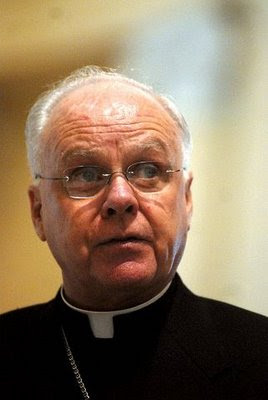
Above all, the unprecedented nod for a residential archbishop -- until now, Holy Sepulchre chiefs have invariably come from the ranks of the Roman Curia or Holy See diplomatic corps -- would stand as a substantial tribute to the Charm City prelate's record of distinguished service to the wider church, most notably in overseeing the 2005-6 Apostolic Visitation of US seminaries at the Vatican's behest. It's likewise a pointed vindication of O'Brien's 2008 move to take on the now-scandal scarred Legionaries of Christ, whose activity in Baltimore was placed under significant restrictions by the archbishop, but only after he was persuaded by a senior Curial official out of his initial thought to expel the community's clerical and lay apostolates from the Premier See.

The only American bishop who's served as rector of two seminaries, O'Brien is already a member of the Congregation for Catholic Education, the Vatican dicastery that oversees formation houses.

The 14th successor of John Carroll at the helm of the nation's mother-diocese, O'Brien spent the early 1980s as priest-secretary to Cardinals Terence Cooke and John O'Connor and subsequently the spokesman for his native archdiocese of New York, then embarking on the first of two tours as rector of the Big Apple seminary, St Joseph's at Dunwoodie, holding the post both before and after his four years at the NAC -- a place which, according to friends, "he's never left" in his heart.

On his second Dunwoodie stint, O'Brien was named an auxiliary of New York months after he welcomed Blessed John Paul II to the Yonkers house on the late Pope's October 1995 visit to the Northeast. (During the latter tenure, O'Brien ordained Eugene Hamilton -- one of his seminarians stricken with terminal cancer -- to the priesthood hours before the young man succumbed at 25.) Barely a year later, the veteran of Army chaplain's duty at West Point and in Vietnam was named coadjutor-archbishop of the 1.5 million-member church comprising the nation's servicemen and women and Federal government workers around the globe, succeeding to the Washington-based AMS' command within months.

Notably, word of the appointment has arrived weeks after the archbishop made national headlines for his public confrontation with Maryland Gov. Martin O'Malley -- a Catholic Democrat -- over the latter's move to support a bill legalizing same-sex marriage in the Free State.

In an exchange of letters, O'Brien accused O'Malley of "mere political expediency" in backing a gay marriage measure for the upcoming legislative session, saying that the governor was "promoting a goal that so deeply conflicts with [his] faith." In response, O'Malley said that while he wouldn't "ever" seek "question or infringe upon [O'Brien's] freedom to define, to preach about and administer" the sacraments, "on the public issue of granting equal civil marital rights to same sex couples, you and I disagree.

"As Governor," O'Malley added, "I am sworn to uphold the law without partiality or prejudice."

While the governor's stance in support of legal abortion has likewise clashed with church teaching, the archbishop has never publicly attempted to withhold the Eucharist from O'Malley, or any pro-choice public official in heavily-Democratic Maryland.

At the same time, acknowledging that he was "something of a late-comer" to understanding the Magisterium's position on capital punishment, in 2009 O'Brien testified before the Maryland legislature to support a state moratorium on the death penalty, saying that "our church’s long-standing advocacy" on the issue "rests upon our consistent advocacy for laws that respect all human life -- even that of the convicted criminal." To boot, the former Military-church chief has repeatedly argued over recent years for the US' nuclear disarmament, terming the persistance of atomic weapons a "disproportionate and indiscriminate threat to human life” during a 2010 talk in Washington.
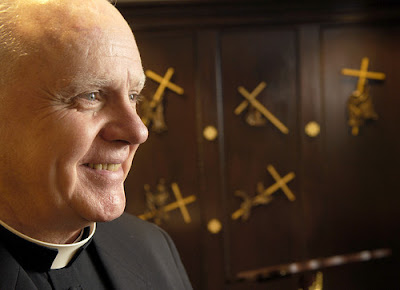
O'Brien would be the third resident American archbishop to be called to a Vatican post by Benedict, following William Levada's 2005 transfer from San Francisco to lead the Congregation for the Doctrine of the Faith, and Raymond Burke's 2008 elevation from St Louis to the helm of the Holy See's "supreme court," the Apostolic Signatura.

Both Levada and Burke were made cardinals at the first consistory to follow their respective appointments. Accordingly, at the college's next intake -- most likely to occur late next year -- the Holy Sepulchre nod would continue Benedict XVI's consistent practice of splitting the US' traditional quota of two new cardinals between one American in Curial service and the head of one of the nation's preeminent sees. Along those lines, the move sets up the most-likely scenario of O'Brien and his successor at the NAC's helm, New York's Archbishop Timothy Dolan, 61, comprising the next class' Yankee contingent.

While, as of today, 12 cardinal-electors from these shores could enter a hypothetical conclave, the Stateside bloc is set to lose three members within the next year as Cardinals Bernard Law, Edward Egan, and Francis Stafford (a Baltimore native and, crucially, likewise a member of the Congregation for Bishops) all reach the ineligibility age of 80.

In the three consistories since his 2005 election, the reigning Pope has already named half of the US' current voting group -- the second largest national bloc, after the Italians. In full, the papal "Senate" currently comprises 114 electors, a figure set to drop by at least another 14 before September 2012 on age-outs alone (read: barring deaths).

Lastly, the move is a watershed on another front -- until now, the archbishops of Baltimore (under the provisions of an 1858 decree from Rome which remains in force, the "first among equals" of the American hierarchy) have either died in office or retired from the post. Surprising as the final outcome is, though, earlier this year the nod was widely envisioned to be given to Cardinal Justin Rigali at the close of his tenure in Philadelphia. The bruising fallout of February's second grand-jury on his charge's handling of clergy sex-abuse cases, however, is said to have precluded that scenario.

Home to some 500,000 Catholics, the Baltimore church comprises ten of the state's 24 counties, with the capital suburbs covered by the archdiocese of Washington and the Eastern Shore affixed to the diocese of Wilmington.

Given the vacancy of the Apostolic Nunciature in Washington -- which, as previously reported, will likely prolong the succession processes of more recently-vacated Stateside dioceses -- authoritative indications are that O'Brien will remain as apostolic administrator of Baltimore, with the full powers of its diocesan bishop, until his successor takes possession of American Catholicism's White House, 408 N. Charles St.

-30-

Tuesday, June 10, 2008

In Premier See, Legion Gets Premier Scrutiny

Culminating years of concerns over the work of the Legionaries of Christ in the nation's oldest diocese, Archbishop Edwin O'Brien of Baltimore has placed the movement's twin organs under a heightened level of oversight.

After meeting with the Legion's superior-general last Friday, O'Brien sent his priests a "letter of understanding" addressed to the group's leader, Fr Álvaro Corcuera Martinez del Rio, detailing the new policy, which was formulated after consultations both with the archdiocese's presbyteral council and the Holy See.

"I need the following from you," O'Brien wrote Corcuera, noting along the way that the "willingness to accept the discernment of ecclesiastical authority is but a further proof of the authenticity of the charisms" of the Legion and its lay arm, Regnum Christi.

By the end of this week, Corcuera was asked to name a priest to serve as liaison between the communities and the archbishop's office, subject to approval by O'Brien. By 30 June, the liaison is required to provide coordinates for every Legion priest serving in the 525,000-member archdiocese; detailed information on every Regnum Christi branch within its boundaries, including "activities, meeting locations and schedules, membership rolls and methodologies for gaining new members"; each RC youth program operating in Baltimore, and a full disclosure of every other LC/RC apostolate active in the archdiocese. By the same date, each pastor whose parish has one of the groups' works on its territory is to receive a "full written" briefing on their activities there.

Given longstanding criticism from some quarters of the Legion's recruitment methods, the most significant part of the new norms deals with the movement's outreach to the young.

"I want to ensure that encouragement of vocations is carried out in a way that respects the rights of parents in the upbringing of their children and the rights of young persons themselves to be able to make free and fully informed decisions about their futures," O'Brien wrote.

Per the archbishop's order, "to avoid any undue sense of vocational obligation," the LC is forbidden to conduct "ongoing, individual" spiritual direction with a minor. The group is likewise to disclose to the archdiocese the names of all under-18 participants in its summer programs, and all attendees of its high school seminaries or boarding schools.

The letter closed with a request for the groups to keep the archbishop informed of their "long- and short-range planning goals and objectives" for their Baltimore apostolates on a six-monthly basis. "I know of the deep commitment of the Legion and Regnum Christi to carry out their mission and exercise their charisms in support of the unity and communion that Christ wants for his Church," he wrote.

Known worldwide for its massive numbers of priestly recruits, pre-eminent organizational prowess and the decades of papal favor that made it one of the most powerful groups in the global church, the LC/RC counts around 250 members in the Premier See, where its prime institution is Woodmont Academy, a K-8 school of over 300 students located about 20 miles west of Baltimore. Founded in 1995, O'Brien's predecessor Cardinal William Keeler did the honors when Woodmont dedicated its new home a decade later. The Legion likewise runs a "family development" center out of an antebellum mansion in Annapolis; the latter's calendar includes marriage prep classes, couples counseling, sessions on how to raise teenagers, and programs for children as young as 10.

While scores of American sees have welcomed the Legion for activities ranging from education and establishing formation houses to spearheading the spiritual renewal of their secular clergy, Baltimore isn't the first Stateside diocese to put the communities under a closer spotlight. Several local churches have enacted similar policies to O'Brien's over the last decade; most prominently, in late 2004 then-Archbishop Harry Flynn of St Paul and Minneapolis effectively banned the LC/RC from "being active in any way" in the Twin Cities.

In late January, the Legion's controversial founder Fr Marcial Maciel Degollado died at 87. After a lengthy investigation by the Congregation for the Doctrine of the Faith was concluded in 2006, Maciel became the highest-profile cleric to cease from public ministry under the specter of sex-abuse allegations when, in exchange for the Vatican's decision to "forgo a canonical process" (keeping the matter out of a church tribunal), the priest known to his faithful as "Nuestro Padre" accepted of a secluded life of prayer and penance. Its constitutions originally approved by the Holy See in 1983, in recent months foreign press reports indicated that the Legion's practice of "secret vows" -- including one to not criticize the judgments or acts of a superior -- has been dissolved at the personal behest of Pope Benedict.

Counting 750 priests, 2,500 seminarians and more than 70,000 lay members, the LC/RC are currently active in over 40 countries around the world.

-30-

Wednesday, March 03, 2010

Strategic Planning

It's the ultimate ecclesial no-win -- taking a century-old infrastructure and adapting it to the realities of this time and the road ahead.

And like it or not, that just so happens to be the order of these days here in the Northeast and the earlier settlements of the Midwest, as no shortage of dioceses proceed with (or brace for) efforts to reconfigure their maps of parishes and schools for Catholic populations that, in luckier cases, may have remained constant inside diocesan boundaries, but have still dramatically shifted within them since the institutions that served the great-grandparents of today's faithful were built.

As some might've noticed, one word is conspicuous by its absence above: "close," or "consolidate." Of course, that's how most folks experience changes of the sort -- and why at least one bishop's mail features the occasional photo of his head superimposed on the Grim Reaper's body.

While the raw emotions of losing a place that feels like a family member will never be completely eased, there are ways of handling the process well. Two of those are in the news this week... and both from places easily considered among the Stateside church's most venerable bastions.

First, having spent close to $10 million to prop up some below-capacity schools just since 2008 and a year after Archbishop Edwin O'Brien empaneled a lay-dominated "Blue Ribbon" commission to take soundings, crunch the data and hash out a feasible long-range framework, the Premier See of Baltimore announced late today that thirteen of its seventy Catholic schools will shut their doors come June.

While the Maryland mother-church had previously practiced the piecemeal closing a handful of schools each year -- a combined 16 between 2002 and 2009 -- O'Brien moved for the comprehensive review on judging that "the process of watching schools succumb one by one, year after year to population shifts and other external forces can no longer continue."

A full press conference won't come until tomorrow morning, but such are the times that the first word of the schools impacted trickled out on Facebook pages and blog posts. For all the rest, the local Sun outlines the steps being taken to ease the pain:
The reorganization will displace 2,152 students and 325 teachers, staff and administrators. The displaced students, who make up nearly 10 percent of the 22,700 students in the system, will be guaranteed a spot in a school no more than five miles from their current school, but it's not yet clear how many employees will lose their jobs.

"I wish there were a painless way to do this," Archbishop Edwin F. O'Brien, spiritual leader of the area's half million Catholics, said in an interview this week. "It's going to be quite painful. It's going to have a ripple effect beyond what we can predict."

He said the reorganization, to incorporate recommendations to be published in a long-term strategy report in June, represents an effort to "stop and regroup" in the face of chronic financial problems that have threatened to destroy the system one school closing at a time.

"If we keep this up in a dozen years we won't have a school system," O'Brien said....

A report on the consolidation designates 24 so-called receiving schools to accept students from the schools that are closing.

Monsignor Bob Hartnett, who directed the work on the consolidation, said some displaced students would be traveling slightly less distance to their nearest new school than they are now, some slightly more. He said the average distance between any closed school and any of its receiving schools is less than three miles. Students make their own way to school, as the archdiocese does not provide transportation.

Average tuition at archdiocesan elementary schools is $5,200 for parishioners and $6,300 for non-parishioners. At current rates, the archdiocese says, the average tuition for the receiving schools is $132 less than the schools that will be closing.

Hartnett said all 1,500 families affected by the changes will get a call in the next few days to see if they need help with the transition, then a follow-up call, then another call during the summer. He said "response teams" will be sent to schools on Thursday to answer employees' questions.

Hiring patterns of the last three years suggest that many of the 231 teachers and 94 staff and administrators who are displaced in the consolidation will be able to find jobs in the system. Last August, for instance, the archdiocese hired 145 teachers and 150 staff. The year before, it hired 118 teachers and 189 staff.

O'Brien said the archdiocese will work with local public schools to try to find jobs for employees who cannot be placed within the archdiocesan system. In the meantime, health and dental benefits for the 325 displaced employees will be extended through August.

"We'll do everything we can to help those people," O'Brien said. "We have such dedicated men and women who are going to be out of work for awhile."

The consolidation plan has been in the works since last spring, shortly after O'Brien announced that he was launching an effort to confront what he considered a "crisis" in the school system. He emphasized his commitment to guarantee every current student a spot, and to sustain the system without abandoning the city. But he said that the archdiocese had to run the schools differently if it wanted them to stay open and maintain academic standards.
* * *
Meanwhile, facing the dire prospect of fiscal "insolvency" come next year -- and already in the midst of heavy administrative cuts -- earlier today saw Bishop Nicholas DiMarzio of Brooklyn meet with his pastors to launch a "reinvention" process that, at its higher projections, could see the close or merger of a quarter of the 1.6 million-member diocese's 198 parishes.

Home to what might well be American Catholicism's most diverse local church, one ever renewed by a steady stream of immigrants, the "city of churches" currently keeps close to half of its parishes buoyed by means of diocesan subsidies that, last year, totaled $5 million -- "a sum that can no longer be sustained," DiMarzio wrote in a freshly-released pastoral letter on the process.

(On a side-note, the pastoral likewise raised eyebrows for the first magisterial document to use the word "tweets.")

With diocesan officials pledging "full transparency," plans afoot for town meeting-style consultations and even, in time, a publicly-viewable internet forum for parishioners' voices to be heard (and, indeed, that should be something), the 66 year-old prelate -- famous for his hard-charging ways -- has already been observed as taking a hands-off role to the process, with officials heavily underscoring that the soundings (including a threefold study of each parish's "pastoral, financial and leadership" viability) will be heard in full before any deliberations are made. Along these lines, the diocese ended up closing just seven schools last year -- a number significantly less than had been foreseen.

The bulk of its legwork entrusted to DiMarzio's sharp 51 year-old right hand, Auxiliary Bishop Frank Caggiano, and its conclusions targeted for a September announcement, the Brooklyn process still takes a back-seat in prominence to the biggest decision looming over the New York area's three dioceses: the impending verdict of a tri-see commission charged with considering options for the consolidation of the four major and collegiate seminaries of New York, Brooklyn and Rockville Centre.

As of last report, plans were full steam ahead toward a unified game-plan for the future of the houses -- Gotham's St Joseph's and Neumann Residence at Dunwoodie; Rockville Centre's Immaculate Conception, Huntingdon, and Brooklyn's Cathedral College, Douglaston -- with the most equitable solution topping the buzzmill's forecast of the result.

An announcement is expected before the close of this academic year, with implementation reportedly slated for after the 2010-11 cycle.

* * *
And lastly, closest to home, by no means is the vaunted River City church immune to the regional trends... if anything, this greatest of ecclesiastical empires being what it once was, the fallout may be even more pronounced 'round these parts.

Keeping with recent patterns, at least seven elementary schools will close or consolidate here come June's end. Still, the most "unmerciful" blow of all came back in October on the announcement that two of the onetime crown jewels of the diocesan system -- Cardinal Dougherty and Northeast Catholic High Schools -- will shut their doors.

Now reduced to an aggregate student-body of 1,100 -- a tenth of their combined peak enrollments -- the heydays of both Dougherty and North saw each bear the crown of the largest secondary school in the global church.

PHOTO: Jed Kirschbaum/Baltimore Sun


-30-

Thursday, June 26, 2008

Last Runs Before Rome

On Sunday morning, the last year's new intake of 41 metropolitan archbishops from around the world will receive the symbol of their office -- the pallium -- from Pope Benedict.

In keeping with the tradition established by John Paul II in 1984, the conferral of the lambswool band will take place at the pontiff's Mass for the Solemnity of Ss. Peter and Paul, at which B16'll be joined by B1 -- Bartholomew I, the Ecumenical Patriarch of Constantinople -- who'll sit alongside the Pope during the Liturgy of the Word and team up with him again for the blessing.

After spending the night in the silver coffin atop the tomb of Peter beneath the basilica's main altar, the pallia -- woven by Benedictine nuns from the wool of lambs blessed on January's feast of St Agnes -- are blessed by the Pope and given to the new archbishops with the words:
To the glory of Almighty God and the praise of the Blessed Virgin Mary and of the apostles Peter and Paul, and of the Holy Roman Church, for the honor of the Churches, which have been placed in your care, and as a symbol of your authority as metropolitan archbishop: We confer on you the pallium taken from the tomb of Peter to wear within the limits of your ecclesiastical province.

May this pallium be a symbol of unity
and a sign of your communion with the Apostolic See,
a bond of love, and an incentive to courage.
On the day of the coming and manifestation
of our great God and chief shepherd, Jesus Christ,
may you and the flock entrusted to you
be clothed with immortality and glory.
In the name of the Father, and of the Son and of the Holy Spirit.
Two of the year's new archbishops will be unable to make it, so their presents will be sent to their dioceses, where a papal legate will confer them in the cathedral. Dating from the third century AD and only restricted to metropolitans in 1978, the pallium doesn't automatically come with a residential archbishopric, but must be formally petitioned from the Pope.

* * *
While the group's global headliners include Cardinal John Njue of Nairobi, the freshly-installed Latin Patriarch of Jerusalem Fouad Twal, Archbishops Reinhard Marx of Munich and Freising and Pavel (Paolo) Pezzi of Moscow, two Canadians -- Archbishops Tony Mancini of Halifax and Martin Currie of St John's, Newfoundland -- and three Statesiders will be among the group: Archbishops Edwin O'Brien of Baltimore, John Nienstedt of St Paul and Minneapolis and Thomas Rodi of Mobile (the Alabama prelate to get his day in Rome).

Before leaving for their respective pilgrimages, though, two of the latter three have been tying up loose ends at home.

Following his widely-noted decision to place the Legionaries of Christ under more stringent oversight in the Premier See -- and a highly-candid chat with the National Catholic Reporter in its wake -- O'Brien met with members of the Legion's lay arm Regnum Christi last weekend to explain himself.

A Charm City priest in attendance provides a brief:
Recognizing that they probably had already heard much of what was the impetus for the meeting, the archbishop told the roomful of 150 people, “It is out of pastoral concern that I speak to you. … I want you to hear [these things] directly from me.” He began the meeting by restating the content of his letter that went to Fr. Alvaro Corcuera, the head of the Legion of Christ in Rome. In restating these concerns raised in the letter, O’Brien emphasized again the three areas of concern he had with regard to the operations of the Legion and Regnum Christi in the Archdiocese:
First was the lack of pastoral transparency in the sharing of information about programs and participants. Second was the nature of youth programs and activities that seem to show a lack of respect for parental rights and duties, and a call to cease ongoing spiritual direction with children under 18. And finally was a need to respect the parental role in encouraging and fostering vocations to the priesthood and consecrated life.

After his brief words of explanation, the archbishop opened the discussion up to the concerns and comments of the assembly. Most of the comments reflected the very positive role that involvement in Regnum Christi has had in the lives of the families who participate. They said that they are closer to their Church and Jesus, and that they have been active and integral participants in their parishes as well. They didn’t feel the “coercion” to follow the LCs vocational promotion or the “flaws endemic” to them that the archbishop’s letter had referred to.

Some who spoke acknowledged their skepticism about RC and their schools and programs but did not deny the positive effects that they saw with their families as a result of this ministry. One man asked O’Brien, “Are you open to this dialogue?” noting that his comments – especially those in the interview with John Allen – seemed “offensive” and “not very open” to a process of healing (referring to the comment that priests applauded the archbishop's decision with regard to the LC). Others pointed out that there could have been a tendency on the part of ex-members to “misinterpret” the problems of RC and that their input represented only one, biased side of the issue.

Many things were said in defense of RC and LC, and O’Brien listened attentively. Some folks mentioned that there was an orthodoxy in teaching by the LC that was not encountered from diocesan clergy. This was the attraction of the Legion’s activities. There was a question as to whether or not the Archbishop was conducting the meeting simply to appease members. O’Brien assured them that “I’d be wasting my time if this was for PR.” For him, it is a real issue that must be addressed openly and candidly....

The people spoke, and O’Brien “got what they were saying.” “I love you and what you are doing,” he told them. Now, he says, it is up to them to be open and honest in approaching their pastors – parish priests – and share the best of who they are – something the LC have already taught them to do for God. In a letter sent to Baltimore priests as a follow-up, O’Brien tells us “In my opinion, many members of Regnum Christi are exemplary in doing fine work in this Archdiocese. However, unique among many apostolic groups, LC and RC suffer a strong negative image among many of our clergy in Baltimore and beyond. Until this factor is addressed candidly, tensions will remain. I suggested that members of Regnum Christi speak with their parish priests, relating their account of Saturday’s meeting and seeking ways to collaborate more closely with parish life.”
Meanwhile, in the Twin Cities -- where Nienstedt's first month in office after a year in wait as coadjutor has seen the term "consecrated blizzard" return to contemporary parlance -- the archbishop put the kibosh on a long-running LGBT prayer service held by a city parish to coincide with the region's Pride Week:
This is "yet another volley of dehumanizing spiritual violence directed at GLBT persons and their families under Archbishop Nienstedt's reign of homophobic hatred," David McCaffrey, a board member of the Catholic Pastoral Committee on Sexual Minorities (CPCSM), said in an e-mail Monday to members.

"The archdiocese is now dictating to people who they can and cannot pray for, and that deeply concerns me," said Bayly, executive director of the CPCSM. "This certainly does not celebrate the presence of God in the lives of gay people. They are dictating to gay people how to have a good life."

The Rev. Jim Cassidy, acting pastor at St. Joan's, said he respects the wishes of the archdiocese and is just happy that the service was not canceled.

"The archdiocese, for all parishes, is the front office and we need to respect that," Cassidy said Tuesday. "There is no welcome mat being pulled here."

Also Tuesday, [archdiocesan spokesman Dennis] McGrath defended the archdiocese and Nienstedt, saying that gay and lesbian relationships, especially if they are consummated, are contrary to church doctrine.

McGrath said Nienstedt decided to act after he was notified by callers about the GLBT service at St. Joan, which has a large homosexual contingent.

McGrath said Nienstedt simply did what any archbishop in the country would do in a similar situation. He said the decision does not signal that the archdiocese is taking a conservative turn in the Twin Cities.
A lay-led rite went forward last night outside St Joan's. To avoid ruffling further feathers, it was characterized as a "peace service."

On another note, in the largest gift in its history, the Twin Cities church last week received an anonymous donation of $10 million, earmarked to ensure the survival of 15 inner-city parochial schools.

PHOTO: AFP/Getty


-30-

Thursday, July 12, 2007

Balto Goes Gotham

Fifteen months in the offing, the mother-diocese of the United States has received its fifteenth change in command.

This morning, Pope Benedict accepted the age-induced resignation of Cardinal William Keeler as archbishop of Baltimore, naming Archbishop Edwin O’Brien of the Military Services USA as the fourteenth successor to John Carroll, the nation’s founding bishop.

The first New Yorker sent to American Catholicism’s birthplace since James Roosevelt Bayley became its eighth archbishop in 1872, the Pope’s appointment of O’Brien, 68, is a marked signal that priestly formation is Priority #1 in the US’ Premier See. The nation’s only bishop to have led two major seminaries will now head the lone American see boasting two of its own: St Mary’s in the city’s Roland Park section, and Mount St Mary’s in Emmitsburg. In testament to his experience as a formator, the Holy See tapped the archbishop to head the Apostolic Visitation of US seminaries during the 2005-6 academic year.

A son of the Bronx, O’Brien was ordained for the archdiocese of New York in 1965. After spending the first decade of his priesthood as an Army chaplain, then earning a Roman doctorate in moral theology, he returned to his hometown’s “Powerhouse,” rising through the ranks as vice-chancellor, director of communications, and private secretary to Cardinals Terence Cooke and John O’Connor before beginning his first stint as rector of St Joseph’s, Dunwoodie in 1985. (Ironically enough, the Harlem-born Bayley – a cousin of presidents and nephew of a saint – also served as priest-secretary to a New York archbishop: the famed first of the bunch, “Dagger John” Hughes.)

Five years later, he was recalled to Rome to lead the NAC, whose resurgence began over the course of his four year term, the end of which saw his return to Gotham and Dunwoodie. Ordained auxiliary bishop by O’Connor in 1996, O’Brien remained at his alma mater’s helm until his appointment the following year as coadjutor-archbishop of the Military Services. For the last decade, he’s served as chief shepherd of the 1.2 million Catholics of the US Armed Services stationed on bases and in combat the world over. Though theology is his formal discipline, he is said to take a keen interest in church history, an interest particularly well-suited for a chief occupant of 408 N. Charles Street.

A relatively under-the-radar figure as senior US prelates go, friends hail the newest resident of Charm City as a “great supporter of the priesthood” and note his genuine concern for the souls in his care. These traits were highlighted in the famous case of Eugene Hamilton, a Dunwoodie seminarian struck with terminal cancer in the course of his formation. As Hamilton’s one desire was to be ordained before he died, O’Brien’s intervention pushed the case to the Holy See, which green-lighted his petition for early priesthood. Placing his own stole over Hamilton’s shoulders, the bishop-rector ordained the 25 year-old in his family home hours before he died on 25 January 1997.

Almost two hundred years on since Baltimore’s elevation to metropolitan rank, the appointment of its 15th head brings to a close one of the Premier See’s great archiepiscopal runs. Named archbishop during the 1989 bicentennial of the American hierarchy, the storied accomplishments of his charge have been brought into a new age by Cardinal Keeler, whose keen scholarship and faithful stewardship of the “Maryland tradition” will reside in the books alongside the triumphs of Carroll and his most exemplary heir, James Cardinal Gibbons, neither of whom could claim to have welcomed Peter’s successor to the nation’s first cathedral.

Alongside the daylong visit of John Paul II in 1995, the capstone of Keeler’s tenure was the fulfillment of his dream project: the $34 million, two-year restoration of the Basilica of the Assumption. Rededicated last November, over 70,000 pilgrims have since been drawn to discover Benjamin Latrobe’s masterpiece as the architect envisioned it, and the local Sun recently reported that an enhanced corps of docents and guides are being trained to handle the larger-than-expected crowds.

As the lead Catholic of the nation’s armed services, O’Brien has had to tow a tight line between the Holy See’s opposition to the war in Iraq and his post’s imperative to nourish the troops under his care. In his 2007 Memorial Day message to the flock, he noted that while the nation “continues to search for an honorable and morally responsible end to our military involvement in Iraq,” the state of the operation four years on “compels an assessment of our current circustances and the continuing obligation of the Church to provide a moral framework for public discussion.”

While the war proceeded despite the Vatican’s stated fears that an incursion would incite “an ominous and long-term escalation of violence throughout the area, with gravely negative repercussions for the people of the region and the fragile Christian presence there,” he concluded that “[u]nfortunately, such has been the case.”

“[R]aising moral questions, even grave moral questions about US involvement in Iraq, is not to question the moral integrity of our military personnel,” the archbishop said, also emphasizing that “at no time has the Holy See or the United States Conference of Catholic Bishops cast doubt on the motives of our national leadership in the Executive or Congressional branches.” However, “at this stage, our nation must honestly assess what is achievable in Iraq using the traditional just war principles of ‘probability of success,’” he said, “including the probability of contributing to a responsible transition.

“Our troops should remain in Iraq only as long as their presence contributes to a responsible transition.”

Predecessor and successor will appear at a 10am press conference under the Basilica’s central dome, and O’Brien will concelebrate today’s 12.10 Mass there at Keeler’s side. The installation has been scheduled for Monday, 1 October in the Cathedral of Mary Our Queen. In the interim, Cardinal Keeler will serve as apostolic administrator of the archdiocese by appointment of the Holy See.

As a nod to the post’s preeminent role in shaping American Catholicism, according to the provisions of an 1858 decree from Rome Baltimore’s archbishop enjoys the “prerogative of place,” ranking first among equals in the number of the nation’s archbishops.

Though the deference to the Premier See’s lineage is rarely honored in modern times, the document granting it has never been abrogated.

-30-

Monday, August 29, 2011

The Grand Hon: O'Brien Named Holy Sepulchre Chief

Not to sound like a broken record or anything... but what was expected is now official: at Roman Noon today, Pope Benedict tapped Archbishop Edwin O'Brien of Baltimore as Pro-Grand Master of the Equestrian Order of the Holy Sepulchre.

His move to Rome first revealed on these pages Saturday, the 72 year-old prelate -- now, in effect, a "Cardinal-in-Waiting" in advance of the next consistory (expected in late 2012) -- will comment on his transfer at a 10am press conference at the offices of the nation's oldest diocese, just across from the Basilica of the Assumption, American Catholicism's mother-church. As previously noted, O'Brien will remain apostolic administrator of the 500,000-member Baltimore church until his successor is installed, a period which could extend for close to a year, or even longer, given present conditions on the pipeline.

On a historic note, for the first time since 1947, when Archbishop Michael Curley died after a 26-year tenure, the Premier See of these United States has fallen vacant -- and this time, due to an unprecedented departure for another post. Speaking of history, at just shy of 3 years and 11 months since his October 2007 installation, O'Brien's occupancy of John Carroll's chair becomes the briefest among Charm City's 15 archbishops since the founding father's immediate successor, the Jesuit Leonard Neale, died in a carriage accident in June 1817, barely 18 months after acceding to the reins on Carroll's own death.

The first prelate having been consecrated in England, in 1800 Neale -- then president of Georgetown College -- became the first bishop ordained on American soil following his appointment as coadjutor to Carroll.

A notably energetic figure -- he's exhorted his priests on the importance of personal fitness -- word from Rome emphatically adds that, despite the age of the millennium-old order's new chief, "this is not a 'retirement' appointment." O'Brien's enjoyment of travel, efficient management-style and savvy at navigating difficult geopolitical situations (a skill honed during his decade leading the archdiocese for the Military Services) are all expected to be employed to their fullest extent, both for the effectiveness of the order's work in the Holy Land, and to keep connected with the group's membership spread across the globe.

As ever, more to come.

-30-

Sunday, February 19, 2012

At the Consistory, A Changing of the Guard

Keeping with longtime custom, the American Cardinals present at this Consistory gathered around the group's newest members for an updated "family portrait" at the Pontifical North American College following yesterday's rites.

To be sure, a few are absent: Chicago's Cardinal Francis George and Philadelphia's retired Justin Rigali -- both in Rome for the weekend -- didn't make the shot, while Detroit's twin emeriti Adam Maida and Edmond Szoka ostensibly stayed home, as did Cardinal Edwin O'Brien's Baltimore predecessor, Cardinal William Keeler, whose condition kept him from making the trip.

With the creation of O'Brien and Cardinal Timothy Dolan, a significant milestone has come to pass: not even seven years after Pope Benedict's election, for the first time, a majority of the Stateside bloc able to elect his successor are now appointees of the reigning pontiff.

Of the US' 12 cardinal-electors in a hypothetical Conclave, seven have now been chosen by B16, and their effect is only set to grow over the next five months. By late summer, the American voting group drops to ten as New York's retired Cardinal Edward Egan reaches the ineligibility age of 80 on April 2nd, followed by the onetime Denver archbishop and Vatican official Francis Stafford on 26 July.

By contrast, as of today, the average age of Papa Ratzinger's seven picks sits at just a few weeks over 67. Yet even if the nation's traditional complement of two new cardinals was maintained at this Consistory, the Stateside church actually lost three electors since the last intake in November 2010: the Vatican's longtime "Voice of Christmas" Cardinal John Foley died last December at 76, while Keeler and Boston's scandal-felled Cardinal Bernard Law both turned 80 during 2011.

To be sure, the same effect is being felt in the wider College -- by year's end, Benedict will have the openings to have tapped just shy of two-thirds of the cardinal-electors: in other words, the supermajority needed to make the next Pope.

* * *
In each of his four additions to the College of Cardinals, Benedict has chosen his US nominees according to a consistent rubric -- one head of a domestic archdiocese (by turns, Sean O'Malley, Daniel DiNardo, Donald Wuerl and now Dolan), and a prelate based at the Vatican (William Levada, Foley, Raymond Burke, now O'Brien).

With at least 16 more electoral slots to open over the next year on age grounds alone, the next Consistory is almost certain to be held by Spring 2013, and -- according to some -- possibly even before the end of this year.

However, under the traditional protocols for the elevation of American cardinals, the queue for a red hat from these shores is suddenly nonexistent. With Dolan and O'Brien now in the "purple" -- the Italian term for cardinal red -- everything's caught up for the next several years.

Given that unusual scenario, were even the first part of Benedict's pattern to hold next time around, a US prelate would need to be named to head a Curial office in the interim. As the move placing O'Brien, 72, in line -- his appointment last August to lead the Order of the Holy Sepulchre -- stoked widespread surprise among the hierarchy, it's entirely possible that the soon-to-be 85 year-old pontiff has another unexpected move up his sleeve. (On a side-note, the American presence in the Vatican's top tier is likely to decrease by one later this year with the expected retirement of the CDF prefect Cardinal William Levada, who turns 76 in June. The LA native and former San Francisco archbishop will, however, retain his key dicastery memberships until reaching age 80.)

On the other hand, the residential side of the equation is likely to prove even trickier. Once Egan turns 80, another US-based cardinal won't lose his conclave rights until Rigali ages out in April 2015, and with the former's successor and latter's protege -- namely, Tim Dolan -- now elevated, the distribution of red hats to their customary American destinations is now at its full complement.

As previously noted, the scenario opens the door to either of two unusual possibilities -- at least, under the "rules" long in place.

In one potential course, the Pope could extend the red hat to a Stateside city that's never previously seen one.

Of course, Benedict did that in 2007 when -- in order "to recognize the growth and vitality of the church in the southern United States" -- he elevated DiNardo, head of the 1.5 million-member fold in the nation's fourth-largest city. Texas' unprecedented red hat marked the first time since 1953 (when Pius XII elevated Los Angeles' Archbishop James Francis McIntyre) that a new region of the country was given representation in the College.

Were the pontiff to continue reflecting American Catholicism's dramatic demographic shift of the last half-century by similarly shuffling around its scarlet, the most likely contenders for the honor are widely thought to be the heads of the Southeast's two largest dioceses: Archbishops Thomas Wenski, 61, the Harley-riding, famously intense polyglot and policy wonk who now heads the 1.3 million-member Miami church, or Wilton Gregory, 64, the finessed, eminently-regarded president of the US bishops during the 2002 eruption of the clergy sex-abuse crisis, now the leader of an Atlanta fold that's grown sixfold since 1990, today comprising a million Catholics.

The son of Polish immigrants to South Florida, while the Dolanesque Wenski is claimed as an adopted son of the Cuban and Haitian communities with whom he's worked closely for decades, the Chicago-born Atlanta prelate -- the standout protege of Cardinal Joseph Bernardin -- would become the first African-American cardinal.

In the second possible scenario, while the nation's historic "cardinalatial sees" are now each assured of a vote should a papal election arise over the next three years, two of those electors -- Rigali and LA's Cardinal Roger Mahony, 76 next week -- have recently retired from running their archdioceses, but still enjoy Conclave privileges. Accordingly, if Benedict opted to maintain the historic configuration of red hats on these shores, he could break custom by expediting the elevations of their respective successors, whether LA's Archbishop José Gomez, 60, or the new Angeleno prelate's mentor, now Philadelphia's archbishop, the Capuchin Charles Chaput, 67.

Born in Mexico and now a naturalized citizen, the Opus Dei-formed Gomez now leads the largest diocese in the four-century history of American Catholicism, its 5 million members forming a bigger crowd than LA's runners-up in New York and Chicago combined. In addition, the sitting Pope is believed to be quite intent to place the historic red hat on the head of the US' first Hispanic cardinal, crowning a Latin ascent soon to boast a majority of the nation's 70 million faithful (one that, already, comprises 60 percent of the Stateside fold younger than age 30).

At the same time, even beyond his signature approach in the public square, Chaput's well-burnished record of tackling daunting assignments from Rome -- first leading two high-stakes Vatican investigations, then last year's crucial appointment to a Philadelphia church brimming with scandals and challenges -- signals a level of Benedict's trust that's arguably unparalleled among the American bishops, as well as indicating the pontiff's considerable esteem for the diligence and sensitivity with which each mission has been carried out.

In this, a parallel can be drawn to O'Brien (above), who won high marks in Rome as an equally thorough, effective hand -- in his case, on the key matter of priestly formation -- first as a rector tasked with heavy lifting at the NAC (now the largest American seminary) before overseeing the 2005-6 Apostolic Visitation of the 225 US seminaries, and then serving as Dolan's lead deputy for last year's on-site examination of the Irish church's two houses.

While the new grand master of the Holy Sepulchre -- the second non-European ever to head the thousand year-old order -- now has his primary residence in Rome, it's emerged that the 72 year-old cardinal will keep a Stateside base, not in his native New York, but in Baltimore, where his stewardship of the Premier See wraps up on the installation of his yet-unnamed successor, a choice on which the field is believed to remain very wide open.

Among O'Brien's global cadre of knights and ladies dedicated to supporting the church's works in the Holy Land, a majority live in the US.

PHOTOS: Whisperazzi(1); L'Osservatore Romano(2-4); Getty(5)


-30-

Friday, January 06, 2012

Grand Master... Eminent Hon

Returning to our coverage of Red Dawn 2012, for only the fourth time in the 223-year history of American Catholicism's Premier See, an archbishop of Baltimore has been called into the Pope's "Senate."

Uniquely, however, this time it's a former Charm City prelate.

Named by Benedict XVI as Grand Master of the Equestrian Order of the Holy Sepulchre of Jerusalem in late August -- notably on the recommendation of his predecessor, the beloved, since-homegone John Cardinal Foley -- on news of his elevation this morning, Cardinal-designate Edwin O'Brien released the following brief statement:
This is an honor I humbly accept and proudly share with the priests and people of the Archdiocese of Baltimore. While this honor may be a reflection of my new position, I believe it is also the result of the great collaboration and zealous faith that I have so consistently experienced in the Church in Baltimore. I am grateful to our Holy Father for his confidence in me and pledge my continued support and fraternal love as I continue to serve this historic Archdiocese and the Church in the Holy Land.
Already in Rome for this morning's ordination of his onetime student at New York's St Joseph's Seminary, Dunwoodie -- now Archbishop Charlie Brown, the freshly-named apostolic nuncio to Ireland -- O'Brien likewise sent the following letter to his clergy and pastoral staff late this morning:
It is with great joy and humility that I share the news that I have been named to the College of Cardinals by our Holy Father, Pope Benedict XVI.

Though I recognize this honor is a reflection of my recent appointment, I am confident that it is also a result of our work together to spread the Gospel to God’s people in our beloved Archdiocese of Baltimore. Therefore, I share this honor with you and with all of those with whom I have collaborated these past four-plus years and offer my sincere gratitude for all you have done and continue to do to lift up the Church in Baltimore.

Though my service as Archbishop of the Premier See ended far sooner than I had expected or hoped, I take great pride in what we accomplished together and even greater joy in the certain hope that the Archdiocese is headed for greater things in the future.

News will be provided about the upcoming consistory on February 18, and I pray that many of you and your people will be able to take part in the liturgy and other celebrations that reflect the rich traditions and majesty of our Church.

As I will remain in Rome for our ad limina visit with the Holy Father, I will not return to Baltimore until late this month and thus will be unable to mark this special occasion with you personally at the present time. Please know that each of you will be in my thoughts and prayers in the days and weeks to come and that I share this great honor with the priests, deacons and people of the Archdiocese, with my humble and heartfelt thanks for all you have done for me and for our Church.
Much like his Stateside classmate in the entering group, O'Brien's elevation is, in many ways, the fait accompli of a long, distinguished ministry underpinned by dedication, diligence and savvy.

Having served as priest-secretary to both Cardinals Terence Cooke and John O'Connor, he preceded Cardinal-designate Timothy Dolan as rector of the Pontifical North American College, serving in the Rome post from 1989-94. Ordained an auxiliary of his native New York a year after returning from the Hill, O'Brien subsequently spent a decade as the traveling head of the 1.5 million member archdiocese for the Military Services, whose turf encompasses all Catholics in uniform on domestic and foreign installations, and US government employees overseas.

Yet even as four Baltimore archbishops have been given the red hat since the legendary James Gibbons in 1886, Orioles Country already has a voting member in the sitting College: the former archbishop of Denver, now retired as Major Penitentiary, Cardinal James Francis Stafford is a native son of the city, where he became an auxiliary bishop in 1984.

Come late July, however, the gentle, unassuming scholar-prince marks his 80th birthday, signaling the end of his voting privileges in a hypothetical conclave, along with his several key dicastery memberships.

All that said, the house saves its greatest joy and highest happiness in today's news for long, blessed last....

Finally.

-30-

Friday, March 28, 2008

First and Forever

For any ecclesiastical history buff, one of life's great pilgrimages is entering into the American church's "holy of holies": the "Gibbons Room" in the residence of the archbishops of Baltimore.

Added onto 408 N. Charles St in the 1870s, the room is the newest section of Stateside Catholicism's answer to the White House. In the days when the Premier See's shepherds also acted as the Holy See's delegate to the national church, the various provincial councils and regular meetings of the nation's archbishops -- the precursor to today's episcopal conference -- took place within its walls, alongside gatherings ranging from diplomatic receptions to the stream of humanity, great and small alike, who would come to see "The Cardinal" during his daily calling hours.

The spirits almost fill the room there. A late-life portrait of Gibbons in his choir robes hangs across the room from the throne used for the sitting. The chair of John Carroll, the first American bishop, holds a place of honor. And flanking the fireplace, the twin croziers made for Carroll and his successor, Ambrose Marechal, stand guard facing each other, fixed to the wall.

What keeps the room alive, however, is that its history is never static.

Copies of Arimaic manuscripts from the early church sit on a credence table. A bust of the only pontiff to cross its threshold holds down a corner, alongside some photos (shot by the 14th archbishop) of John Paul II hovering over a Denver crowd in Marine One, the presidential chopper. And in an addition echoing the spirit of the room's very namesake -- who, in his time, was once publicly blessed by a rabbi as "holy unto the Lord" -- its sense of antiquity is enhanced by its lone modern-day touch: a menorah with six candlesticks, each depicting a human figure to represent one million Jews killed during the Holocaust.

This year's center stage might belong to the four suffragans which mark the bicentennial of their founding. Lest anyone forget, however, the American Catholic project was born in Baltimore, where Carroll -- the founding pastor of the new nation -- became America's archbishop on 8 April 1808 as his charge was carved up with the establishment of new dioceses at Bardstown, Boston, New York and Philadelphia.

Since Charm City had the spotlight all to itself in 1989 as the archdiocese -- and, by extension, the American hierarchy -- celebrated its bicentennial with a papal legate and the first plenary of the nation's bishops there in a century, this anniversary will be a quieter one. But as history always lives in Baltimore, the event will go far from unnoticed.

Plans for the metropolitan milestone were unveiled this morning by Carroll's 14th successor, Archbishop Edwin O'Brien, in the Basilica of the Assumption -- the cathedral Carroll envisioned, yet didn't live to see completed.

The centerpiece of the festivities is slated for the weekend following the anniversary, with a Sunday morning Mass in the nation's mother-church, followed by the unveiling of a bust of O'Brien's predecessor, Cardinal William Keeler.

Archbishop from 1989 until his retirement last year, Keeler -- the keen historian who prophetically pushed for the basilica's comprehensive restoration -- will be the fourth archbishop so honored. Memorials to Gibbons and Carroll have long stood in the church's transepts, and the cardinal's bust will be placed in the nave opposite that of Baltimore's "middle" cardinal, the Council-era giant Lawrence Shehan. Poignantly, though, as Carroll, Gibbons and Shehan were each born and bred in the Premier See, Keeler -- whose tenure breathed new life into the "Maryland tradition" of his predecessors -- is the first non-native prelate to receive the accolade.

Just as Gibbons once proclaimed that he "love[d] every stone" of the Assumption, while his cardinal-disciple has found a new energy following his retirement, Keeler has long indicated his wish to be buried in the basilica crypt alongside Carroll, "The Cardinal" and six of the other archbishops. Since the "New Cathedral" of Mary Our Queen opened in 1958 with its own crypt, no Baltimore prelate has been laid to rest beneath Carroll's cathedral. But no worries about that anytime soon. Charmopolis makes for long and happy living; just ask the 13th head of the Premier See, Archbishop William Borders, who's still up and kickin' at 94... and a half.

Both the 12 April Bicentennial Mass and bust ceremony are open to the public. The day before, an exhibit on the archdiocese's history will open at the nation's first seminary -- St Mary's, now located in the city's Roland Park. And right on the heels the papal visit, the basilica will host a lecture on Carroll from the nation's best-known prelate-historian: Archbishop Timothy Dolan of Milwaukee, the last student of John Tracy Ellis (and O'Brien's predecessor as rector of the Pontifical North American College).

Due to the difficulties of Transatlantic travel, exacerbated by the blockades of the Napoleonic Wars, Carroll never received his pallium despite living for nearly eight years after his elevation. Having headed the nation's lone non-metropolitan archbishopric -- the Military Services -- for a decade, O'Brien can well associate... that is, until June, when the Premier See's 15th head finally receives the woolen band symbolizing "the fullness of the episcopal office" on the solemnity of Ss. Peter and Paul from Pope Benedict.

On next month's papal visit, the Bronx-born "first among equals" of the American hierarchy will have an altar-spot alongside the pontiff and the other "bicentennial bishops" at Yankee Stadium, a stone's throw from his boyhood home.

* * *

Speaking of American archbishops, the latest members of the group are less bound to Baltimore than... Alabama.

Tomorrow morning, the newly named papal nuncio to Bangladesh, Archbishop-elect Joseph Marino, will be ordained to the episcopacy at St Paul's Cathedral in his hometown of Birmingham. A 20-year veteran of the Holy See's diplomatic corps, Marino, 55, is the first native Southerner made a bishop in the Vatican's direct service.

As a tribute to his home region, Marino was assigned the titular see of Natchitoches, the Louisiana diocese whose seat was moved to Alexandria in 1910. Though most archbishop-nuncios are ordained by the cardinal-secretary of state, given the venue Marino's rites will be presided over by his former boss Cardinal Jean-Louis Tauran, now president of the Pontifical Council for Interreligious Dialogue.

Then, as soon as next week, the Pope is expected to appoint a new archbishop of Mobile to succeed the venerable native son Oscar Lipscomb, the nation's longest-serving metropolitan, who reached the retirement age of 75 in September 2006. Multiple sources report that the nod will fall to the senior suffragan of the province, Bishop Thomas Rodi of Biloxi.

A native New Orleanean who turned 59 yesterday, Rodi led the rebuilding of Mississippi's Gulf Coast diocese following Hurricane Katrina. The Mobile appointment is one of several to be announced before B16's 15 April arrival in Washington.

PHOTOS: Maryland Historical Society (1,5); Archives of the Archdiocese of Baltimore(2); Doug Kasputin and Angelina Perna/Baltimore Sun(3,4)


-30-

Monday, March 19, 2012

Son of Hickey, Heir of Carroll -- Bishop Lori Headed for Baltimore

(The move reported below was formally announced by the Vatican at noon on 20 March. Archbishop-elect Lori will be installed in Baltimore on Wednesday, May 16th.)

From its beginnings in the lone American colony founded by Catholics, the Premier See of Baltimore and its illustrious occupants have stood as a preeminent icon of religious freedom in these States. And now, the golden thread of that 223-year line is set to continue with particular vigor in the choice of its 16th Archbishop.

As soon as tomorrow, sources tell Whispers that Pope Benedict will name Bishop William Lori, 60 -- leader of Connecticut's Bridgeport diocese since 2001 -- as the next head of the nation's oldest local church, first shepherded for 18 years by John Carroll, a cousin of the lone Catholic signer of the Declaration of Independence, and founder of the nation's first Catholic university at Georgetown shortly after his appointment in 1789.

In the post whose holder remains, by Roman decree, the "first among equals" of the American bishops, the Indiana native would succeed Cardinal Edwin O'Brien, who the pontiff named as Grand Master of the Equestrian Order of the Holy Sepulchre last August. O'Brien remains Apostolic Administrator of the 550,000-member archdiocese until his successor's installation, and the new cardinal will maintain his American base there afterward as the city's archbishop-emeritus.

Cited as a top prospect for several prior metropolitan openings, especially heavy speculation began to tip Lori for the Baltimore nod within weeks of O'Brien's appointment to the Rome-based post overseeing the thousand year-old body responsible for supporting the church's works in the Holy Land.

Ordained a priest for the archdiocese of Washington in 1977 and an auxiliary there in 1995, the theologian-prelate is an alumnus of Mount St Mary's in Emmitsburg, one of two diocesan seminaries in the Baltimore church -- a unique attribute among the nation's 197 dioceses. The chief protege of the capital's late Cardinal James Hickey (who ordained him a bishop at 43), Lori has come into an even brighter spotlight over recent months as the appointed head of the bishops' newly-created ad hoc Committee on Religious Liberty, and thus the quarterback of the church's recent surge against the contraceptive mandate of the Federal health-care reform law.

While the skirmishes have included Lori's penning a widely-circulated swipe at America magazine following an editorial in the Jesuit journal lamenting the bishops' strategy on the issue, in his most recent comments on the hierarchy's tense face-off with the White House, Lori said he found a meeting last week with Obama administration officials "distressing" given a stance that, he said, made the policy appear "non-negotiable" and "here to stay."

The tenor of the sit-down "does not bode well for future discussions," the bishop told Catholic News Service.

In Baltimore's case, however, the liberty concerns aren't limited to Washington. A concerted religious freedom push by the Maryland church failed on the floor of its state legislature last month, as the cradle of American Catholicism became the seventh US jurisdiction to legalize same-sex marriage. With its enactment, the bill's lead champion, Democratic Gov. Martin O'Malley, became the nation's fifth Catholic chief executive to sign full recognition of gay unions into law. (For purposes of context, Connecticut's Supreme Court ruled same-sex marriage into law in 2008.)

As a binding referendum on the issue is expected to be held in November -- prior to the move's entering into force next year -- any new archbishop will arrive to find his tenure's first major battle already lined up.

In addition to the key conference slot, Lori has served as Supreme Chaplain of the Knights of Columbus since 2005. He was likewise chair of the Board of Trustees of his alma mater, the Catholic University of America, from 2003 to 2009.

Lastly, for a diocese that revels in its proud history, there is a precedent to the reported move -- in 1961, the founding prelate of the Bridgeport church, Baltimore native Lawrence Shehan, returned home to become the 12th Archbishop. A leading ally of Pope Paul VI in advocating the agenda of Vatican II, Shehan was elevated to the College of Cardinals in 1965, the first American given the red hat by Papa Montini.

To date, two of Lori's three predecessors in the wealthy diocese covering Connecticut's Fairfield County were promoted to major archdioceses: besides Shehan, Lori himself was named to Bridgeport following the 2000 transfer of then-Bishop Edward Egan to New York.

As ever, more to come.

-30-

Saturday, February 18, 2012

For the Redbirds, A Whirlwind Day

The formal ritual of elevation might now be in the books, but the rest of this Consistory Day in Rome traditionally takes the form of a goose-chase. Or, here, Redbird-chase.

You get the idea.

Once the new cardinals are set loose from St Peter's, the freshly-elevated porporati tend to be swarmed by well-wishers before fanning out across the Vatican and the wider city for time with their respective delegations. Keeping the longtime custom for Stateside red-hats, for example, Cardinals Edwin O'Brien and Timothy Dolan are spending the afternoon receiving their guests at the Pontifical North American College -- where, in a notable subtext to this intake, the latter succeeded the former as rector in 1994.

With the duo's elevations, the number of NAC chiefs who ended up in scarlet has doubled in a day to four, in the footsteps of Boston's first cardinal, William O'Connell (rector from 1895-1901), who was elevated in 1911, and Washington's James Hickey (1969-74), a member of the Consistory Class of 1988. (Speaking of history, in the shot above, O'Brien -- the 15th holder of John Carroll's chair -- is wearing the pectoral cross of his Baltimore predecessor, the Stateside church's founding bishop.)

From their personal events, a rushed lunch is shoehorned into the schedule before the new red-hats are whisked back to the Vatican, where -- in another reflection of the College's close tie to Peter's successor -- the doors of the Apostolic Palace are flung open to the public for a general reception from 4.30 to 6.30 in the evening.

With the cardinals stationed around the building's various state rooms, the traditional open-house for "courtesy visits" is the only time anyone can enter the Bronze Doors and ascend the Scala Regia, so the crowd tends to feature a decent number of art-gazing natives among the buzzing pilgrims.

Given the size of this year's class, however, only the new cardinals of the Roman Curia -- and not even all of them -- have been given the coveted slots in the Pope's House; the rest of the bunch are slated to be on the other side of St Peter's in the modern, now solar-powered Paul VI Audience Hall. While Dolan and Toronto's Cardinal Thomas Collins will be set up in the main space where Benedict XVI holds his Wednesday gatherings and other large events, O'Brien's been given a spot in the building's atrium. Per custom, each cardinal hands out prayer-cards to commemorate his elevation, and by each station stands a small table intended to display the greeter's new red biretta.

From there, the groups break up for dinner and, in most cases, an early night. While the Pope's concelebrated Mass with his new appointees begins at 9.30 Vatican time tomorrow morning in St Peter's, for the third of three indoor consistories in a row, reports have already emerged that at least hundreds of pilgrims -- some of whom were said to be queued up before dawn to get into this morning's ceremony -- were shut out of the basilica and forced to watch the event on the large video-screens set up in the square.

In prior instances of this, the excluded (including members of some new cardinals' families) all had tickets, but the distributed number of passes ostensibly exceeded the roughly 10,000-seat capacity of the world's second-largest church. Before B16 moved his elevations inside at his second intake in 2007, they had been held in the Piazza from 1998, taking place in the 7,000-seat Audience Hall prior to that.

Before the advent of mass pilgrimages accompanying the designates, consistories historically occurred in the Hall of Blessings above the narthex of St Peter's, or in the Sistine Chapel.

The formal events for the new crop of the College wrap up on Monday, when the Pope receives the cardinals and their groups for one mass audience. More than most Consistory Weeks, Rome is expected to clear out quickly afterward with Ash Wednesday, and the residential prelates' task to lead Lent's opening rites at home, all of hours away.

Not much later, the new class' added workload will begin to evidence itself. Within the coming weeks, the new cardinals younger than 80 will receive their memberships to several dicasteries of the Roman Curia, their dockets individually determined by the pontiff to reflect which offices can benefit most from their particular strengths and experiences. And for most cardinals, the new role tends to bring a fairly sizable uptick both in mail and invitations, all of which has to be balanced with a "day job" that's often fairly intense on its own.

All that said, there is one last Roman ritual awaiting each member of the class -- "taking possession" of his assigned titular church. The simple parish Mass launching a new cardinal's ministry as honorary pastor of his assignment now usually takes place within a year.

PHOTOS: Getty, Reuters


-30-

Friday, November 16, 2007

Father-General: Nuncio's Four-Star Homecoming

It's already been implied below, but as word's coming in from ecclesiastical bases on multiple continents, here goes.

As soon as Monday, Pope Benedict is expected to name Archbishop Timothy Broglio, the Cleveland-born apostolic nuncio in the Dominican Republic and papal delegate to Puerto Rico, as the new head of the archdiocese for the Military Services USA (AMS) and its fold of 1.4 million Catholics.

Not even seven weeks after Archbishop Edwin O'Brien -- the military's shepherd of a decade -- was installed in the Premier See of Baltimore, the homecoming of the 55 year-old veteran diplomat, a former chief of staff to the Secretary of State, would come with a speed unseen in recent times for an American appointment. The rapid pace of the succession process would seem to signal the import with which the Holy See holds the pastoral care of the nation's armed services spread across the globe, but would also match the DC-based post with a prelate keenly aware of the Vatican's oft-critical views of American policy, both at home and abroad.

An alumnus of Boston College, where he earned his bachelor's in classical studies, Broglio was ordained in Rome in 1977. In 1983, he entered the diplomatic service of the Holy See. Following tours of duty in the Ivory Coast and Paraguay, he was recalled to the immediate service of the Secretariat of State's "Second Section," commonly known as the Vatican's "foreign ministry." In 2001, after five years as then-Cardinal-Secretary Angelo Sodano's top personal aide, Broglio was elevated to the episcopacy and named to the Caribbean posting, his first as a mission chief.

While the relative intimacy of his current brief has allowed the archbishop to function as both pastor and ambassador, the native Ohioan's foreseen return to the "military ordinariate" would continue the rise in the post's profile and prominence.

Only spun off from the oversight of the archbishops of New York in 1985, previous heads of the worldwide charge were drawn from the diocesan ranks. A Big Apple auxiliary at the time of his 1996 transfer to the post, O'Brien enjoyed wide recognition as a former rector of the Pontifical North American College. In a shattering of tradition, Broglio would be the first chief pastor of the forces without New York ties, but would continue the trend of giving AMS to a trusted Roman hand; the Holy See named O'Brien to supervise the 2005-6 apostolic visitation of US seminaries.

Staff at the archdiocese's new headquarters in Washington's Brookland section have been given the "clean-desk and full-dress" alert in anticipation for "a special guest" arriving on Monday morning at 10am. Earlier this week in Baltimore, the annual AMS dinner -- invariably a marquee event on the USCCB plenary's social calendar -- drew about 40 bishops and a horde of chaplains.

PHOTO: Paver Arias/El Viajero


-30-