Wednesday, November 26, 2008

A Year Later, the Cardinal Marches On

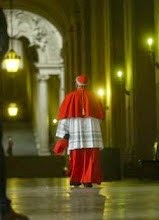
Hard to believe where the time's gone -- Monday marked a year since the emergent "growth and dynamism" of the church in the American South went global with the historic entrance of its largest fold's leader into the Pope's Senate.

Down in H-Town, however, Dan DiNardo kept to form, not using the day to celebrate, but to shine a light on bigger things as he led a "Pilgrimage for Life":
The mile-long march began outside the Huntsville Planned Parenthood clinic and passed through the Sam Houston State University campus before reaching the Walls Unit, site of the Texas execution chamber. Observers said it likely was the largest such demonstration in Huntsville history....

"We're not here to demand. We're here to pray," said the Galveston-Houston Archdiocese's DiNardo. "There will be no slogans. We'll fall on our knees for intercession."...

DiNardo, speaking at a morning Mass at St. Thomas Catholic Church that began the activities, told the congregation the "Gospel of life applies to everyone, no matter how little or seemingly insignificant."

After DiNardo admonished the group that "we need to make the truth known in a persuasive way — one by one, not always in massive doses of rhetoric," marchers were bused across town to Huntsville's Planned Parenthood clinic....

Among those at the gathering were Florence and George Scheuchenzuber of Magnolia. "We're here hopefully to let people know about our feelings of support of life from conception to natural death," Florence Scheuchenzuber said.

Her husband said he favored capital punishment until two months ago.

George Scheuchenzuber said he revised his thinking on the issue because he concluded the death penalty can end a prisoner's life before he repents and, possibly, finds salvation.

"Murder is murder," he said. "Abortion is murder. And if a grown person kills someone, that's murder." Execution, he said, is murder by the state.

Texas is the nation's leading death penalty state, where 423 people have been put to death since the punishment was resumed in 1982....

For being such emotionally charged ground, DiNardo's concluding remarks [at the execution chamber] were mild.

"We're not here to do anything but pray and witness," he said. "We're here to ... pray for life."
...and CNS has more:
"We know that the announcement of the good news that a child is born at the beginning of the Gospels of Matthew and Luke is not only a reflection on the birth of Jesus, though it is that," Cardinal DiNardo said. "It is reflection on the conception and birth of every human being.

"There is nothing more innocent than innocent human life at its beginnings. Therefore a claim is made on us for the protection of all human life; most especially that most delicate, brilliant and yet frequently violated human life through the act of abortion," Cardinal DiNardo continued.

The Catholic Church and its members are "absolutely committed" to the eradication of abortion, Cardinal DiNardo said. The way to show that commitment is through prayer, he added.

"(We must) beg the Lord to transform first our hearts and then the hearts of all this culture by prayer and persuasion to respect this human life," Cardinal DiNardo said.

The Catholic Church also opposes the death penalty, because at the core of the issue is the same basic question as abortion: the dignity of the human person.

"We are also in Huntsville today in another dimension of the pro-life movement which is guilty human life," Cardinal DiNardo said. "For the last 25 or 30 years the bishops of Texas have quietly tried to persuade, argue and explain to the people of this state and beyond that in fact what is exercised as the death penalty is frequently unjust."...

"None of this is easy, friends. If we thought that we would do it by pure human means then we would be as St. Paul says the most pitiable of all," Cardinal DiNardo added.
Days earlier, DiNardo headed up an ecumenical group in "taking aim" at current Federal immigration policy -- a key issue-point throughout Texas, but especially in the newcomer-heavy Houston church.

Earlier this month, of course, the US bishops elected the "Cardinardo" to the chairmanship of the conference's most prominent policy committee: Pro-Life Activities.

The post might always be held by a red-hat, but it hasn't gone to one so young in almost three decades -- the Southern cardinal turns 60 in late May.

-30-

Saturday, March 16, 2019

USCCB President Suffers Stroke – As Bench VP, Gomez Given The Reins

Having soldiered through this last year carrying an unprecedented double burden – the daily life of a booming 1.8 million-member archdiocese (one currently under civil investigation) and the elected leadership of the US' largest religious body amid a season of epic crisis – Houston Chancery released the following statement at 7pm Central tonight, announcing a significant health scare for Cardinal Daniel DiNardo, the President of the US Conference of Catholic Bishops:
Cardinal DiNardo was taken to a Houston hospital last night [Friday, 15 March] after experiencing the symptoms of what tests today have confirmed was a mild stroke. The Cardinal is resting comfortably and conversing with associates, doctors and nurses. It is expected that Cardinal DiNardo will remain hospitalized for a few more days of testing and observation, followed by a transfer to another facility for rehabilitation. he is grateful to the doctors and nurses for their wonderful care and for continued prayers during his recovery. Cardinal DiNardo said, "With so much to do, I am looking forward to getting back to work as soon as possible."
According to a separate statement circulated privately to the US bench and obtained by Whispers, as the USCCB by-laws provide that the bench's “Vice President ... shall have such powers and perform such other duties as may be assigned him by the President," as of tonight, DiNardo "has assigned [Los Angeles'] Archbishop [José] Gomez, as Vice President, to assist in executing the day-to-day responsibilities of the Presidency" for the period of his recovery.

In other words, for all practical purposes, the Mexican-born, 68 year-old head of the largest diocese American Catholicism has ever known is suddenly the Acting President of the US bishops – even on a pro tem basis, the first Latino ever to lead an episcopal bench north of the Rio Grande.

Just when you thought things weren't eventful enough. Then again, lest anybody forgot, this was a "joint presidency" from its outset.

*  *  *
Just shy of his 70th birthday in late May, DiNardo – the first cardinal ever created in the American South – is in the home stretch of his three-year term at the bench's helm, which'll end with the election of the new Executive in November.

Over the nearly five-decade history of the modern Stateside conference (rebooted as it was in the wake of Vatican II), not in memory has a Vice-President been called to publicly "assist" at the body's helm as Acting Chief.

Then again, as the Presidency takes at least a third of its occupant's energy in a normal time – always beginning with a first-thing hourlong call from the Washington headquarters every morning – lest anyone forgot, these days are anything but "normal."

Having served as the US bench's delegate to last month's abuse summit in Rome, DiNardo was stricken just after returning home from this past week's USCCB Administrative Committee meeting in Washington, which set the agenda for the bench's June meeting in Baltimore and its expected plan to vote on four major documents enhancing the accountability of bishops, both in terms of direct allegations against them and/or their handling of abuse cases.

As one Whispers op relayed from the Admin talks, DiNardo appeared "ashen and tired" over the two-day DC meeting, echoing weeks of concern from within his inner circle over the unrelenting workload.

When the wear-down finally caught up with him, a Houston op reports that the cardinal was presiding over a Friday night Stations of the Cross in the Cathedral he dedicated ten years ago next month (above) – a rite specifically held in reparation for the recent scandals – when DiNardo became unsettled at the Seventh Station (per tradition, the moment recalling when "Jesus Falls the Second Time") and needed to be taken out in a wheelchair.

Per early reports from Astroworld, the president is in intensive care in a local hospital; his rehab and initial recovery period will take at least six weeks, thus keeping DiNardo – head of the US' fifth-largest diocese beyond his national role – out of commission through Holy Week and Easter.

In his last major public appearance before this weekend's turn, DiNardo headlined an early February seminar at his alma mater – Washington's Catholic University of America – where the bench chief cited Pope Francis' January call to the US bishops for "a new ecclesial season" in the scandal-hit Stateside church... focusing especially on the laity's role in it:


Developing – more to come.

-30-

Tuesday, March 25, 2008

In Siouxland, the Second Coming

Prior to his elevation as the first cardinal of the American South, a wistful Dan DiNardo noted to friends that the red hat might've come his way as head of Texas' oldest and largest local church, but it was amid the cornfields of Iowa where he learned how to be a bishop.

Returning to his first diocese, where he served for seven years before his 2004 transfer to Texas, the self-described "baby cardinal" -- the first Roman prince whose path wound through Hawkeye Country -- made a sentimental pilgrimage to Siouxland yesterday for an Easter Monday jaunt the locals treated more like a "royal visit," complete with public reception, wall-to-wall coverage on several local TV stations (which interrupted hours of regular programming to cover the festivities live), and a full package of goodies from the hometown Journal.
Though an admitted "happy camper" in Houston, DiNardo said he misses the county blacktops of Northwest Iowa and the Casey's doughnuts that he enjoyed on those road trips. He travels more these days, but it's by plane, not auto. He recalled trips from Sioux City to Spencer, Iowa, that always took 2 hours and 5 minutes. It takes that long these days to visit a parish 20 miles away from his Houston office, Texas traffic being what it is....

"If you can be a good shepherd at the local level, then when you're called to ... further responsibilities in the Universal Church, you hope you don't lose that shepherd's touch with people," DiNardo said. "Sioux City people were so friendly and respectful, but never in awe, which was very important.

"The Sioux City diocese not only taught me how to be a better bishop, to be a good bishop, the people also taught me in terms of the depths of their thinking about things."...

Jim Wharton of Sioux City, who served as diocesan communications director during DiNardo's tenure, said he has never run into anybody who has had the impact in such a short period of time as DiNardo had on the diocese of Sioux City. "He's an incredible person," he said. "And to see this outpouring today. He was humbled by this. But they could have had another thousand people in here if they'd had the room."

The first person in the greeting line at the Marina Inn was Michelle Steinbach who worked with DiNardo at the chancery. "So it was really important for me to come and be able to hear him speak again. We were always excited to hear what he had to say. He brings his messages to the people's levels," she said.

Judy Wittkop of Le Mars, Iowa, said she told DiNardo that a new church was being built at St. Joseph's Parish there, the result of a process that started under his leadership. "We asked him to keep us in his prayers," she said.

"It's really wonderful to see him again," said the Rev. Laurence Burns, pastor of Sacred Heart Church at Early, Iowa. "Just to experience his presence. We all got to know him pretty well."

Before leaving Sioux City today after his brief visit, DiNardo planned to visit the Carmelite Sisters at their cloistered monastery who because of their vows could not attend the service. "They were one of my major prayer supports while I was bishop here in Sioux City," he said, not needing to add that he doesn't forget his old friends.
Riffing anew on a theme he's employed often since his November elevation, the cardinal's homily (video) to the invite-only Mass crowd of 700 focused on the theme of universal vocation, albeit with a characteristic hook.

"In all the accounts of the Risen Jesus," he said, "anybody who meets the Risen Jesus -- genuinely, always -- gets a job.

"Do you notice? No one is unemployed who meets the Risen Jesus."

At a pre-Mass press conference (fullaudio), DiNardo rattled off both his memories of the Heartland and a detailed demographic portrait of the "huge, vast" flock of 1.5 million he now heads.

While it was in Iowa where the native Pittsburgher discovered what true darkness was during late-night drives home after confirmations, the nation's fourth largest city, he said, "is the United Nations," citing one Houston parish where 23,000 parishioners speak sixteen different languages.

For all the seeming differences, the cardinal offered that the goodness and quality of faith present in both was much the same. But even so, "There aren't as many hogroasts in Houston."

* * *

Another similarity binding the two is the mutual penchant for cathedral projects on the part of DiNardo's predecessors, the benefits of which he's gotten to enjoy in spades.

Just as Sioux City's Cathedral of the Epiphany was restored shortly before then-Bishop Lawrence Soens handed off to his then-coadjutor, a week from tomorrow the cardinal will, as previously noted, dedicate his archdiocese's first permanent mother-church, Houston's new Co-Cathedral of the Sacred Heart -- the dream-project of Archbishop-emeritus Joseph Fiorenza, a native son who retired in 2006.

In advance of the 1,800-seat, $40 million sanctuary's debut, H-Town's ABC affiliate recently rolled out an impressive hourlong documentary on its construction and the people behind it.

Around 60 hierarchs from around the country are expected to join in the dedication festivities, which'll be streamed live over the web by the local outlets.

PHOTOS: Tim Hynds/Sioux City Journal (1,2); Smiley N. Pool (Removed by order of the) Houston Chronicle


-30-

Thursday, October 18, 2007

Fr. Dan, the Pastor

Admittedly, the torrent of "surprise" expressed in practically all the rest of the media over the elevation of the American South's first prince of the church has been, well, rather confounding.

Par for the (press) corps, sure, but still....

See, even on Cardinal-designate Daniel DiNardo's first morning as head of the US' sixth-largest diocese (19 months ago), it was intimated on these pages that the red hat was already believed to be on its way to Galveston-Houston (...with the hint dropped again here nine months later).

Well, gang, at least you weren't shocked. Which means that you've been served well. I hope.

That is, after all, my job.

(On a related note, next year's Houston Livestock Show and Rodeo will be held at the Colosseum.

(Just kidding... at least, as things stand -- the first prep meeting for a Texas pilgrimage was held earlier today in H-Town. At the very least, though, one'd hope that George Strait might be able to play for the Pope; given B16's prior musings on pop culture, suffice it to say he's not Dylan.

(On another related note, the news comes as the Romans -- who customarily pride themselves on having seen everything -- are still getting over the last descent of mass Texans on the Urb... which'll make things even more eventful come Consistory Week.... As if they weren't already.)

Anyway, when the historic appointment was finally confirmed by a phone call from Rome 40 minutes before the papal utterance early yesterday, after a, um, moment of emotion that a fellow product of my lineage would take his place beside our shared mentor in the Pope's Senate, I placed a westward call to congratulate one of DiNardo's nearest and dearest: Fr Lou Vallone -- sometime canonist and deep-sea diver; full-time genius, biker-priest, brain-trust, adviser and great friend to so many (this scribe included)... all on top of pastoring two parishes in suburban Pittsburgh.

A friend of the cardinal-designate from their high school days, without skipping a beat after hearing the news, Vallone fired off but one line: "I never realized our church was that smart."

And, in the coming edition of his parish bulletin, he explains the thought:
The phone call came at 5:31 AM. The words that greeted me were "It's Dan!" I groggily replied that it didn't sound like Dan. (There is only one Dan that would call me on my cell phone that early in the morning. He had done it on two other occasions, which I will refer to later.) The response was "No, I'm Rocco. It's Dan who has just been named a cardinal!"

Rocco Palmo is a blogger who is known throughout the English speaking world as a premier Vatican watcher, even though he is still shy of his 25th birthday. His intel on things Catholic is internationally sought and respected. We have been correspondents for a number of years. He was calling to inform me that Archbishop Daniel DiNardo of Galveston-Houston, who started his clerical life as a fellow seminarian to me 44 years ago here in Pittsburgh at the Bishop's Latin School (a high school seminary that no longer exists) had just been made a Prince of the Church by Pope Benedict XVI at the Wednesday audience in Rome.

This was rather earth-shaking, in that he is the first cardinal to be named in the American South, is not yet 60 years old, and had only been an archbishop for less than two years. Every one had expected Archbishop Wuerl of Washington D.C. to be named, since he is shepherd of the nation's capital and that post has always had a cardinal for the past 40 years. The only other American to be named was a Philadelphian, Archbishop Foley, who has been serving in the Vatican for almost a quarter of a century. Now, Dan is one of only 120 cardinal-electors of the Catholic Church - those who vote on a new pope when one is needed, and from whose ranks popes normally come.

My next call, four minutes later, started with the same words: "It's Dan." But this time it was in fact the man himself. Twice before, when he was named bishop of Sioux City, Iowa, then later transferred to become coadjutor bishop of Galveston-Houston, he called at an early hour to inform me. When he was named an archbishop at the raising of his diocese to metropolitan status, he also told me the news equally early. But on that occasion it was over our first cup of coffee in the morning prior to celebrating Mass at the Church at St. Mary's here at St. John of God Parish.

That's right - our own parishioners are well acquainted with this brilliant, but self-effacing servant of God and His people because he frequently stays at our rectory; and when he does, he delights in celebrating daily Mass. In fact, many more of our people may remember less than two months ago when we were short a priest, that he took both the anticipated Masses for the Assumption Holy Day at the Chapel at Mother of Sorrows. (After which he strolled the grounds of our festival, eating, drinking, and spending his money while meeting and greeting the people.) He also celebrated the Saturday evening Mass at the Church of St. Mary so that I didn't have to try to rush back from St. Catherine's to do it. He loves to stay here. His parents are deceased - more the pity now that he has been so honored in testimony to their upbringing. He treats this as his Pittsburgh home because while here he is once again merely “Fr. Dan” – a Pastor, which is the only ambition he has ever had in life, though the Church has consistently seen fit to assign him other tasks.

Just one story to prove the last point: every time he stays here, he tries to give me money to pay for his expenses, which I of course refuse. Invariably, he leaves behind a check made out to the Parish, but specified for the Parish Share Program. Only a real pastor knows that doing it that way saves the 17.6 % diocesan tax and is therefore doubly appreciated.
In the cardinal-to-be's former diocese -- where he lived in a simple suburban house -- the Siouxlanders spent yesterday recalling DiNardo's "talent, wisdom and humor":
The Rev. Brad Pelzel, vocations director for the diocese, was ordained by DiNardo in August 2002.

Pelzel, who served as a priest in what is now the Holy Trinity Parish in Webster County for four years until last summer, said he experienced DiNardo’s generosity literally from the beginning of his priesthood.

‘‘At the time of my ordination, my mother was ill with cancer and had been hospitalized the night before,’’ Pelzel said. ‘‘The bishop delayed the start of my ordination almost an hour so that my mom could come. That doesn’t often happen.’’

Before Pelzel was ordained, he said, DiNardo shared some of wisdom that he had gained over the years.

‘‘He told me that, if I was going to make a mistake in my priestly duties to err on the side of compassion,’’ Pelzel said.

Jason Swedlund, who became acquainted with DiNardo as director of music at Sacred Heart Church, characterized the cardinal-elect as very generous and very humble.

‘‘My impressions were that he was a very gifted man pastorally,’’ Swedlund said. ‘‘He is very good with children. ... He believes a lot in our youth.’’
...and more from Iowa:
"He took a very strong interest in the rural economy, caring for the land and all sorts of issues that are important to Iowans," said Eaton, 62, of Sioux City. "He saw Iowans as independent people, not easily swayed or led astray."

Marilyn Christiansen, 72, of Dakota Dunes, S.D., was honored when DiNardo officiated the 2000 funeral mass for her husband, Russell, who was retired chief executive officer of MidAmerican Energy.

"He was so holy and so fun," Christiansen said of DiNardo. "Probably one of the best homilists I ever heard. He also had a very good sense of humor."

DiNardo told Christiansen a story about a phone conversation he had with his ailing mother before Easter one year. She asked him if he could come home for the holiday, but DiNardo reminded her he would be very busy during the week leading up to the holiday.

"She said, 'Why don't you talk to your bishop?' He said, 'Mother, I am the bishop,' " Christiansen said.

Dick Billings, 48, a deacon at Blessed Sacrament in Sioux City, said DiNardo is a good administrator and a good spiritual guide. "He could speak about the saints or the issues of the day, but in a way that the average Catholic could understand," Billings said...
...just like the Pope who elevated him.

In 1924, Archbishop George Mundelein of Chicago became the "Cardinal of the West." In 1953, Pope Pius XII's elevation of Archbishop James McIntyre of Los Angeles pushed that boundary further, signaling the arrival to prominence of the church on the Pacific Coast.

And now, finally, 54 years later, Texas can boast the "Cardinal of the South"... who, in a sign of the times, sat for the Whispers Interview earlier today.

For that and everything else, stay tuned.

PHOTO: Nick de la Torre/Houston Chronicle


-30-

Saturday, January 05, 2008

THE CHURCHMAN OF THE YEAR: The Reluctant Prince

2007 CHURCHMAN OF THE YEAR -- US
Cardinal Daniel N. DiNardo
Archbishop of Galveston-Houston

"Se ve. Se siente. DiNardo está presente."

"You see it. You feel it. DiNardo is here."

Just six weeks ago, that was the word from Rome. The surroundings might've been Italian, the chant Spanish, but its voice was catholic as, by the hundreds, a diverse group from the American South stormed the Vatican to mark their arrival on the stage of the global church.

From relative obscurity (at least, in the public mind), the Pope had tapped Archbishop Daniel DiNardo of Galveston-Houston -- head of the US' youngest archdiocese, 31st in rank of the 34 archbishops -- to enter the papal senate. In a church where seniority and precedent often trump all else, the move has continued to find not a few of its establishment claiming "surprise," as states of shock or confounded silences continue to linger on the scene.

From every angle, however, it was a destiny years in the making.

In barely three decades, the mother see of Texas -- home to the nation's fourth-largest city, an emerging capital of international transport, migration and commerce -- had rocketed to a place among the nation's ten largest dioceses by population, its Catholic presence quadrupling to 1.5 million. The last American see to receive its first cardinal was Washington, where Archbishop Patrick O'Boyle received his red hat in 1967. The scarlet hadn't traveled to a new region of the country since 1953, when Los Angeles' James Francis McIntyre became the "Cardinal of the West." And among the chronicle of American Catholicism's 46 princes of the church since New York's John McCloskey was called to the college in 1875, a Southern prelate's induction into the Roman clergy joins the elevations of McCloskey, McIntyre and the 1924 rise of the first "Western" cardinal -- Chicago's George Mundelein -- as the watershed moments when the faith's pilgrimage across a continent earned its vanguards a place on the universal scene.

At the audience for his newly-created lieutenants, Benedict XVI might've told DiNardo that "Texas needed a cardinal." But its fruition was the climactic stroke of a Roman design a decade in the works.

Its script: to catapult the Curialist who picked parish ministry over a Vatican post from his founding pastorate in suburban Pittsburgh to an elector's seat in the conclave.

It all happened before his 60th birthday. And little of it as the wiry, unassuming cleric would've wished.

Lone Star Country needed a cardinal before 2007. Rome just bided its time 'til its choice got there. And, in a rare triumph of Vatican clairvoyance, the bet has paid off spectacularly.

They say that "everything's bigger in Texas," and the customary bounce of energy that a local church gets from the red hat is no exception. According to the locals, the elevation "has breathed new life" into an already booming, energized fold. Since arriving home, the new cardinal has been welcomed by crowds of thousands at every turn, his post-liturgy reception lines running into the early hours of the morning. A stronger sense of identity and unity is already being felt among the multiethnic mega-flock, and several parishes have noticed a curious uptick of calls about RCIA programs in the weeks following the November consistory.

The Houston press -- which had, according to one local, primarily "covered [the archdiocese] when the news was bad" -- provided acres and hours of the finest, most enthusiastic elevation coverage ever seen on these shores. And most significantly of all, in the very city where the first Catholic president sought to assuage panicked Protestant clergymen that the White House wouldn't take its lead from the Apostolic Palace, some of the most effusive testimonies to the advent of a Roman prince have come from H-Town's ecumenical and interfaith communities.

Texas -- and Houston in particular -- likes to view itself as the "New America," and not without reason. With Catholics recently edging out Evangelicals as the state's largest religious group, the new America has bred a model of American Church gaining in strength, size and reputation, an ascendancy now recognized with the elevation of a new breed of American Cardinal -- the post-institutional prince of the church.

Some might still be stunned, but it all happened in plain view. It just took a flash of scarlet to emerge to the fore.

And to think: it's only just beginning.

* * *
"This is Sambi. Sit down."

At mid-morning on 15 October, DiNardo was checking out of an Oklahoma City hotel when the papal nuncio to Washington, Archbishop Pietro Sambi, reached the Texas prelate on his cell-phone.

Due to a calcium buildup that requires hearing-aids in both his ears, DiNardo rarely uses his mobile; it mostly collects his messages, which he checks intermittently on a land-line.

Seeing the nunciature number, however, he picked up.

Having sat, Sambi dropped the bomb, telling him to return immediately to Houston. And everything afterward became a blur.

The announcement would be made 40 hours later. He told no one. By 11am Wednesday, five hours after Benedict revealed his list of 23 new cardinals during his weekly General Audience, the phone messages had already piled up by the hundreds at the Houston chancery.

Literally overnight, the quiet, relatively low-key life DiNardo loved was over.

Slight but intense, in contrast to some of his more overpowering peers, the cardinal cuts an inconspicuous figure. This was the prelate who, after a long day at last year's November Meeting, sat quietly with his usual Pinot Grigio in a corner of the Baltimore Marriott lounge, clad in a plaid button-down shirt and khaki Tommy Hilfiger windbreaker as, at the center of the room, a score of his confreres held court in their day-dress of collars, suits and pectoral crosses.

The hearing-aids were turned down, and the lone figure -- indistinguishable were it not for the same iconographic gold band he'd worn since his episcopal ordination -- almost seemed to be at prayer.

He's not one to seek out attention. But seek him out and, like a light switch, the "nervous energy" jump-starts itself.

He's a figure of wild contrasts: the Basselin Scholar given to earthy, dynamic preaching from the middle of church aisles; fluent in Latin but devoted to the spirituality of the Eastern tradition; loved in the Curia but wary of the trappings of high office; the staunch defender of Summorum Pontificum who spent a whole week last summer "singing his head off" and mixing with attendees at the Indianapolis conference of the National Pastoral Musicians, of which he's episcopal liaison. (A music fan who's spoken of singing as "the elevation of the human voice," DiNardo's motto -- "Ave Crux Spes Unica" ("Hail, O Cross, Our Only Hope") -- is taken from a sixth-century Roman hymn.)

The catch-all nature has baffled more than a few. At his 1997 ordination as coadjutor-bishop of Sioux City, the clergy of the Iowa diocese attempted the standard practice of figuring out their boss-in-waiting from his choices of co-consecrators and attending chaplains.

The "read" might usually be a reliable indicator. On this occasion, however -- and to the frustration of the local clergy -- the exercise proved futile.

Assisting then-Siouxland Bishop Lawrence Soens were DiNardo's former ordinary, then-Bishop Donald Wuerl of Pittsburgh, and the new bishop's classmate and longtime friend, then-Bishop Raymond Burke of LaCrosse.

The chaplains made for an even harder read. At one side stood the delicate, straight-laced Msgr Leonard Blair of Detroit, the onetime secretary of Cardinal Edmund Szoka and current bishop of Toledo. On the other was his best friend since high school -- the ponytailed, Harley-riding Fr Lou Vallone of Pittsburgh, known in the South for his proficiency at giving Black church revivals.

In the place he's spoken of as "14,000 square miles of cornfields, that just happened to contain 93,000 Catholics," the Iowans eventually came to recognize their bishop as "the most gifted man of the church we have ever experienced."

It was something they only would learn, however, once he hit the ground running.

* * *
In a column for Sioux City's diocesan paper, DiNardo once wrote of learning what true darkness was as he drove down Iowa roads to get home.

The straight, unlit drags through cornfields were a far cry from his hometown of Pittsburgh, and even further removed from the cramped and winding streets of Rome. But, so he says, it was in the Heartland that the onetime director of the English desk at the Congregation for Bishops actually learned how to be one.

In 1984, the newly-arrived bishop of Pittsburgh, Anthony Bevilacqua, found a request from the Vatican dicastery requesting one of his priests for a five-year tour of duty.

Bevilacqua's predecessor, Bishop Vincent Leonard -- who ordained DiNardo six years earlier -- invariably refused the feelers from Central Office. But the Brooklyn-born, Rome-trained canonist -- who would, in time, go on to become cardinal-archbishop of Philadelphia -- was more given to the bigger picture of the church than Leonard, a native son who, DiNardo said, "taught me the value of being local, of belonging to a place."

After a canvass of his senior staff, the bishop offered the assignment to DiNardo, then 34 and doing double-duty as vice-chancellor and a professor at St Paul Seminary.

Marked out from his high school days as a standout talent, he was no stranger to the Eternal City, having spent his seminary days at the Pontifical North American College, studying in turns at the Gregorian and the Augustinianum, where he earned his licentiate in Patristics. The timing of his return, however, would prove fortuitous.

In a historic move months earlier, Pope John Paul II had appointed Cardinal Bernardin Gantin to head the congregation. Born in Benin, Gantin was the first African ever named to lead one of the nine top-level offices overseeing the internal matters of the worldwide church.

As minutante, or desk officer, DiNardo was responsible for processing the case-files pertaining to episcopal appointments in the US, Canada, Britain and Australia. The reports would then go to the body's membership of cardinals, who would vote on a nominee to recommend to the Pope.

Since the dicastery's work was a topic of intense focus around the globe, the job didn't just require a work ethic diligent enough to pore through ceaseless reams of documentation -- the 1985 selection of a new archbishop of Los Angeles, for example, saw a dossier that measured some two feet high dropped on his desk -- but the utmost discretion, to boot.

Every public, and some not-so-public, details of candidates' lives and careers lay on the junior cleric's desk, and whatever he saw would have to go with him to the grave. And, day after day, the files gave their reader a unique glimpse into the church's universality. Even more usefully for the road ahead, it allowed him to see that the church in the States was less a monolith than a tapestry of cultures, administrative models, pastoral ideas and the faithful's needs. As if the day job (on the usual curial schedule of six days a week) wasn't enough, he took on two other commitments: the directorate of Villa Stritch, the residence for American priests in the Vatican apparatus, and an adjunct position on the faculty of the NAC.

Both on the job and off, DiNardo's qualities of mind and spirit won a keen admirer in Gantin, among other curial chiefs and staffers. As 1989 approached and the early birds outside the walls began speculating on possibilities for John Paul's successor, the African cardinal had appeared on not a few lists of papabili. More concretely, however, his American aide's five-year term was ending.

It could've been renewed, and seemingly would've been without a flinch. If not, that is, for one minor issue: having served his stint, the Pittsburgher wanted to go home, back to the life of a parish priest.

"Dan will obey, but he'll say what he wants," a friend noted. The almost unheard-of wish to bolt Rome for the trenches was something of a brutta figura move -- if anything, most curialists would give anything to spend their lives in the Vatican offices, a quality especially true of non-Italians. Then again, honesty was one of the traits that won him his superiors' regard to begin with, even if it cut both ways.

It took a year of resisting the attempts to keep him from leaving, but his bosses realized he wouldn't be changing his mind. In 1990, Wuerl -- who had succeeded Bevilacqua in the Steel City two years earlier -- named DiNardo co-pastor of an Italian parish, Madonna del Castello, on the outskirts of Pittsburgh.

At the time, friends recall him saying that "I've got everything I want in my life."

But there was more. Alongside the parish duties, he was named the diocese's #2 official in Wuerl's specialty area: education. DiNardo shared his bishop's devotion to catechesis -- one that, the former said, could only be rooted in "knowing the face of Christ" if it sought to be effective -- and to the formation of the young.

While Wuerl built a national following as the "education bishop," the younger official who ended up leapfrogging him to the Sacred College was honing his approach on ground level.

After four years juggling his first pastorate and the office, the teacher-prelate handed his lieutenant a new lesson.

Twenty miles outside Pittsburgh, the suburban community of Marshall Township was expanding at a rapid clip. In early 1994, Wuerl announced that 12 acres there would be home to a new parish, Saints John and Paul. Named in tribute to the then-pontiff -- who had ordained Wuerl to the episcopacy eight years earlier -- it also evoked the Passionist church on Rome's Coelian Hill (which, since 1946, has been the titular parish of the archbishops of New York). Appropriately, DiNardo was tapped to found it.

In his Whispers interview, the newly-named designate said that, among his models of ministry, one of the most powerful came from the pastor of his first parish assignment.

Fr Tom Marpes would always be on the lookout out for regulars who were missing from Sunday Mass. Without fail, the next afternoon found the Lebanese priest at the table in the rectory kitchen as he called the absentees -- not to chide, but simply to make sure they were OK.

"It might sound unusual today," his former associate said, "but it was his way of showing that he cared."

The example proved particularly useful in keeping tabs on a new community's growth. No buildings existed on the parish plot, so "Father Dan" -- though made a monsignor in Rome, he shirked the title -- and a core group from his 650 families began tracking down a starter site for Masses and offices, eventually nabbing a 300-seat makeshift "chapel" and two smaller rooms on the lower level of a local office complex.

While DiNardo came to realize the one easy part of founding a parish -- "you don't hear 'But, Father, we've done it this way for years' for the first six months" -- every so often, the ghost of Rome would reappear and see if he was still enjoying himself at home.

Just in case he wasn't, "something" -- most likely an episcopal appointment in the Curia -- could always be arranged. Gladly.

The pastor was happy and the parish was growing -- a return trip wasn't wanted or needed. But his fans along the Tiber hadn't given up finding something he'd finally see fit to accept.

* * *
By 1997, it was no secret in Rome that Gantin's 13-year stewardship of the Congregation for Bishops was nearing its end. He had been elected Dean of the College of Cardinals some years earlier, but longed to pull a DiNardo of his own and return to his homeland (a request John Paul would only approve when, after his 80th birthday in 2002, he retired from the latter post).

No curial don leaves office without shepherding a handful of cherished projects to fruition, and the Dean from Benin was no exception. His friend from Pittsburgh had been given seven years to live the dream and work quietly on the ground at home, but the reserved cardinal known for his prayerful spirit and gentle touch wouldn't go until he ensured that his former aide's talents had been put to the church's wider service.

By then, the task DiNardo once performed alone required not one Pennsylvanian, but two. The staff was on board, as were the four American cardinals who sat on the congregation's voting membership. And, in a facet that wouldn't come to full bloom until a decade later, undoubtedly aware of -- and sharing in -- the departing prefect's esteem for the Pittsburgher was the cardinal who was the congregation's best-prepared, most observant member: Gantin's closest ally in the Curia's top rank, the prefect of the Congregation for the Doctrine of the Faith, Joseph Ratzinger.

Knowing of the candidate's fondness for intense study before acting, the pitch was sweetened by making his appointment not a direct one to the bishop's chair, but as successor-in-waiting to a cooperative 71 year-old ordinary, providing a learning period that would allow for the most seamless transition possible.

In the dead of summer, as much of Pittsburgh was making its annual pilgrimages to South Carolina and Stone Harbor, the call was placed to Marshall.

A year earlier, Fr Dan had overseen the completion of a multi-use building of classrooms, offices, a temporary church and pastor's apartment, and had the project's debt paid off within months.

The nominee had to check his atlas to find Sioux City. But this time, he accepted.

"We knew he wouldn't be here long," one Siouxlander said. As for what the new arrival brought to the table in a place that was "certainly not the center of the universal church," a local priest brimmed to overflowing.

"His intelligence, wit, and ability to passionately and persuasively preach the Gospel are unmatched," the cleric said.

"He is also a genuinely humble man -- there's no way that he could be unaware of his gifts, [but] he never made a fuss over himself, and was visibly uncomfortable when other people did.

"Before all else, he is a shepherd."

Without fail, the bishop cris-crossed the diocese relentlessly: present at every function, taking time with every person, sometimes getting an earful (and doing what he could about it), keeping contacts across the turf, and sticking around 'til the last person had gone. (The only people he was known to avoid: politicians... who tend to be especially abundant in Iowa every fourth winter.) The priests' monthly deanery meetings would be a double-bill of business and down-time with the Boss, small-group dinners were routine at the simple house in a suburban development he called home and, with his distaste for handlers, his entourage was never more than himself.

The mark of the pastor, however, lay away from the big-print. While churchfolk can easily be tempted to measure leadership by the yardsticks of grand initiatives, big numbers or public flourishes, the record shows none of these. A pastor knows that the commission to teach and preach -- to lead and give life -- isn't done in the wholesale, nor through policies, nor at the desk, but one by one, person to person. The policy is the Gospel, the most priceless asset is faith; live by and invest in those, and the rest just has a way of working itself out.

(The closest thing to a diocesan initiative DiNardo sought in Sioux City was an effort to train his priests in spiritual direction, with the hope that his clergy and the people could easily find regular, sound guidance.)

The bishop's interest in a low profile extended practically to everything outside his diocese. The congregation, however, kept its eye on Iowa, and barely five years after succeeding Soens as diocesan bishop, another phone call was being prepared.

By late 2003 -- after a spate of rumors had the Siouxland prelate in the mix for the bishopric of Brooklyn -- Gantin had gone home, replaced by his former second-in-command, Giovanni Battista Re. Ratzinger was still at the table, as were the four Americans. In the wake of the abuse earthquake of 2002, the nation's bishops felt under siege and, with American cases being placed under a closer microscope, the appointment process had started to go beyond the usual six to nine month time frame.

One succession, however, was settled before it could even be broached.

A leader of the US church's "good-governance" wing, as Bishop Joseph Fiorenza of Galveston-Houston approached his 73rd birthday in early 2004, he sent a letter to the congregation advising that it might want to start considering the appointment of a coadjutor for Texas' largest diocese.

The flock was booming at a staggering rate, with domestic transplants and an international mix of immigrants pouring in to an extent that the church was hard-pressed to keep pace with. A former president of the US bishops, Fiorenza often mused that he could open seven parishes the next morning -- if he had the priests to staff them. Religious and foreign clergy outnumbered the incardinated presbyterate by about 2 to 1. And on top of all that, already sharing the episcopal duties with two auxiliaries, the coming of an heir apparent would make the burden easier still.

Just two months after Fiorenza's note to Re, the native-son bishop was reportedly taken aback when the congregation sent word that his coadjutor had been named.

The bishop of Sioux City had never set foot in the Lone Star State. Heading to the home of the nation's second-largest Hispanic community, he couldn't speak Spanish extemporaneously.

But yet again, the vote of confidence was there where it counted -- and, yet again, the chattering circles registered barely a ripple as the design to make Houston the church's Southern hub had rolled into full gear.

There would be no dark roads in Southeast Texas. If anything, quite the opposite.

* * *
As in Sioux City, the deja vu coadjutor used the time to quietly visit each parish, take mental notes, get a feel for his new turf -- and, most importantly, dig in with the people. Or try to -- it was, after all, a mission-field with 15 times the faithful of Northeast Iowa.

Nine months after DiNardo's Texan welcome -- held in a large parish church as the 600-seat Houston co-cathedral was deemed too small -- the future came into an even wider view.

During the Christmas Octave of 2004, as John Paul's declining health loomed ominously over the Catholic world, the state's longtime metropolitan, Archbishop Patrick Flores of San Antonio, retired, with the Denver auxiliary Jose Gomez (a longtime Houston hand before his appointment to the Rockies) named to succeed him. But simultaneously, for the first time since 1980, an American province was split up -- San Antonio would keep the western seven suffragans of what had been the global church's largest metropolitan jurisdiction as the eastern six were siphoned off to the newly-elevated archdiocese of Galveston-Houston.

Within a matter of years, a chain of events unseen in US Catholicism since the overnight explosions of the dioceses of Los Angeles and Detroit in the early 1940s quickly became evident: first, the population rose, then the caliber of leadership, a pallium appeared... and the rest -- i.e. the red -- would soon follow.

Having visited all but a few of the new archdiocese's 149 parishes over the course of his two-year apprenticeship, on Mardi Gras 2006 -- ironically enough, also Opening Day of the city's biggest annual event: the renowned Houston Livestock Show and Rodeo -- DiNardo became the second archbishop as the newly-elected Benedict XVI accepted Fiorenza's retirement. To mark the transition, the new chief issued a video message via the archdiocesan website and set out immediately to work.

His journey to the corner office completed, the mental notes he'd been taking quickly became action items. Gently, but firmly, they came to light: insufficiently reverent tabernacle placements were to be rectified, and liturgical norms adhered to more faithfully; permanent deacons would start receiving assignments to archdiocesan ministries in addition to their parish duties; even more resources would be poured into young adult ministry -- and, especially given the dearth of homegrown clergy, priests belonged in the parishes, not the chancery.

The venue might've changed, his profile raised mightily, but the man and his hallmarks stayed the same: never an MC, driver, or priest-secretary hovering over him, no desire for a national profile or responsibilities outside the diocese (except NPM), out among the people whenever possible, appraised of the doings in the office but not immersed in them; and, when his presence was sought, seldom (if ever) saying "no."

As in Sioux City, following his succession the archbishop took up residence at another simple, small house, this time at St Mary's Seminary. (His first Houston home, however, was humbler still; Fiorenza had allotted his coadjutor a spartan two-room flat on the chancery's top floor.) Reflecting its occupant's Eastern affinity, iconography now decorates the chapel of the traditional Archbishop's Residence, which boasts just one accoutrement not often seen in his parishes -- a chalice veil.

His collaborators have described him in turns as "a gift of God," "a truly holy man," and "one who personifies Christ's love for the church." But that doesn't mean the experience has been without its bumps.

At a priests' gathering shortly after taking the reins from Fiorenza, DiNardo made a point of underscoring his seriousness about rubrics and well-celebrated liturgy. Channeling Dirty Harry, those who did otherwise were, he said, welcome to "make my day."

The remark sparked outrage among segments of the presbyterate. When asked about it at a subsequent convocation, he apologized. In the end, his ability to admit an error ended up earning more goodwill than the initial quote could've drained. Two years later, after pressure from his staff forced the naming of a priest-secretary on his elevation, he apologized again to his presbyteral council for drawing on the archdiocese's clerical resources. (The choice of aide fell on Fr Gerald Goodrum, who Fiorenza ordained in 2005.)

Not the greatest enthusiast for the administrative end of the office, the reshuffle of the archdiocese's central staff is ongoing. Keeping with the aim to not place any further strain on the already-stretched demand for clergy, Bishop Joe Vasquez -- the lone active auxiliary -- serves as chancellor and, in a first, DiNardo named a laywoman, Christina Deajon, as Vasquez's deputy on his first day in office. (A former assistant counsel to the archdiocese, Deajon is believed to be the highest-ranking African-American layperson serving in a US chancery.) At present, the archdiocese's top two financial posts are in the process of being filled.

He delegates authority willingly and expects the best -- and as one aide who's seen him in office mode put it, were anything less delivered, "I wouldn't want to be on his bad side."

That firmness, however, finds its flip-side in creativity. While many of his confreres either panicked at or turned a blind eye to the 2006 Vatican ruling revoking the permission for lay liturgical ministers to participate in the purification of vessels, the now-cardinal came up with a "third way" solution that both complied with the policy while avoiding post-Communion chaos, establishing a diocesan program for the formation of acolytes. Married men can be admitted to the order, and instituted acolytes were still permitted to care for the vessels by universal law.

While the predominant response sought to criticize the policy-change as pastorally insensitive or excessively rigid, a practical solution was present in the rubrics all along, it just took a bit of investment at the outset.

The Houston prelate saw the opening and ran with it. How many others did is anyone's guess.

* * *
As he was in 1997 and 2003, Joseph Ratzinger was back at the personnel table earlier this year when DiNardo's name came up. This time, however, his was the lone vote that mattered.

Never one to forget a name or face, Benedict XVI first met the young priest from Pittsburgh as he took notes for Gantin at the bilateral meetings between the top officials of the CDF and Bishops. The staff's job was to remain inconspicuous. Clearly, though, enough of an impression had been made.

Back in the States, the names proffered for the red hat were primarily the old guard of the church: Washington, St Louis, Baltimore. Not a few advocated San Antonio -- US Catholicism's Hispanic seat -- and Gomez as the more likely choice should a red hat travel. But in the end, alongside the chiefs of the Curia and the heads of the marquee sees of Paris, Bombay, Nairobi and Barcelona, it was Galveston-Houston's chief pastor who got the nod, completing its rapid ascent to the top tier of the global church.

But some things were still more important -- at least, for the figure at the center of the storm. As the chaos of Announcement Day bore down and cameras swarmed the chancery for a hastily-called, exuberant press conference (fullvideo), DiNardo kept a commitment to attend the installation of a Protestant pastor in the city. The following afternoon, with the frantic plans for the unprecedented consistory pilgrimage just beginning to take shape, he refused to miss a priest's funeral.

Twice a coadjutor, one thing DiNardo never had was a proper installation as a diocesan bishop. He ended up with a coronation instead as, over Thanksgiving Weekend, the threads of his life converged in the Eternal City.

To the amusement of Vallone's longtime sidekick, the sight of a cassocked cleric with a ponytail provided enough of an attraction to keep the crowd under control as almost a thousand well-wishers queued up for a moment with the new cardinal at the traditional post-consistory reception in the Apostolic Palace. And earlier that day, as the bareheaded cardinal-designate processed down the main aisle of St Peter's with the other 22 honorees, another pilgrim took to shouting "Hey, DiNardo!" over the basilica's barricades.

On his way to be inducted into the Roman clergy, the voice of Marshall was calling.

Since departing his founding pastorate for Sioux City, Fr Dan's initial flock of 650 families had more than tripled at Sts. John and Paul, and Fr Joe McCaffrey had been tasked with the construction of a permanent church.

Spotted by his onetime spiritual director, "he shouted back," McCaffrey told a local paper, "asking how things are at the parish."

Led by his twin sister, Peg, his three siblings and their families were there, as was his ordination classmate David Zubik, now Pittsburgh's 12th bishop, with a planeload from the Steel City. A low-profile retirement couldn't keep Bevilacqua from seeing the first of his proteges to don the "sacred purple" alongside him, and from the Heartland where he learned what episcopal ministry was all about, a group of 40 from Sioux City -- including his successor, Bishop Walker Nickless -- descended to honor the first American cardinal whose road wound through Iowa.

But for all these, the week belonged to the upwards of 700 Texans. The group's diversity and excitement turned heads even among their fellow cheering-sections, and as their chants bounced off the city's walls, one longtime Vatican hand said the "radiant" Houston crowd had provided the natives with a much-appreciated sign -- that, for all the bad headlines of recent years, "the church in America is still very much alive."

The show of unity wasn't a one-off occurrence. "Everyone really gets along here," DiNardo said shortly after the elevation was announced, ticking off a list of the archdiocese's cultural groups: the Hispanic majority, a historically prominent African-American contingent, vibrant Vietnamese and Filipino communities, the world's largest concentration of Nigerians outside their home country, and more.

Almost since the beginning, tensions between rival ethnic factions have been a mainstay of the church's American journey... that is, until the Southwest.

The region's newest honor isn't just papal recognition of a metropolis and its momentum, but of the energized, collaborative model that, following generations of Establishment suspicion, earned Southern Catholicism a place at the civic table not through confrontation, coercion or compromise, but a commitment to the common good and the credibility of its witness.

* * *
Returning home exhausted from the feeding frenzy of Consistory Week, the new cardinal received a card from a grade-schooler that summed up the expectations ahead.

"Congratulations, Cardinal," it said. "Now get to work."

Just when he thought his 2008 plans were "worked out," DiNardo told his flock that "a number of things have now been turned topsy-turvy.

"It should be an interesting time in the year ahead," he said. "I really need your prayers!"

As it wasn't just a matter of weeks ago, the ecclesiastical spotlight now rests squarely on what its new prince has termed the "happy chaos" of Houston, of Texas and the wider South.

The archdiocese's marquee event of the year -- the early April dedication of its first permanent Houston hub, the $64 million, 2,000-seat Co-Cathedral of the Sacred Heart -- now takes on the dynamics of a national, even international, event.

From near and far, the invites and requests have already increased, as has his public prominence on the local circuit, the once-averted political niceties included.

Earlier this week, DiNardo offered the invocation as Houston Mayor Bill White was sworn in for his third term. In mid-December, as Texas Gov. Rick Perry hosted a "private" lunch for 400 to welcome the new cardinal home, the guest of honor used the statewide coverage of the Austin event to tackle the controversial topic of immigration, advocating the moral imperative of family reunification and saying that "punitive measures alone" to the end of protecting the nation's borders "are going to be ultimately ineffective and, I think, counterproductive."

But, again, the ride is just beginning.

At 58, the youngest American cardinal elevated in nearly two decades has another 22 years of eligibility in a conclave. With 15 of the US' 17 red-hats now older than 71, his seniority in the top rank will accrue quickly. What's more, as the undisputed head of the Stateside church's most dynamic region and leader of the second-largest state grouping of the nation's Catholics, his potential degree of national influence -- already evidenced by the deference accorded him at November's USCCB plenary -- could be without peer.

Well, to the degree he seeks to use it. Time is, after all, on his side.

Seemingly overnight, much has changed for the pastor-turned-"Cardinardo." But the mind and approach of his parish roots remain unscathed.

Keen to put one on his rectory wall, a Houston priest recently asked his boss when his formal portrait in the scarlet would be ready. Never a fan of flashbulbs, DiNardo told him there were bigger things to think about -- even in the purple, he said "it's still me." (Six weeks since the consistory, the shot has remained untaken.)

And as he preached from the aisle to a group of young people, another of his clerics was overheard muttering that "This guy should be teaching high school religious ed., not running a diocese."

The line was intended as a slight. But as the nation's hierarchy struggles to restore its credibility, an American cardinal couldn't ask for a better compliment.

PHOTOS: AP/Pier Paolo Cito; Getty Images; Sts. John and Paul Parish, Marshall Pa.; Loggiarazzi; Smiley N. Pool/(Removed by order of the) Houston Chronicle


-30-

Saturday, November 24, 2007

The Land of the Free... and the Home of the Red

With today's elevation of Cardinals John Foley and Daniel DiNardo, the all-time number of US prelates added to the Roman clergy now stands at 47 since John McCloskey of New York received the red hat in 1875.

The new additions, however, set a record -- 17 American cardinals in all, thirteen of whom may vote in a hypothetical conclave.

DiNardo is the first US cardinal under 60 and the first Italian-American to be named to the college since Roger Mahony and Anthony Bevilacqua respectively brought those distinctions to the table in 1991. Foley is but the second Curial "lifer" from the States to enter the papal senate -- and, just like Cardinal Francis Brennan (the longtime dean of the Roman Rota elevated in 1967) before him, he's a Philadelphian. The River City can now boast of four native sons who've ended up in red, while DiNardo's hometown of Pittsburgh has its second.

Immediately following the consistory, as the rain teemed outside, the American honorees were quickly hustled up the Janiculum Hill to a press conference at the Pontifical North American College, where the "private" afternoon receptions were held for a combined crowd numbering about 2,000.

The National Catholic Reporter's John Allen has rushed a transcript of the meeting -- most of which, in keeping with the exuberant feeling of the day, kept things quite light.
Opening Remarks by Cardinal John Foley: I’ve been told I’m supposed to go first. I think I can speak for Cardinal DiNardo in saying that we’re very grateful to our Holy Father for this great honor, not to us personally but to the church in the United States. We’ve been very well-received by our fellow members of the College of Cardinals, and many of the American members of the College are here today. As one who has worked with the media for so many years, I’m grateful and happy to see so many of you here. It’s a pleasure to see you. Thank you for all the kind things you’ve said about both of us in these days. I said to John Allen yesterday that it’s nice to be canonized without the inconvenience of dying! We’re very grateful for all of your kindness and thoughtfulness and support. We ask you for your prayers. I know that both of us will be available to you as much as we can in these days. Forgive me for asking to be seated at this time, but some bug struck me a couple days ago and I haven’t been in the best possible shape. I’m just trying to survive through the ceremonies. Thank you for your understanding and your patience. I now give you to the man who was my boss here in Rome a number of years ago as director of Villa Stritch, where I live, the residence for American priests who work at the Vatican. Cardinal DiNardo was so kind to me when I celebrated my 25th anniversary as a priest. He had a special dinner for me, and invited other people. He was always very gracious, very thoughtful, so God has rewarded him for his goodness!

Opening Remarks by Cardinal Daniel DiNardo: I think Cardinal Foley has spoken for us both in saying how grateful we all are, first to the Holy Father, and to God’s people. We’re both humbled too by receiving this title, this honor. I would want to add along with Cardinal Foley my gratitude to those of you here with the press. I especially want to thank the press from Houston, if you don’t mind a plug, because they’ve come here from the city of Houston. It is a distinctive honor for not just Texas, but the whole south of the United States, but certainly for Houston. I’m very proud that a cardinal from the south has been named. It’s an honor, a responsibility, and pretty humbling for this kid from Pittsburgh. I’ve been so warmly accepted by the Archdiocese of Galveston-Houston, and now to be selected to be a cardinal of the church. I’m delighted. It was a wonderful celebration today, beautiful words of the gospel, beautiful interpretation by the Holy Father today. Thank you.

Cardinal DiNardo, what did you think when the Holy Father put the biretta on your head?

I wanted to be very composed in terms of the sacred moment, but I have to admit at the very moment he put it on, my zucchetto was falling off. I had to push it back up. Once I stood up, he had a great smile when he said Pax Domini, “the peace of the Lord be with you.” That smile, that encouragement, were a great moment for me today.

Cardinal Foley, when you were the editor of the Catholic Standard and Times up there on the ninth floor of 222 17th Street, did you ever think you’d be wearing the red hat of a cardinal?

No, but I thank the members of the Catholic Press Association for having given me the clothes I’m wearing today! Is that your way of slipping that in? Bob Zyskowski is the President of the Catholic Press Association of the United States and Canada, and he worked for me in Philadelphia lo these many years ago, so he’s made good. Thank you. Do I look alright, by the way?

Both of you have given your lives to the church. Cardinal DiNardo first and then Cardinal Foley, would you say this is the happiest day of your lives?

DiNardo: It’s a very, very happy day of my life, but I’m going to be as frank with you as I can. The happiest day of my life was the day as a bishop I ordained my first priest. No day will probably ever equal that. I say that [because] it just simply affected me more than anything. But to receive this great title from the Holy Father … it’s really quite special. To have my family present, as well as the family of the church from Houston and Pittsburgh and Sioux City, made it an extremely fine, fine moment. So it’s on the edge of the happiest day of my life.

Foley: I also was on the edge of the happiest, but the happiest day was my ordination as a priest. That’s it. I keep saying that I’ve never had an unhappy day as a priest, and I mean that. It’s been a wonderful, wonderful blessing … including today!...

Cardinal DiNardo, as somebody who came into Texas from the outside, can you talk a little bit about what you’ve learned about Catholicism in Texas and the southwest, and what this day means for Catholics there?

Houston had half the number of Catholics twenty years ago that it has right now. There has been an incredible growth of various nations and peoples, plus people from other parts of the United States who have come in to the southwest, to the south, and specifically to the area around Galveston-Houston-Austin. They bring with them experiences of the Catholic faith, of their respective nations, which has been an enrichment to us. That’s particularly [the case] when you think of those from various parts of South America, and from the Pacific … Vietnamese, Filipinos, Chinese, Koreans. I see that as a great enrichment. What it has allowed us to do, but it’s also a challenge, is to see that the unity of faith can be maintained with a wide variety of cultures around. However, it requires purposive work to do that. The challenge I see in Houston is to celebrate the richness we have, with this great diversity and expressions of Catholicism. That’s also why I’m delighted that there’s a red hat. The unity of faith with the Holy Father is also extremely crucial if we’re going to keep all this working together.

I say this with great pride, that Houston to my mind in the Catholic church there strikes me as ‘happy chaos.’ It’s not the chaos of no one knows what’s going on, but the chaos of great enrichment. Coming from outside, I’ve been delighted and very impressed, particularly with the young people of the archdiocese of Galveston-Houston. Let’s not forget, may I also add, that there’s a rich tradition already in Houston of African-American Catholic culture, from Louisiana. That should be noted.

Cardinal Foley, you’ve been known as the voice of the Vatican through your Christmas and Easter commentaries during the televised Masses. Is there any way, with your new duties as a cardinal and with the Order of the Holy Sepulchre, that you’ll be able to continue that?

Foley: The Cardinal Secretary of State told me I could continue that, so God willing, at Christmas you’ll hear the ghost of Christmas past. By the way, not only that, but I had been previously invited to go to Houston for the dedication of their new co-cathedral and do television commentary for that. I said yes, and I’m going to keep that promise … whether he [DiNardo] wants me or not!

DiNardo: We always want you, Cardinal Foley. It’ll be good to see you, and to have a professional who knows what he’s doing.

Do you know when you’ll take possession of your titular churches, and do you know anything about them?...

Foley: My church is San Sebastiano al Palatino. It’s supposed to be the site of the martyrdom of Saint Sebastian, who was first pierced with many arrows and nursed back to health. When they found he had been nursed back to health, they invited him again to worship the emperor, and when he refused to do so, he was beaten to death. His body was thrown into a drain right near where the titular church is. Then his body was taken out and buried at San Sebastiano on the Appian Way. So, San Sebastiano al Palatino is built on the site of the martyrdom, not where the saint is buried. It’s a very ancient church. It was redone in the 16th century, but it goes back much further than that.
A photog for the Philadelphia Inquirer shot video instead as the city's 24-year vigil for Foley's day finally came to an end... the moment is posted.

PHOTO: AP/Andrew Medichini

-30-

Monday, January 14, 2008

Amid Sadness, Sound Strategy

Proving how truly different things are down in Texas -- and the lessons some of us can learn from that -- the Cardinal of the South called a press conference... on his own accord... to face down questions on a priest's removal from ministry... at his chancery... on a Sunday afternoon.

If the confluence of the above terms seems unusual, it's because the scenario is without precedent.
Cardinal Daniel N. DiNardo said Sunday that the Rev. Stephen Horn was removed in November from his current position as pastor of St. Luke the Evangelist Church in south Houston shortly after the victim, now an adult, reported the abuse.

"This is a day of sadness for us," DiNardo said at a news conference Sunday.

Horn is accused of sexually abusing a minor between 1989 and 1993.

DiNardo declined to say where the 63-year-old Horn is now, other than to say he is receiving treatment and being monitored. He said the archdiocese will now await a decision from the Vatican before taking further action against Horn.

Horn served at Christ the King, located on the near North Side, from 1981 to 1994; he has been pastor of St. Luke the Evangelist since 1994.

DiNardo declined to give details of the sexual abuse, but said an Archdiocesan Review Board panel investigated the allegations and "thought there was credible evidence for the abuse allegations."

A letter from DiNardo, who became a cardinal in November, was read to parishioners at Christ the King and St. Luke during Masses Saturday evening and Sunday.

"An allegation is not a determination of guilt, and we each have a right to our good reputation," the letter said.

"However, the Archdiocese takes allegations of sexual abuse of minors extremely seriously. Accordingly, it is my conclusion that Father Horn should be removed from active ministry at this time."

The letter urged parishioners with any relevant information about Horn to contact the archdiocese's attorney or police.

"This is a difficult time for everyone involved, which, because a priest is the alleged wrongdoer, includes all of the Clergy and Catholic Faithful of the Archdiocese," DiNardo wrote in his letter.
The chancery presser (video) was DiNardo's first since the October announcement of his elevation.

-30-

Sunday, January 31, 2010

"Groups of Anglicans"... Group of Catholics

As noted on the "Back Page," tomorrow morning will see B16's address to the bishops of England and Wales on their first ad limina visit of his pontificate.

While the pontiff's much-awaited assessment of the British church -- well, two-thirds of it -- remains a matter of mystery at this hour, it's worth wagering that Benedict's recent outreach to groups of traditional Anglicans will come up, as it reportedly has over the course of the prelates' meetings with the dicasteries of the Roman Curia.

Along these lines, in what appears to be the highest-profile Stateside engagement to date of Anglicanorum coetibus, the "Cardinal of the South" recently appeared at his own diocese's Anglican Use parish to discuss November's historic Apostolic Constitution.

Here, snips from a VirtueOnline report:
[Cardinal Daniel DiNardo] would not hazard a guess as to when the Anglican Ordinariate would be formally established other than to say that Pope Benedict XVI in the Anglicanorum Coetibus has mandated the Ordinariates, therefore, they will happen in Rome's good timing. He urged abundant patience as Vatican wheels churned out the details.

In fact, the Cardinal hopes that his established warm relationship with [Houston's Our Lady of Walsingham parish] will continue even after the Anglican Use parish becomes a formal part of the Anglican Ordinariate. He would like to have a close fraternal bond with the first Ordinary -- whom he hopes is a Catholic bishop and not a Pastoral Provision priest, even one who formerly may have been an Episcopal bishop -- of the new Ordinariate. He would welcome invitations to visit OLW since the church would remain tucked within the Archdiocese of Galveston-Houston much like the Vatican is located within the city walls of Rome.

Looking towards the future actuality of an American Ordinariate, Cardinal DiNardo has already joined with Archbishop José Gomez of the Archdiocese of San Antonio -- home to Our Lady of the Atonement Anglican Use Catholic Church and OLA Academy -- and Bishop Kevin Vann of the Catholic Diocese of Fort Worth -- home to St. Mary the Virgin Anglican Use Catholic Church in putting their mitered heads together and forging a way for the three Latin Rite jurisdictions to transfer their Anglican Use parish and school properties to the Anglican Ordinariate when the Vatican-designed ecclesial structure gets up and running.

"Who gets the property?" Cardinal DiNardo asks teasingly tongue-in-cheek, sounding much like an Anglican in so doing.

For the Catholic Archdioceses of Galveston-Houston and San Antonio and Catholic Diocese of Fort Worth the transfer of established Anglican Use properties to the new Ordinariates will be relatively smooth.

However, in the Episcopal Diocese of Fort Worth, where there is some notable interest in entire Episcopal parishes converting such as St. Bartholomew's did in 1994, thus becoming St. Mary the Virgin Anglican Use Catholic Church, the smooth transfer of property could be more problematic with The Episcopal Church's on-going property litigations in that diocese.

Although Cardinal DiNardo is very supportive of the Anglican Use personal parish and the fruition of the Anglican Ordinariates, he advises caution in the fleshing out of the skeletal structure put into place by Pope Benedict with the Anglicanorum Coetibus and its accompanying Norms.

He noted that the Anglicanorum Coetibus was not only a work of the Holy See, but more importantly the document was a work of the Holy Spirit seeking unity.

Cardinal DiNardo also sees the Anglican Use parish as an effective Catholic evangelization tool to not only reach out to the spiritual marooned Episcopalians in this country and Anglicans abroad to bring them into the fullness of faith in the One, Holy, Catholic and Apostolic Church through the See of Peter and to also bring those disenfranchised Catholics who have left the Church and discovered Her again through the beauty and majesty of the Anglican Use liturgy.

However, the Cardinal warned against Anglican Use parishes becoming a select group and failing to enter into the cross pollination of liturgical and spiritual enrichment with the wider Latin Rite Catholic Church. He did note that the Liturgy is celebrated in at least 15 different languages within his archdiocese.

A check with the Galveston-Houston Archdiocesan directory shows that Mass is celebrated in several languages and dialects including but not limited to: English, Spanish, Latin, Chinese, Korean, Polish and Vietnamese. So the Anglican Use Elizabethan English adds a nice complement to the multi-linguistic Archdiocesan liturgical celebrations.

Cardinal DiNardo feels that it would be very prudent if once the Ordinariate gets up and running that the transferring Ordinariate priests continue to receive some monetary assistance from their local Latin Rite dioceses for on-going financial support at least in the terms of health insurance and retirement benefits until the Ordinariate can afford to foot the entire cost of a married priest and his family needs. He explained that in the beginning the Ordinariate will be small with few self-sustaining parishes and would therefore be financially strapped while the Ordinariate will have to immediately be able to support its own Ordinary and his immediate chancellery structure.

"Go slow." Cardinal DiNardo emphasized, reminding his Anglican Use audience several times to be patient as the internal workings of the Ordinariate are developed and put into place, reminding the group that the Anglican Ordinariates are a work in process.

He noted that patience, common sense and good humor will be needed by all as the details of the Ordinariates are developed and hammered into place while imploring the intercession of the Virgin Mary under her title of Our Lady of Walsingham and realizing that eventually things will fall into place.

"Everything can be worked out," the Cardinal explained.
While the particulars -- and, indeed, the number of Tiber-swimmers via Canterbury -- remain to be seen, the Roman expression of their liturgical patrimony is, of course, already in place... and for those who haven't yet seen it, a copy of the Anglican Use Book of Divine Worship is available for online reading.

As for the rest, expect B16's fulltext here as soon as it emerges.

-30-