Saturday, June 07, 2008

"Family Guy," Ratzi Edition

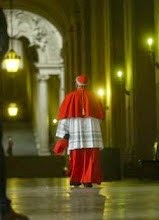
Moving quickly to fill the presidency of the Pontifical Council for the Family, this morning the Pope named Cardinal Ennio Antonelli of Florence to the post.

While some speculation had predicted the consolidation of the Family shop into the Pontifical Council for the Laity, the appointment keeping the former a stand-alone entity comes but six weeks -- i.e. a Vatican minute -- after the death at 72 of Cardinal Alfonso Lopez Trujillo, who led the dicastery since 1990.

Even so, however, those expecting the 71 year-old appointee to continue in the mold of his oft-controversial predecessor might be in for a surprise. In contrast to the Columbian cardinal -- a favorite of church conservatives who became a globally-known figure for his high-profile polemics on abortion, homosexuality and HIV/AIDS -- Antonelli's long enjoyed a reputation as one of the Italian church's gentler, more moderate hands.

A onetime professor and seminary rector, the trained theologian, classicist and art historian served as a diocesan bishop for 12 years before being named in 1995 to the powerful post of secretary-general of the Italian episcopal conference, the CEI. On Cardinal Silvio Piovanelli's retirement six years later, he was named archbishop of Florence, receiving the red hat at the consistory of 2003.

Before the 2005 conclave that elected Benedict XVI, the cardinal's name emerged as papabile from circles seeking a "pastoral" successor to John Paul II. Even more recently, a series of pastoral schema on family life released by the Florence archdiocese focused much more intently on issues of the "fear of definitive choices," "relational fragility" in families, and even the "post-sacramental exodus" of the faithful than anything that'd fall into what the pontiff himself once termed the "collection of prohibitions."

In a late 2005 profile, Catholic News Service highlighted Antonelli's love of the arts alongside an "optimistic pastoral approach and his strong social teachings."
As a member of the pontifical councils for Social Communications and for the Laity, Cardinal Antonelli puts special emphasis on the role of lay people in the church.

As in most European cities, church attendance in Florence is relatively low, but he said the small number of "active and responsible faithful" who get personally involved in the life of the church is on the rise.

"This phenomenon is unexpected" but is "a sign of a providential rebirth," he said in a December interview with the Italian daily, Il Tempo.

In the midst of the secularization that has taken hold across most of Europe, the cardinal praised Catholics who "pay splendid witness to prayer, charity, helping the poor, education, missionary courage and Christian joy."

"They make up a bright and credible sign of the presence of Christ the savior," he told the newspaper Toscana Oggi in a recent interview.

In the world of politics, the cardinal lamented the lack of political representation that fully reflects a Christian agenda.

Though "politics is about mediation and compromise" and "one can never be fully satisfied" in getting what one wants, "the Christian today may find himself in great difficulty because his vision of society is not fully promoted by either the major or minor political parties," he told Il Tempo.

Cardinal Antonelli, like most Italian bishops, was an outspoken critic of the U.S.-led invasion of Iraq, which the Italian government supported.

When the war began in March 2003, he and the bishops of Italy's Tuscany region issued a statement expressing their sadness and their disappointment that Pope John Paul II's repeated appeals against the war were ignored.

Cardinal Antonelli asked all the churches in his archdiocese to toll their bells in mourning the first night of the war and said his own opposition to military action in Iraq was "convinced, firm and passionate."

He invited people to come to a church in the center of the city and pray the rosary for peace with him and encouraged them to continue demonstrating their opposition to the war "in the squares and the churches, with our body and souls."
Before the conclave, the National Catholic Reporter similarly cited the cardinal's "terrific relations with his people" and "lack of interest in cracking heads over doctrinal issues," using as an example Italian elections during the 1990s when some wings of the national church sought hierarchical rebukes for divorced Catholic politicians. Comparing the Florentine prelate to John Paul I along the way, the mag's John Allen wrote that Antonelli "took the view that personal morality belongs to the private sphere, and that in terms of politics, the church should be more concerned with a politician's voting record."

In a statement released this morning on his appointment, the incoming Family Czar said he approached his new position "fully aware of the importance" of the task ahead.

Calling the family "the cellular base of the church and society... strongly respected at the level of ideals and first among the aspirations of the Italian people," Antonelli added that the institution also finds itself "in great difficulty, threatened, and in crisis." Later, in an afternoon interview with Vatican Radio, the cardinal defined the principal challenges to the family as "the unity, the stability of matrimony, and the fruitfulness of couples," explaining the latter as the "demographic fall [that]... above all in Europe, places the future at risk."

Asked why the church's "yes" to the family is often interpreted as a "no," the cardinal said that, "ever more in its language," the church needed to "present the Evangelical, positive prospect of the family: its great values, the beauty of the family [as] Christian and also authentically human.

"Above all, the positive needs to stand out," he said. "Ahead of, above and more than some 'no's, counts the 'yes' -- the great 'yes' to life, the great 'yes' to the dignity of the person, the great 'yes' to communion among the people who form a family."

The cardinal closed the chat by praising his predecessor as someone with a "great passion for the family" who, he said, had the "courage to not fear unpopularity."

Scheduled to leave Florence in late September to take up his new duties in Rome, Antonelli's first major turn on the global church's stage will come in early January, when the 6th World Meeting of Families takes place in Mexico City. The Pope is expected to attend.

PHOTO: ANSA

-30-

Friday, September 19, 2008

The New PCF: Now Family-Friendly

On his June appointment as the Vatican's lead spokesman on the "domestic church," it was noted that Cardinal Ennio Antonelli would likely change the tone at the Pontifical Council for the Family from the trigger-happy style of his late predecessor, Cardinal Alfonso Lopez Trujillo, to better fit the Italian prelate's -- and, by extension, his Boss' -- gentler, more affirmative approach.

Yesterday, in his first turn before the home-office press corps in the new post, Antonelli briefed reporters on his first major task as a dicastery head: arranging early January's World Meeting of Families in Mexico City. While the cardinal dashed the hopes of the traveling triennial's organizers with his announcement that the Pope won't be making the trip, the former Florentine's light yet uncompromising touch remained well intact:
Antonelli said his first priority as president of the Pontifical Council for the Family is to help faithful Catholic couples and their children proclaim by their example the church's teaching on marriage and family life.

"The first priority is to build up Christian families," said the cardinal, who was named president of the council in June.

Cardinal Antonelli said he does not think the church and its leaders speak only about problems and attacks on the family, but the media seems to pay attention only when the church expresses its concerns.

"We must care for normal families first so that they become a sign for others," he said. "Without examples, how can we persuade others?"...

Antonelli said he hoped to increase the council's contacts with bishops' conferences around the world, with families, experts and Catholic associations, but giving priority "to ordinary parish pastoral outreach to families."

While strengthening programs for all families, the church wants people who have remarried civilly without an annulment to know that it "welcomes them in every way possible and is close to them, supporting them in their difficulties," the cardinal said.

But the church also must recognize that the situation in which they are living "is not in full harmony" with Jesus' own teaching on the indissolubility of marriage, which is why they cannot receive Communion, he said.

"Objectively, this is the situation: Divorced and remarried people are not in harmony with the teaching of the Gospel; they are not in full communion with the church. Even if the people involved are good people, it is important not to falsify the significance of the Eucharist," he said.

"The church must be open," Cardinal Antonelli said. "Jesus went out to all," but the church also must make clear "the difference between marriage and other forms of cohabitation."

The cardinal said that in church teaching, preaching and public statements about family life, "the accent must be on the beauty of the Gospel lived in the family. That is clear. Beauty persuades by itself. But that can happen only when there are strong families."
With B16's trips to Sydney and Lourdes now in the can, for the first time in a good while the Pope's announced calendar boasts not a single overseas trip.

That doesn't mean, however, that there aren't possibilities. In late June, the Secretary of State Cardinal Tarcisio Bertone indicated in the Italian press that the logistics of a potential African visit for 2009 was being studied. Three weeks later, as he rode into Sydney Harbour on a yacht, the pontiff -- ostensibly given his repeated "deep anguish" over the "horror" in the Darfur -- told a young Sudanese woman that hers "is the country I most want to visit."

And if it comes to pass, two words would come in handy: Zaire Rite.

As always, stay tuned.

-30-

Tuesday, October 14, 2008

After Outcry, the Vatican Cracks Down

Almost a year and a half after the story broke in the Italian press, the multiply-accused Florentine cleric whose victims went public after what they deemed an insufficient response from church officials has been laicized:
An Oct. 12 statement by Cardinal Ennio Antonelli, former archbishop of Florence, said that in a decree dated Sept. 19, the pope also ordered Father Lelio Cantini, 85, be confined under surveillance to a private residence and dedicate himself to prayer and penance.

Cardinal Antonelli, whom the pope appointed to head the Pontifical Council for the Family in June, said he had asked the pope to laicize Father Cantini, reported the Italian daily La Repubblica Oct. 13.

In his statement, the cardinal said the Vatican's Congregation for the Doctrine of the Faith determined Father Cantini was guilty of multiple and serious instances of sexual abuse against minors, soliciting sexual relations during the sacrament of reconciliation and "abuse of ecclesiastical power in the formation of consciences."

Father Cantini was removed from ministry in 2007 after a diocesan church administrative penal process found him guilty of sexually abusing young girls between 1973 and 1987, as well as "false mysticism" and the coercion and manipulation of consciences.

However, a criminal investigation by Italian prosecutors followed after a number of alleged victims and priests from the diocese made their claims and concerns public when the priest received what they considered to be "too light" a punishment from the church.

Cardinal Antonelli said at the time that the penalties, which included making a yearly donation to charity and reciting a prayer of repentance daily, had taken into account Father Cantini's "advanced age" and "unstable state of health."

The new penalties ordered by the Vatican include risk of excommunication if the now-defrocked priest fails to comply, the cardinal said.
-30-

Sunday, September 07, 2008

Deja Vu, Vatican Style

As soon as tomorrow, the Pope is expected to name the longtime #2 of the Italian church -- the CEI secretary-general Bishop Giuseppe Betori -- to one of the Bel Paese's plum posts as archbishop of Florence.

First reported yesterday by Il Giornale's Andrea Tornielli, the foreseen promotion for Betori, 61 (shown above with B16 at a 2007 concert), entered the buzzmill hours after the June transfer of Cardinal Ennio Antonelli from the 800,000-member Florentine church to the Vatican as president of the Pontifical Council for the Family. The formal announcement has reportedly been timed to coincide not just with tomorrow's feast of the Birth of Mary, but the 712th anniversary of the cornerstone-laying of Florence's famous Duomo of S. Maria del Fiore.

As the Tuscan see's tradition of cardinal-holders stretches back to the early 16th century -- i.e. the Medicis -- Betori's safely assured of a red hat at the next consistory. It's not the first time the presumptive appointee finds himself following in Antonelli's footsteps, either; the newly-named Family Czar likewise preceded Betori as the Italian hierarchy's second-in-command.

Best-known as the faithful deputy to Cardinal Camillo Ruini over the final years of the latter's run as Italy's most-powerful churchman, Betori's star began rising in earnest after his oversight of Rome's World Youth Day in 2000; he was elevated to the episcopacy and named the CEI's day-to-day chief but seven months after the festival's climactic closing liturgy on Tor Vergata drew upwards of 2 million. As secretary-general, he's had the task of overseeing the nuts and bolts of the shop built by Ruini's amassed clout -- a purview that's ranged from managing church-state relations and the conference's influential daily Avvenire to defending the use of modern art in the Italian Lectionary and arguing against preventative war.

Yet despite the post's premium on (mostly) keeping behind-the-scenes, Betori's flair for the spectacular didn't go completely unbrandished. When the Italian bishops mounted a firm protest last year to the civil partnership legislation proposed by the government of then-Premier Romano Prodi, the CEI organized a mass protest in Rome against the plan, known as the "DICO." The result: after the "Family Day" rally attracted a crowd estimated in excess of a million, the DICO was stalled, and Prodi's center-left coalition was swept out of office last March.

Given the widely-reported intent of the Secretary of State Cardinal Tarcisio Bertone to play the lead role in the church's dealings with the Italian government, Ruini's empire was gradually split up after he passed the retirement age of 75; then-Archbishop Angelo Bagnasco of Genoa was named to the conference's top post in early 2007, and -- with the "Vice-Pope" reported to have "excluded" Betori from consideration -- Cardinal Agostino Vallini was named papal vicar for Rome in late June after months of leaks leaving little doubt that the pastoral, low-profile canonist was Bertone's choice.

According to Tornielli, Betori's successor at the CEI will be chosen at the next meeting of the body's secretariat later this month. The tradition of the Italian conference has invariably seen the post held by a bishop.

PHOTO: AFP/Getty


-30-

Thursday, October 22, 2009

At the Vatican, Secretaries' Day

Half a year exactly from the annual day set aside to honor assistants, this morning the Pope bolstered two of his second-tier dicasteries this morning with the appointment of new Secretaries to the Pontifical Councils for the Family and Justice and Peace, both of whom reflect B16's technocratic leanings but, notably, come to their posts from outside the offices they'll now help oversee.

To the Family council, where Cardinal Ennio Antonelli arrived a year ago with a more encouraging, affirmative approach in mind, the pontiff named French Msgr Jean Laffitte, 57, until now the #2 at the Pontifical Academy for Life. Unlike his predecessor, Laffitte -- a member of the Emmanuel Community -- was elevated to the episcopacy with this morning's move.

A moral theologian ordained a priest at 36, the bishop-elect has spent most of his priesthood working the life and family beat; a former vice-dean of the John Paul II Institute on Marriage and Family, he served briefly (2005-6) as the #3 official at Family before being named vice-president of the Academy for Life, the Vatican think-tank founded in 1994 by the late pontiff to examine medical and bioethical issues with an eye to forming an ecclesial response geared toward "the promotion and the defense of life."

In the council post, Laffitte succeeds the Polish cleric Gregorz Kaszak, who was named Secretary at Family in late 2007 before being sent home as a diocesan bishop earlier this year.

Meanwhile, three months after the release of B16's "social encyclical," one of the reported hands behind the drafting of Caritas in Veritate has been tapped to serve as #2 at the global church's social-justice arm.

A member of the Salesians of Don Bosco (the community of this pontificate's "Vice-Pope"... and a sizable horde of its appointees), Bishop-elect Mario Toso is not a complete stranger to the Pontifical Council for Justice and Peace; he's been a consultor there for some time while serving until earlier this year at the helm of his order's Roman university, where he had been a lecturer in philosophy since 1980.

Born in Treviso, along Italy's northeast coast, the 59 year-old appointee was professed into the Salesians at 17, ordained a decade later, and spent practically his entire priesthood in the academy. A highly-sought expert in Catholic Social Teaching whose studies have delved into the nature of the welfare state, Toso said that Caritas in Veritate "proposed anew, in a positive sense... the construction of an ethical capitalism" in a summer interview with the Italian bishops' daily Avvenire.

Likewise named a bishop this morning, both Toso and Laffitte bring multilingual abilities to their new posts; the Italian speaks four languages, the Frenchman five. That said, while Laffitte's new superior is known to all, who Toso will be working for remains -- at least, officially -- a question mark; with the longtime Justice and Peace chief Cardinal Renato Martino soon to be two years past the retirement age of 75, months of heavy speculation has remained fixed on Ghanaian Cardinal Peter Turkson as the post's next holder... as of this writing, though, the move remains unconfirmed... and so, the wait continues.

-30-

Tuesday, January 13, 2009

Vice: "Dump the Dealers"

This week, a good bit of the Vatican will find itself south of the border -- in Mexico City, for the 6th World Meeting of Families.

Unlike the last edition of the triennial gathering, the Pope won't be in attendance, so the event will take a lower profile than 2006's gathering in Valencia. With a million-plus slated to be in attendance, however, it still bears watching as the five-day meeting, which begins Wednesday, will mark the first major public rollout of the more affirmative approach of the global church's new top man on family matters, Cardinal Ennio Antonelli, who B16 named as president of the Pontifical Council for the Family last summer.

But even so, the former Florentine's spotlight will likely be minimal given the presence of the current Curia's lead show-stopper -- the Secretary of State Cardinal Tarcisio Bertone SDB, who's attending as papal legate.

Best known in Italy for his stints as a calcio analyst and always ready with a money quote -- or, for that matter, an arsenal thereof -- the "Vice-Pope" hadn't even left Rome before he was making global headlines for his journey by recommending excommunications... just not, given the context, for the folks you'd think:
Decrying the violence that Mexicans are enduring, the Vatican has suggested excommunication as a possible punishment for drug traffickers whose war with the government has led to the deaths of thousands of people in the last year.

But the Roman Catholic Church's severest form of rebuke would probably have little effect on traffickers and killers who lack a religious conscience, Bertone acknowledged.

Speaking to Latin American journalists at the Vatican before traveling to Mexico on Monday, Bertone said it was a "duty" to fight drug gangs because their actions represent "the most hypocritical and terrible way of murdering the dignity and personality of today's youth."

"Certainly, excommunication is a very harsh deterrent that the church has used to deal with the most serious crimes in its history, from the very first centuries," Bertone said when asked if the censure would be appropriate. Excommunication bars a Catholic from receiving sacraments and participating in public worship.

"But I should observe that excommunication is a punishment that touches only those who have some form of ecclesiastical conscience, an ecclesiastical education," he added.

The Vatican, Bertone said, is alarmed at the "disasters" of drug-fueled violence, kidnappings and generalized insecurity in Mexico and, increasingly, in some of its Central American neighbors. He called on Catholics to pray for traffickers to have a change of heart....

President Felipe Calderon launched the Mexican army a little over two years ago in a nationwide offensive against powerful and well-armed drug gangs. Rather than pacify the country, the conflict has only increased the bloodshed. More than 5,000 people were killed last year alone.

Officially, the church hierarchy in Mexico has been supportive of the government campaign while also urging dialogue and an end to violence. In some parts of the country, however, priests have been willing to accept money from local drug lords to pay for church repairs or other community projects.

"They are very generous with the societies of their towns," Bishop Carlos Aguiar Retes, president of the Mexican Bishops Conference, said in April, according to the newspaper Reforma. In some remote towns, he said, "they put up lights, communications, roads, at their own expense. . . . Often they also build a church or a chapel."

The remarks outraged many Mexicans, and church officials later said the bishop was taken out of context. But human rights activists have long complained of complacency by many priests.
The circumstances behind it remain murky, but officially, a government inquest concluded that a shootout between rival drug-gangs led to the 1993 murder of Cardinal Juan Jesus Posadas Ocampo.

Given his red hat just two years before, the 68 year-old Guadalajara archbishop was gunned down in his car at the city's airport.

In his press conference, Bertone likewise addressed the global economic crisis and the Pope's long-delayed "social encyclical," which his top aide pledged will "certainly" roll out in the first half of this year.

PHOTO: Reuters

-30-

Thursday, February 16, 2006

Springtime For Ruini

First reported here the other morning, the extension of Cardinal Camillo Ruini's mandate as head of the Italian Episcopal Conference is more than duly noted in the latest edition of Panorama.

Yet again, the usual names are mentioned for his succession (Cardinals Poletto, Antonelli, Tettamanzi, Scola and Bertone), however the magazine goes the extra step of throwing the name of Carlo Caffara, the archbishop of Bologna (e cardinale subito) into the mix.

Bruno Forte, next time. Well, unless he's Pope by then.

However, the best part is a repeated term that's been coming up in the Italian press. So dominant has Ruini been over the CEI, and such a force in national life, that his succession is being called the "Dopo-Ruini" -- the "After-Ruini." Panorama notes that a "real chorus" of the Italian political elite combined to praise his remaining, even if it's only for another nine months or so.

You've gotta love it.

-30-

Monday, June 09, 2008

On Communication

Late last month, B16 received representatives of of Catholic university communication faculties who had gathered in Rome for a seminar organized by the Pontifical Council for Social Communications.

Suffice it to say, for anyone involved or interested in media work, the remarks (fulltext) are worth a good read.

Snip:
The diverse forms of communication - dialogue, prayer, teaching, witness, proclamation - and their different instruments - the press, electronics, the visual arts, music, voice, gestural art and contact - are all manifestations of the fundamental nature of the human person. It is communication that reveals the person, that creates authentic and community relationships, and which permits human beings to mature in knowledge, wisdom and love. However, communication is not the simple product of a pure and fortuitous chance or of our human capacity. In the light of the biblical message, it reflects, rather, our participation in the creative, communicative and unifying Trinitarian Love which is the Father, the Son and the Holy Spirit. God has created us to be united to him and he has given us the gift and the duty of communication, because he wants us to obtain this union, not alone, but through our knowledge, our love and our service to him and to our brothers and sisters in a communicative and loving relationship.

It is self-evident that at the heart of any serious reflection on the nature and purpose of human communications there must be an engagement with questions of truth. A communicator can attempt to inform, to educate, to entertain, to convince, to comfort; but the final worth of any communication lies in its truthfulness. In one of the earliest reflections on the nature of communication, Plato highlighted the dangers of any type of communication that seeks to promote the aims and purposes of the communicator or those by whom he or she is employed without consideration for the truth of what is communicated. No less worth recalling is Cato the Elder's sober definition of the orator; vir bonus dicendi peritus -- a good or honest man skilled in communicating. The art of communication is by its nature linked to an ethical value, to the virtues that are the foundation of morality. In the light of that definition, I encourage you, as educators, to nourish and reward that passion for truth and goodness that is always strong in the young. Help them give themselves fully to the search for truth. Teach them as well, however, that their passion for truth, which can be well served by a certain methodological skepticism, particularly in matters affecting the public interest, must not be distorted to become a relativistic cynicism in which all claims to truth and beauty are routinely rejected or ignored.

I encourage you to give more attention to academic programmes in the area of the means of social communication, in particular to the ethical dimensions of communication between people, in a period in which the phenomenon of communication is occupying an ever greater place in all social contexts. It is important that this formation is never considered as a simple technical exercise, or a mere wish to give information. Primarily it should be more like an invitation to promote the truth in information and to help our contemporaries reflect on events in order to be educators of humankind today and to build a better world. It is likewise necessary to promote justice and solidarity, and to respect in whatever circumstance the value and dignity of every person, who also has a right not to be wounded in what concerns his private life.

It would be a tragedy for the future of humanity if the new instruments of communication, which permit the sharing of knowledge and information in a more rapid and effective manner, were not made accessible to those who are already economically and socially marginalized, or if it would contribute only to increasing the gap that separates those people from the new network that is developing at the service of human socialization, of information and of understanding. On the other hand, it would be equally grave if the tendency toward globalization in the world of communications were to weaken or eliminate the traditional customs and the local cultures, particularly those which are able to strengthen family and social values: love, solidarity, and respect for life.
* * *

Earlier tonight, the Pope traveled to his cathedral -- Rome's Basilica of St John Lateran -- to open the annual convocation for the Rome diocese, this year dedicated to the theme of "Educating in Hope by Prayer, Action and Suffering."

Slated to run through Thursday, the gathering of the Eternal City's clergy and layfolk is expected to be the swan song of Cardinal Camillo Ruini, the longtime papal vicar for the Urb charged with running the pontiff's diocese. Arguably among Italy's most influential public figures in recent decades, the 78 year-old cardinal's retirement is expected shortly after he marks his 25th anniversary as a bishop at month's end; as noted for months, the cardinal's successor is widely expected to be Cardinal Agostino Vallini, currently the church's "chief justice" as prefect of the Vatican's highest court, the Apostolic Signatura.

Combined with the new vacancy in Florence as a result of Cardinal Ennio Antonelli's Saturday appointment as president of the Pontifical Council for the Family, the twin openings give Benedict XVI -- closely advised as always by his Secretary of State -- his biggest opportunity yet to reshape the Italian church's top rank in his own image.

Already, the Florentine tipping has largely turned toward the #2 of the nation's episcopal conference, 61 year-old Bishop Giuseppe Betori, the organizer of both the CEI's "Family Day" protest against civil partnership legislation last year and Rome's World Youth Day in 2000.

PHOTO: AP/Plinio Lepri


-30-