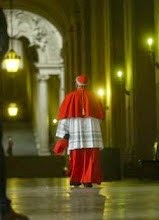
And so, almost two years since the former cardinal-archbishop of Washington Theodore McCarrick became the highest-ranking cleric ever to be dismissed from orders amid serial credible reports of sexual abuse, the Holy See's report has finally arrived – the 449-page whopper was released this morning, underpinned by testimonies from 17 victims of the 90 year-old ex-prelate.
As no advance copies were circulated ahead of the 2pm Rome (8am ET) publish time – not even to practically any senior figures in either Rome or the US – the findings of the intense, exhaustive probe are just being absorbed across the board. Still, as for the major element in McCarrick's five-decade ascent, to repeat, if you're surprised, start paying attention.
Though it's not exactly the internet's strong-suit, with a product as sprawling as this, it's best to read it first and only react once one has... and as with any major Vatican document, but even more here, don't skip the footnotes.
Processing this will take a while. But for something of this gravity and scope, it deserves nothing less. Ergo, more in due course.
From the Pews to "The People's House" – Biden Wins, Becoming US' Catholic-in-Chief
(Ed. Note: Updated with statements from competent ecclesial authority.)
Yet again, the votes of the nation's largest religious body held the keys to the White House. And for just the second time in the 231-year history of the Republic, 1600 Pennsylvania Avenue will be home to an American Catholic.
After 87 hours of counting across several states, at 11.30am today, the nation's major news outlets called the election of Joseph Robinette Biden, Jr of Delaware, 77, as the 46th President of the United States, defeating the incumbent Donald Trump.
The projection came as the Democratic nominee widened his lead in Pennsylvania, one of the three heavily-Catholic states that flipped to Trump in 2016 by a combined 77,774 votes. (At top, Biden is seen accepting the University of Notre Dame's 2016 Laetare Medal – the most prestigious honor for a US Catholic – receiving it jointly with the Republican House Speaker John Boehner.)
Already the first Catholic ever to be elected Vice-President over two terms at Barack Obama's side, the Scranton-born Biden – taught by his hometown's Sisters, Servants of the Immaculate Heart of Mary and the Norbertines of Archmere Academy in his adopted First State – now takes his place alongside John F. Kennedy (1961-63) as the lone members of the faithful to ascend to the Oval Office. A five-decade member of St Joseph on the Brandywine parish at the suburban edges of Wilmington, the President-elect is a weekly attendee at Sunday's 9am Mass in the quaint church, built in 1841 by the Dupont family for their chemical company's immigrant laborers.
According to exit polling by the Associated Press, Biden wiped out the GOP's usual dominance with white Catholics nationwide – a feat last accomplished by Bill Clinton in his two victories in the 1990s – but took the church's at-large vote on the back of a 2-to-1 split among Hispanics, who were the largest minority bloc in this election for the first time. With the Democratic ticket on pace to win roughly 300 electoral votes (clearing the requisite threshold of 270), the ongoing popular tally has made Biden the first presidential contender ever to attain 75 million votes.
In a year marked by titanic upheavals of American society amid the COVID-19 pandemic and a national reckoning on race relations, Trump sought to shift his re-election from being a referendum on his polarizing, disaster-prone first term, hitching his bid for Catholic support on the basis of his opposition to abortion – a push fueled by his surrogates' baseless, but no less concerted attempts to portray Biden as out of communion with his own church.
While the Democrats' increasingly dogmatic abortion policy has exacerbated tensions between the party and much of the church's leadership over the last two decades, the incoming President has never been sanctioned by any ecclesiastical authority – as Biden's home-ordinary, Bishop W. Francis Malooly of Wilmington reiterated at the campaign's start last year that he "has consistently refrained from politicizing the Eucharist, and will continue to do so."
Despite the significant divide on the unborn, Biden has formed a solid bond with Pope Francis since the pontiff's election in 2013, finding common cause on several key concerns of the latter's social Magisterium opposed by Trump's nationalist base, among them climate change, racial and economic justice and the plight of migrants.
Though he was quietly received by then-Pope Benedict XVI as Vice-President in 2011, in a 2015 tribute to Francis he penned for TIME magazine, Biden said that the reigning Pope began their first meeting by pointedly telling him "You are always welcome here" at the Vatican.
Even as global travel is severely complicated amid the pandemic, it's virtually certain that a historic encounter between an American Pope and the US' "Catholic-in-Chief" would be at the top of a Biden Administration's wish-list of road stops as soon as circumstances allow.
For its part, odds are the Holy See will have a better rapport with the incoming White House than the departing one. Beyond the Pope's longstanding and explicit revulsion at Trump's immigration policy, just last month, the Vatican's two lead diplomats made a rare expression of public displeasure after Secretary of State Mike Pompeo was seen as openly pressuring Francis against renewing the church's provisional accord with China's Communist government over the appointment of bishops.
The Sino-Vatican pact was extended shortly after a visit to Rome by Pompeo, during which the secretary was not granted a private audience with the Pope.
As for the nation's hierarchy, while it is customary for the president of the US Conference of Catholic Bishops to issue a statement congratulating the POTUS-to-be once the election is called, no reaction has yet emerged. (SVILUPPO: A statement was released Saturday evening – text below) In any case, though the bench's conservative flank leaned heavily on opposition to abortion and the GOP's advocacy for Christians' religious liberty as the linchpin of their people's discernment, this campaign was marked by a notable pushback against "single-issue voting" by an unusually sizable bloc of prelates largely seen as key allies of Francis.
How the dynamic will translate to the church's relations with a Catholic White House remains to be seen, but experience indicates a warmer ride than the transactional, whiplash-like nature of Trump's one term in office, capped by last month's confirmation of now-Justice Amy Coney Barrett – a favorite of pro-life activists – to the Supreme Court.
While supporters of the winning ticket have taken to the streets of major cities to celebrate the election's outcome, the mood doesn't lessen the mountain of challenges Biden will inherit upon his Inauguration on January 20th. Nonetheless, that day will begin with a special touch of history, as the President-elect attends early Mass at the Jesuit-run Holy Trinity Church in Georgetown before heading to the Capitol for his oath of office.
It will be 60 years to the day since JFK opened his swearing-in at the same altar.
SVILUPPO: At 6pm Washington time, the USCCB President, Archbishop José Gomez of Los Angeles, released the bench's customary statement congratulating the President-elect.
Notably, however, the text conspicuously ducked the term in reference to Biden – ostensibly in light of Trump's refusal to concede and Republican threats of legal challenges to the result.
Here, Gomez's full comment:
We thank God for the blessings of liberty. The American people have spoken in this election. Now is the time for our leaders to come together in a spirit of national unity and to commit themselves to dialogue and compromise for the common good.
As Catholics and Americans, our priorities and mission are clear. We are here to follow Jesus Christ, to bear witness to His love in our lives, and to build His Kingdom on earth. I believe that at this moment in American history, Catholics have a special duty to be peacemakers, to promote fraternity and mutual trust, and to pray for a renewed spirit of true patriotism in our country.
Democracy requires that all of us conduct ourselves as people of virtue and self-discipline. It requires that we respect the free expression of opinions and that we treat one another with charity and civility, even as we might disagree deeply in our debates on matters of law and public policy.
As we do this, we recognize that Joseph R. Biden, Jr., has received enough votes to be elected the 46th President of the United States. We congratulate Mr. Biden and acknowledge that he joins the late President John F. Kennedy as the second United States president to profess the Catholic faith. We also congratulate Sen. Kamala D. Harris of California, who becomes the first woman ever elected as vice president.
We ask the Blessed Virgin Mary, patroness of this great nation, to intercede for us. May she help us to work together to fulfill the beautiful vision of America’s missionaries and founders — one nation under God, where the sanctity of every human life is defended and freedom of conscience and religion are guaranteed.
SVILUPPO 2: While several US bishops have issued their own responses to the outcome – with all the variation you can imagine – Sunday afternoon brought a statement from Biden's local hierarch, Wilmington's aforementioned Bishop Fran Malooly.
Soon to be three years past 75, as Whispers reported in July, the Vatican delayed the retirement of Delaware's statewide prelate until the campaign was completed. Even so, the Baltimore native now becomes the second prelate to be the bishop of an American President, joining Boston's legendary Cardinal Richard Cushing, the chaplain to the Kennedys, who died 50 years ago this week.
Named to lead the 250,000-member Wilmington fold in summer 2008 – just as Biden was tapped as Obama's running mate – given Malooly's usual reticence for public comment on his most prominent parishioner, to use a famous Biden-ism, his bishop's statement "is a BFD":
“St. Paul reminds us in today’s second reading that as Christians, we are called to be people of hope. No matter where we might fall on the political spectrum, we must seize this moment as an opportunity to begin to heal the crippling divisions in our great nation. These fractures were forged over decades and reconciliation will take time and patience. It begins with each of us. Today I congratulate President-elect Biden. We all must pray for the President-elect and President Trump during this time of transition and we look to the future with hope that as one Nation under God, we will continue be a beacon of freedom and prosperity to the world.”
...and speaking of Wilmington, today's morning after brought this:
President-elect Joe Biden attended mass and visited the grave of his son Beau Biden in Wilmington, Delaware, the day after winning the U.S. election. https://t.co/gCFYTttbDLpic.twitter.com/OibtZokBzQ
And so, waged against the backdrop of a cataclysmic year for the Union, the long, bitter campaign has reached its end... and the nation's largest religious body might just be standing at the threshold of history.
It's going to be a long night – according to some indicators, it might end up being a long couple days. But regardless of the outcome, per custom on these nights, we return again to the foundational prayer of American Catholicism: the Prayer for the Nation written and given in 1791 by John Carroll of Baltimore – the nation's founding bishop, a cousin of the lone Catholic to sign the Declaration of Independence.
We pray, Thee O Almighty and Eternal God! Who through Jesus Christ hast revealed Thy glory to all nations, to preserve the works of Thy mercy, that Thy Church, being spread through the whole world, may continue with unchanging faith in the confession of Thy Name.
We pray Thee, who alone art good and holy, to endow with heavenly knowledge, sincere zeal, and sanctity of life, our chief bishop, Pope Francis, the Vicar of Our Lord Jesus Christ, in the government of his Church; our own bishop, N., all other bishops, prelates, and pastors of the Church; and especially those who are appointed to exercise amongst us the functions of the holy ministry, and conduct Thy people into the ways of salvation.
We pray Thee O God of might, wisdom, and justice! Through whom authority is rightly administered, laws are enacted, and judgment decreed, assist with Thy Holy Spirit of counsel and fortitude the President of these United States, that his administration may be conducted in righteousness, and be eminently useful to Thy people over whom he presides; by encouraging due respect for virtue and religion; by a faithful execution of the laws in justice and mercy; and by restraining vice and immorality. Let the light of Thy divine wisdom direct the deliberations of Congress, and shine forth in all the proceedings and laws framed for our rule and government, so that they may tend to the preservation of peace, the promotion of national happiness, the increase of industry, sobriety, and useful knowledge; and may perpetuate to us the blessing of equal liberty.
We pray for his excellency, the governor of this state, for the members of the assembly, for all judges, magistrates, and other officers who are appointed to guard our political welfare, that they may be enabled, by Thy powerful protection, to discharge the duties of their respective stations with honesty and ability. We recommend likewise, to Thy unbounded mercy, all our brethren and fellow citizens throughout the United States, that they may be blessed in the knowledge and sanctified in the observance of Thy most holy law; that they may be preserved in union, and in that peace which the world cannot give; and after enjoying the blessings of this life, be admitted to those which are eternal.
Finally, we pray to Thee, O Lord of mercy, to remember the souls of Thy servants departed who are gone before us with the sign of faith and repose in the sleep of peace; the souls of our parents, relatives, and friends; of those who, when living, were members of this congregation, and particularly of such as are lately deceased; of all benefactors who, by their donations or legacies to this Church, witnessed their zeal for the decency of divine worship and proved their claim to our grateful and charitable remembrance.
To these, O Lord, and to all that rest in Christ, grant, we beseech Thee, a place of refreshment, light, and everlasting peace, through the same Jesus Christ, Our Lord and Savior. Amen.
As ever, more to come as things allow. For now, hope everyone's hanging in there... and buckle up.
Red Hats... Black History – Because He Can, The Pope Packs His "Senate"
First it was coming, then it wasn't....
But, finally, it's here – finally, in more ways than one.
At the close of today's noontime Angelus, the Pope announced his seventh intake of new cardinals – 13 in all; nine younger than 80 and thus eligible to enter a Conclave – who'll receive the red hat and cruciform ring on Saturday, 28 November, the eve of the First Sunday of Advent.
Here, the names of the cardinals-designate, listed in the strict order of precedence that dictates their seniority in the papal "Senate" – first, the electors:
–Bishop Mario Grech, 63, Secretary-General of the Synod for Bishops (Maltese); –Bishop Marcelo Semeraro, 72, prefect of the Congregation for the Causes of Saints (Italian); –Archbishop Antoine Kambanda, 62, of Kigali (Rwanda); –Archbishop Wilton Daniel Gregory, 72, of Washington DC; –Archbishop José Advincula, 68, of Capiz (Philippines); –Archbishop Celestino Aós Braco OFM Cap., 75, of Santiago de Chile; –Bishop Cornelius Sim, 69, vicar-apostolic of Brunei; –Archbishop Paolo Lojudice, 56, of Siena (Italy); –Fr Mauro Gambetti OFM Conv., 55, custodian of the Convent of Assisi (Italian)
...and alongside them, the four picks older than 80, given the red hat for "lifetime achievement":
–Bishop Felipe Arizmendi Esquivel, 80, emeritus of San Cristobal de las Casas (Mexico); –Archbishop Silvano Tomasi CS, 80, retired Permanent Observer of the Holy See to the UN Offices in Geneva; –Fr Raniero Cantalamessa OFM Cap., 86, preacher of the Papal Household –Msgr Enrico Feroci, parish priest of Rome, 80, pastor of Our Lady of Divine Love at Castel di Leva
With today's picks, the College will have 128 voting cardinals once the Consistory is held – eight over the customary limit set by St Paul VI in 1975, but nowhere near the 135 to which the group was ballooned by John Paul II in 2001, when he created 37 electors in one fell swoop.
Upon the new class' entrance, Francis will have chosen 73 voters in a hypothetical Conclave, comprising just shy of 60 percent of the total.
For context, the Roman Pontiff is elected by a supermajority of two-thirds. Yet far more significantly, the electors don't merely choose the next Pope – one of them will be next the Pope.
In light of the ongoing travel restrictions due to the pandemic, it's worth noting that cardinals-designate need not be present at the Roman ceremonies to formally take their places in the College. Regardless of their whereabouts, the designees enjoy the title "Eminence" and the right to enter a Conclave upon the Pope's publication of the biglietto – literally, the "ticket" – listing their names, which currently takes place at the beginning of the Consistory itself.
It remains to be seen whether, as in times past, Francis will need to send the scarlet birette and rings to at least some of the new cardinals for them to receive at home. While, today, the insignia would ostensibly be conferred on the pontiff's behalf by the local Nuncio or another nearby cardinal, in Catholic countries that privilege was historically carried out by the head of state. (Above right, the future St John XXIII – then-Archbishop Angelo Roncalli, the Nuncio to Paris – is seen receiving his biretta from the French President Vincent Auriol, a Socialist, on his elevation in 1953.)
* * *
Before anything else, given Cantalamessa's invariable presence in his brown Capuchin habit – to say nothing of his penchant for controversy over four decades as the household preacher – the sight of Padre Raniero in cardinal red is going to give more than a few natives the vapors. On a related front, the friar's deluxe following among the Catholic Charismatic renewal is likewise set to make next month's rites the first "Scarlet Bowl" to feature en masse speaking in tongues among the moment's usual kaleidoscope of the church's universality.
And speaking of the church's Catholicity... here at home, this Sunday is nothing short of a watershed.
Of course, the elevation of Wilton Gregory gives Stateside Catholicism its first African-American ever to don the red hat – indeed, the first US cardinal of non-European descent.
For Francis, the call is legacy-defining. For the cardinal-designate, it's simply been a long time coming.
Appointed a bishop at 35 – the youngest possible age under canon law – the DC prelate (a favorite of the last three pontificates) now becomes the oldest American to be elevated to a Conclave seat since St Paul VI limited the electoral age to 80 in 1975. Having echoed the meteoric rise of his own mentor in many ways – among them, becoming the first Black president of the US bishops at all of 53 – while today's announcement has been gleefully received across all sorts of divides, if anything, it comes as an overdue recognition of a ministry that, by any standard, has been one of the landmark tenures in American Catholic history, one often saddled with equally historic and unique burdens.
To be sure, there is a poetic – and, even more, a Providential – timing to the news, coming amid a societal reckoning over systemic racism and the ties that bind the body politic. Yet while much of the wider world will make the mistake of conflating the man with the moment, anyone who's watched Gregory's ascent onto the national, then global stage over the last 30 years knows the extraordinary blend of skill, dignity, self-effacement and, yes, tolerance for pain that have paved the road to today, and how this elevation is the most merited of any these shores have seen in living memory.
Three decades ago, the walk began with his arrival in rural Southern Illinois, an early hotbed of abuse scandals, which saw him take the then unheard-of move to suspend one-sixth of the priests he inherited. Not long after, within six weeks of Gregory's election as USCCB chief in late 2001, the crisis' national eruption began in Boston, and despite the resistance of many of the young president's elders on the bench – let alone potent opposition in Rome – "one strike and you're out" didn't just become the church's buzzword, but national law. And now, just when he was beginning to coast toward retirement after 15 years leading Catholicism's emergence as the dominant religious bloc in the "Capital of the South" – seeing Atlanta's 69-county church more than double in size to 1.3 million members, usually featuring the nation's largest RCIA classes of adult converts (2,000 or more each year) – not only did another atomic-grade cleanup come calling, but one to be carried out in the hyper-polarized, omni-media glare of the nation's capital.
Far from the hurricane-like experience of the long, torrid summer of 2018, these days, nary a peep is heard out of Washington. And that's pretty much what was hoped on his arrival – as no shortage of the designate's confreres remarked upon his appointment, "Thank God it's him... and (even more) thank God it isn't me."
Lest it sounded easy, accomplishing any of these was no mean feat. What's more, however, doing so while Black has required the churchman's equivalent of tackling it "Backwards and in heels." And all the while, from those early days in Belleville and the conference – as Atlanta received, then quickly lost, the first two African-American archbishops – the expectations grew, gradually yet widely, that Wilton would be "the one."
For any man, that can be a crushing weight to live with. But most of us can't imagine being the vessel of an aspiration that isn't your own, yet held by a community of 3.5 million – the US' Black Catholic population, itself larger than the entire Episcopal Church.
By every account, the man has never sought the scarlet for himself. Yet if the day never came, there would still be the weight – of wondering whether the "wrong" thing was said or done somewhere along the way, of somehow letting down those for whom his red hat would've been perceived as their church's way of seeing them and speaking their name.
But we don't have to worry about that now. And on top of the grace of the news, knowing that we don't – that he doesn't – is a gift and a balm all its own.
For longer than most folks can remember, many have believed that, more than any other man in red, Wilton Gregory was born for it. Maybe now, he might begin to believe that. Either way, the decades of expectation placed upon Miss Etta Mae's son are behind him... and as Wilton Cardinal Gregory, he can finally be himself.
* * *
National monument aside, today's class builds upon several of Francis' now well-burnished traits among his intakes: only two of the designates – Gregory and Aós (himself leading the Chilean church's sprawling post-scandal cleanup) – come from the customary "cardinalatial sees," with the bulk hailing yet again from "the peripheries," albeit in several senses of the word.
Beyond the duo who'll be the first-ever cardinals from their respective countries (Rwanda's Kambanda and Brunei's native-born Sim), while technically a Curial cardinal in light of his new post, Grech – who recently gave a notable, extended reflection on the shape of a post-COVID church – becomes the first Maltese prelate with a Conclave vote in two centuries.
In addition, Papa Bergoglio has continued his practice begun last time in elevating a simple priest – here, Gambetti (above), the superior of the Assisi complex containing the Basilica and tomb of St Francis – to an electoral seat.
Given how the friar's role as custos (guardian) is subject to his Franciscan superiors, and the reality that cardinals answer only to the Pope, the 55 year-old is certain to receive a new assignment determined by the pontiff. (As now-Cardinal Michael Czerny SJ was already a Vatican official on being catapulted from priest-to-cardinal elector last year, a similar change of his day-job wasn't similarly needed.)
As none of the priests on today's list are Jesuits, Gambetti and the trio of 80-something designates will all be ordained bishops before the Consistory, in accord with the 1962 stipulation of John XXIII now inserted into the canons.
“FRATELLI TUTTI”. With these words, Saint Francis of Assisi addressed his brothers and sisters and proposed to them a way of life marked by the flavour of the Gospel. Of the counsels Francis offered, I would like to select the one in which he calls for a love that transcends the barriers of geography and distance, and declares blessed all those who love their brother “as much when he is far away from him as when he is with him”. In his simple and direct way, Saint Francis expressed the essence of a fraternal openness that allows us to acknowledge, appreciate and love each person, regardless of physical proximity, regardless of where he or she was born or lives.
This saint of fraternal love, simplicity and joy, who inspired me to write the Encyclical Laudato Si’, prompts me once more to devote this new Encyclical to fraternity and social friendship. Francis felt himself a brother to the sun, the sea and the wind, yet he knew that he was even closer to those of his own flesh. Wherever he went, he sowed seeds of peace and walked alongside the poor, the abandoned, the infirm and the outcast, the least of his brothers and sisters.
There is an episode in the life of Saint Francis that shows his openness of heart, which knew no bounds and transcended differences of origin, nationality, colour or religion. It was his visit to Sultan Malik-el-Kamil, in Egypt, which entailed considerable hardship, given Francis’ poverty, his scarce resources, the great distances to be traveled and their differences of language, culture and religion. That journey, undertaken at the time of the Crusades, further demonstrated the breadth and grandeur of his love, which sought to embrace everyone. Francis’ fidelity to his Lord was commensurate with his love for his brothers and sisters. Unconcerned for the hardships and dangers involved, Francis went to meet the Sultan with the same attitude that he instilled in his disciples: if they found themselves “among the Saracens and other nonbelievers”, without renouncing their own identity they were not to “engage in arguments or disputes, but to be subject to every human creature for God’s sake”. In the context of the times, this was an extraordinary recommendation. We are impressed that some eight hundred years ago Saint Francis urged that all forms of hostility or conflict be avoided and that a humble and fraternal “subjection” be shown to those who did not share his faith.
Francis did not wage a war of words aimed at imposing doctrines; he simply spread the love of God. He understood that “God is love and those who abide in love abide in God” (1 Jn 4:16). In this way, he became a father to all and inspired the vision of a fraternal society. Indeed, “only the man who approaches others, not to draw them into his own life, but to help them become ever more fully themselves, can truly be called a father”. In the world of that time, bristling with watchtowers and defensive walls, cities were a theatre of brutal wars between powerful families, even as poverty was spreading through the countryside. Yet there Francis was able to welcome true peace into his heart and free himself of the desire to wield power over others. He became one of the poor and sought to live in harmony with all. Francis has inspired these pages....
Every fourth year, what's normally the third Thursday in October is always a moment to remember. But both in terms of its setting and the turmoil of a brutal campaign amid a crisis-ridden national scene, there's never been an Al Smith Dinner like this one.
Far from its usual home before a white-tie and ballgown-ed crowd at the Waldorf-Astoria in Midtown Manhattan before a crowd approaching 2,000, what was planned as a 50-person gathering in light of the ongoing pandemic was scrapped following concerns expressed by the New York state government. In its place, the ultimate church-state moment of six decades of presidential campaigns – by tradition, the nominees' lone joint appearance outside the debates – went all-virtual, with Cardinal Timothy Dolan performing livefeed "host" duties from his Madison Avenue residence.
Surreal as the context already was, it entered even more uncharted territory not long after – some five hours after President Trump used his remarks to declare that the end of COVID-19 "is in sight," the Republican contender announced just before 1am Eastern Friday that he and First Lady Melania Trump had contracted the virus. In that light, with the First Couple now set to be quarantined in the White House residence, Trump's pre-recorded remarks from Washington likely made for his last appearance for at least several days as the bruising campaign enters its home-stretch.
For the Democratic nominee's part, after days of strange silence by aides on whether he'd accept his invitation, Vice President Joe Biden's campaign only announced that he would participate an hour or so before the event took place.
Named for the first Catholic nominated for the Presidency – whose faith saw him subjected to bigotry and suspicion in his 1928 run – while the Al Smith is customarily the candidates' final appearance, coming after their last debate, even for this edition's earlier place in the calendar and the virtual setup, the shape of this race (underscored by the visceral nature of Tuesday's opening debate) made the tension of the moment already higher than its predecessors. Add in the conventional wisdom that a small slice of Catholic voters – mostly across the Rust Belt, but quite possibly in the "New South" as well – will determine the outcome, and what's always a significant pitch to the pews might just be more electorally significant than it's ever been.
All that said, here below is fullvideo of tonight's event, headlined by speeches lacking this night's usual lighthearted, roast-like tone, while still vividly underscoring the divergence between the contenders:
On a final church-state note, the nexus of the Catholic world and the political scene continues into the weekend: as ever on the eve of the First Monday in October, Sunday morning brings the Red Mass in Washington's St Matthew's Cathedral to mark the Supreme Court's new term.
Usually not filmed in keeping with SCOTUS' ban on cameras, the 10am liturgy will be live-streamed for the first time due to restrictions on attendance. While the capital's Archbishop Wilton Gregory took the preaching duties last year – as is custom for a new DC prelate in his first and last years in office – this 68th edition of the rites returns to the norm of a visiting homilist, this time Bishop Michael Burbidge of Arlington, the USCCB Communications chair.
Like the Al Smith, this year's Red Mass comes amid a more charged backdrop than usual given last month's death of Justice Ruth Bader Ginsburg and Trump's nomination of Judge Amy Coney Barrett – a figure hailed by conservatives for an especially intense Catholic identity – in her stead, with Barrett's mid-month confirmation hearings set to make for not just a societal flashpoint, but one within the church's walls, to boot.
While the Mass normally draws a majority of the Court – which would comprise six Catholics (of nine) upon Barrett's likely confirmation – only Chief Justice John Roberts is expected to attend this year in light of COVID precautions. A committed member of his suburban Maryland parish, the Chief was active in the capital's John Carroll Society, the guild of Catholic lawyers which organizes the liturgy, long before his 2005 elevation to the bench.
Breaking Form, Pope "Decapitates" A Cardinal – With Becciu's Exile, A Monster Vatican Precedent
In a 2016 interview with his hometown paper, Pope Francis told La Nación one key to his governing style:
"I don't cut off heads," he said. "I've never liked doing that."
Yet now, the pontiff has done just that, effectively stripping one of his inner circle of the red hat in stunning, dramatic fashion.
At 8pm Thursday in Rome, the Holy See Press Office slipped out a very late, one-sentence addendum to the noontime Bollettino, stating that Francis had "accepted the resignation of the office of Prefect of the Congregation for the Causes of Saints and of the rights connected to the Cardinalate presented by His Eminence Cardinal Giovanni Angelo Becciu."
Unaccompanied by any explanation – and likened by many to either a "lightning bolt" or an "earthquake" – what the announcement lacked in length, it made up for in impact... and, at least at first, a flood of unanswered questions.
In modern times, three other men have either been forced to renounce either the prerogatives of membership in the papal "Senate" or the rank altogether. In each of those cases – the Austrian Hans Hermann Groer in 1998, the Scotsman Keith O'Brien in 2015 and, in 2018, the American Theodore McCarrick – the move was taken after multiple allegations of sexual abuse were levied against each.
That is not the case here: in a first, Becciu's ouster owes itself to financial misconduct, which in itself creates a monster of a precedent for an institution that's seen its share of fiscal scandal at very high levels. Yet just as much, while the prior trio of de facto ex-cardinals were figures in the distant trenches (albeit prominent ones in their respective countries), this time, Francis moved on a key Vatican figure in a way not seen in memory, exiling Becciu not just from his Roman office, but a seat in the next Conclave.
A lifer in papal diplomacy, the Sardinian-born prelate was brought to the pinnacle of the Vatican by Benedict XVI, who named him Sostituto of the Secretariat of State (effectively the Holy See's "chief of staff") in 2011, after a brief but formidable stint as Nuncio to Cuba. Upon Francis' election two years later, Becciu's combination of background and skill won a quick admirer in the new Pope, who famously crashed a lunch at his aide's apartment on his first Holy Thursday in office, having learned that the then-archbishop was hosting rank-and-file parish priests.
Accordingly, while Papa Bergoglio took less than six months to replace Benedict's "Vice-Pope," Cardinal Tarcisio Bertone, at the Secretariat's helm, Becciu remained atop the power structure alongside Francis and Cardinal Pietro Parolin past the pontificate's five-year mark, going to the saint-making office in 2018 with the post's traditional red hat. Before departing, however, his prior experience had helped the pontiff rack up two legacy-defining achievements – thanks to his time in Cuba and its resulting contacts, Becciu played a role in brokering what became the US' watershed 2014 "opening" to the Communist-run island under President Barack Obama, as well as securing Havana as the site of the first-ever meeting between a Roman pontiff and the patriarch of the Russian Orthodox Church in 2016, the latter a coveted ecumenical goal of the Popes for over a half-century.
While most outside guessing in the wake of Thursday's move focused on long-simmering rumblings over Becciu's potential role in an investment of over €100 million (US$116 million) of Vatican funds into a high-end apartment building in London (dubbed the "palace of luxury" in the Italian press), only after the announcement did the ostensible cause surface, as the Italian outlet L'Espresso – the Sunday magazine of the country's largest newspaper, the leftist La Repubblica – revealed that this weekend's edition would allege a "real and proper method" of financial corruption on the part of the cardinal. Among the claims: Becciu's authorization of spending from the Holy See's charitable accounts (most pointedly, the Peter's Pence collection from the world's faithful) for speculative investments, among them with entities involving his brothers. (As a point of context, it bears noting that Francis himself is close to the leadership of La Repubblica, above all the paper's co-founder and longtime editor, the atheist Eugenio Scalfari, whose multiple, loosely-constructed interviews with the Pope have garnered fury among church conservatives.)
Adding to the furore, barely 12 hours after telling a handful of reporters that he "prefer[red] silence" in the wake of Francis' decision, Becciu abruptly changed tack Friday morning, holding a press conference to profess his innocence and reaffirm his "confidence" in the Pope.
According to Italian reports, the cardinal thought he was going to a standard 6pm audience to present Francis with decrees on causes of canonization when, Becciu said today, the Pope told him "that he no longer trusts me."
"I felt a little dazed," Becciu said. "Until 6.02, I thought I was his friend, a faithful executor for the Pope.... I don't think I'm corrupt."
In light of "the good done" over his years of service, the cardinal added that Francis had permitted him to keep his Vatican apartment.
* * *
Again, the sweeping nature of the move itself doesn't mean we've heard the entirety of what's happened. At least, not yet.
Even as the effective "decapitation" of a cardinal is among the most potent tools in a Pope's arsenal of clerical punishment, it remains to be seen whether Becciu will face charges in Vatican City's justice system, or if Francis – the sovereign of the city-state – will see the cardinal's exile as having sent enough of a message. Just as much, given years of claims surrounding abuse of resources by other top prelates, the million-dollar question is whether this is a one-off penalty, or something the pontiff will see fit to extend to other egregious instances.
Either way, as the closest analog to Becciu – the Chicago-born Archbishop Paul Marcinkus, hounded by a long trail of seedy allegations from the Vatican's banking scandals of the 1970s and '80s – was permitted to depart Rome for a golf course in Arizona and live a quiet, un-punished life for some two decades until his 2006 death, yesterday's move makes for a sizable game-changer on one of the Curia's keenest weak-spots, and arguably signals a turning point in Francis' pontificate halfway through its eighth year.
While Becciu retains the title of cardinal, his renunciation of "the rights connected to it" goes well beyond a vote in an eventual Conclave, which he would've enjoyed through 2028.
As the pontiff's principal advisers – and given the sensitive missions on which they're often sent – the members of the College enjoy universal faculties in the law (in other words, they are not subject to a local bishop when traveling and ministering), as well as the prerogatives to advise the Pope and collaborate with him in the universal governance of the church, whether as a group in consistories or through their membership of the dicasteries of the Roman Curia. All that said, as the move on Becciu did not include the imposition of sanctions upon his ministry as priest and bishop, he may celebrate Mass and the sacraments publicly without any issue.
In that light, the cardinal's ouster has significantly complicated at least one top-level coming event – on 31 October, Becciu was slated to be in Hartford, presiding in his role as Saints Czar at the Beatification Mass of Fr Michael McGivney, the Connecticut-born founder of the Knights of Columbus.
With his departure from the post, another figure must now be tapped as papal legate to lead the rites. As of press-time,no developments have emerged in light of the sudden change.
On St Louis' Day, The Arch's Call – "We Must Be 'Gateways,' Not Gatekeepers"
(Updated with homily.)
One hundred sixty years ago, on the eve of a Civil War whose echoes have eerily resurfaced in these days, the bond between Catholicism's oldest diocese in these States and the mother-church of the American West was created when Baltimore and St Louis were respectively led by Dublin-born brothers named Kenrick.
Today, as the Premier See's own Mitch Rozanski crosses the Mississippi to become the ninth successor of the younger of the siblings, the MetroLink comes full-circle. And much like Peter Richard – the founding archbishop who would hold office for 52 years (the record tenure of any US prelate) – the nation's newest metropolitan now outranks his "older brothers," becoming the first Baltimore priest named to an archdiocese in nearly four decades.
Gratefully, there is no need today to say "Noli Irritare Leonen" – the Kenrick motto once memorably translated by a successor as "Don't mess with the lion." Here, if anything, facing a roiled scene of pandemic-induced turmoil, one of the nation's outsize venues of civil unrest over racial injustice – and, indeed, a local ecclesiology encrusted by history that has led to strong perceptions of a disconnect with the people it's supposed to serve – the more fitting opening line is drawn from the 1791 prayer of Baltimore's John Carroll, the nation's founding shepherd: namely, "[T]hat they may be preserved in union and in peace."
With that in mind, it's Arch-time – from the sumptuous "New Cathedral" named for the city's patron on his feast-day, the livefeed of the Installation Mass, beginning at 2pm Central – and, here, the rite's ample libretto:
...and in a potent answer to the call given by today's papal legate for the event – that is, Rome's wish for a ministry of "unity and prophecy" (citing Francis' loaded Peter and Paul preach in June) – here below, the new Arch's opening word.
* * *
HOMILY OF THE MOST REVEREND MITCHELL THOMAS ROZANSKI
TENTH ARCHBISHOP OF ST LOUIS
MASS OF INSTALLATION
THE CATHEDRAL-BASILICA OF SAINT LOUIS
25 AUGUST 2020
It is with a heart that is deeply humbled that I am in your midst this day: grateful to God for calling me to priesthood; grateful to Pope Francis for calling me to shepherd this Church of St. Louis; grateful to his representative in our country, Archbishop Christophe Pierre, who has shown me such great kindness over these past two months.
As Archbishop Pierre could not be with us, I thank Msgr. Dennis Kuruppassery, the Chargé d’Affaires of the Apostolic Nunciature, who so graciously bestowed the Pallium earlier in our celebration in the name of our Holy Father. This past Sunday’s Gospel reminds us powerfully how our Lord built his Church on the “rock” of Peter’s faith. And so as a Catholic, even more as a pastor, I pledge my own fidelity and unity, and that of God’s People in this “Rome of the West,” to Peter’s successor among us, without whom we cannot know the Lord who sent him, the Lord who seeks to send us.
As we are graced with the presence of our Seventh Archbishop, Justin Cardinal Rigali, Your Eminence, welcome home. And to all my brother Bishops who honor us with your presence here today, many of you sons of this illustrious local Church we now share, I offer not only my personal gratitude, but that of all of us here. What a joy it is to gather with brother priests, deacons, women and men in consecrated life, seminarians and the good people of this venerable Church of St Louis – it is a privilege, it is my joy, to be able to serve the Lord with you!
Bishop Mark Rivituso and Bishop Robert Hermann have been so welcoming in sharing with me their great love of our archdiocese and her people; I pray that I may have that same share of enthusiasm and joy in serving here for which they are so well loved.
On the day I received the phone call from Archbishop Pierre with the surprising news that the Holy Father had appointed me to St. Louis, the next person I spoke with was Archbishop Robert Carlson. Serving here as Archbishop for the past eleven years, he is a shepherd truly dedicated to the Lord Jesus and His people. We are all so grateful to Archbishop Carlson for his generous response to the call of Jesus to serve as priest of fifty years, and a remarkable 37 years as bishop across no less than four dioceses. Archbishop, please know of the gratitude of the entire Church for your solicitous care for everyone in this Archdiocese and beyond!
I thank our friends in the media who are sharing this Mass of Installation with the wider world, and I look forward to working closely with you. But for now, please know how your work is allowing two very, very special people to watch this Mass from their home in Baltimore, Maryland. My Mom and Dad, Jean and Alfred, are united with us here in prayer. Throughout their sixty-four years of married life, they have made a home where God is the center of who we are as family; living out the vocation of marriage in a heroic way. I would not be living out my vocation if they first did not show me the way of love, faith, devotion and gratitude. My two brothers, Ken and Albert, and my nephews, Kyle and Dalton, join with me in thanking you for everything, Mom and Dad!
And now, I look to my new home. Alongside our Stanley Cup Champion Blues, baseball’s Eminent Cardinals, and delicious ribs, the defining symbol of St. Louis to the world is the Arch. A tangible symbol of this “Gateway to the West,” the span of the Arch reminds us of the hopes and dreams of so many, who either settled here in the early history of our country, or those who passed through here to move to a life on the great western frontier. They came with many hopes: for a better life, for a place to raise their families and to be a part of that great adventure in the growth of this nation.
How much that hope is needed in our world today! Back in late February, just six months ago, could any of us have imagined how, within days, we would be plunged into the greatest pandemic to affect the human race in over a hundred years? As we mourn the passing of tens of thousands of our fellow citizens, and offer prayers for the millions among us who are still struggling with the impact of the coronavirus, we share in the frustration of its devastating impact on all of our lives, be they physical, emotional or economic. As one person remarked to me, “How much longer can we take all this?”
But sisters and brothers, COVID-19 is not the only urgent cross facing us today. As a nation – and, indeed, as a Church – we find ourselves still struggling with the scars of systemic racism in our society. To quote a brother bishop who this area knows well, this crime against human life and dignity is another, no less devastating virus, this one a man-made plague that also isolates us from one another and diminishes the God-given humanity that we all must cherish if we are to be His children.
Our civil discourse these days is not very civil; when a person shares a differing opinion, the tendency to demonize the other, often in deeply personal ways, eclipses any type of dialogue, common ground or understanding. And as Catholics – as Christians – we need to ask: Where is God in all this?
We need only look at the words of Jesus in today’s Gospel: “Love one another as I have loved you.” How many times have we heard these words of Jesus from the Gospel of John? That Jesus wanted his own to “Love one another as he has loved us.” In the midst of a pandemic, a societal reckoning on the life issue of race relations, an atrophied civic discourse – and, yes, the often-sinful polemics we now face within our Church – loving one another seems to be a tough thing to do these days. Yet, my friends, we are called to be a people of hope!
Pope Emeritus Benedict XVI helps us to understand Jesus’ command when he wrote in Deus Caritas Est that “Love of neighbor, grounded in the love of God, is first and foremost a responsibility for each individual member of the faithful, but it is also a responsibility for the entire ecclesial community at every level: from the local community to the particular Church and to the Church universal in its entirety. As a community, the Church must practice love.”
I am humbly called to be with you in this ecclesial community of St. Louis. This “Gateway City” provides us a rich imagery – for in order for us to live out this fundamental command to love one another, it must be carried out in action. We ourselves must be gateways, not gatekeepers: Gateways to healing, to evangelization, to mercy, to compassion – gateways to listening with the ears of Jesus. As Pope Francis has so clearly and repeatedly taught: “We must build bridges and not walls.”
How do we put our love of others into action? How do we serve the Lord with gladness? How do we rejoice in the Lord always? It’s simple: Jesus calls us to encounter people just as He did. Jesus never shied away from anybody – but rather He knew how significant and fundamental it is to meet people face to face no matter their history, their sinfulness, their sanctimoniousness, their abilities or their shortcomings. And so we are called to do the same.
Shortly after being elected Pope, our Holy Father Francis found and elevated Fr Konrad Krajewski – a junior staff-member at the Vatican – to be the papal almoner, the bishop who oversees the distribution of alms and goods to those in need. Having heard of Fr Konrad’s nightly ritual of feeding the poor of Rome with leftovers he was given from the city’s restaurants, Pope Francis gave him a very clear description for his new job: he said, “Here is your office and here is your desk and I don’t want to see you behind that desk because if you do you will not have this job very long.”
On the feast-day of this illustrious city, how poignant a message this is for a diocese and community named for a saint who was holy not for the crown he wore, but the service it allowed him to give. My friends, in the spirit of St Louis, let us remember: parishes are not built from behind desks; communities are not built from behind desks; as a Church, evangelization does not happen from behind a desk.
During this pandemic, most of us have been confined to Zoom calls and virtual “meetings.” Thank God we have these, but, like most of you, I yearn for the day when we can meet safely face to face and not through our TVs, computers or phones. While we are compelled to be our brother’s keeper and so live within these necessary public safety parameters for the time being, let us nonetheless be visible and encounter people as best we can to spread the joy of the Gospel.
The call to leadership in the Church today is a call to a deeper love: a love for God and for His people, who are the Body of Christ in the world. This calling is a challenge to all of us to pour out our lives in service. Pope Francis reminds us of this in the Joy of the Gospel. Our Holy Father beautifully sets forth the way a bishop ought to be present and ceaseless in his pastoral activity and conversion: “The bishop must always foster [a] missionary communion in his diocesan Church, following the ideal of the first Christian communities, in which the believers were of one heart and one soul. To do so, he will sometimes go before his people, pointing the way and keeping their hope vibrant. At other times, he will simply be in their midst with his unassuming and merciful presence. At yet other times, he will have to walk after them, helping those who lag behind and – above all – allowing the flock to strike out on new paths. In his mission of fostering a dynamic, open and missionary communion, he will have to encourage and develop the means of participation proposed in the Code of Canon Law and other forms of pastoral dialogue, out of a desire to listen to everyone and not simply those who would tell him what he would like to hear. Yet, the principal aim of these participatory processes should not be Ecclesial organization but rather the missionary aspiration of reaching everyone."
My brothers and sisters, let us walk together on this path – I need your help and your prayers.
As we are encouraged to do so, let us be bold and creative in the task of rethinking goals, structures, style and methods of evangelization. With your prayers, voices and commitment, let us work together in wise pastoral discernment.
In all our words and deeds – in everything we hope to do – may we remember the words of the prophet Sirach: “Compassionate and merciful is the Lord.”
So must we be “compassionate and merciful.” So must we be!
Bishop Mitch Goes to “Rome” – Pope Taps Mass. Prelate For St Louis
As the Vatican’s working year wends toward its close at month’s end, a cycle interrupted by a historic outbreak is making up for lost time, and wrapping up with more than one bang.
Accordingly, Roman Noon this Wednesday brings another “end-of-school” treat, as the Pope named 61 year-old Bishop Mitchell Rozanski of Springfield (Mass.) as the Tenth Archbishop of St Louis.
The first East Coast figure to inherit the “Rome of the West” since the Brooklyn-born John Joseph Carberry – the last of three (non-baseball) cardinals on Lindell Blvd. – arrived in 1968, the archbishop-elect succeeds Archbishop Robert Carlson, who reached the retirement age of 75 last June after 35 years on the bench.
Now home to some 550,000 Catholics, the 175 year-old archdiocese – the mother church of the American West: a vaunted center of Catholicity dating to its initial settlement by the French – might not have much in common with Rozanski’s most recent assignment in the Berkshires, but indeed bears a stark resemblance to his hometown of Baltimore: similar in size and the inflections of Southern culture, both titanic venues of Catholic history on these shores, with the enduring legacy of a massive institutional presence to prove it. And the similarities don’t end at the church’s walls, either – with Ferguson just over St Louis’ western line, six years since Michael Brown was murdered by a police officer there, the current national moment merely underscores the cities’ shared thread of high-profile racial injustice, the brutality and tensions of which have extended into our own time.
In that light, it’s especially notable that Francis has sent a prelate with a warm and fuzzy pastoral style, an empathetic listener with a premium on conciliation – traits already well-affirmed by the bench, which chose Rozanski to helm its ecumenical and interfaith efforts over the 500th anniversary of the Lutheran Reformation. Yet earthy as he is, Mitch – a "lifer" in the trenches before becoming an auxiliary to Cardinal William Keeler at 45 – won’t so much sweep onto the Mississippi's western bank with a flourish as much as he’ll be overawed by it.
Indeed, in the thinking of some, Rozanski’s healing traits had marked him out over recent months as a contender for the roiled, bankrupt diocese of Buffalo – an idea bolstered by his Polish heritage given the community’s prominence in Western New York. That he’s instead been sent to a far more prominent and happier charge (and the pallium that comes with it) isn’t simply a vote of confidence in his talents, but likewise a reflection of St Louis’ ongoing need for bridge-building of a different sort.
A solid moderate in the tradition of his hometown mentors – Keeler and his Baltimore predecessor, Archbishop William Borders – the notion of Mitch Rozanski as successor to now-Cardinal Raymond Burke (who led the St Louis church for four tumultuous years, 2004-08) is enough to make one’s head spin. Not that the archbishop-elect is some sort of raving leftist – far from it – but simply that the excoriating style with which Burke polarized the archdiocese to the point of instability, outrage (and, in the case of one parish, a formal schism) would be antithetical to Rozanski’s low-key, dialogue-heavy approach. On this front, as the remnants of Burke’s high-octane, Francis-skeptic ecclesiology endure in influential pockets of St Louis Catholicism, reinforcing the cohesion in diversity of the local church remains a formidable challenge.
Much as the destination is a surprise, Rozanski’s name has been floated for several major openings over the last year, including Washington and Philadelphia, yet as recently as three weeks ago, another name was tipped for this appointment.
Even so, St Louis hit “jackpot” with this pick – Cardinal fans, you’re gonna love this guy. He’s coming to you with an open hand and a heart of gold, and this scribe knows you’ll respond in kind, just as Whispers’ STL crew always has for this shop. It’s simply a wonderful match – the only thing missing is a branch of Royal Farms (Baltimore’s home of the World’s Best Fried Chicken)... all told, be good to him, and he will assuredly be good to you.
Having first flown to Baltimore to tell his parents of the move, the archbishop-elect will be in St Louis this morning for the usual 10am press conference (video), which have now resumed after the COVID-induced lockdowns. Per the norms of the canons, Rozanski must be installed within two months of today’s appointment.
(SVILUPPO: Per the in-house Review, the handover is slated for August 25th, the diocese's patronal day as the feast of St Louis, King of France.)
At said installation in the mammoth, all-mosaic "jewel-box" named for the city's patron, it’s likely that the Tenth Archbishop will likewise be invested with his pallium as head of the church in Missouri – a rare doubling-up of the twin rites.
While the world's newly-named metropolitans are usually expected to join the Pope on the 29th’s feast of Saints Peter and Paul to receive the symbol of their office, the hurdles of international travel mid-pandemic is set to prevent most of this year’s class from being on hand for the moment. Regardless, the US’ contingent of five new archbishops – Paul Etienne of Seattle, Nelson Pérez of Philadelphia, Atlanta’s Gregory Hartmayer OFM Conv., the Vincentian Andrew Bellisario of Alaska’s newly-merged archdiocese of Anchorage-Juneau, and now the “Arch-Mitch” – is Francis’ largest to date over his seven years in office.
With today’s move, the reigning pontiff has named 13 of the nation’s 32 Latin-church metropolitans.
* * *
Of course, today’s handoff isn’t this week’s only blockbuster for the Stateside bench – capping years of anticipation among not a few church-folks, yesterday saw Francis give the hat to the longtime top prospect to enter the nation’s episcopal ranks.
All of 49, Msgr David Toups of St Petersburg has established himself as a bona fide rockstar, from a well-regarded stint at the national church’s Clergy office, to pastoring one of the Southeast’s marquee parishes (Tampa’s booming Christ the King), to nearly a decade as rector of the region’s lone major seminary, where he oversaw a rare expansion of a US formation-house in recent times – and raising the eight-figure construction budget to make it happen.
To be sure, the “if” of Toups becoming a bishop was never in question – it was only a matter of “where”… and after years of sparring among the Great Powers, we have our answer: he’s taking his talents to Beaumont, Texas, an extremely comfortable fit given its place on his native Gulf Coast, and a tight-knit, diverse community that’ll make for an ample proving ground for his considerable skill-set, all the more given its not-so-seldom experience of damaging hurricanes, to which he’s already well-accustomed.
In contrast to Rozanski, Bishop David will take Beaumont by storm – and the rest of Churchworld will be watching. Indeed, looking at his path to this point – Roman formation, a critical DC posting that put him on the wider radar, then presiding over marked growth and vitality at an A-list American seminary (and turning his charismatic Rector’s Conferences into a book) –the parallels are almost eerie to the trajectory of his own rector at the NAC: Tim Dolan, who likewise was rocketed onto the bench at the close of his seminary tenure. One significant difference, however, is that Toups is two years younger than was Dolan at his own appointment in 2001 – and unlike the now-cardinal-archbishop of New York, he’s starting out as a diocesan bishop as opposed to an auxiliary.
With public worship already well resumed in Texas, the bishop-elect will be ordained on August 21st. Yesterday’s press conference in the Cathedral-Basilica of St Anthony was notably the first in-person rollout since the COVID lockdowns pushed the events to virtual form:
"True Shepherds Don't Live For Themselves" – In Atlanta, "A Call To Action"
Always slated to be American Catholicism's Main Event of 2020 – yet now, an even more poignant and notable one amid the pandemic that's robbed it of a congregation – from Atlanta's empty Cathedral of Christ the King, the homecoming of Friar Gregory Hartmayer as the Seventh Archbishop of what's become a 1.2 million-member church in the "Capital of the South."
The Installation Mass set to begin at 12.30pm Eastern, here's the livefeed:
...and the worship aid for the drastically slimmed-down rites:
Fifty days into a Stateside Church in lockdown, this first of May brings the latest edition of a ritual as old as American Catholicism itself.
A practice employed both in hours of celebration and crisis over the last four centuries, the throes of a pandemic that’s now claimed 65,000 lives across the US will see the nation’s bishops re-consecrate these shores to Our Lady, this time as "Mother of the Church" – a title declared by now-St Paul VI at the close of Vatican II and re-emphasized by the reigning Pope, who gave Mater Ecclesiae a universal feast on the Monday after Pentecost.
The distinct linkage of the Stateside fold to the Mother of God dates to the settlement of Maryland (the lone Catholic colony) on Annunciation Day 1634, a tie bolstered nearly two centuries later under the nation's founding bishop, John Carroll of Baltimore, who dedicated the new people's first Cathedral to Mary Assumed into Heaven, the venue in which Immaculate Conception would be declared the national patroness in 1846.
Yet even for reflecting that vaunted heritage, today's rite likewise underscores a markedly different era: far from the hierarchy's Anglo cradle, the consecration will be led on the opposite coast, in Los Angeles – another place named for the Madonna, whose 5 million faithful (their number doubled in three decades) now comprise the largest US diocese of all time – due to last year's ascent of the first Latino ever to lead the national bench, the Mexican-born Archbishop José Gomez.
With many, if not most diocesan bishops set to replicate the act from their respective quarantines, the brief liturgy in the Cathedral of Our Lady of the Angels begins at Noon Pacific (3pm Eastern); as ever, here's the livefeed:
...and the text of the Prayer of Consecration itself:
Most Holy Virgin Mary, Mother of the Church, you are the fairest fruit of God’s redeeming love;
you sing of the Father’s mercy and accompany us with a mother’s love. In this time of pandemic we come to you, our sign of sure hope and comfort. Today we renew the act of consecration and entrustment carried out by those who have gone before us. With the love of a Mother and Handmaid, embrace our nation which we entrust and consecrate once again to you, together with ourselves and our families. In a special way we commend to you those particularly in need of your maternal care. Mary, Health of the Sick, sign of health, of healing, and of divine hope for the sick, we entrust to you all who are infected with the coronavirus. Mary, Mother of Consolation, who console with a mother’s love all who turn to you, we entrust to you all those who have lost loved ones in the pandemic. Mary, Help of Christians, who come to our rescue in every trial, we entrust to your loving protection all caregivers. Mary, Queen and Mother of Mercy, who embrace all those who call upon your help in their distress, we entrust to you all who are suffering in any way from the pandemic. Mary, Seat of Wisdom, who were so wonderfully filled with the light of truth, we entrust to you all who are working to find a cure to this pandemic. Mary, Mother of Good Counsel, who gave yourself wholeheartedly to God’s plan for the renewing of all things in Christ, we entrust to you all leaders and policymakers. Accept with the benevolence of a Mother the act of consecration that we make today with confidence, and help us to be your Son’s instruments for the healing and salvation of our country and the world. Mary, Mother of the Church, you are enthroned as queen at your Son’s right hand: we ask your intercession for the needs of our country, that every desire for good may be blessed and strengthened, that faith may be revived and nourished, hope sustained and enlightened, charity awakened and animated; guide us, we pray, along the path of holiness. Mary our Mother, bring everyone under your protection and entrust everyone to your beloved Son, Jesus Christ our Lord. Amen.
Again, Buona Pasqua – Happy Easter – to one and all, especially those among us seeking its light, joy and hope all the more this year.
A couple hundred feet, but really a world away from its usual site in the flower-laden "garden of the Resurrection" outside, again from a starkly empty Altar of the Chair, here's the video of the final event of this extraordinary Holy Week at the Vatican – the Pope's Mass of this Easter Day...
...which, as ever, was followed by the traditional Urbi et Orbi message and blessing – again, one which took place against the kind of backdrop never before seen, an all the more staggering visual (top) as it made for Francis' lone moment of the week in the mammoth nave of the Basilica:
Dear brothers and sisters, Happy Easter!
Today the Church’s proclamation echoes throughout the world: “Jesus Christ is risen!” – “He is truly risen!”.
Like a new flame this Good News springs up in the night: the night of a world already faced with epochal challenges and now oppressed by a pandemic severely testing our whole human family. In this night, the Church’s voice rings out: “Christ, my hope, has arisen!” (Easter Sequence).
This is a different “contagion”, a message transmitted from heart to heart – for every human heart awaits this Good News. It is the contagion of hope: “Christ, my hope, is risen!”. This is no magic formula that makes problems vanish. No, the resurrection of Christ is not that. Instead, it is the victory of love over the root of evil, a victory that does not “by-pass” suffering and death, but passes through them, opening a path in the abyss, transforming evil into good: this is the unique hallmark of the power of God.
The Risen Lord is also the Crucified One, not someone else. In his glorious body he bears indelible wounds: wounds that have become windows of hope. Let us turn our gaze to him that he may heal the wounds of an afflicted humanity.
Today my thoughts turn in the first place to the many who have been directly affected by the coronavirus: the sick, those who have died and family members who mourn the loss of their loved ones, to whom, in some cases, they were unable even to bid a final farewell. May the Lord of life welcome the departed into his kingdom and grant comfort and hope to those still suffering, especially the elderly and those who are alone. May he never withdraw his consolation and help from those who are especially vulnerable, such as persons who work in nursing homes, or live in barracks and prisons. For many, this is an Easter of solitude lived amid the sorrow and hardship that the pandemic is causing, from physical suffering to economic difficulties.
This disease has not only deprived us of human closeness, but also of the possibility of receiving in person the consolation that flows from the sacraments, particularly the Eucharist and Reconciliation. In many countries, it has not been possible to approach them, but the Lord has not left us alone! United in our prayer, we are convinced that he has laid his hand upon us (cf. Ps 138:5), firmly reassuring us: Do not be afraid, “I have risen and I am with you still!” (cf. Roman Missal, Entrance Antiphon, Mass of Easter Sunday).
May Jesus, our Passover, grant strength and hope to doctors and nurses, who everywhere offer a witness of care and love for our neighbours, to the point of exhaustion and not infrequently at the expense of their own health. Our gratitude and affection go to them, to all who work diligently to guarantee the essential services necessary for civil society, and to the law enforcement and military personnel who in many countries have helped ease people’s difficulties and sufferings.
In these weeks, the lives of millions of people have suddenly changed. For many, remaining at home has been an opportunity to reflect, to withdraw from the frenetic pace of life, stay with loved ones and enjoy their company. For many, though, this is also a time of worry about an uncertain future, about jobs that are at risk and about other consequences of the current crisis. I encourage political leaders to work actively for the common good, to provide the means and resources needed to enable everyone to lead a dignified life and, when circumstances allow, to assist them in resuming their normal daily activities.
This is not a time for indifference, because the whole world is suffering and needs to be united in facing the pandemic. May the risen Jesus grant hope to all the poor, to those living on the peripheries, to refugees and the homeless. May these, the most vulnerable of our brothers and sisters living in the cities and peripheries of every part of the world, not be abandoned. Let us ensure that they do not lack basic necessities (all the more difficult to find now that many businesses are closed) such as medicine and especially the possibility of adequate health care. In light of the present circumstances, may international sanctions be relaxed, since these make it difficult for countries on which they have been imposed to provide adequate support to their citizens, and may all nations be put in a position to meet the greatest needs of the moment through the reduction, if not the forgiveness, of the debt burdening the balance sheets of the poorest nations.
This is not a time for self-centredness, because the challenge we are facing is shared by all, without distinguishing between persons. Among the many areas of the world affected by the coronavirus, I think in a special way of Europe. After the Second World War, this continent was able to rise again, thanks to a concrete spirit of solidarity that enabled it to overcome the rivalries of the past. It is more urgent than ever, especially in the present circumstances, that these rivalries do not regain force, but that all recognize themselves as part of a single family and support one another. The European Union is presently facing an epochal challenge, on which will depend not only its future but that of the whole world. Let us not lose the opportunity to give further proof of solidarity, also by turning to innovative solutions. The only alternative is the selfishness of particular interests and the temptation of a return to the past, at the risk of severely damaging the peaceful coexistence and development of future generations.
This is not a time for division. May Christ our peace enlighten all who have responsibility in conflicts, that they may have the courage to support the appeal for an immediate global ceasefire in all corners of the world. This is not a time for continuing to manufacture and deal in arms, spending vast amounts of money that ought to be used to care for others and save lives. Rather, may this be a time for finally ending the long war that has caused such great bloodshed in beloved Syria, the conflict in Yemen and the hostilities in Iraq and in Lebanon. May this be the time when Israelis and Palestinians resume dialogue in order to find a stable and lasting solution that will allow both to live in peace. May the sufferings of the people who live in the eastern regions of Ukraine come to an end. May the terrorist attacks carried out against so many innocent people in different African countries come to an end.
This is not a time for forgetfulness. The crisis we are facing should not make us forget the many other crises that bring suffering to so many people. May the Lord of life be close to all those in Asia and Africa who are experiencing grave humanitarian crises, as in the Province of Cabo Delgado in the north of Mozambique. May he warm the hearts of the many refugees displaced because of wars, drought and famine. May he grant protection to migrants and refugees, many of them children, who are living in unbearable conditions, especially in Libya and on the border between Greece and Turkey. And I do not want to forget the island of Lesvos. In Venezuela, may he enable concrete and immediate solutions to be reached that can permit international assistance to a population suffering from the grave political, socio-economic and health situation.
Dear brothers and sisters,
Indifference, self-centredness, division and forgetfulness are not words we want to hear at this time. We want to ban these words for ever! They seem to prevail when fear and death overwhelm us, that is, when we do not let the Lord Jesus triumph in our hearts and lives. May Christ, who has already defeated death and opened for us the way to eternal salvation, dispel the darkness of our suffering humanity and lead us into the light of his glorious day, a day that knows no end.
With these thoughts, I would like to wish all of you a happy Easter.
One of global Catholicism's most prominent chroniclers, Rocco Palmo has held court as the "Church Whisperer" since 2004, when the pages you're reading were launched with an audience of three, grown since by nothing but word of mouth, and kept alive throughout solely by means of reader support.
A former US correspondent for the London-based international Catholic weekly The Tablet, he's been a church analyst for The New York Times, Associated Press, Washington Post, Reuters, Los Angeles Times, BBC, NBC, CNN and NPR among other mainstream print and broadcast outlets worldwide.
A native of Philadelphia, Rocco Palmo attended the University of Pennsylvania, where he earned a Bachelor of Arts in Political Science. In 2010, he received a Doctorate of Humane Letters honoris causa from Aquinas Institute of Theology in St Louis.
In 2011, Palmo co-chaired the first Vatican conference on social media, convened by the Pontifical Councils for Culture and Social Communications. By appointment of Archbishop Charles Chaput OFM Cap., he's likewise served on the first-ever Pastoral Council of the Archdiocese, whose Church remains his home.